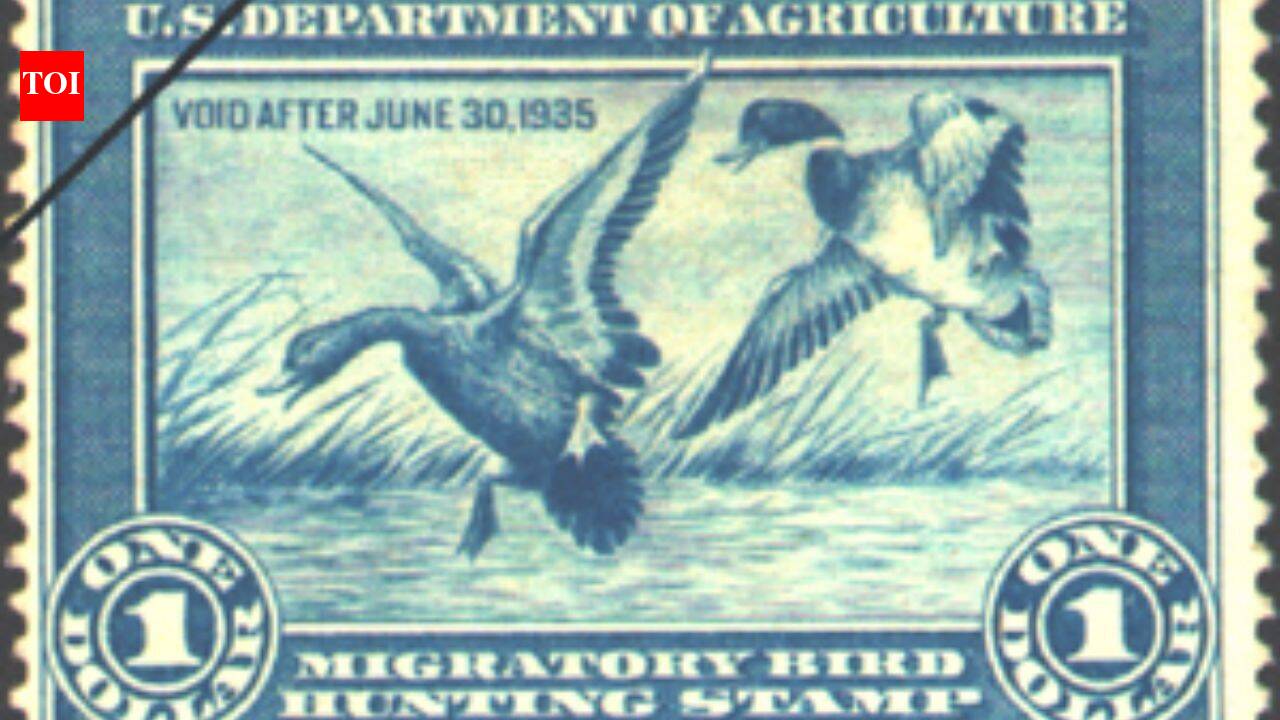
In 1934, the United States introduced a small annual stamp that linked waterfowl hunting directly to wetland conservation.
asserted
that → introduce → conservation
The Migratory Bird Hunting Stamp Act, signed by President Franklin D. Roosevelt on 16 March that year, required waterfowl hunters aged 16 and over to buy a stamp.
asserted
Act → sign → stamp
The first one cost $1 and featured mallards, with artwork created by conservationist and cartoonist J.N. Ding Darling.
asserted
one → cost → Darling
More than nine decades later, the Federal Duck Stamp has raised over $1.3 billion and helped conserve more than 6 million acres of habitat, according to the US Fish & Wildlife Service (US FWS).
uncertain
Stamp → raise → Service
How the 1934 $1 Duck Stamp began protecting wetlands
The idea emerged during a difficult period for both people and wildlife.
asserted
idea → begin → people
BirdNote reported that the early 1930s were marked by the Great Depression, drought and widespread damage to wetlands.
asserted
1930s → report → wetlands
Waterfowl populations had already been weakened by hunting pressure and the loss of breeding habitat as wetlands were drained.
asserted
wetlands → weaken → habitat
The Federal Register provides the legal history of the programme.
asserted
Register → provide → programme
Congress passed the Migratory Bird Hunting Stamp Act on 16 March 1934, and Roosevelt signed it the same day.
asserted
Roosevelt → pass → it
The law required waterfowl hunters aged 16 or older to purchase a stamp every year.
asserted
law → require → stamp
The money was intended to provide a dedicated source of funding for protecting habitat.
asserted
money → intend → habitat
The first stamp was designed by Jay N. Ding Darling, who was then director of the Bureau of Biological Survey, the predecessor of the US Fish & Wildlife Service.
asserted
who → design → Service
The US FWS says Darling's design began an annual tradition in which wildlife art became part of a conservation funding system.
asserted
art → say → system
Image Credit: Ducks.org
The hunting requirement became a conservation tool
asserted
requirement → become → ?
Hunters were the main group required to purchase the stamp, turning an annual hunting requirement into a source of money for wetlands.
asserted
Hunters → require → wetlands
According to the Federal Register, the programme had generated more than $1 billion by 2018 and supported conservation of more than 6 million acres of waterfowl habitat.
uncertain
programme → accord → habitat
The agency also noted that the protected areas benefit many species beyond waterfowl, while wetlands can help with flood control and water purification.
asserted
wetlands → note → control
The US FWS now reports that more than $1.3 billion has been raised since 1934.
asserted
billion → report → 1934
Its Federal Duck Stamp programme states that 98 cents of every dollar spent goes towards acquiring vital habitat or conservation easements within the National Wildlife Refuge System.
asserted
cents → state → System
How Duck Stamp money reaches wildlife habitat
asserted
money → reach → habitat
The funds do not simply support the production of the stamp.
asserted
funds → support → stamp
They are deposited into the Migratory Bird Conservation Fund, which is used to purchase or lease wetlands and other wildlife habitat.
asserted
which → deposit → wetlands
The US FWS explains that more than 6 million acres have been acquired using Federal Duck Stamp revenue.
asserted
acres → explain → revenue
More than 300 national wildlife refuges have been created or expanded with the help of these funds, while at least one refuge in nearly every state has benefited.
asserted
refuge → create → state
The programme also supports smaller wetlands and surrounding uplands through Waterfowl Production Areas.
asserted
programme → support → Areas
These sites can provide important breeding and nesting habitat, while conservation easements can protect land without necessarily ending private ownership or its working-land uses.
asserted
easements → provide → ownership
What makes the stamp useful beyond hunting
The stamp's value extends beyond the people who are legally required to buy it.
asserted
who → make → it
The US FWS says anyone can purchase a Federal Duck Stamp, including conservationists, birdwatchers and collectors.
asserted
anyone → say → conservationists
A current signed stamp can also provide free admission to national wildlife refuges that charge an entrance fee.
asserted
that → sign → fee
The wetlands protected through the programme have practical benefits as well.
asserted
wetlands → protect → benefits
According to the US FWS, they can help purify water, control floods and reduce soil erosion and sedimentation.
uncertain
they → accord → erosion
They also create opportunities for outdoor recreation.
asserted
They → create → recreation
The National Wildlife Federation reported in 2026 that more than 98 percent of Duck Stamp proceeds go directly towards acquiring and protecting wetland habitat for the National Wildlife Refuge System.
asserted
percent → report → System
The artwork has become part of the programme
The conservation story is also tied to wildlife art.
asserted
story → become → art
The first Federal Duck Stamp Contest was held in 1949, when 65 artists submitted 88 designs.
asserted
artists → hold → designs
The Federal Register notes that it remains the only art competition of its kind sponsored by the US government.
asserted
it → note → government
Today, the US FWS holds the annual competition, with the winning artwork becoming the design for the following year's stamp.
asserted
artwork → hold → stamp
The contest gives the programme a changing visual identity while keeping wildlife at its centre.
asserted
contest → give → centre
The designs have also evolved alongside the programme.
asserted
designs → evolve → programme
The Federal Register records changes intended to reinforce the connection between the stamp, waterfowl hunting heritage and conservation.
asserted
Register → record → stamp
…and 3 more, not listed.
 The Aporia