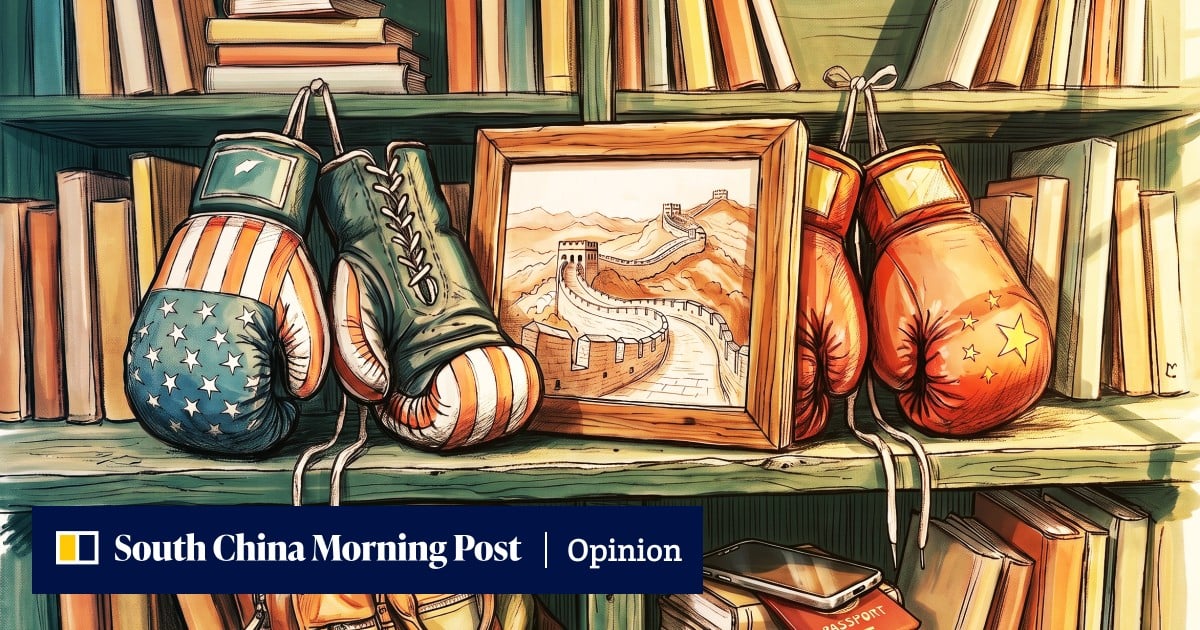
Heading to America to bridge the gap in US-China relations

News - South China Morning Post · collected 2026-09-06 · by Wang Xiangwei
Read the original at News - South China Morning Post ↗

Summary

The author, a Chinese journalist with 30 years of experience covering China, is traveling to the US as a senior visiting scholar at Harvard's Kennedy School to research US-China relations over the next year. The author notes that both American and Chinese citizens often delete sensitive information from their phones before traveling abroad due to concerns about being misunderstood or misconstrued. The author aims to interview thought leaders across the US political spectrum to understand their views on the future of US-China relations, which many perceive as heading towards conflict.
Written by the local model on 2026-09-06, using this article's own text rather than the other coverage of the same event (that is the story summary below).

Signals How these are calculated →

Claims extracted
9
claim-shaped sentences
Uncertain
22%
2 of 9 hedged
Leaning
Leans left
of the writing, not the subject
Publisher trust
94.0
red-flag proxy, not a credibility rating
Outlets on this story
1
Politics
Narrative spread
1
articles carrying this framing
Analyzed 2026-09-06 · how these are computed

AI analysis (generated at analysis time, not now)

Story summary

Wang Xiangwei, a journalist who has been covering China for over 30 years, is starting a year-long research project in America, specifically in Boston, to explore where the friction between the US and China ends and their shared interests begin. Before leaving for the US, Wang spent three days scrubbing his phone of sensitive information, including deleting old emails, screenshots, and WeChat threads, following advice given to Chinese travelers to avoid any potential misinterpretation by American officials or media. Wang will be taking up a senior visiting scholar position at the Rajawali Foundation Institute for Asia at the Harvard Kennedy School, where he aims to sit down with American thought leaders and map out areas of shared interest between the two superpowers.

Written for “US China Diplomatic Relations” on 2026-09-07, grounded in this article and the 0 other(s) covering the same event.
Why this leaning score
The article's own words the score was based on. Each is quoted verbatim and was checked against the article text before being stored, so you can find it in the original.
Score -0.35 Confidence medium
Leaning score -0.35 for article 5926 (medium confidence, 3 verified quotes) · logged 2026-09-06

Story

📰 US China Diplomatic Relations
Politics · 1 article(s) covering the same event. This is the one the site leads with.

How this is being covered How these are calculated →

Article leaning vs. publisher reliability
Source leaning vs. consistency

Compared with similar articles

This article reads leans left and hedges 22% of its claims. Each row says how that neighbour differs.
The Straits Times World News
⚖️ Leans right further right than this 🔴 0% hedged 0 of 8 📰 publisher trust 94
“Article A describes a planned state dinner for Xi Jinping hosted by Trump, while Article B discusses a personal experience of an author covering China and planning to travel to America”
Semafor
⚖️ Leans left 🔴 0% hedged 0 of 5 📰 publisher trust 96
“Article A discusses a trade issue at G20 finance meetings, while Article B is an opinion piece about traveling to America and mending US-China relations, with no mention of a specific event or meeting.”

Publisher

News - South China Morning Post · 156 article(s) · 0 correction(s) detected
SignalValueWeight
Correction rate 0.000 0.4
Uncertainty density 0.120 0.25
Assertive mismatch rate 0.000 0.35
No corrections detected for this publisher. That may mean careful reporting, or simply that nothing has been checked.

Who wrote this

Wang Xiangwei
1 article(s) here · 1 carrying a prediction
🔮 Heading to America to bridge the gap in US-China relations In a year-long research across America, I hope to map where superpower friction ends, and where shared interest must begin Before boarding my flight to Boston late last month, I spent the better part of three days doing something I never imagined I would do in more than 30 years of covering China: scrubbing my phone.
The only article under this byline in the corpus.

Topics

America American Boston China Chinese

Subjects

America GPE · 3× American NORP · 3× China GPE · 3× Beijing GPE · 1× Boston ORG · 1× Chinese NORP · 1× Washington ORG · 1× the Harvard Kennedy School ORG · 1× the United States GPE · 1×

Narrative

Heading to America to bridge the gap in US-China relations In a year-long research across America, I hope to map where superpower friction ends, and where shared interest must begin Before boarding my flight to Boston late last month, I spent the better part of three days doing something I never imagined I would do in more than 30 years of covering China: scrubbing my phone.
framing: mixed · carried by 1 article(s) · first seen 2026-09-06
🔮 Heading to America to bridge the gap in US-China relations In a year-long research across America, I hope to map where superpower friction ends, and where shared interest must begin Before boarding my flight to Boston late last month, I spent the better part of three days doing something I never imagined I would do in more than 30 years of covering China: scrubbing my phone.
2026-09-06 · News - South China Morning Post
Heading to America to bridge the gap in US-China relations · mixed framing

Claims (9 extracted, 2 hedged)

Heading to America to bridge the gap in US-China relations In a year-long research across America, I hope to map where superpower friction ends, and where shared interest must begin Before boarding my flight to Boston late last month, I spent the better part of three days doing something I never imagined I would do in more than 30 years of covering China: scrubbing my phone. asserted
I → head → phone
Old emails, screenshots, WeChat threads that might be read the wrong way, anything that could be misconstrued in an airport interview room – all deleted, just in case. uncertain
all → read → case
I was following advice now routinely passed among Chinese travellers to the United States: carry a clean phone, or better yet, a burner. asserted
I → follow → phone
American officials, academics and business travellers headed into China have long been told the same thing. asserted
officials → head → thing
Two sets of citizens, one shared instinct – that what is on your phone could get you into trouble on the other side. uncertain
is → share → side
Beginning this month, I take up a one-year appointment as a senior visiting scholar at the Rajawali Foundation Institute for Asia at the Harvard Kennedy School. asserted
I → begin → School
My purpose is straightforward to state and harder to fulfil: to sit down with American thought leaders across the political spectrum and ask them where they think this relationship is headed, and whether conflict is as inevitable as it now appears. asserted
it → state → them
Layered on top were structural anxieties. asserted
anxieties → layer → top
In Beijing, there is a mirror-image worry: that a declining but still-dominant America, unwilling to accept the reality of a rising China, is bent on containing its development, through tariffs, technology export controls and alliances built for that purpose. asserted
America → be → purpose
💬 Give feedback
🕘 History 🎫 Support