That is 0 articles you have read today.
The Aporia is free and carries no advertising, so readers are the only
thing paying for it. If you are getting this much out of it, a small
donation is what keeps it independent.
Daily limit reached
You have read 0 articles today.
That is more than the 15 a day The Aporia gives away,
and well past what it can carry on nothing. Your allowance resets at
midnight.
There is no advertising here and nothing about you is sold, so readers
are the only thing paying for it. If the site is worth this much of
your day, it is worth a few dollars.
Everything else stays open: the
maps, the
directory and
search do
not count against this, and neither does re-opening something you have
already read today.
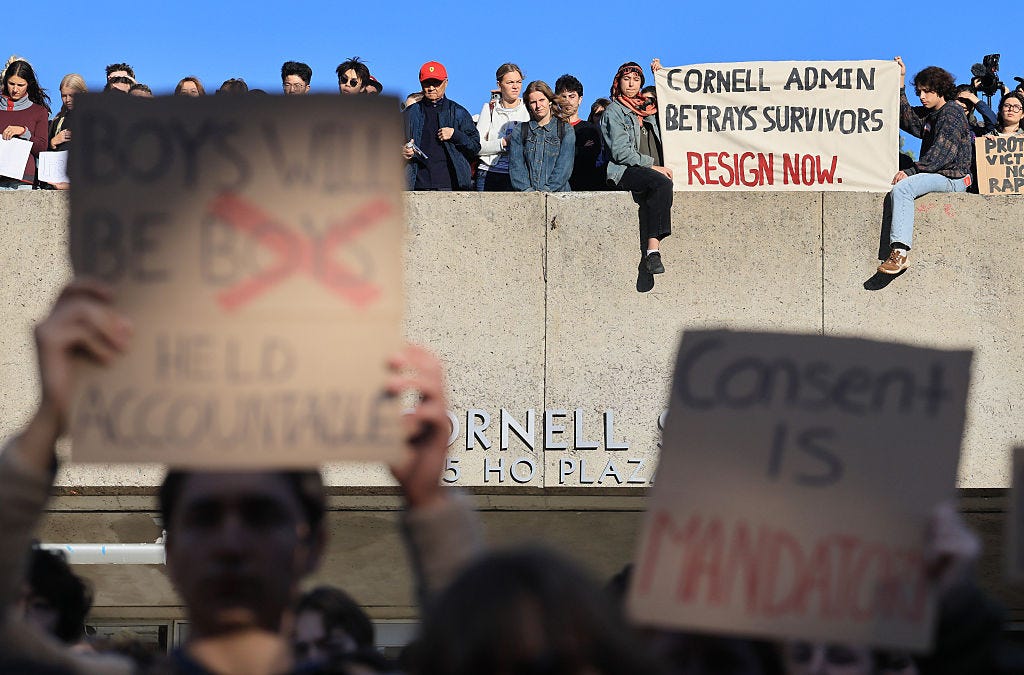
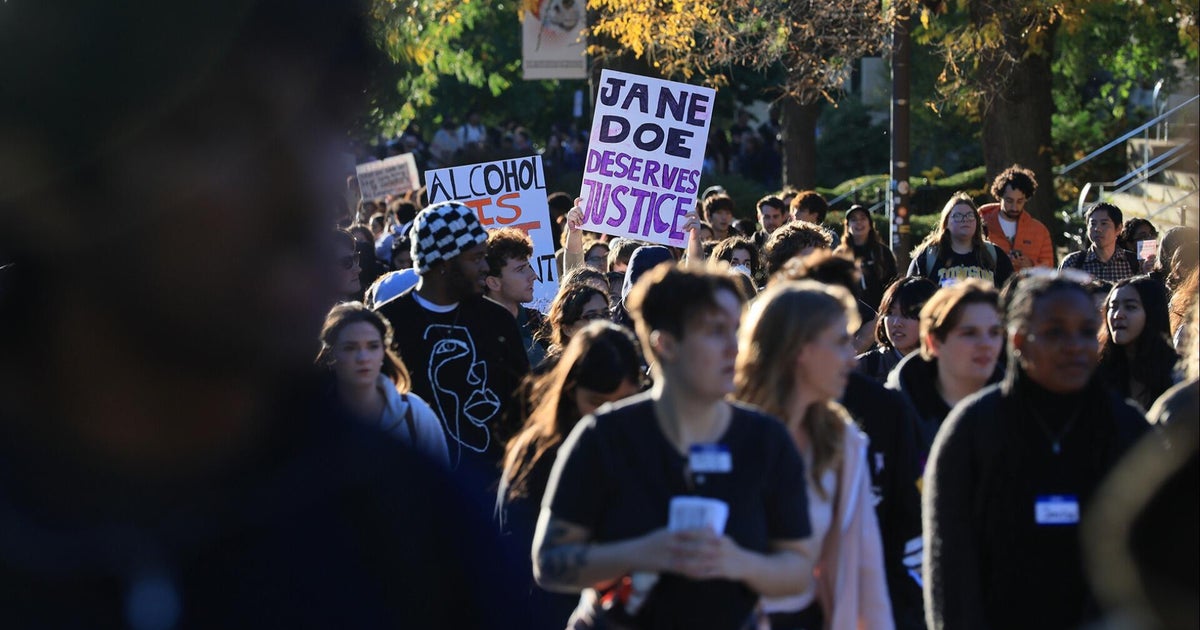
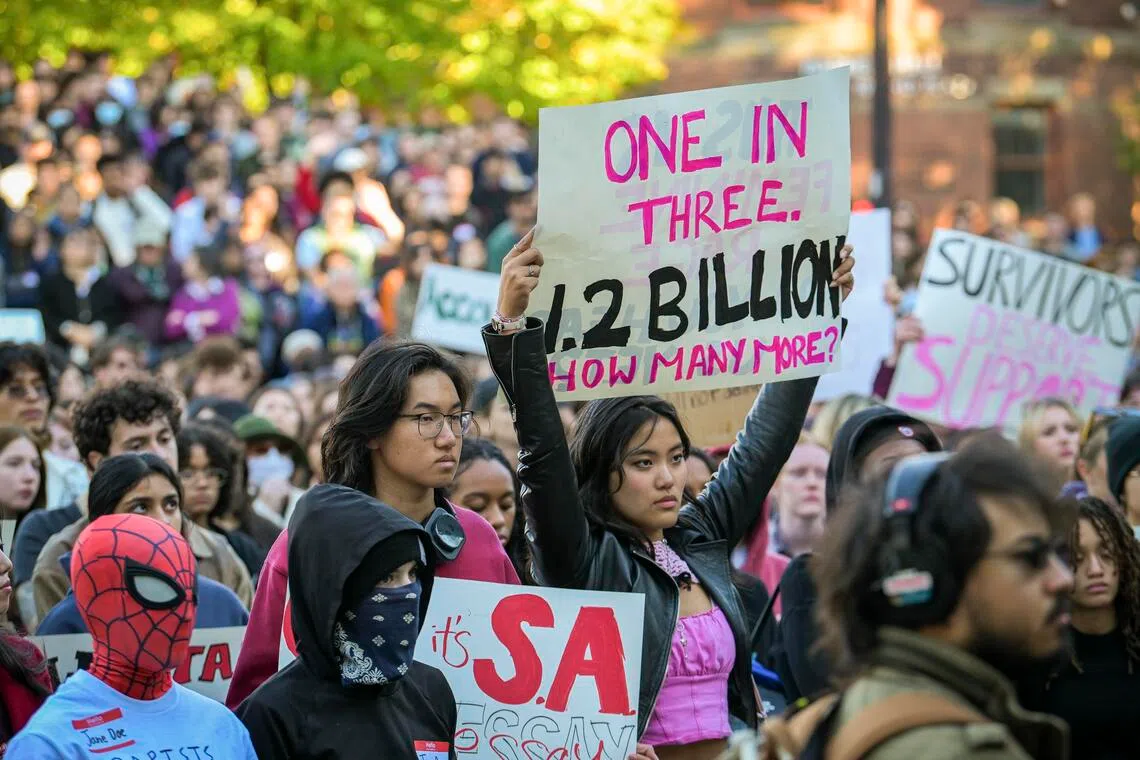
At Cornell University, students protested against what they see as an institutional failure to address sexual assault adequately. The rally was sparked by a lawsuit filed by Jane Doe, who alleges that she was gang-raped at a fraternity house in September 2024 but only sought medical help more than two weeks later due to delayed realization of the trauma. The Tompkins County district attorney declined to press charges based on the initial description provided by Jane Doe, which included details about her alcohol and drug use that she initially characterized as voluntary. The protest reflects broader societal debates over consent, especially in cases involving substance use, and questions whether universities are adequately addressing rape culture.
Written locally by qwen2.5:14b on 2026-10-06,
using this article's own text rather than the other coverage of the
same event (that is the story summary below).
Story summary
On October 5, 2026, Cornell University's main administration building, Day Hall, was vandalized by student activists protesting the university’s handling of an alleged gang rape from 2024. Activists broke a glass door and spray-painted messages like “Smash the patriarchy” and “At Cornell rapists are protected... protestors are expelled” in red paint on the walls surrounding the entrance. The vandalism occurred overnight, ahead of a planned protest by student groups to demand justice for survivors of sexual assault.
Cornell spokesperson Kyle Kimball stated that while they understand students' frustrations, damaging property is not an acceptable response and that the university would address the incident according to its policies and applicable law. The protests have been fueled by growing public outrage over how Cornell initially handled the case, with some demanding changes in the university’s procedures for addressing sexual assault complaints.
Written for “Cornell Gang Rape Protests” on 2026-10-06,
grounded in this article and the 16 other(s) covering the same event.
Why this leaning score
The article's own words the score was based on. Each is quoted
verbatim and was checked against the article text before being
stored, so you can find it in the original.
Leaning: leans left for article 59152 (high confidence, 1 verified quote) · logged 2026-10-06
Claims extracted
11
claim-shaped sentences
Uncertain
0%
0 of 11 hedged
Leaning
Leans left
of the writing, not the subject · beta estimate
Correction & hedging signals
96.4
corrections and hedging in what we collected;
not a measure of accuracy
Outlets on this story
17
Education
Narrative spread
1
articles carrying this framing
A sea of students hangs on every word as Saya Taylor, an 18-year-old Cornell University student, urged them to think beyond the trauma of the past few weeks.
asserted
Taylor → hang → weeks
“We are known as the rape school, but we don’t have to be,” Taylor boomed into a microphone before a vast crowd, her pink hair falling over her face.
asserted
hair → know → face
“We can be the students that lead a nationwide reform movement against the institutions that perpetuate rape at every single level.”
asserted
that → lead → level
On Monday afternoon, Taylor was one of about a dozen speakers at a “Justice for Survivors” protest blasting Cornell for perpetuating a culture that allows rape to go unpunished.
asserted
rape → blast → culture
Their fury was on behalf of Jane Doe, the anonymous student who filed a September 14 lawsuit alleging that seven male students gang-raped her at a fraternity house in 2024.
asserted
students → file → 2024
The student, then 20 years old, initially described the evening—including her drinking and use of a dissociative drug called ketamine—as voluntary and consensual.
asserted
student → describe → drug
Then, more than two weeks after the alleged incident, with rumors about her in full swirl on campus, Jane Doe requested a rape kit at a local emergency room.
asserted
Doe → allege → room
At the time, the Tompkins County district attorney declined to bring charges in relation to the case based on a statement Jane Doe had given to university police, finding the description of her participation to be “voluntary, conscious, and consensual.”
asserted
description → decline → participation
The case has since exploded far beyond Ithaca, dividing the country as it wrestles with some of the thorniest questions that remain nearly a decade after #MeToo: What happens when a woman comes to understand a sexual encounter as rape in retrospect?
asserted
woman → explode → retrospect
How relevant should a woman’s alcohol and drug consumption be in determining consent?
asserted
consumption → determine → consent
And should the names of the accused men be public given they have not been charged with a crime?
asserted
they → accuse → crime
 The Aporia