That is 0 articles you have read today.
The Aporia is free and carries no advertising, so readers are the only
thing paying for it. If you are getting this much out of it, a small
donation is what keeps it independent.
Daily limit reached
You have read 0 articles today.
That is more than the 15 a day The Aporia gives away,
and well past what it can carry on nothing. Your allowance resets at
midnight.
There is no advertising here and nothing about you is sold, so readers
are the only thing paying for it. If the site is worth this much of
your day, it is worth a few dollars.
Everything else stays open: the
maps, the
directory and
search do
not count against this, and neither does re-opening something you have
already read today.
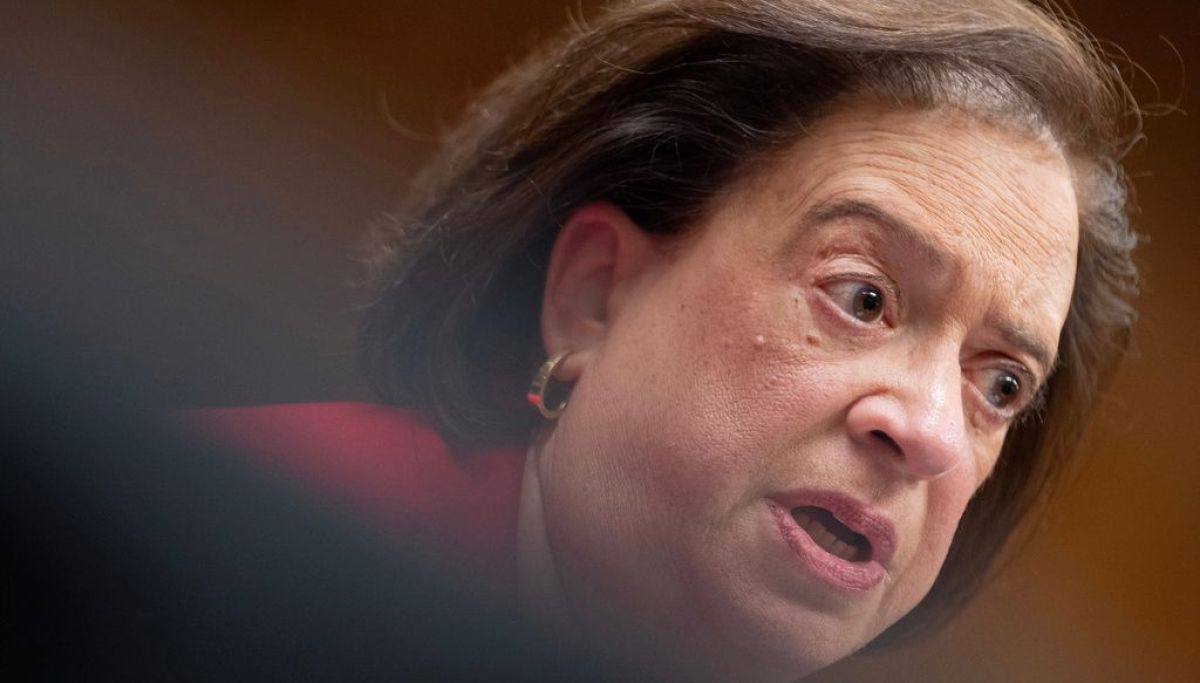
Justice Elena Kagan denied an emergency petition filed by consumers on Monday to halt the $111 billion Paramount-Warner Bros. merger scheduled for Tuesday. The plaintiffs argued the merger would be anticompetitive despite safeguards provided in a settlement between the companies and 12 Democratic state attorneys general. They claimed that centralizing control over competing studios, streaming services, and news organizations would cause immediate harm to consumers who pay for HBO Max and Paramount+. Kagan's denial of their petition allows the merger to proceed as planned.
Written locally by qwen2.5:14b on 2026-10-06,
using this article's own text rather than the other coverage of the
same event (that is the story summary below).
Story summary
Supreme Court Justice Elena Kagan denied a last-minute emergency application on Monday from consumers seeking to block the Paramount-Warner Bros. merger scheduled for the following day. The petition, which was previously rejected by both the district court and the U.S. Court of Appeals for the 9th Circuit, argued that even with safeguards set by twelve Democratic state attorneys general, the merger would still be anticompetitive. These safeguards include provisions to prevent Paramount and Warner Bros. from selling or closing their respective lots and to ensure reapplication rights for displaced employees, as well as creating an editorial-independence board. Despite these measures, the petitioners claimed they did not sufficiently preserve competition between the two studios. The merger is set to proceed on Tuesday.
Written for “Paramount Warner Bros Mergerrejected” on 2026-10-06,
grounded in this article and the 0 other(s) covering the same event.
Why this leaning score
This article does not take a side on a contested political
question, so it has no leaning score. That is an
answer rather than a gap: a match report or a rescue can be warmly
or critically written without being left or right, and scoring it
anyway is how approval of a subject gets recorded as a political
position.
No political leaning scored for article 59093 · logged 2026-10-06
Supreme Court Justice Elena Kagan shot down a last-minute emergency application filed by consumers on Monday that sought to halt the Paramount-Warner Bros. merger from closing the following day.
asserted
that → shoot → merger
Kagan, who handles emergency applications arising from the U.S. Court of Appeals for the 9th Circuit, denied the plaintiffs’ petition without providing a reason.
asserted
who → handle → reason
Their case was previously rejected by the district court and appeals court.
asserted
case → reject → court
Earlier Monday, five consumers who described themselves as Paramount subscribers, viewers, and cable customers argued the merger remains anticompetitive after 12 Democratic state attorneys general reached a settlement with the two Hollywood studios.
asserted
general → describe → studios
“The States’ settlement itself requires that the combined company not sell or close the Paramount or Warner Bros. lots during the commitment period, provides reapplication rights to employees displaced by the transaction, and creates an editorial-independence board,” the court filing says.
asserted
filing → require → board
“Those safeguards show the magnitude of the integration that closing will unleash, but they do not preserve competition between Paramount and Warner Bros.”
asserted
they → show → Paramount
On Tuesday, Paramount and Warner Bros. are set to finally merge under Skydance after a monthslong bidding war and subsequent legal battle that never made it to trial.
asserted
that → set → trial
The plaintiffs claimed the anticipated closing date would result in “immediate and irreparable injury” to consumers who pay for the HBO Max and Paramount+ streaming services.
asserted
who → claim → services
“Closing will not merely change a stock ledger,” they said.
asserted
they → change → ledger
“It will replace separate ownership with common control over competing studios, streaming products and news organizations and permit the integration respondents themselves describe.
asserted
respondents → replace → integration
Once independent pricing, programming, release, newsroom, technology, employment and investment decisions are centralized, later relief cannot restore the period of competition that was lost.
asserted
that → centralize → competition
If Kagan let the appeal proceed, the Supreme Court would have had to block the $111 billion transaction while considering the petition.
asserted
Court → let → petition
“The requested order is narrow: preserve separate ownership and prohibit integration pending disposition of the petition or further order,” the emergency application says.
asserted
application → request → petition
“It does not decide final antitrust liability.
asserted
It → decide → liability
It preserves the Court’s ability to decide the legal questions before the October 6 closing changes the competitive structure the Clayton Act is designed to protect.”
asserted
Act → preserve → structure
Now that the eleventh-hour challenge was denied, Paramount CEO David Ellison can move forward with closing the merger as planned.
asserted
Ellison → deny → merger
The deal cleared its last major legal hurdle last week when U.S. District Judge Araceli Martinez-Olguin approved the states’ settlement with Paramount and Warner Bros.
Days later, Ellison announced Skydance will oversee the two companies and their respective media assets.
asserted
Skydance → clear → companies
Beyond the theatrical and streaming markets, the merger brings CBS News and CNN under the direction of a board that will ensure the editorial independence of each news outlet.
asserted
that → bring → outlet
Paramount controls CBS News, and Warner Bros. owns CNN.
asserted
Bros. → control → CNN
 The Aporia