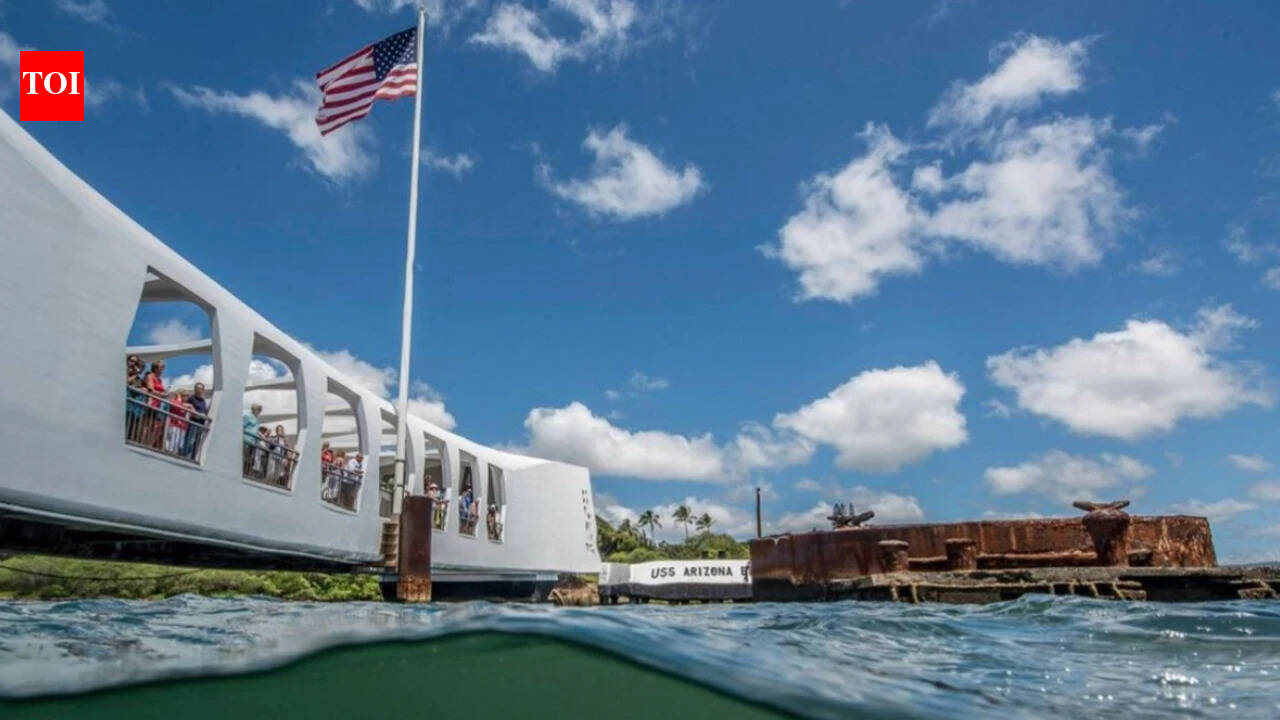
In 1961, Elvis Presley contributed $65,000 towards building the USS Arizona Memorial in Pearl Harbor, which commemorates those who died aboard the sunken battleship during the December 7, 1941 attack. The memorial was completed that year and officially dedicated in 1962; it stands above the wreck where over 900 crew members remain entombed. Designed by Alfred Preis, the structure symbolizes defeat and victory, with a section for visitors to reflect on their personal responses to the historical event.
Written locally by qwen2.5:14b on 2026-10-06,
using this article's own text rather than the other coverage of the
same event (that is the story summary below).
In 1961, Elvis Presley raised $65,000 towards the USS Arizona Memorial, helping support the project that would honour those who died aboard the battleship at Pearl Harbor.
asserted
who → raise → Harbor
The memorial was completed that year and officially dedicated in 1962.
asserted
memorial → complete → 1962
Its 184-foot structure stretches across the sunken USS Arizona.
asserted
structure → stretch → Arizona
According to National Park Service, the memorial stands above the battleship that became the final resting place for more than 900 of its 1,177 crewmen who died on December 7, 1941.
uncertain
who → accord → December
The USS Arizona remains beneath the structure, while the memorial gives visitors a place to remember those who lost their lives during the Pearl Harbor attack.
asserted
who → remain → attack
The idea for a memorial emerged during the Second World War.
asserted
idea → emerge → War
Initial suggestions were made as early as 1943, but it took several years before concrete steps were taken to create a permanent tribute.
asserted
steps → make → tribute
In 1949, the Territory of Hawaii established the Pacific War Memorial Commission, helping move the idea forward.
asserted
Territory → establish → idea
The site received its first official recognition in 1950.
asserted
site → receive → 1950
Admiral Arthur Radford, Commander in Chief of the Pacific, ordered a flagpole to be erected over the sunken battleship.
asserted
flagpole → order → battleship
On the ninth anniversary of the attack, a commemorative plaque was placed at the base of the flagpole.
asserted
plaque → place → flagpole
How the memorial was created
The plan for a permanent memorial gained further support in 1958, when President Dwight D. Eisenhower authorised its creation.
asserted
Eisenhower → create → creation
The project was funded through public contributions and private donations.
asserted
project → fund → contributions
The memorial was completed in 1961, the same year Presley raised $65,000 towards it.
asserted
Presley → complete → it
Architect Alfred Preis designed the structure.
asserted
Preis → design → structure
Its shape was intended to represent the story of the attack and what followed.
asserted
what → intend → attack
Preis explained that the structure "sags in the center but stands strong and vigorous at the ends, expressing initial defeat and ultimate victory."
asserted
structure → explain → defeat
Preis also said the overall effect was meant to be one of serenity.
asserted
effect → say → serenity
He explained that "Overtones of sadness have been omitted to permit the individual to contemplate his own personal responses, his innermost feelings."
asserted
Overtones → explain → responses
Three sections above the wreck
The USS Arizona Memorial is divided into three main sections- the Entry Room, the Assembly Room and the Shrine Room.
asserted
Memorial → divide → sections-
The Entry Room welcomes visitors at the start of their visit.
asserted
Room → welcome → visit
The Assembly Room forms the central section and provides space for ceremonies and general observation.
asserted
Room → form → ceremonies
It also gives visitors an area for reflection.
asserted
It → give → reflection
The Shrine Room is where the names of those who died aboard the USS Arizona are engraved on a marble wall.
asserted
who → die → wall
The names provide a permanent record of the people who lost their lives aboard the battleship.
asserted
who → provide → battleship
The memorial stretches across the sunken ship below the surface.
asserted
memorial → stretch → surface
Visitors can look through its open windows towards the USS Arizona beneath them.
asserted
Visitors → look → them
The battleship is no longer in commission, but the United States flag continues to fly from a flagpole attached to its severed mainmast.
asserted
flag → continue → mainmast
The flag remains a symbol of the ship's continuing legacy.
asserted
flag → remain → legacy
The USS Arizona Memorial honours the people who died aboard the battleship, but its significance extends beyond the ship itself.
asserted
significance → honour → ship
The National Park Service says the memorial also honours all military personnel who lost their lives in the Pearl Harbor attack.
asserted
who → say → attack
The USS Arizona beneath memorial
More than 900 of the USS Arizona's 1,177 crewmen who died on December 7, 1941, remain entombed in the sunken battleship.
asserted
who → die → battleship
The wreck has therefore remained an important part of the memorial site.
asserted
wreck → remain → site
Oil still leaks from the USS Arizona, linking the memorial above the water to the physical remains of the ship below it.
asserted
Oil → leak → it
Visitors standing inside the structure can look towards the wreck beneath the surface.
asserted
Visitors → stand → surface
The National Park Service describes the memorial as a place of reflection and remembrance.
asserted
Service → describe → reflection
Its white structure spans the battleship and provides visitors with a way to contemplate the attack and the lives lost.
asserted
structure → span → attack
The National Park Service facilitates the USS Arizona Memorial programme.
asserted
Service → facilitate → programme
Tickets are free, but reservations are required.
asserted
reservations → require → ?
The previous first-come, first-served ticket distribution programme is no longer available.
asserted
programme → come → ?
…and 2 more, not listed.
 The Aporia