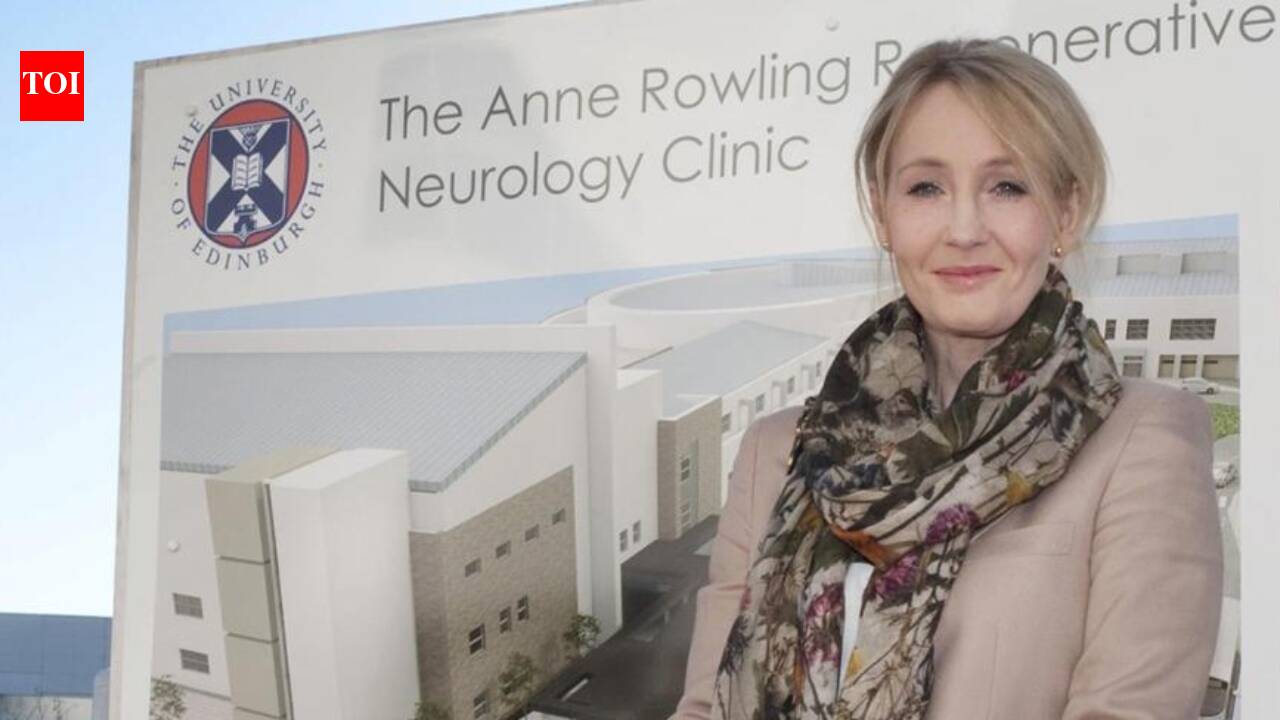
J.K. Rowling donated £10 million to the University of Edinburgh in 2010, in memory of her mother Anne Rowling who died from complications due to multiple sclerosis (MS) at age 45. The donation established the Anne Rowling Regenerative Neurology Clinic, which opened in October 2013 and combines patient care with medical research for neurological diseases such as MS, motor neurone disease, Parkinson’s disease, and early-onset dementia. Rowling highlighted that Scotland has one of the highest rates of MS globally, emphasizing her desire to combat this "very Scottish disease" through medical advancements.
Written locally by qwen2.5:14b on 2026-10-05,
using this article's own text rather than the other coverage of the
same event (that is the story summary below).
Anne Rowling died of complications from multiple sclerosis in 1990.
asserted
Rowling → die → 1990
Anne had suffered from the disease for 15 years before her death.
asserted
Anne → suffer → death
For J.K. Rowling, who was just a teenager at the time, her mother’s death was an ‘enormous shock’, as her mother ‘always seemed very young’.
asserted
mother → seem → time
“She was very fit, she was a non-smoker, non-drinker, and I say all of this because of course then for her to be diagnosed at 35 with an illness that would kill her was just the most enormous shock to us and everyone who knew her.
asserted
who → say → her
The loss has shaped one of the author’s series’ central themes.
asserted
loss → shape → themes
In August 2010, when Rowling turned 45 herself, she donated £10 million to the University of Edinburgh in memory of her mother.
asserted
she → turn → mother
Today, the Anne Rowling Regenerative Neurology Clinic combines patient care with medical research, treating people with brain conditions including multiple sclerosis, motor neurone disease, Parkinson’s disease and early-onset dementia, while working to develop and trial new treatments for neurological diseases.
asserted
Clinic → combine → diseases
Cure for a ‘very Scottish disease’
Rowling had lived in Edinburgh for years and wrote the Harry Potter books there.
asserted
Rowling → live → books
The city had given her so much, and she wanted to give something meaningful back.
asserted
she → give → something
While talking about her mother’s disease, she said it was a ‘very Scottish disease’.
asserted
it → talk → disease
More than 150,000 people live with multiple sclerosis (MS) in the UK.
asserted
people → live → UK
In fact, roughly one in 400 people in the UK have MS, according to the latest data from the MS Society.
uncertain
people → have → Society
Scotland has one of the highest rates in the world.
asserted
Scotland → have → world
So donating to research and treatment only made sense to her.
asserted
donating → donate → her
“I cannot think of anything more important, or of more lasting value, than to help the university attract world-class minds in the field of neuroregeneration, to build on its long and illustrious history of medical research and, ultimately, to seek a cure for a very Scottish disease,”
asserted
university → think → disease
J.K. Rowling said after the donation.
asserted
Rowling → say → donation
It followed the Centre for Multiple Sclerosis Research, set up at the university in 2007, which had also received her support.
asserted
which → follow → support
Research and treatment under one roof
The clinic opened in October 2013, inaugurated by the Princess Royal, chancellor of the university.
asserted
clinic → open → university
It sits at the Little France site beside the Royal Infirmary of Edinburgh.
asserted
It → sit → Edinburgh
Rowling said she was ‘moved and elated’ to see it finished.
asserted
it → say → ?
The idea was simple: the doctors and researchers had to work under one roof.
asserted
doctors → have → roof
NHS Lothian runs specialist clinics in the building, and university researchers work alongside them, so what doctors see in an appointment can shape what scientists test next.
asserted
scientists → run → what
The clinic focuses on conditions such as MS, motor neurone disease, Parkinson’s disease and early-onset dementias.
asserted
clinic → focus → MS
The goal was to find treatments that slow progression and, eventually, to stop and reverse it.
asserted
that → find → it
Access works in two tiers.
asserted
Access → work → tiers
Clinical appointments are limited to people within NHS Lothian.
asserted
appointments → limit → Lothian
But the research is wider: people across Scotland can take part in studies.
asserted
people → take → studies
“Neurological diseases will always be complicated, and we are under no illusions about the scale of the task that lies ahead.
asserted
that → lie → task
We are very aware that this letter will sit inside a time capsule alongside the stories of patients who are facing real, daily struggles with diseases like MS and MND.
asserted
who → sit → MS
In fifty years’ time, however, we believe that a diagnosis of neurodegenerative disease will no longer be a life (and death) sentence,” Professor Siddharthan Chandran, Director of the Clinic, said in a release at the time.
asserted
Chandran → believe → time
“I know that the clinic will make a difference.
asserted
clinic → know → difference
I don’t know if it will be large or small, short- or long-term, related to MS or another condition.
asserted
it → know → MS
The fact that it will make a difference is really what matters...”
asserted
what → make → difference
Elizabeth Vokurka, who was diagnosed with MS, said, as mentioned in the ‘time capsule’ installed at the entrance of the Anne Rowling Clinic.
asserted
who → diagnose → Clinic
Since then, the clinic has held tens of thousands of clinical and research appointments and conducted numerous research projects and trials.
asserted
clinic → hold → projects
 The Aporia