Australia faces a looming dementia crisis with the number of people affected expected to double to one million by 2061, costing over $1 trillion economically. Despite breakthroughs like new drug treatments and diagnostic tools, funding shortfalls in research, prevention programs, and patient care are significant concerns. For instance, brain banks crucial for understanding disease pathology face closure due to lack of long-term funding, while preventative measures such as public awareness campaigns remain underfunded despite evidence that 45% of dementia risk is modifiable. The article calls for more government investment in innovative strategies to address this growing health challenge.
Written locally by qwen2.5:14b on 2026-10-05,
using this article's own text rather than the other coverage of the
same event (that is the story summary below).
Story summary
Australia faces a growing dementia crisis, with Australian Institute of Health and Welfare forecasts predicting that the number of people living with dementia will more than double to one million by 2061. The cumulative economic cost is expected to surpass $1 trillion, making it the country's leading cause of death. Despite recent breakthroughs, including the approval of the world’s first drug treatments for Alzheimer’s and new blood tests that detect changes decades before symptoms appear, funding shortfalls remain a critical issue. These gaps affect research, prevention, subsidies, and therapy development, threatening progress in addressing dementia.
Written for “Dementia Funding Crisis” on 2026-10-05,
grounded in this article and the 0 other(s) covering the same event.
Australia is incubating a dementia timebomb.
asserted
Australia → incubate → timebomb
According to Australian Institute of Health and Welfare forecasts, the number of people living with the disease will more than double to one million by 2061, which would work out to 1 in 40 people.
uncertain
which → accord → people
The cumulative economic cost would surpass $1 trillion.
asserted
cost → surpass → trillion
It is already our leading cause of death.
asserted
It → lead → death
Yet, as today’s feature on dementia breakthroughs reveals, there’s reason to be optimistic, with the approval of the world’s first drug treatments shown to modify Alzheimer’s disease and new blood tests that can detect key changes decades before symptoms arrive.
asserted
symptoms → reveal → changes
This progress is momentous and has sparked renewed vigour and momentum in research and development – but it should not be a cause for complacency.
asserted
it → spark → complacency
Funding shortfalls are a recurring issue raised by almost every person the Herald spoke to, across areas from research and prevention to subsidies and the development of novel therapies.
asserted
Herald → recur → therapies
The sad truth is funding could be the determining factor for whether some develop dementia in our lifetime.
uncertain
some → determine → lifetime
Take Australia’s brain banks, where hundreds of donated brains are collected, stored and distributed in samples around the world for vital research.
asserted
hundreds → take → research
Post-mortem brain examinations are gold standard for understanding pathology and informing new treatments.
asserted
examinations → understand → treatments
Yet, Sydney Brain Bank does not have long-term funding support and relies on philanthropy.
asserted
Bank → have → philanthropy
The Victorian Brain Bank is not accepting new tissue because of a lack of funding.
asserted
Bank → accept → funding
Others have been forced to close.
asserted
Others → force → ?
Prevention is also under-funded.
asserted
Prevention → fund → ?
Not long ago considered a matter of genetic destiny, dementia risk is now 45 per cent attributable to modifiable factors.
asserted
risk → consider → factors
A new government letter being sent to people turning 50 about risk reduction is a good start, but public awareness remains low and key opportunities for intervention are being missed.
asserted
opportunities → send → intervention
Awareness campaigns and a midlife check could make a difference.
uncertain
campaigns → make → difference
A short online survey developed in Australia that gives users a personalised risk assessment for dementia is also funded by philanthropy.
asserted
that → develop → philanthropy
If it were supported by government and integrated into GP software, it could be scaled up to prevent or delay the disease.
uncertain
it → support → disease
A dedicated Medicare item number for consultations on dementia prevention would also help.
asserted
number → help → prevention
In laboratories, researchers must compete for a limited pool of grants to fund their work.
asserted
researchers → compete → work
For individuals, government subsidies would make a difference.
asserted
subsidies → make → difference
Some dig into their superannuation to pay up to $100,000 for expensive new drug treatments.
asserted
Some → dig → treatments
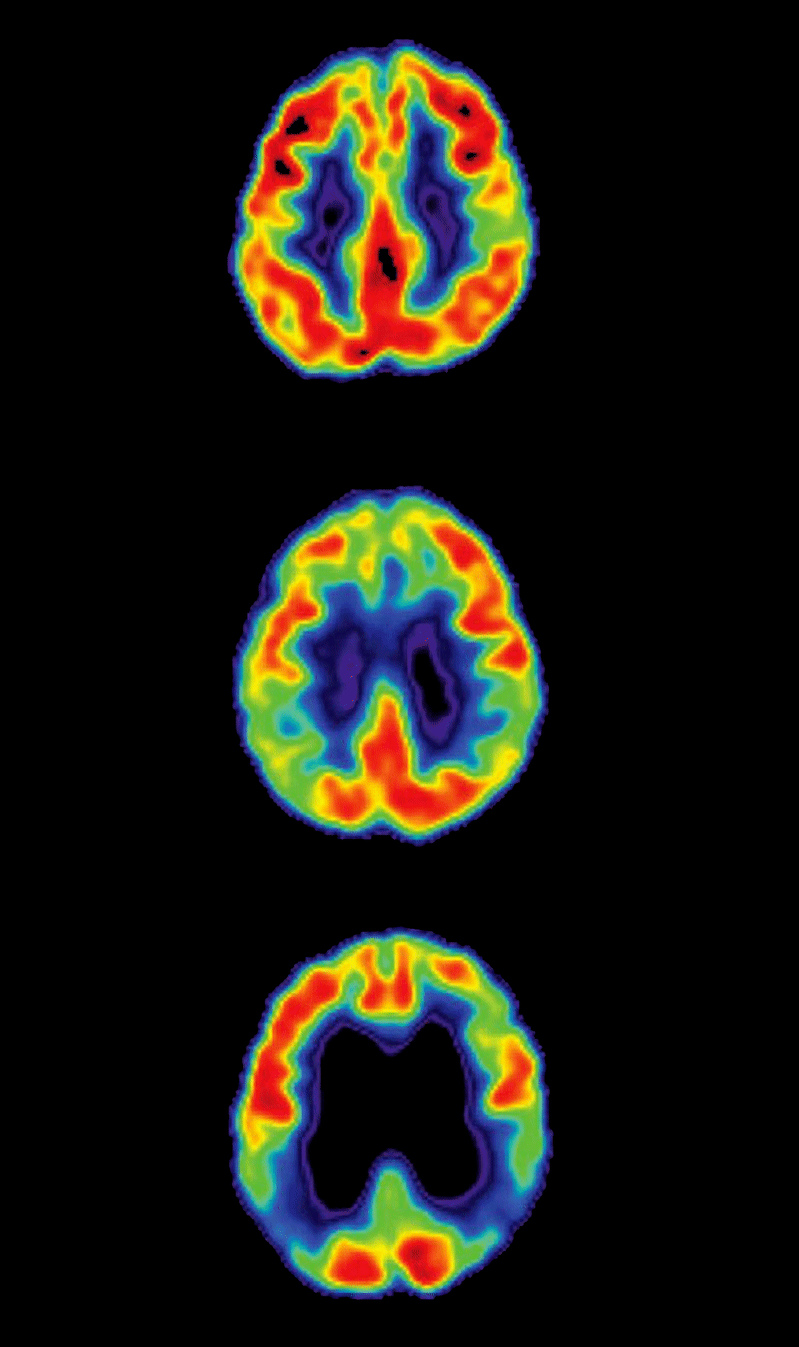
Bill Yeates had to self-fund $2500 for a PET scan that confirmed he had young onset dementia.
asserted
he → have → dementia
The government spends billions of dollars a year on dementia, most of which deservedly goes into aged care services.
asserted
most → spend → services
But given the size of both our nation’s dementia prognosis and the potential to change our trajectory, not enough is going into targeted, practical and innovative strategies.
asserted
enough → give → strategies
The government should take a long-term view and invest for the health of our country, rather than for short-term returns.
asserted
government → take → returns
The human and economic costs of failing to act are too great.
asserted
costs → fail → ?
 The Aporia