After deadly Kyiv strike, Ukraine warns interceptor shortage is costing lives

Read the original at BBC News ↗
Cite

Johnson, D. (2026, August 6). After deadly Kyiv strike, Ukraine warns interceptor shortage is costing lives. BBC News. https://www.bbc.co.uk/news/articles/cyvlgq2gp2eo?at_medium=RSS&at_campaign=rss

Dated when The Aporia collected the article, usually within hours of publication. Check the original for its exact date and byline.

BBC News · collected 2026-08-06 · by Dan Johnson

Quick Summary

A spokesperson for President Volodymyr Zelensky warns that a shortage of US-supplied Patriot interceptor missiles is costing lives in Ukraine. According to Zelensky, the lack of interceptors has encouraged Russia to launch deadly attacks, and Ukraine's skies are "wide open" as a result. The article reports on the aftermath of a recent Russian aerial attack on Kyiv that killed 21 people and injured dozens, and notes that only one out of 27 missiles was shot down by Ukrainian defenses. The US has used up many of its stockpiles of Patriot interceptors during its war with Iran, and while Ukraine was initially offered permission to make its own Patriots, the deal remains uncertain.
Written locally by qwen2.5:14b on 2026-08-21, using this article's own text rather than the other coverage of the same event (that is the story summary below).

AI analysis runs on qwen2.5:14b, locally

Story summary

At least 17 people were killed and dozens more injured when Russia launched a massive missile and drone attack on the Ukrainian capital region overnight, including Kyiv, where warehouses belonging to civilian businesses were targeted. The strike was one of several large-scale attacks this summer, which Ukraine's President Volodymyr Zelenskyy says are possible because of the country's critical shortage of missile interceptors for its US-made Patriot systems. Russia fired 24 ballistic missiles, four cruise missiles, and 115 drones during the assault. Zelenskyy blamed the "horrific casualties and destruction" on Ukraine's partners not providing enough anti-ballistic systems in a timely manner.

Written for “Russian Attacks on Ukraine” on 2026-10-16, grounded in this article and the 4 other(s) covering the same event.

Story

📰 Russian Attacks on Ukraine
World · 5 article(s) covering the same event. Compare every outlet's account →

Compared with similar articles

This article reads leans left and hedges 6% of its claims. Each row says how that neighbour differs.
Al Jazeera · 0.88 cosine similarity
⚖️ Leans left 🔴 24% hedged 9 of 38 📰 publisher trust 60
“Both articles describe the same type of incident (Russian attack on Kyiv) at the same time period, with similar details about damage and casualties.”
BBC News · 0.88 cosine similarity
⚖️ leaning not scored 🔴 10% hedged 2 of 20 📰 publisher trust 69
“Both articles describe a single Russian strike on Ukraine, with identical location (Kyiv) and impact (death toll, injured, destroyed facilities)”
CBC News
⚖️ leaning not scored 🔴 13% hedged 4 of 30 📰 publisher trust 60
“Both articles report on the same Russian missile and drone attack in Kyiv, with the same date, location, and number of casualties”
BBC News
⚖️ Leans left 🔴 0% hedged 0 of 2 📰 publisher trust 69
“Both articles describe a single aerial attack by Russia with the same casualty numbers, location, and outcome.”
BBC News
⚖️ Leans left 🔴 17% hedged 4 of 24 📰 publisher trust 69
“Article A describes a gun rampage in Crimea, while Article B reports on an aerial attack by Russia on Ukraine with a different location and type of incident”
BBC News
⚖️ leaning not scored 🔴 12% hedged 3 of 24 📰 publisher trust 69
“Article A mentions strikes on Wildberries sites and a separate industrial site, while Article B describes a Kyiv strike with details about drone attacks and intercepted missiles”
BBC News
⚖️ leaning not scored 🔴 0% hedged 0 of 4 📰 publisher trust 69
“Article A describes a drone attack on a street vendor in Kherson, while Article B reports on an aerial attack by Russia with multiple drones and missiles targeting Kyiv, resulting in different casualties”
BBC News
⚖️ Leans left 🔴 4% hedged 3 of 68 📰 publisher trust 69
“The events described in both articles occurred at different locations (Odesa vs Kyiv) with distinct details, suggesting they are separate incidents”
How this article was measured signals, leaning charts, publisher record, byline, topics and claims

Signals How these are calculated →

Claims extracted
35
sentences that state something as happening or true
Uncertain
6%
2 of 35 hedged ("reportedly", "may", "according to")
Leaning
Leans left
of the writing, not the subject · beta estimate
Publisher signals
69/100
BBC News's corrections and hedging, across everything collected from it. Not a measure of accuracy.
Outlets on this story
5
World
Same framing elsewhere
1
articles that frame the event the way this one does
Analyzed 2026-08-06 · how these are computed

How this is being covered How these are calculated →

Article leaning vs. publisher reliability
Source leaning vs. consistency

Publisher

BBC News · 3546 article(s) · 4 correction(s) detected
Running correction rate · 4 correction(s)

Who wrote this

Dan Johnson
7 article(s) here · 1 carrying a prediction
🔮 The Institute for the Study of War reported that pro-Russian military bloggers had acknowledged the Ukrainian advances, and expressed fears this could lead to more losses for Russia in the future.
🔮 Speaking to BBC News at a wrecked apartment block in Kyiv, Mayor Vitali Klitschko said Ukraine needed "ammunition, anti-missile systems - we need support from our partners".
🔮 A number of Ukrainian analysts have also questioned whether it would be possible to properly organise the voting for millions of Ukrainians who have fled the country and also hundreds of thousands of soldiers on the front line.
🔮 Meanwhile, Moscow's mayor said about 600 Ukrainian drones were launched towards the city overnight.
🔮 Explosions could be heard on the outskirts of the capital, triggering fires.
🔮 "Ballistic missile interceptors could have saved the lives of those killed today," President Volodymyr Zelensky said.
🔮 - Published Russia has attacked Ukraine with ballistic missiles and drones, killing at least 17 people, as Ukraine's President Volodymyr Zelensky said interceptors "could have saved lives".
Also by Dan Johnson
Nothing else under this byline is closely related to this article, so these are simply their most recent.
All 7 articles by Dan Johnson →

Topics

Kyiv Moscow Russia Russian Ukraine

Subjects

Ukraine GPE · 8× Kyiv GPE · 4× Russia GPE · 3× Russian NORP · 2× Anastasiia PERSON · 1× Anastasiia Dudley's PERSON · 1× Iran GPE · 1× Kvitneva GPE · 1× Moscow GPE · 1× Ukrainians NORP · 1×

Narrative

It takes at least two to bring down each incoming ballistic missile and the system has a range of around 160km (99m), so effectively placing units can be difficult. Russia, meanwhile, uses on average between 20 and 30 ballistic missiles each time it carries out large-scale strikes on Ukraine.
framing: assertive · carried by 1 article(s) · first seen 2026-08-06
🔮 "Ballistic missile interceptors could have saved the lives of those killed today," President Volodymyr Zelensky said.

Claims (35 extracted, 2 hedged)

- Published At the Kvitneva railway station near Kyiv, workers lift white body bags from the pockmarked platform and carry them to waiting ambulances. asserted
workers → publish → ambulances
Shoes, glasses and some pieces of clothing mark the spot where eight people were killed during Russia's latest massive aerial attack on Ukraine. asserted
people → mark → Ukraine
Overnight, Moscow fired 115 drones and 24 ballistic missiles. asserted
Moscow → fire → drones
Most of the drones were shot down, but Kyiv's depleted air defences did not intercept any of the missiles. asserted
defences → shoot → missiles
Twenty-one people were killed and dozens more were injured. asserted
dozens → kill → ?
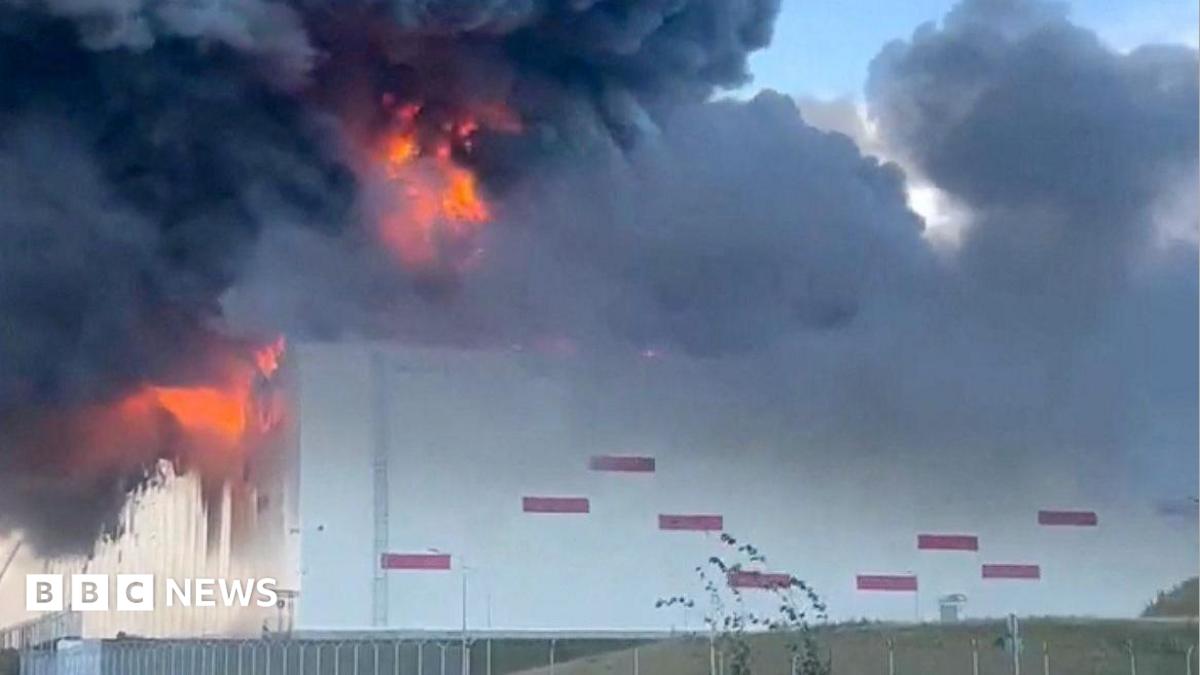
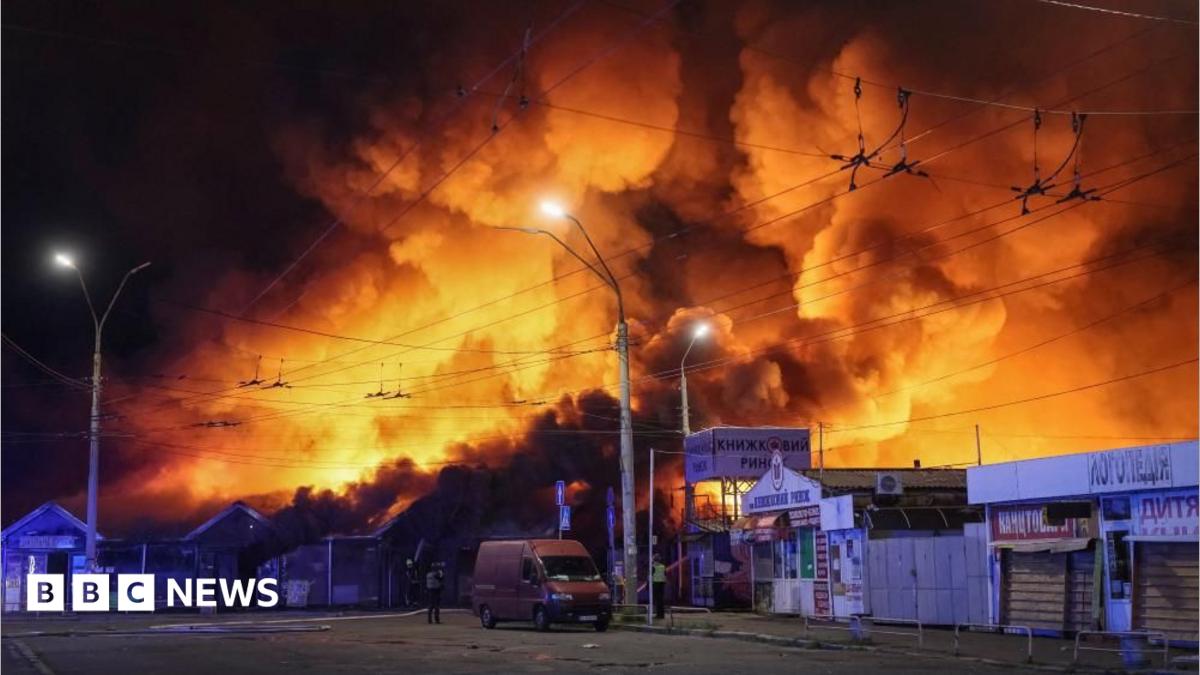
The latest Russian barrage destroyed storage and logistics facilities - from online retailer warehouses to a postal sorting centre. asserted
barrage → destroy → centre
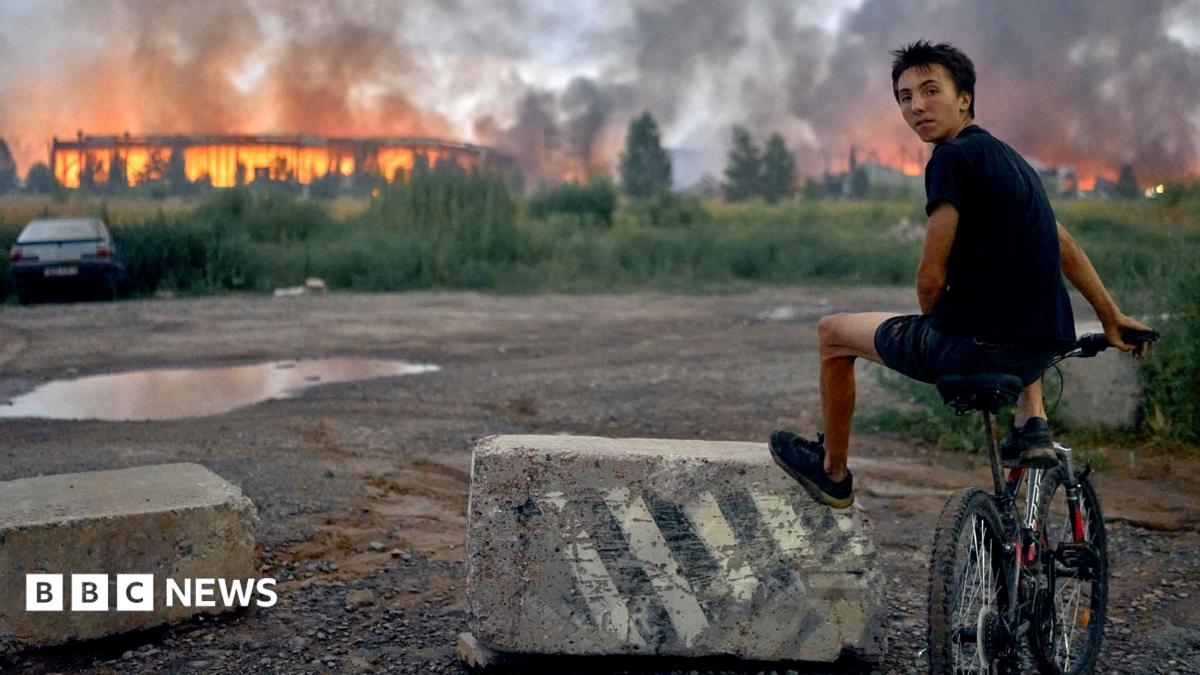
In Kvitneva, it is not clear if the target was the railway itself or the warehouse beside it, which was also hit and was still smouldering hours later. asserted
which → hit → it
The attack started just after midnight, with very little warning. asserted
attack → start → warning
It was one of the most intense nights of bombardment Kyiv has endured in recent months. asserted
Kyiv → endure → months
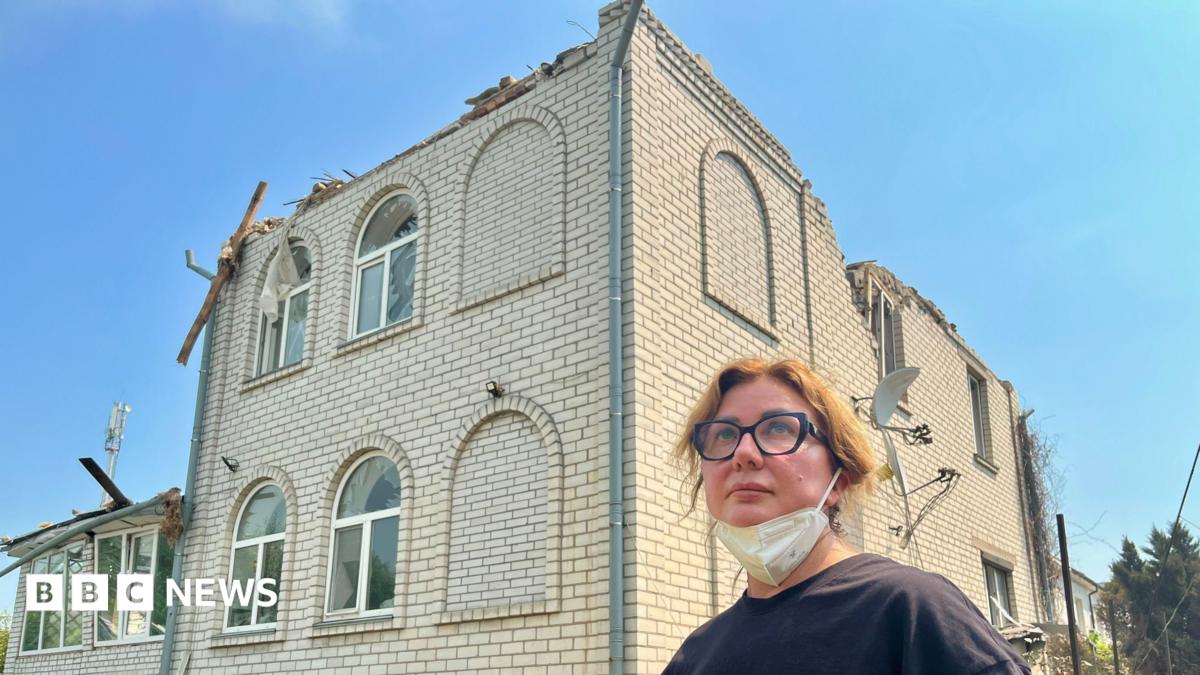
Nearby, Anastasiia Dudley's house was almost totally destroyed but she and her mother survived – shaken but unharmed. asserted
she → destroy → ?
Anastasiia has lived through years of war - but Wednesday was her "scariest night" since the start of Russia's full-scale war on Ukraine in February 2022, she says. asserted
she → live → February
She looks up at the precariously leaning walls of her house, which she says was hit by a drone a few hours before missiles struck the warehouse and the station nearby. asserted
missiles → look → warehouse
"You see two floors - the first and the second, but it was a three-floor house with a roof," she says. asserted
she → see → roof
The building's top floor has been sliced off. asserted
floor → slice → ?
Ukrainians have lived through four-and-a-half years of war, but now air defences are increasingly vulnerable, resulting in dozens of deaths at a time. asserted
defences → live → time
For years, Ukraine has relied on US supplies of Patriot interceptor missiles to shoot down Russian ballistic missiles. asserted
Ukraine → rely → missiles
But the US has used many of its stockpiles during its war with Iran and is reluctant to give up more. asserted
US → use → more
After initially offering Ukraine the license to make Patriots in early July, last week President Donald Trump denied the US had agreed to "give away that kind of technology". asserted
US → offer → technology
"Ballistic missile interceptors could have saved the lives of those killed today," President Volodymyr Zelensky said. uncertain
Zelensky → save → those
Last week, following another deadly attack in which only one out of 27 missiles was shot down, he warned that a shortage of interceptors "encourages Russia to launch such attacks that take human lives". asserted
that → follow → lives
On Wednesday again Zelensky made a direct link between the delays in supply and the "horrific casualties and destruction" witnessed regularly across Ukraine. asserted
Zelensky → make → Ukraine
"Quite literally every single day, the lives of people here in Ukraine depend on the decisiveness of our partners in Europe and America," he said later, adding he had spoken to Nato chief Mark Rutte about getting interceptor missiles. asserted
he → depend → missiles
Ukraine has an undisclosed number of Patriot systems, but it is the Patriot interceptor missiles which are in short supply. asserted
which → have → supply
It takes at least two to bring down each incoming ballistic missile and the system has a range of around 160km (99m), so effectively placing units can be difficult. Russia, meanwhile, uses on average between 20 and 30 ballistic missiles each time it carries out large-scale strikes on Ukraine. asserted
it → take → Ukraine
Ukrainian military expert and former intelligence service officer Ivan Stupak says the lack of interceptors left Kyiv in a situation comparable to having a supercar in the garage but no petrol. asserted
lack → say → garage
"Imagine you own a Lamborghini but have no fuel," he tells the BBC. asserted
he → imagine → BBC
"You have one of the best cars in the world, but you can't drive anywhere... asserted
you → have → world
The systems are there, but there are no interceptor missiles. asserted
systems → be → ?
" A lack of Patriot missiles leaves the whole country exposed – including the valuable Patriot systems. asserted
lack → leave → systems
"Now the question is how to protect the systems themselves from being destroyed," Stupak says. "Because they could very well become priority targets for the Russian Federation. uncertain
they → protect → Federation
Until we receive more interceptor missiles, these systems need to be relocated or concealed somehow so the Russians cannot detect and destroy them. asserted
Russians → receive → them
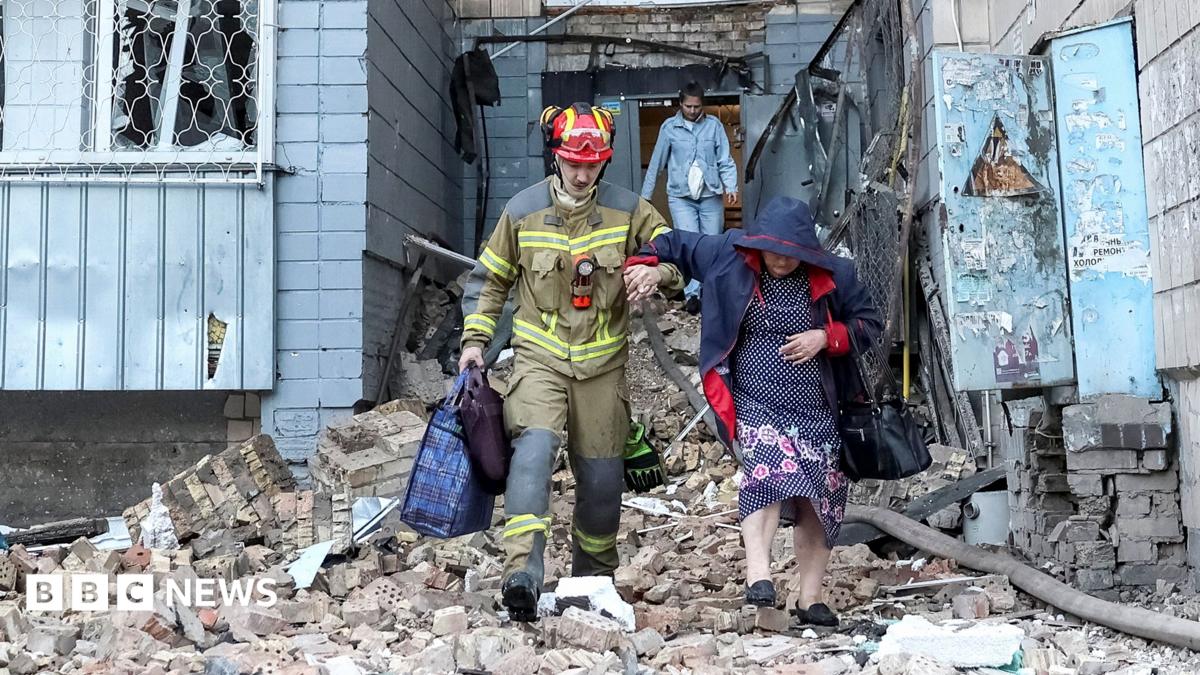
At the railway station as the medics leave the scene, another team moves in quickly to repair the power lines above the track so services can resume. asserted
services → leave → track
This is the rapid recovery and clear-up Ukrainians have become all too familiar with. asserted
Ukrainians → clear → ?
But they know their skies can still light up with deadly force at a moment's notice. asserted
skies → know → notice
Countering that threat and keeping people here safe can depend on decisions about production and distribution of interceptors made many miles from Ukraine's borders. asserted
Countering → counter → borders

💬Give feedback
🕘History 🎫Support