On the day of her 41st wedding anniversary, Vera Gulyaeva recalled her husband’s life and death.
asserted
Gulyaeva → recall → life
In March, a Russian drone plunged into a bread line in the southern Ukrainian town of Oleshky, killing several people and wounding Serhiy Gulyaev, a retired 63-year-old driver.
asserted
drone → plunge → Gulyaev
Recommended Stories
list of 4 items- list 1 of 4Row between Ukraine, South Korea mounts over North Korean POWs
- list 2 of 4Ukraine calls for tighter sanctions as Russian attacks spark Kyiv gridlock
- list 3 of 4Russia’s ‘new doctrine’ targets civilian sites in Ukraine, Zelenskyy says
- list 4 of 4Ukraine ready for US-backed talks with Russia: Zelenskyy
asserted
Zelenskyy → mount → Russia
The town in the Kherson region had already been occupied for more than four years, and its 2,000 remaining residents spent the last two and a half years without electricity, running water, natural gas or healthcare.
asserted
residents → occupy → electricity
The Gulyaevs, who had met at a friends’ wedding in 1985, lived in a small house they had built.
asserted
they → meet → house
They were reluctant to leave even after their children fled to Kyiv-controlled areas.
asserted
children → leave → areas
They had an orchid, a vegetable patch, five hens, a water well and a power generator that ran on the overpriced gas they occasionally bought from middlemen.
asserted
they → have → middlemen
“I almost never left the house,” Gulyaeva, a stately 64-year-old retired schoolteacher told Al Jazeera.
asserted
Gulyaeva → leave → Jazeera
“The husband occasionally went out to buy bread.”
asserted
husband → go → bread
The bread-line attack left him with deep cranial wounds.
asserted
attack → leave → wounds
She tried to get him to a hospital 80km (50 miles) away in the city of Skadovsk but failed as the ambulance ran over a landmine on the road.
asserted
ambulance → try → road
Days later, a second attempt worked – but Gulyaev died in the hospital.
asserted
Gulyaev → work → hospital
She recovered his remains, had them cremated and returned home with his ashes.
asserted
them → recover → ashes
Now, she lives in western Ukraine with her daughter-in-law and two grandchildren while her son fights Russian forces.
asserted
son → live → forces
Gulyaeva left behind all her family photos, friends and neighbours – several of whom have since died.
asserted
several → leave → whom
“People ate all of the food they’d stashed.
asserted
they → eat → food
People are starving,” Gulyaeva said of the food shortage stalking the town.
asserted
Gulyaeva → starve → town
After four decades of teaching in the elementary school she had attended as a child, she still cannot fathom “how people can kill other people”.
asserted
people → teach → people
Some residents survive on what they have farmed, stashed or found in abandoned apartments or houses.
asserted
they → survive → apartments
Others try to reach the nearest functioning grocery shop in the neighbouring village of Radensk, 20km (12.4 miles) away, to buy food.
asserted
Others → try → food
But some never return.
asserted
some → return → ?
A resident who fled the town but remains in contact with some residents told Al Jazeera that people have been killed by Russian drones or landmines.
asserted
people → flee → drones
The bodies left out in the open are eaten by feral dogs.
asserted
bodies → leave → dogs
As they tried to get to Radensk, two people were killed and two were injured and brought back on a wheelbarrow and a bike.
asserted
two → try → wheelbarrow
“The choice that Russia leaves every day to civilian residents – stay and starve to death, leave and risk getting blown on a landmine,” Ukraine’s human rights ombudsman, Dmytro Lubinets, wrote on Telegram on Saturday.
asserted
ombudsman → leave → Saturday
European officials said the situation in Oleshky proves that Kyiv should not give in to Moscow’s demands to cede its land.
asserted
Kyiv → say → land
“When someone says: ‘Why don’t they just give up these territories?’ it sounds so simple.
asserted
it → say → territories
But in reality, this is about the people who will suffer on those territories,” European Union High Representative for Foreign Affairs and Security Policy Kaja Kallas said on September 28.
asserted
Kallas → suffer → September
Moscow, which has denied targeting civilians throughout the war, has acknowledged the humanitarian disaster but blamed Kyiv.
asserted
which → deny → Kyiv
“There are, indeed, problems with delivering food and medical drugs [because] the Kyiv regime literally does everything to thwart these deliveries,” Kremlin spokesman Dmitry Peskov claimed on September 20.
asserted
Peskov → be → September
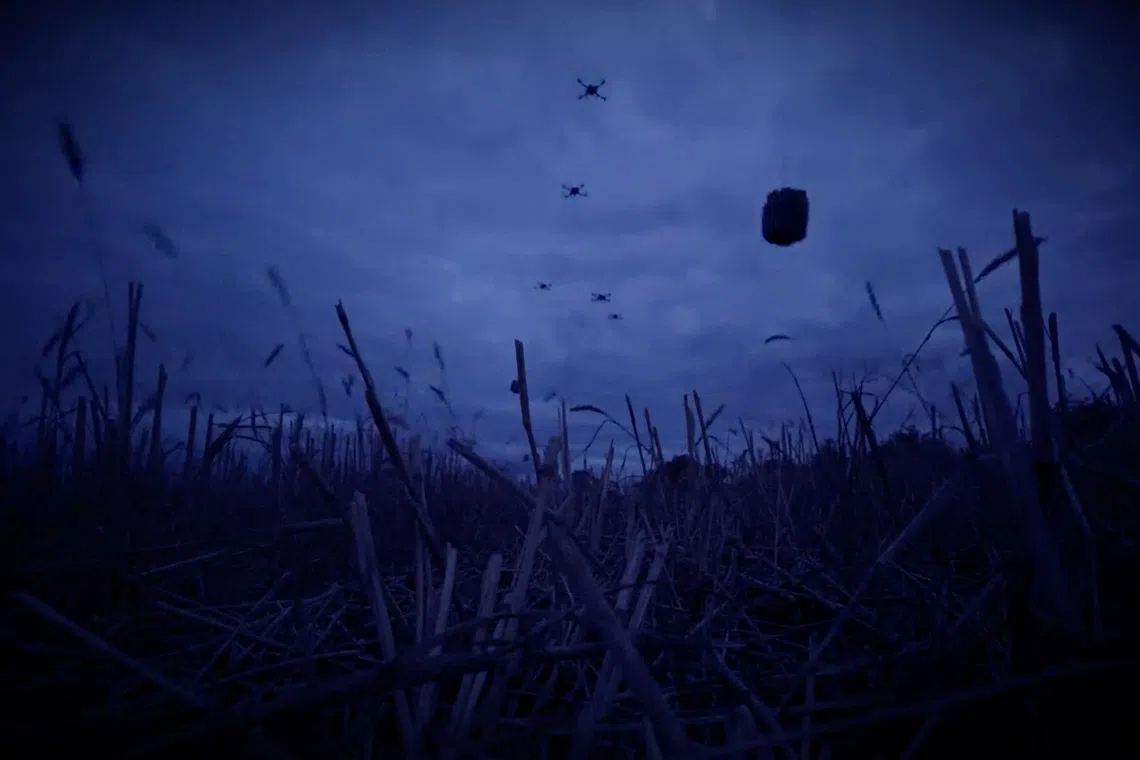
“Drones always hover in the air, killing people.”
asserted
Drones → hover → people
Pro-Russian figures in occupied areas support his claims.
uncertain
figures → occupy → claims
“Those who wanted to leave have left.
asserted
who → want → ?
No one is being held here,” an anonymous pro-Russian woman who runs a Telegram channel on life in Oleshky wrote on September 28.
asserted
who → hold → September
“Unfortunately, locals are afraid to speak on camera” because they have relatives on the Ukrainian side, she claimed.
asserted
she → speak → side
“The elderly live under Ukrainian shelling but are afraid to talk.”
asserted
elderly → live → shelling
Her claims are a far cry from what Ukrainian officials say.
uncertain
officials → say → what
Most Oleshky residents eat once a day, according to Tetiana Khasanenko, Oleshky’s mayor, who fled to the Kyiv-controlled side but maintains constant contact with the remaining residents.
uncertain
who → eat → residents
She described the remaining residents as a human shield for Russia.
asserted
She → describe → Russia
Some have found old, dried macaroni to sustain themselves.
asserted
Some → find → themselves
…and 15 more, not listed.
 The Aporia