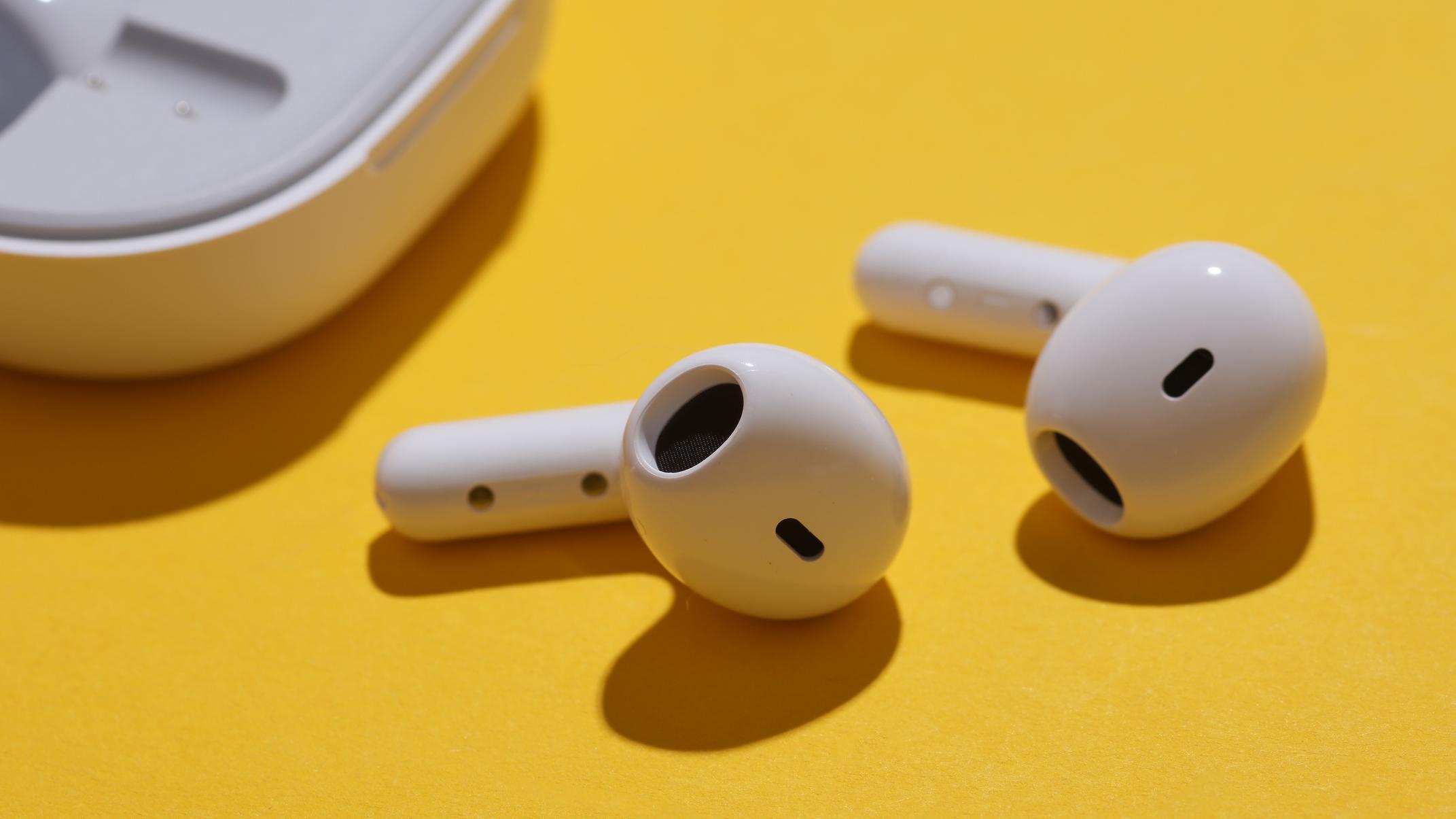
I keep losing my wireless headphones.
asserted
I → lose → headphones
When I do have them with me, they’re often out of battery.
asserted
they → have → battery
So one day earlier this summer, I decided to ditch them.
asserted
I → decide → them
It felt like a huge step, as I’d long used in-ear tech as a shield from the auditory chaos of London.
asserted
I → feel → London
But what happened felt transformative.
asserted
happened → happen → ?
During my first headphones-free commute, I smiled at strangers.
asserted
I → smile → strangers
I noticed the stops on the train line, something I never do when I rely on an app to tell me when to get off the train through my earphones.
asserted
I → notice → earphones
That one journey made me wonder if I had accidentally outsourced the joys of my city life to my phone.
asserted
I → make → phone
In 2026, we have become remarkably good at filling every quiet moment: Spotify on the train, podcasts while walking, Google Maps telling us where to go, our phones providing something to look at whenever there’s a lull.
asserted
phones → become → something
Ofcom’s latest research found that 93% of U.K. adults listen to some form of audio every week, and more than a quarter listen to podcasts weekly.
asserted
quarter → find → podcasts
Hundreds of millions of people worldwide listen to podcasts.
asserted
millions → listen → podcasts
Research published in the Journal of Experimental Social Psychology found that people often avoid talking to strangers because they underestimate how enjoyable those interactions will be.
asserted
interactions → publish → strangers
And research into constant smartphone connectivity published in Current Directions in Psychological Science suggests that our devices can cause us to miss the emotional benefits of casual interactions by effectively replacing them.
uncertain
us → publish → them
It turns out that there might be a psychological reason why being without headphones has felt so unthinkable.
uncertain
being → turn → headphones
Psychotherapist Jack Worthy tells me that our earliest impulses as newborns are approach and avoidance.
asserted
impulses → tell → newborns
“We approach what feels interesting, exciting, or otherwise potentially rewarding.
asserted
what → approach → ?
We avoid whatever feels dangerous, disgusting, or boring.”
asserted
whatever → avoid → ?
Our emotional life proceeds from these drives, and these drives evolved to promote our survival and success.
asserted
drives → proceed → survival
Our headphones give us the power to dial in to highly appealing experiences and tune out everything we’d rather avoid in the environment.
asserted
we → give → environment
If our homes serve as refuge from the outside world, our headphones create a tidy micro-environment inside our heads.
asserted
headphones → serve → heads
I decided to continue my experiment, spending a month commuting without earphones at all.
asserted
I → decide → earphones
After a week without them, I started observing fascinating new details about streets that I had walked countless times.
asserted
I → start → that
Google Maps had shown me the longer route, hauling me around the local houses for more than double as long, which in London may as well be wasted hours.
uncertain
which → show → London
Without headphones, I found myself overhearing bizarre conversations.
asserted
myself → find → conversations
Like the girl next to me on the train, who had found a Rhode lip gloss in her boyfriend’s car when she is a Rare Beauty girl.
asserted
she → find → car
She assured her friend that it could not have been her lip gloss because she would never buy anything from Hailey Bieber—after all, she is a long-time Selena Gomez fan.
uncertain
she → assure → Bieber
“I can’t believe how Hailey Bieber stole Justin Bieber from Selena Gomez, and now someone else is stealing my man!” she wailed with her head held between her knees and her friend rubbing her back.
asserted
friend → believe → back
Another time, I witnessed a man nearly lose his mind after a stranger accidentally smeared dirt onto his white shoes.
asserted
stranger → witness → shoes
The man exploded, yelling at this innocent stranger.
asserted
man → explode → stranger
How could this man be fuming about a simple mistake?
uncertain
man → fume → mistake
Imagine if I’d missed the spontaneous subterranean soap opera because I was listening to a podcast.
asserted
I → imagine → podcast
My absolute favorite eavesdropping moment was when two women in leather outfits and cowboy boots boarded the train and sat opposite me.
asserted
women → board → me
The woman next to the window said her stressed boyfriend Keith had just bought the couple a flat, so she didn’t feel she could pressure him for an engagement ring.
uncertain
she → say → ring
I was glued to their ridiculous conversation and, when they got off, sad that I couldn’t listen in anymore, as her requests were getting more and more ludicrous with every outburst.
asserted
requests → glue → outburst
“I don’t see him proposing to that nutter!” said the old man next to me, and we shared that rarest of joyous things: a communal laugh.
asserted
we → see → things
Lots going on, poor fella.
asserted
Lots → go → ?
I couldn’t believe I had been missing out on so much drama.
asserted
I → believe → drama
Looking back, I realized how rarely I let myself be bored, instead always reaching for distraction.
asserted
myself → look → distraction
Psychoanalysis uses the term “reverie” to define a particular kind of constructive, necessary daydreaming, points out Worthy.
asserted
Worthy → use → daydreaming
“In therapy, reveries refer to the daydreams, memories, and associations occurring to the analyst during a session.”
asserted
reveries → refer → session
…and 12 more, not listed.
 The Aporia