That is 0 articles you have read today.
The Aporia is free and carries no advertising, so readers are the only
thing paying for it. If you are getting this much out of it, a small
donation is what keeps it independent.
Daily limit reached
You have read 0 articles today.
That is more than the 15 a day The Aporia gives away,
and well past what it can carry on nothing. Your allowance resets at
midnight.
There is no advertising here and nothing about you is sold, so readers
are the only thing paying for it. If the site is worth this much of
your day, it is worth a few dollars.
Everything else stays open: the
maps, the
directory and
search do
not count against this, and neither does re-opening something you have
already read today.
The Guardian
· collected 2026-10-05 · by Graham Readfearn Environment and climate correspondent
Australia experienced its second-hottest September on record due to a combination of global warming and an intensifying El Niño event. National average temperatures were 2.71°C above the long-term average, with minimum night-time temperatures being the highest ever recorded for any September since records began in 1910. This extreme heat led to unusual weather patterns, including snow depth falling to zero in Kosciuszko national park for the first time in a September since 1954 and ski resorts closing early due to warmer than usual conditions.
Written locally by qwen2.5:14b on 2026-10-05,
using this article's own text rather than the other coverage of the
same event (that is the story summary below).
Story summary
In September 2023, Australia recorded its second hottest September on record, with minimum night-time temperatures also being the highest ever for that month since records began in 1910. This extreme heat was exacerbated by both global warming and an intensifying El Niño system forecasted to be the strongest ever recorded. Every state across Australia reported their temperatures among the top five warmest Septembers, with some areas like Kosciuszko national park experiencing unprecedented snow depth loss. The average temperature for September was 2.71°C above the long-term 1961 to 1990 average, marking a significant impact of climate change on seasonal patterns and weather extremes.
Written for “Climate Crisis Effects In Australia” on 2026-10-05,
grounded in this article and the 0 other(s) covering the same event.
Australia had its second hottest September on record last month as global heating and a strengthening El Niño combined to break a string of heat records around the country.
asserted
heating → have → country
Bureau of Meteorology data showed the minimum night-time temperatures across the continent were also the hottest for any September, on a record that goes back to 1910.
asserted
that → show → 1910
Averaged temperatures ranked in the top five warmest Septembers for every state, and the sixth hottest for the Northern Territory.
asserted
temperatures → average → Territory
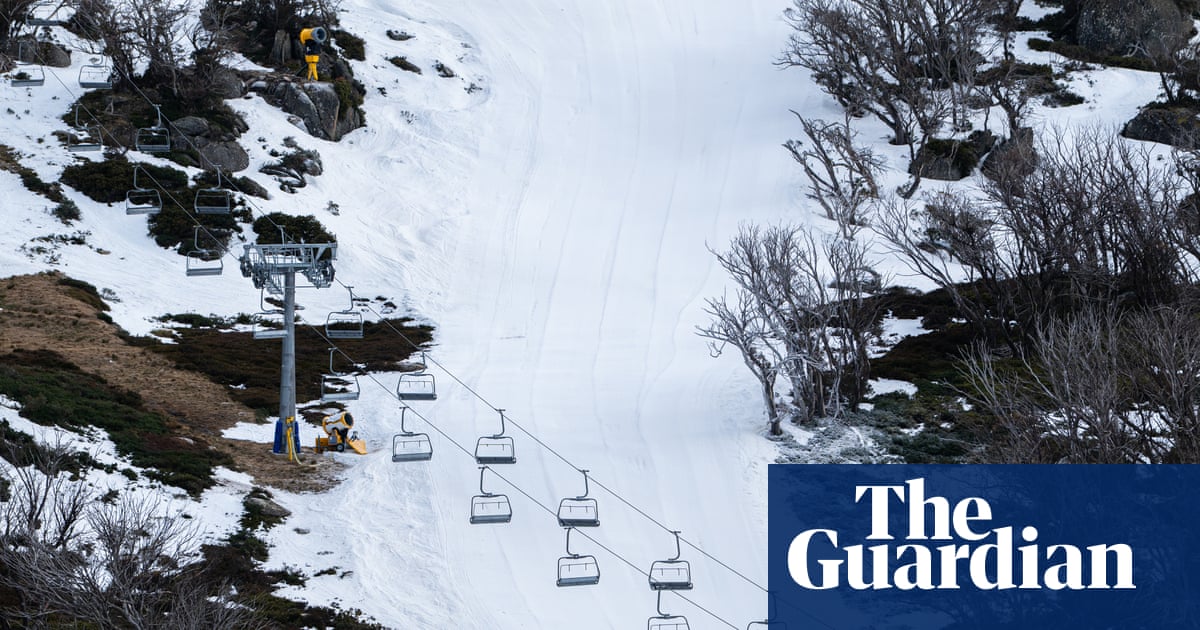
Alpine areas also broke temperature records, and in Kosciuszko national park snow depth fell to zero in September for the first time since monitoring started in 1954.
asserted
monitoring → break → 1954
“There’s only one clear driver of this and that’s climate change,” said Dr Linden Ashcroft, a climate scientist at the University of Melbourne.
asserted
Ashcroft → ’ → Melbourne
“This is also a clear example of seasonal creep where winter is ending earlier and spring is starting sooner.”
asserted
spring → end → creep
Minimum temperatures were 2.52C above average for the month, just beating the previous mark of 2.51C set in 2023.
asserted
temperatures → beat → 2023
The bureau’s data showed Australia has not experienced a September with below-average mean temperatures since 2004.
asserted
Australia → show → 2004
Global heating has warmed the continent by more than 1.5C since country-wide records began in 1910.
asserted
records → warm → 1910
All states and territories had below average rainfall for September except for Western Australia, which had its second wettest September on record and the wettest September since 1904.
asserted
which → have → 1904
In NSW, 45 locations recorded their warmest Septembers on record.
asserted
locations → record → record
Dr Simon Grainger, a senior climatologist at the bureau, said: “It was pretty much just warm everywhere.
asserted
It → say → bureau
“There were persistent high-pressure systems over south-east Australia, and that kept the days quite warm and meant the days were quite dry.
asserted
days → be → days
“It’s unusual to see this persistent lack of cold days.”
asserted
It → ’ → days
Alongside global warming, Grainger said the El Niño climate system that is still intensifying in the tropical Pacific – forecast to be the strongest ever recorded – had likely contributed to the heat and rainfall patterns seen in September.
asserted
that → say → September
Several alpine weather stations – where many ski resorts closed early after a warm and rainy winter – also set records in September.
asserted
resorts → close → September
The bureau said data from Snowy Hydro’s monitoring gauge at Spencers Creek in Kosciuszko national park showed snow depth had fallen to zero during September – the first time this had happened in any September since records started in 1954.
asserted
records → say → 1954
At Thredbo, where temperatures measurements go back 59 years, the average night-time temperature was 0.1C – the first time the daily minimum for September had averaged above freezing.
asserted
minimum → go → freezing
The town also saw its hottest September day on record at 16C, about 1C over the previous record set in 2001.
asserted
town → see → 2001
 The Aporia