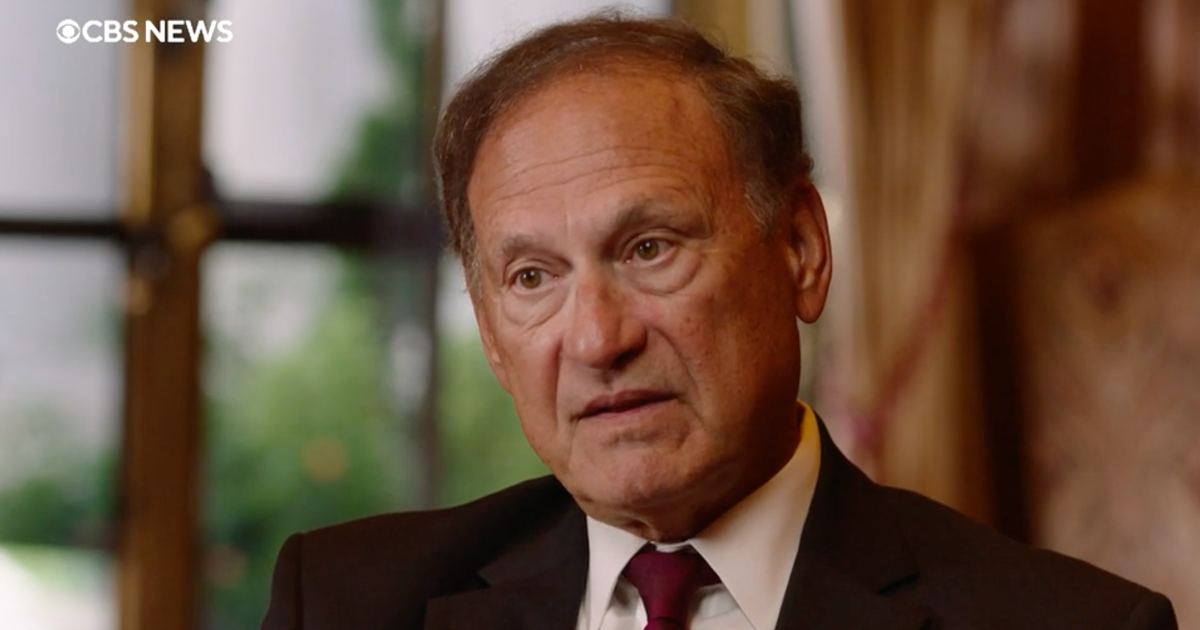
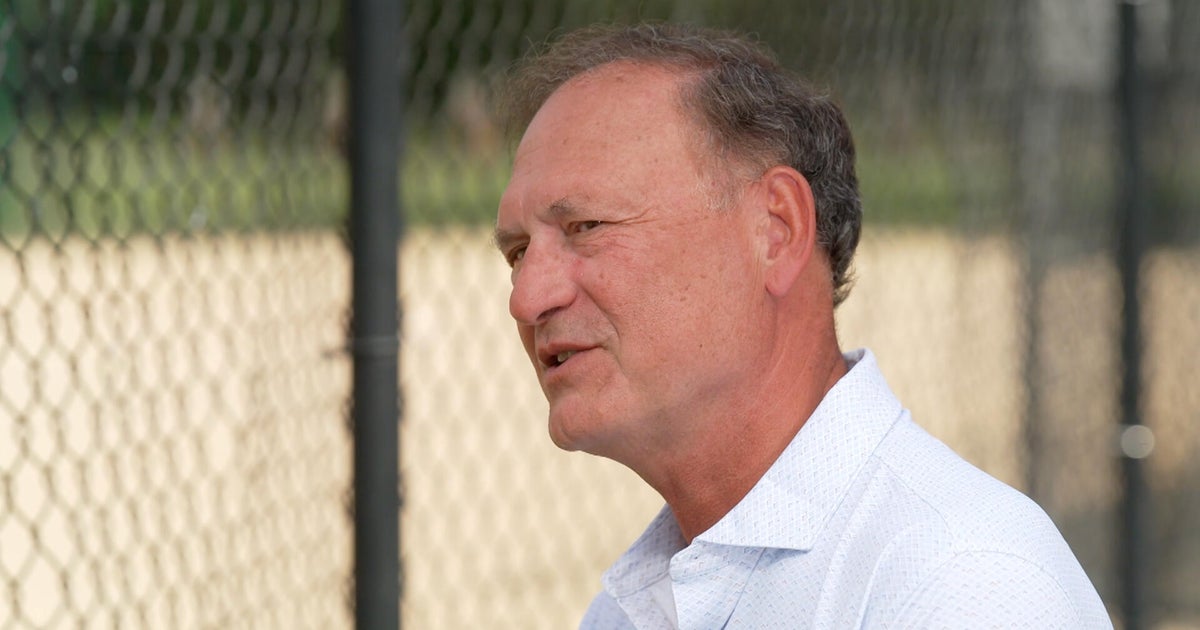
Walking across the gritty New Jersey ball field for the first time since he played here as a boy, Samuel Alito couldn't help but stop to analyze the playing surface.
asserted
Alito → walk → surface
The pebbles were bigger back then, he said, the field more uneven.
asserted
field → say → ?
These sounded like minor details for anyone to notice, but Alito saw something more.
asserted
Alito → sound → something
A rougher surface, he explained, makes it harder for infielders to field ground balls.
asserted
infielders → explain → balls
"I played second base.
asserted
I → play → base
And my best friend Ronnie played shortstop.
asserted
friend → play → shortstop
He had a stronger arm, so we were the double-play combination," Alito said, before pausing to correct himself with a laugh.
asserted
Alito → have → laugh
"In my fantasy, we did it all the time.
asserted
we → do → it
But maybe we did it once or twice."
asserted
we → do → it
"It's a sign of bad character if you abandon your team just because they're having a bad streak," he said.
asserted
he → abandon → streak
"Some people would think I could be quite stubborn, but I've stuck with the Phillies through thick and thin.
uncertain
I → think → Phillies
Hope springs eternal."
It's been 60 years since Alito last played on this New Jersey field or, just down the road, walked the hallways of his old high school, where he served not only as its valedictorian, but student council president, editor of the student newspaper and a key member of both the debate and track teams.
asserted
he → spring → teams
"It seems familiar," he says as he takes it all in, "and also seems somewhat different."
asserted
he → seem → it
On this day outside Trenton, he's dressed casually, in a slightly rumpled polo shirt and khakis.
asserted
he → dress → shirt
Without his black robe, no one seems to realize Samuel Alito is one of the most influential Supreme Court justices of our time.
asserted
Alito → seem → time
Portrayal of him as "angry" or "bitter" strikes Alito as "a caricature"
asserted
Portrayal → strike → caricature
The current Supreme Court is referred to as the "Roberts Court," after Chief Justice John Roberts, and Roberts is typically the justice most often in the majority.
asserted
Roberts → refer → majority
His legal positions going back years on abortion, affirmative action, voting rights and religious liberty now are law of the land.
asserted
positions → go → land
To critics, that makes Alito a villain who is taking away rights from women and minorities.
asserted
who → make → women
They see him as "angry," his decisions fueled by "grievance" or "seeking revenge for the '60s."
asserted
decisions → see → 60s
Alito calls that portrait unrecognizable.
asserted
Alito → call → portrait
"The idea that I'm angry and that I'm bitter and that I'm trying to get revenge for something that I experienced at an earlier point in my life is a caricature," Alito said.
asserted
Alito → try → life
He says he is applying the Constitution as its framers intended.
asserted
framers → say → Constitution
But his impact on the Court goes well beyond his own vote.
asserted
impact → go → vote
Among the nine, Alito is especially skilled in bringing together five justices for a majority on some of the Court's most difficult and contentious issues.
asserted
Alito → bring → issues
That includes his 5-4 majority decision in Dobbs v. Jackson Women's Health Organization, which overturned Roe v. Wade and sent the issue of abortion back to the states.
asserted
which → include → states
That may seem a contradiction: The justice often publicly portrayed as unyielding and inflexible is, behind the scenes, the conservative who is uniquely adept at finding common ground on the most divisive issues.
uncertain
who → seem → issues
It's a skill formed on the fields and classrooms of Hamilton Township: His focus and attention to detail, his loyalty, his quiet leadership style, and his ability to survey the playing field and adjust, all to make the winning play.
asserted
all → form → play
Alito is almost repelled by the public spotlight, but he has written his first book, "So Ordered: An Originalist's View of the Constitution, the Court and Our Country."
asserted
he → repel → Constitution
A collection of his speeches, the book is both a defense of his "practical originalist" approach to judging and a warning that America's constitutional system is under growing institutional and cultural strain.
asserted
system → grow → strain
Alito agreed to talk with me about it in a rare television interview.
asserted
Alito → agree → interview
Our remarkably candid conversations, in his hometown in New Jersey and at the Supreme Court, spanned several hours and provided a substantive look at one of the most important and often mischaracterized figures in American law.
asserted
conversations → span → law
Considered retiring earlier this year, but says,"I think I can still make a contribution"
asserted
I → consider → contribution
After two decades as a justice, Alito said he considered retirement earlier this year.
asserted
he → say → retirement
Now 76, he said, "it's something I think that somebody at my age has to think about every term."
asserted
somebody → say → term
Some conservatives had urged him to step down while Republicans have control of the Senate, so that President Trump could nominate his replacement.
uncertain
Trump → urge → replacement
But Alito said that wasn't a factor in the decision.
asserted
that → say → decision
"It's too hard to predict what the political situation will be," he said, "and what any president might do with respect to a replacement."
uncertain
president → predict → replacement
Sitting in one of the Court's formal conference rooms, with gilded framed paintings of former chief justices hanging on the richly paneled walls, I asked him if he thought about his role and influence on the Court when he decided to stay.
asserted
he → sit → Court
"I think I can still make a contribution," he said.
asserted
he → think → contribution
…and 304 more, not listed.
 The Aporia