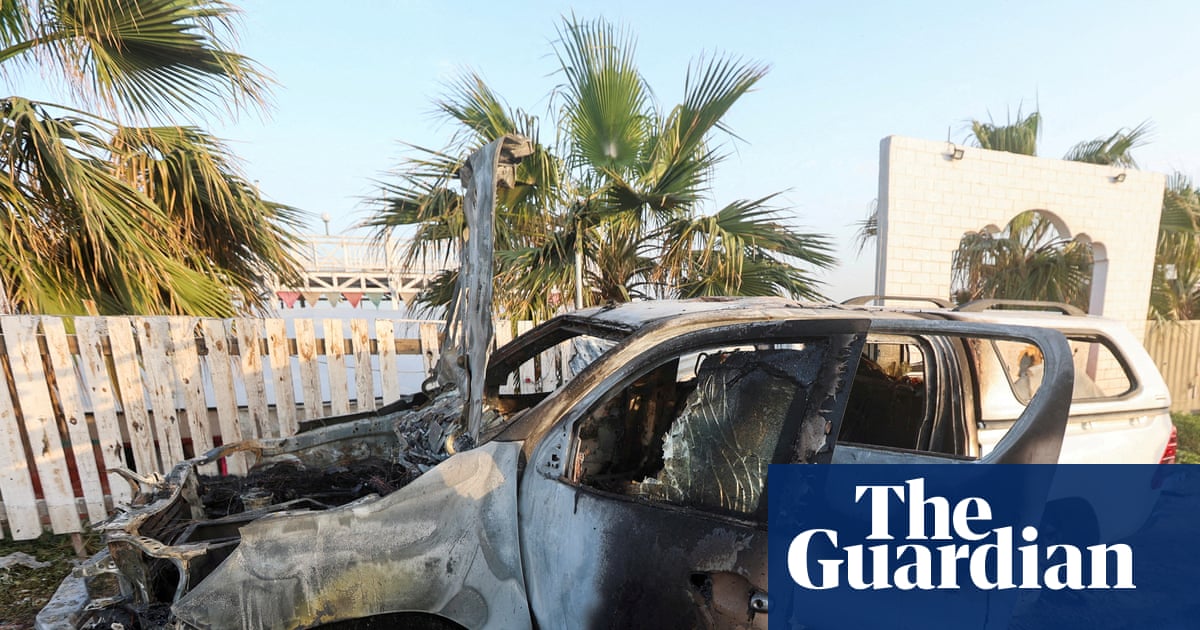
Seven aid workers killed in an airstrike in Gaza were marked as targets under an Israeli military practice of establishing guilt by association, a Guardian investigation shows.
asserted
investigation → kill → association
A top Israeli military prosecutor announced last month that he would not pursue criminal proceedings for the April 2024 incident in which drones fired missiles at three clearly marked World Central Kitchen (WCK) cars soon after they had escorted a food aid delivery to Gaza.
asserted
they → announce → Gaza
Three British humanitarian workers along with an Australian, a Palestinian, a Pole and a dual US-Canadian national were killed.
asserted
workers → kill → Australian
The official Israel Defense Forces (IDF) version of events pointed to specific mistakes made by a handful of officers.
asserted
version → point → officers
The victims of the strike were also blamed for hiring armed guards to protect a food aid convoy and for allegedly “deviating” from their agreed route.
uncertain
victims → blame → route
However, interviews with senior Israeli officers involved in the incident or familiar with the official Israel investigation suggest it glossed over the role played in the killings by a common IDF practice used to designate targets, which endangers aid workers and civilians in general, especially when combined with the army’s open-ended mission to end Hamas’s civil control in Gaza.
asserted
which → involve → Gaza
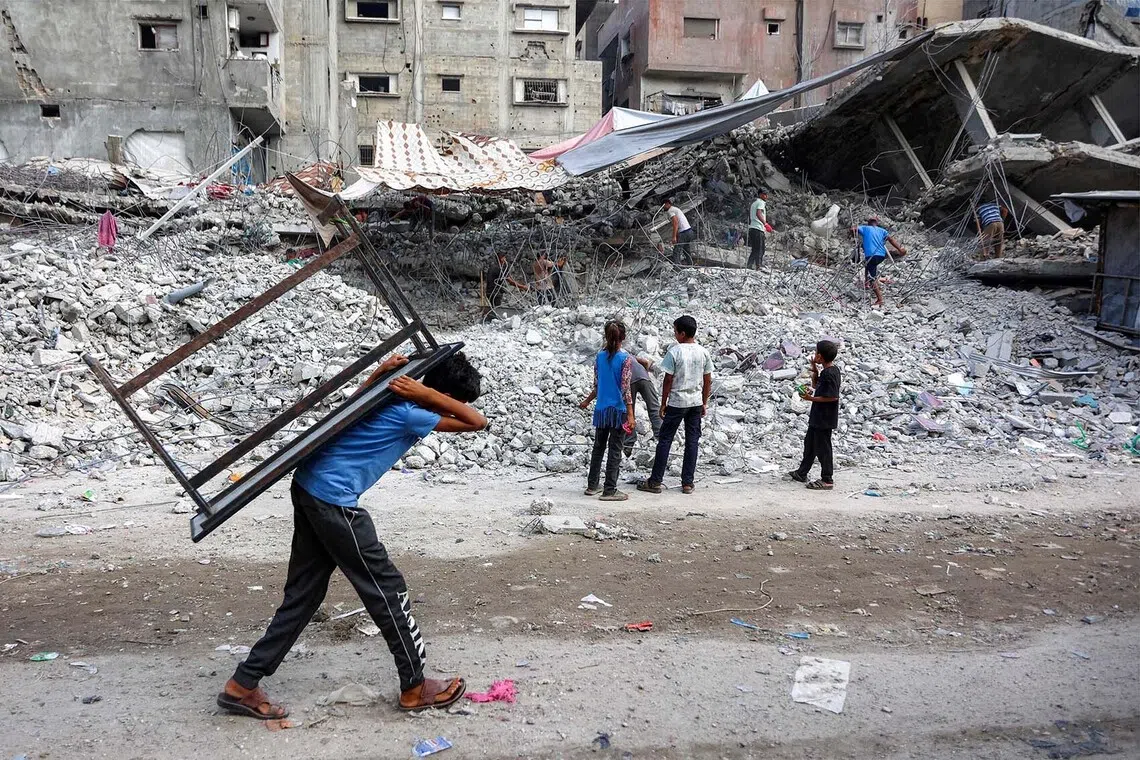
More than 70,000 Palestinians have been killed by the Israeli military in the three years of the Gaza war.
asserted
Palestinians → kill → war
The army’s own internal data suggests more than three-quarters of the dead have been civilians.
uncertain
quarters → suggest → dead
The reserve colonel who ordered the strikes, Nochi Mendel, said the WCK workers became potential targets after they had a brief encounter, lasting just minutes, with armed guards assumed to be from Hamas (an assumption later shown to be groundless).
asserted
guards → order → assumption
He deemed them to have “mixed together” with alleged Hamas militants, where mixing together was defined as being “near them, talking, playing, hanging out and so on”.
asserted
mixing → deem → them
Asked whether the presence of armed men made the entire convoy a target, Mendel replied: “Certainly.”
asserted
Mendel → ask → men
He concluded: “They were not innocent because they were connected to Hamas.”
asserted
they → conclude → Hamas
Mendel was referring to a general policy of haflala, “incrimination”, which gives commanders in the field wide discretion on designating someone as a “terrorist”, including those “incriminated” by association.
asserted
which → refer → association
The manner in which haflala is to be applied in a given sector is often conveyed in a commander’s mission brief delivered verbally to other officers.
asserted
haflala → apply → officers
He said his unit had been commended by the army hierarchy for its involvement in several strikes on what were deemed to be Hamas's attempted commandeering of aid.
asserted
what → say → aid
“They applauded us and were pleased with our action,” he said.
asserted
he → applaud → action
The difference in the WCK incident was that foreign nationals were killed, he said.
asserted
he → kill → incident
“That’s the whole difference.
asserted
That → ’ → ?
When the WCK convoy was destroyed, it was nowhere near Israeli troops.
asserted
it → destroy → troops
Several Israeli officers familiar with the incident said the strikes were not ordered on the basis of an imminent threat to Israeli lives, but to fulfil the mission to thwart Hamas attempts to control aid deliveries.
asserted
strikes → say → deliveries
An IDF statement said the airstrikes were a result of an “erroneous assessment that Hamas military operatives were present in the vehicles, rather than from an intention to target the organisation’s personnel”.
asserted
operatives → say → personnel
The statement added that “this assessment was compounded by serious failures to comply with applicable orders and procedures”.
asserted
assessment → add → orders
However, it said: “Following an in-depth examination of the findings and in light of the standards applicable under criminal law, it was determined that, despite the aforementioned failures, the circumstances of the incident did not give rise to a reasonable suspicion of a criminal offence warranting the opening of a criminal investigation.”
asserted
circumstances → say → investigation
The WCK said the Israeli decision not to pursue criminal proceedings was “inconsistent with the full truth and deeply offensive”.
asserted
decision → say → truth
“At the time of the lethal attacks, our team in Gaza was unarmed and posing a threat to nobody,” the WCK said.
asserted
WCK → pose → nobody
“The IDF had full visual clarity on our clearly marked humanitarian vehicles during the extended, multiple airstrikes.
asserted
IDF → have → airstrikes
It knew our team’s movements, identities and activities in advance.”
asserted
It → know → advance
Britain, Australia and Canada denounced the prosecutor’s decision as “shameful”, saying they would “continue to seek answers” on behalf of the slain aid workers.
asserted
they → denounce → workers
The UK opened an inquest in 2024 into the deaths of the three British team members: James Kirby, James Henderson and John Chapman.
asserted
UK → open → members
The UK inquest was adjourned pending the outcome of the Israeli investigation.
asserted
inquest → adjourn → investigation
Mendel, who is the only officer of such high rank to have been dismissed for his actions in the Gaza war, has been portrayed in army command briefings as a rogue operator.
asserted
who → dismiss → operator
Questions have been raised about a political motive.
asserted
Questions → raise → motive
Mendel is a settler who is reported to have been one of the 130 signatories of a 20 January 2024 letter to the IDF calling for the flow of aid to Gaza to be restricted.
asserted
flow → report → Gaza
However, the way the Israeli army operates in Gaza – rules of engagement are made contingent on local circumstances and passed on, often verbally, down the chain of command – gives officers at Mendel’s level wide discretion in subjective judgments as to who is a “terrorist” and therefore a target.
asserted
who → operate → judgments
The IDF statement said its activity in the Gaza Strip was “regulated by a broad range of binding written orders and standing directives governing the use of force, the approval processes for strikes, strikes against sensitive sites, and other matters” and that these incorporated “the rules of the laws of armed conflict, including the principles of distinction, proportionality, and precautions in attack”.
asserted
these → say → attack
The statement said that “a person does not become a lawful target merely because they are in the vicinity of an armed individual, come into contact with them, or travel alongside them”.
asserted
they → say → them
The IDF said: “Carrying a weapon may be a relevant factor in such an assessment, but is not sufficient on its own without meeting the definitions described above.
uncertain
Carrying → say → definitions
In particular, and in the context of the incident in question, security personnel hired to protect a humanitarian convoy from looting do not become lawful targets merely because they are armed.”
asserted
they → hire → looting
An IDF officer familiar with the WCK killings said that given the circumstances and the standing IDF procedures, the overwhelming majority of officers would have acted in the same way.
asserted
majority → say → way
“There were armed men next to them,” the officer said.
asserted
officer → be → them
…and 28 more, not listed.
 The Aporia