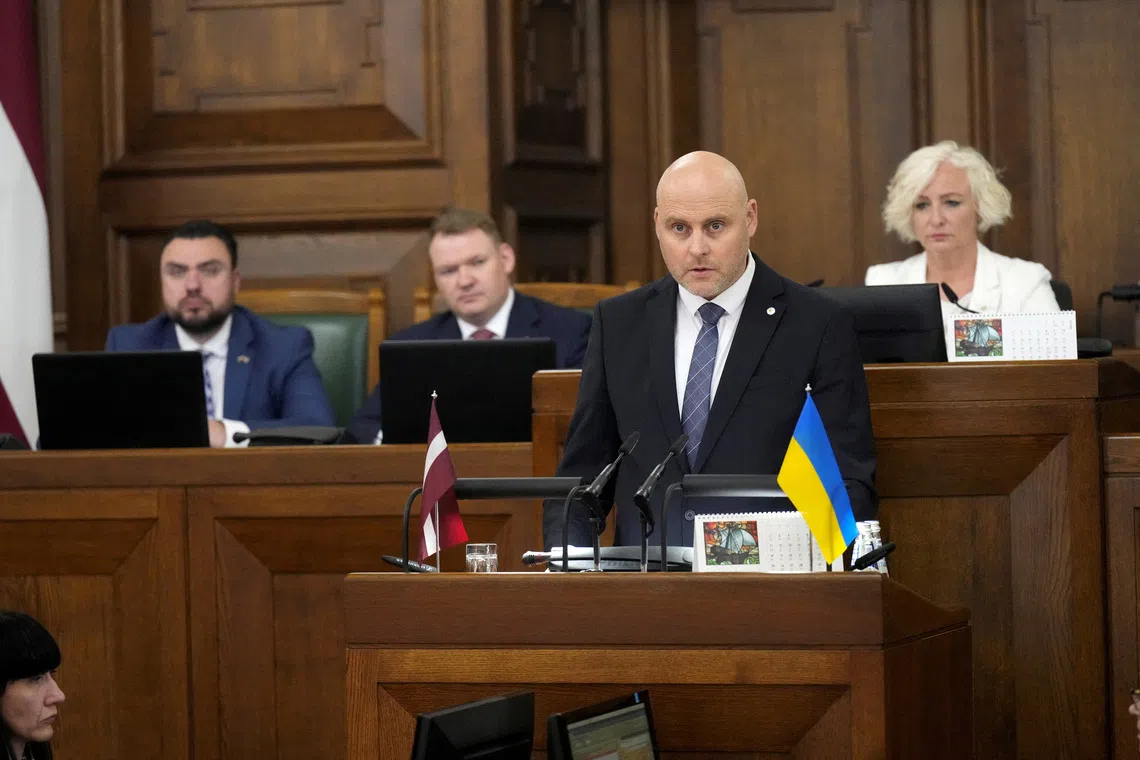
Photo via CBC News

Pro-Ukraine governing coalition wins 35% in Latvian election

Read the original at CBC News ↗
Cite

Pro-Ukraine governing coalition wins 35% in Latvian election. (2026, October 4). CBC News. https://www.cbc.ca/news/world/pro-ukraine-coalition-wins-35-per-cent-latvia-9.7368604?cmp=rss

Dated when The Aporia collected the article, usually within hours of publication. Check the original for its exact date and byline.

CBC News · collected 2026-10-04 · by CBC

Quick Summary

In Sunday's Latvian parliamentary election amid concerns over potential Russian aggression, Prime Minister Andris Kulbergs’s pro-Ukraine coalition won 35% of the vote and secured 42 seats out of 100 in parliament. The election was marked by a voter turnout exceeding 51%, with nearly 1.56 million eligible voters choosing among parties needing at least five percent to enter parliament, necessitating coalition formation for governance due to the fragmented political landscape.
Written by AI on 2026-10-04, from this article's own text only (the story summary below draws on all the coverage).
See how they differ ↓

AI analysis

Story summary

On October 1, Latvians went to vote in a parliamentary election amidst concerns over potential Russian aggression and economic challenges. The incumbent Prime Minister Andris Kulbergs, leading the centrist United List party, was expected to retain power despite his party's relatively low poll numbers of around 14-20%. His victory became clear as exit polls indicated that the United List received 35.6% of the vote, the best result since Latvia regained independence in 1991. The election highlighted deep political fragmentation; while Kulbergs won significantly, forming a new coalition will be challenging due to the expected gains by populist parties focusing on economic issues. With 42 seats out of 100, Kulbergs is positioned to form a pro-Ukrainian government, reinforcing Latvia's stance within NATO and against perceived Russian threats.

Written for “Latvia Election Amid Russia Threat” on 2026-11-18, grounded in this article and the 11 other(s) covering the same event.

How they differ

7 outlets covered “Latvia Election Amid Russia Threat”.

What each outlet says

One AI summary per outlet of its latest article on this story, written from that article alone and checked against it. Open the article for the outlet's own words.

CBCThis outlet4 Oct

In Sunday's Latvian parliamentary election amid concerns over potential Russian aggression, Prime Minister Andris Kulbergs’s pro-Ukraine coalition won 35% of the vote and secured 42 seats out of 100 in parliament. The election was marked by a voter turnout exceeding 51%, with nearly 1.56 million eligible voters choosing among parties needing at least five percent to enter parliament, necessitating coalition…

Pro-Ukraine governing coalition wins 35% in Latvian election (this article)

The Straits Times4 Oct

Latvian Prime Minister Andris Kulbergs is set to continue in power after his United List party won 42 out of 100 seats in parliament following the October 7 election, securing 35.3% of the vote with nearly all ballots counted. The centrist victory comes as Latvia aims to maintain a strong stance against Russia and support for Ukraine, while addressing domestic economic challenges. Kulbergs has promised to improve…

Latvian PM on track to lead pro-Ukraine coalition after election win →3 articles from The Straits Times on this story
Euronews4 Oct

Prime Minister Andris Kulbergs' center-right United List party won Latvia's parliamentary election with 35.4% of the vote and secured 42 seats out of 100 in parliament. This outcome indicates a strong pro-European and pro-Ukrainian stance for Latvia, despite concerns over Russia and high living costs. While Kulbergs' coalition is likely to change due to some parties underperforming, populist parties have gained…

Latvia's pro-European ruling party wins election as populists gain ground →2 articles from Euronews on this story
South China Morning Post3 Oct

Latvian Prime Minister Andris Kulbergs’ United List is projected to win a significant portion of votes in Saturday’s parliamentary election, according to an exit poll by LTV public broadcaster. The poll indicates that the United List received 35.6% of the vote, which would be the best result for any party since Latvia's independence from the Soviet Union in 1991. Kulbergs could potentially secure a majority with…

Latvian leader poised for big win in election shadowed by Putin →2 articles from South China Morning Post on this story
Toronto Star4 Oct

Latvian lawmakers are set to start forming a new government after Sunday's parliamentary election where Prime Minister Andris Kulbergs' four-party coalition won 35% of the vote. The previous governing coalition had been dissolved due to a political crisis triggered by stray drones possibly originating from Ukraine, as well as other unresolved issues.

Pro-Ukraine governing coalition wins 35% in Latvian election →2 articles from Toronto Star on this story
Al Jazeera3 Oct

Latvia held parliamentary elections on Saturday amid concerns about security threats from Russia and economic pressures like rising living costs. Prime Minister Andris Kulbergs, whose United List party is polling at around 20%, faces a complex negotiation for coalition-building as two of his allies are declining in popularity. With polls open from 05:00 GMT to 17:00 GMT, about 1.5 million eligible voters chose among…

Polls open in Latvia against backdrop of perceived Russia threat →
Show 1 more outlets
The Hindu4 Oct

On October 3, 2026, Latvia held a parliamentary election where Prime Minister Andris Kulbergs’ pro-Ukraine coalition won with 35% of the vote. The election followed a political crisis in May due to tensions over Ukrainian drones and broader issues. Voter turnout was above 51%, resulting in the United List party securing around 42 seats, necessitating a multiparty coalition for governance.

Pro-Ukraine governing coalition wins 35% in Latvian election →

Where they agree and split

The full story: what happened, how it changed, and all 12 articles →

Compared with similar articles

This article reads unscored and hedges 18% of its claims. Each row says how that neighbour differs.
Toronto Star
Hedges 1 of 3 claims Outlet record 64/100
The Straits Times
Hedges 2 of 19 claims Outlet record 64/100
South China Morning Post
Centre Hedges 5 of 6 claims Outlet record 62/100
The Hindu
Centre Hedges 2 of 10 claims Outlet record 60/100
Toronto Star
Hedges 1 of 4 claims Outlet record 64/100
South China Morning Post
Leans left Hedges 1 of 5 claims Outlet record 62/100
Euronews
Hedges 5 of 39 claims Outlet record 60/100
Al Jazeera
Hedges 3 of 15 claims Outlet record 60/100
Euronews
Hedges 4 of 20 claims Outlet record 60/100
The Straits Times
Hedges 1 of 32 claims Outlet record 64/100
“While both articles discuss Kulbergs' election performance and the context of Russian aggression in Latvia, Article A describes the lead-up to the election, while Article B covers the actual election results.”

Story

Latvia Election Amid Russia Threat
Politics · 12 article(s) covering the same event. Compare every outlet's account →
How this article was measured signals, leaning charts, publisher record, byline, topics and claims

Signals How these are calculated →

Claims extracted
11
sentences that state something as happening or true
Uncertain
18%
2 of 11 hedged ("reportedly", "may", "according to")
Leaning
withheld
no quote in the article backed the model's score
Publisher signals
60/100
CBC News's corrections and hedging, across everything collected from it. Not a measure of accuracy.
Outlets on this story
12
Politics
Same framing elsewhere
1
articles that frame the event the way this one does
Analyzed 2026-10-04 · how these are computed

How this is being covered How these are calculated →

Article leaning vs. publisher reliability
Source leaning vs. consistency

Publisher

CBC News · 948 article(s) · 2 correction(s) detected
Running correction rate · 2 correction(s)

Who wrote this

No reporter is named on this article, beyond the feed's “CBC”.

Topics

Latvian Russian Saeima Ukraine United List

Subjects

Ukraine GPE · 4× Latvian NORP · 2× Moscow GPE · 2× Russian NORP · 2× Saeima ORG · 2× United List ORG · 2× Andris Kulbergs PERSON · 1× Baltic NORP · 1× Kulbergs PERSON · 1× Latvia GPE · 1×

Narrative

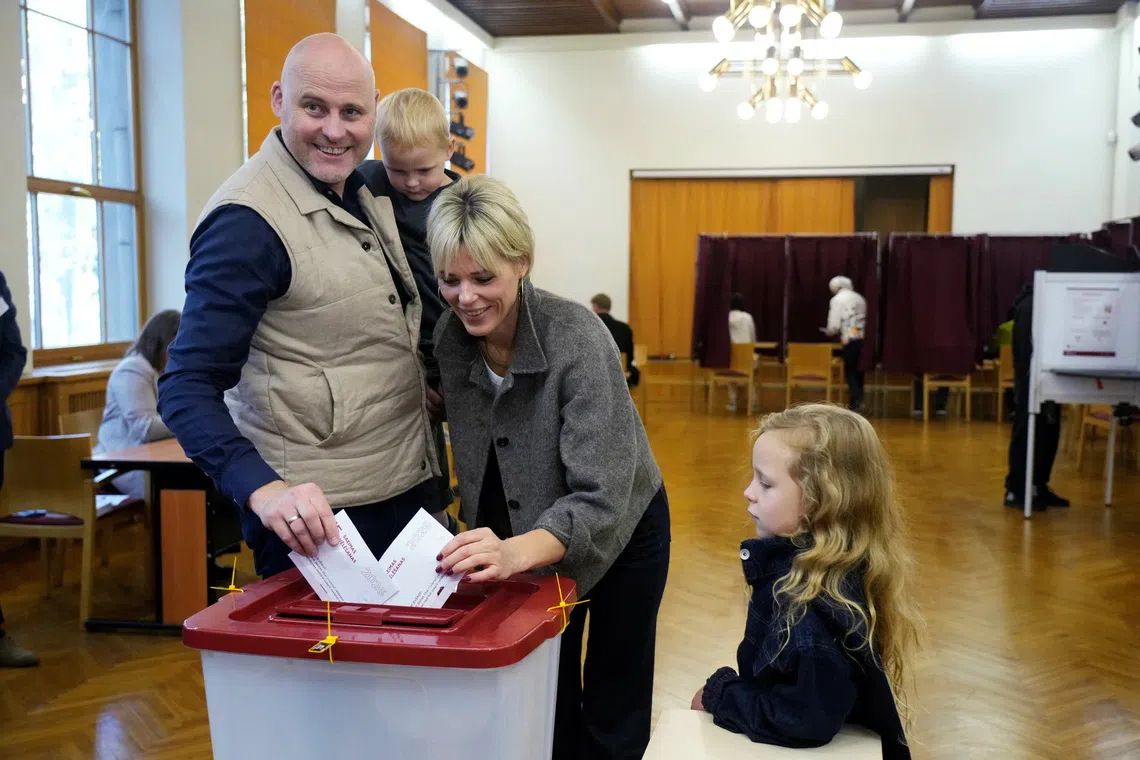
Vote came amid growing concern about potential Russian aggression Latvian lawmakers on Sunday planned to begin negotiations to form a new government following a parliamentary election in which pro-Ukraine prime minister Andris Kulbergs's four-party coalition emerged with 35 per cent of the vote.
framing: assertive · carried by 1 article(s) · first seen 2026-10-04
A political crisis in May over the handling of stray drones suspected of coming from Ukraine brought down the governing coalition that had been under strain over several other issues.
2026-10-04 · CBC News
Pro-Ukraine governing coalition wins 35% in Latvian election · assertive framing

Claims (11 extracted, 2 hedged)

Pro-Ukraine governing coalition wins 35% in Latvian election asserted
coalition → govern → election
Vote came amid growing concern about potential Russian aggression Latvian lawmakers on Sunday planned to begin negotiations to form a new government following a parliamentary election in which pro-Ukraine prime minister Andris Kulbergs's four-party coalition emerged with 35 per cent of the vote. asserted
coalition → come → vote
A political crisis in May over the handling of stray drones suspected of coming from Ukraine brought down the governing coalition that had been under strain over several other issues. uncertain
that → suspect → issues
The parliament, or Saeima, then approved the coalition led by Kulbergs of the centrist United List party, previously in opposition. asserted
parliament → approve → opposition
Latvia, like its Baltic neighbours Lithuania and Estonia, strongly supports Ukraine in its fight against Moscow’s invasion. asserted
Latvia → support → invasion
It borders both Russia and Moscow-allied Belarus. asserted
It → border → Russia
Saturday’s vote came as the small republic on NATO’s eastern flank contends with growing concern about potential Russian aggression. asserted
republic → come → aggression
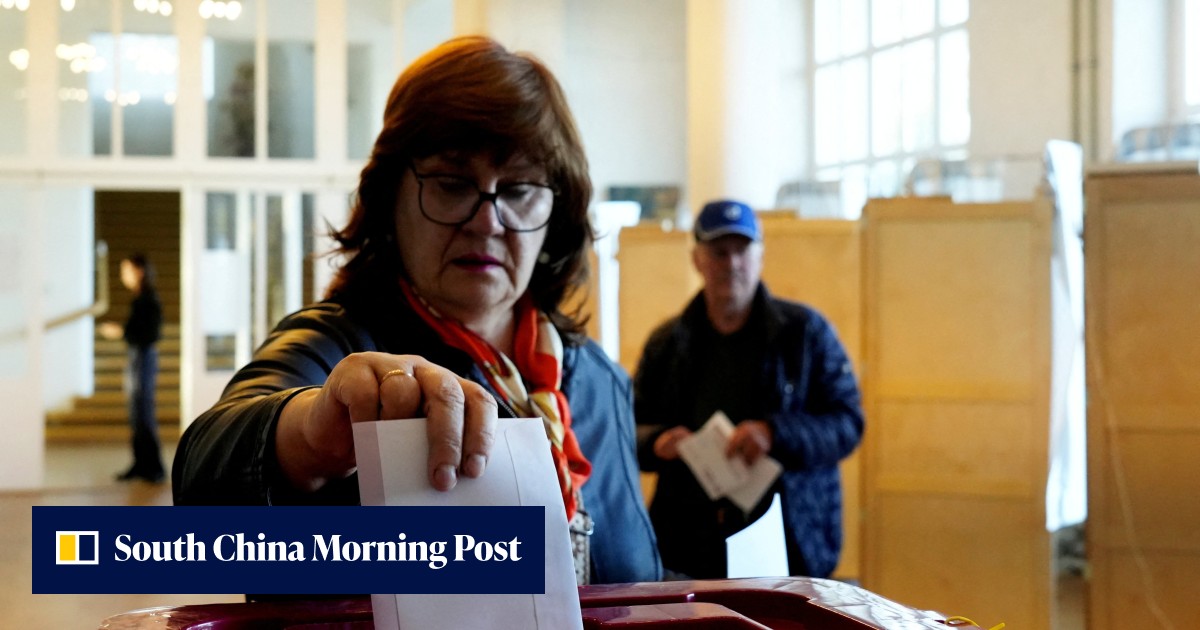
The election saw a voter turnout above 51 per cent, according to election data. uncertain
election → see → data
Nearly 1.56 million people in the nation of more than 1.8 million were entitled to choose the 100 members of the single-chamber Saeima for a four-year term. asserted
people → entitle → term
The United List party is expected to take 42 seats in parliament, and a multiparty coalition will be needed to govern in a splintered political landscape. asserted
coalition → expect → landscape
Parties must take at least five per cent of the vote to win parliamentary seats. asserted
Parties → take → seats
Give feedback · no sign-in needed

No sign-in needed for now. Your note is sent without a name, so it cannot be answered.

History Support