That is 0 articles you have read today.
The Aporia is free and carries no advertising, so readers are the only
thing paying for it. If you are getting this much out of it, a small
donation is what keeps it independent.
Daily limit reached
You have read 0 articles today.
That is more than the 15 a day The Aporia gives away,
and well past what it can carry on nothing. Your allowance resets at
midnight.
There is no advertising here and nothing about you is sold, so readers
are the only thing paying for it. If the site is worth this much of
your day, it is worth a few dollars.
Everything else stays open: the
maps, the
directory and
search do
not count against this, and neither does re-opening something you have
already read today.
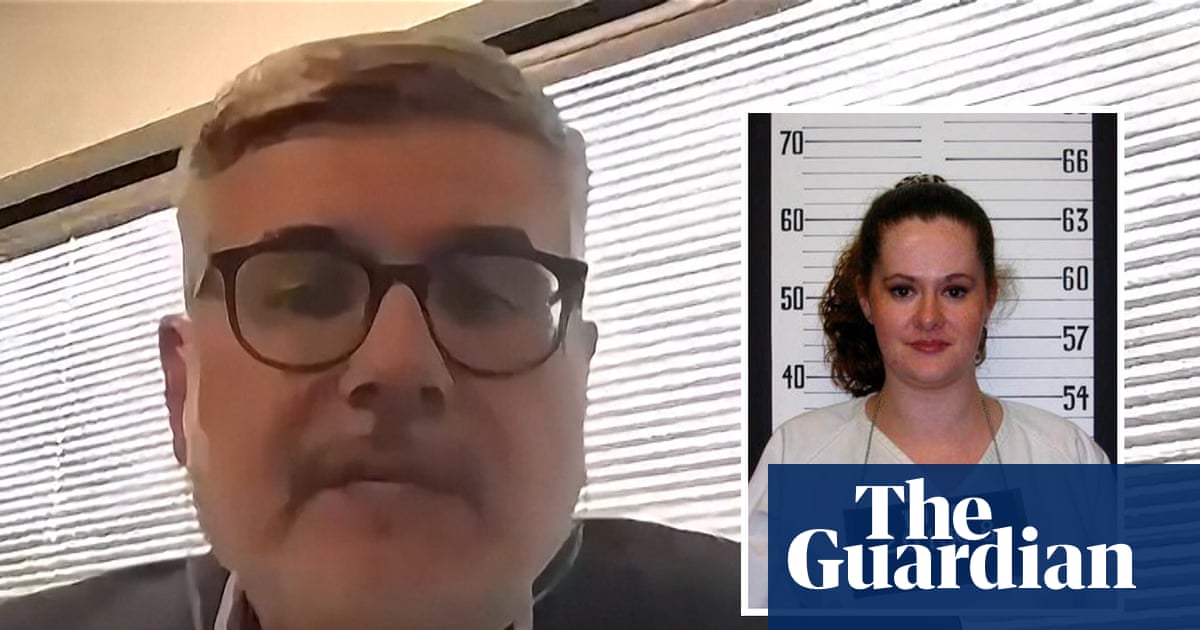
Professor Deborah Denno of Fordham School of Law discusses the legal implications for Christa Pike after a botched execution attempt in Tennessee. If Pike regains mental competency, she might use double jeopardy to argue against further attempts at execution due to previous failed efforts. However, experts like Michael Meltsner from Northeastern University suggest that Governor Bill Lee is unlikely to commute her sentence given the severity of her crime and public sentiment. Pike's attorneys have pointed out her medical history which complicates lethal injection procedures, potentially allowing for alternative methods if another execution attempt occurs.
Written locally by qwen2.5:14b on 2026-10-03,
using this article's own text rather than the other coverage of the
same event (that is the story summary below).
Story summary
Christa Pike, a convicted murderer scheduled for execution in Tennessee, experienced a failed lethal injection procedure. Legal experts suggest Pike might still face execution if she survives and is deemed mentally competent, as double jeopardy would not apply under these circumstances. Professor Deborah Denno from the Fordham School of Law explained that someone who does not comprehend their punishment due to brain injury cannot be executed legally. However, Michael Meltsner from Northeastern University School of Law doubts Governor Bill Lee will commute her sentence despite an independent review ordered following the failed execution attempt. The governor's decision could heavily depend on the victim’s family and the nature of the crime committed by Pike.
Written for “Christa Pike Execution Controversy” on 2026-10-04,
grounded in this article and the 0 other(s) covering the same event.
“She can’t be executed if she is brain injured and doesn’t understand the proceedings,” Professor Deborah Denno of the Fordham School of Law told The Post.
asserted
Denno → execute → Post
“The United States Supreme Court recognized in a case involving a dementia patient in 2019 that you can’t execute someone who’s not aware of the punishment that they’re going to receive.”
asserted
they → recognize → that
But Denno explained that if Pike survives and is found to be mentally competent, she could have a “strong argument” for double jeopardy — which means that convicts cannot be punished twice for the same crime.
uncertain
convicts → explain → crime
Pike’s lawyers have called on Tennessee Gov. Bill Lee –- who halted state executions and ordered an independent review after this week’s fiasco –– to commute her sentence.
asserted
who → call → sentence
“I doubt whether that would happen in this case, because of the nature of the crime, and because the governor seems extremely responsive to the victim’s family,” Michael Meltsner, Emeritus Professor at Northeastern University School of Law, said.
asserted
Meltsner → doubt → Law
“For instance, the governor could commute her sentence to 30 years in jail, but that’s unlikely to happen here.”
uncertain
that → commute → jail
Here’s the latest on the botched execution of Tennessee murderer Christa Pike:
asserted
latest → ’ → Pike
Before her bungled execution attempt, Pike claimed that she had a “history of difficulty with blood draws and needle insertion,” according to a motion filed by her attorneys.
uncertain
she → bungle → attorneys
She even proposed hanging as an alternative method of execution due to her concerns over Tennessee’s lethal injection protocol, but the request was rejected.
asserted
request → propose → protocol
Under Tennessee law, lethal injection is the primary form of capital punishment — with inmates whose crimes were committed before January 1, 1999 being given the choice of the electric chair instead.
asserted
crimes → commit → chair
Pike rejected the electric chair as an alternative method because of her Buddhist beliefs.
asserted
Pike → reject → beliefs
Denno said that, should she face execution again, Pike’s lawyers could push again for an alternative method to be used.
uncertain
method → say → execution
“She could be executed using a different method of execution, and she has a very good argument that lethal injection, in her case and with her particular medical situation, simply doesn’t work.
uncertain
injection → execute → situation
“However, the state could reject all her arguments and just set a new execution date using lethal injection again.”
uncertain
state → reject → injection
In a statement to The Post Friday, Pike’s lawyers revealed that “Christa remains hospitalized” and “is critically ill, unconscious, intubated and receiving breathing assistance through a ventilator.”
asserted
Christa → reveal → ventilator
 The Aporia