- Published
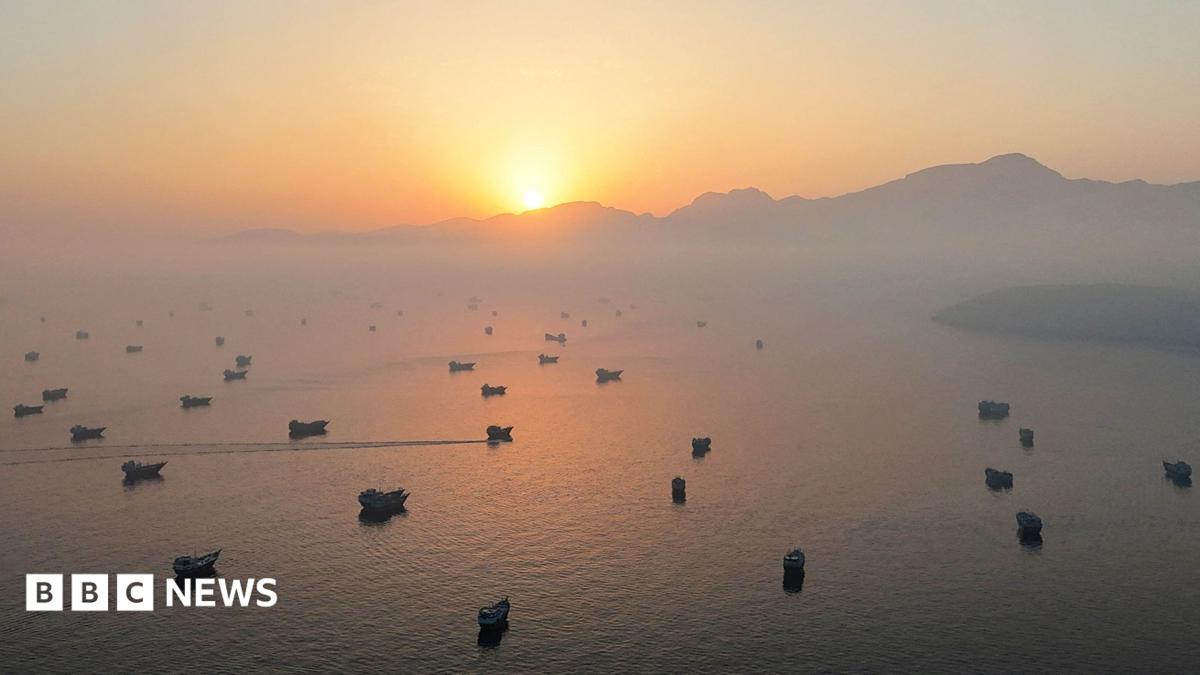
Iran says it has reached an agreement with Oman on a route for shipping through the Strait of Hormuz.
asserted
it → publish → Hormuz
Foreign ministry spokesman Esmaeil Baqaei did not give any further details on the agreement, which he said was "in the final stages".
asserted
he → give → stages
Baqaei warned, however, that a deal with Oman would not guarantee safe navigation through the strait, arguing security remained impacted by the US blockade of Iran's ports.
asserted
security → warn → ports
The US and Oman have not commented on the proposal.
asserted
US → comment → proposal
Since the US and Israel attacked Iran in February, Tehran has largely blocked the Strait of Hormuz through which about a fifth of the world's oil and liquefied natural gas usually passes.
asserted
fifth → attack → oil
On Tuesday, US President Donald Trump warned that Iran would be "hit very hard" if the strait did not open "very soon".
asserted
strait → warn → Tuesday
His comments came after senior US officials said talks had progressed to allow shipments to potentially resume later this week, though Iran has maintained that it is not negotiating with the US and has no plans to do so.
asserted
it → come → plans
Reopening the strait has been a key point in discussions between the two countries and mediators.
asserted
Reopening → reopen → countries
In his statement, the Iranian foreign ministry spokesman said the "geographical coordinates of the route" had been agreed with Oman.
asserted
coordinates → say → Oman
"The factors making the Strait of Hormuz insecure still exist on the part of the United States, particularly the naval blockade and other aggressive and threatening actions against Iran and its interests," he said, according to Iran's official Irna news agency.
uncertain
he → make → agency
Iran's Deputy Foreign Minister Kazem Gharibabadi later told Irna the new route would be temporary and could stay open from two to four months.
uncertain
route → tell → months
He did not give further details.
asserted
He → give → details
Oil prices edged lower on Thursday, with global benchmark Brent crude down by 0.3% at $79.24 (£58.84) in morning Asian trade.
asserted
crude → edge → trade
Energy prices have fluctuated wildly during the conflict as shipments through the key route for around 20% of the world's oil and liquefied natural gas (LNG) have been severely disrupted.
asserted
shipments → fluctuate → oil
Since the beginning of the war, traffic through the strait has dwindled.
asserted
traffic → dwindle → strait
Iran has said all passage needs to be cleared beforehand - and it has attacked vessels which have ignored the order.
asserted
which → say → order
One of the main points of disagreement between Tehran and Washington has been Iran's threat to impose a fee on vessels wishing to cross the strait.
asserted
One → impose → strait
Iran is seeking fees of between 5% and 7% of the price of cargoes from ships using the strait, according to a senior Iranian official cited by Reuters.
uncertain
Iran → seek → Reuters
Oman is discussing fees of around 3%, while Washington wants no fees at all.
asserted
Washington → discuss → fees
The proposed deal would also give Tehran control over ships entering the Gulf through the Strait of Hormuz, Reuters reported.
asserted
Reuters → propose → Hormuz
The BBC has contacted the White House for comment.
asserted
BBC → contact → comment
In June, Iran and the US signed a Memorandum of Understanding (MoU), aiming to stop fighting, reopen the Strait of Hormuz, and reach agreement to end the war within 60 days.
asserted
Iran → sign → days
The deal quickly fell through, as did diplomatic talks, with tit-for-tat attacks resuming just days after the MoU was signed.
asserted
MoU → fall → tat
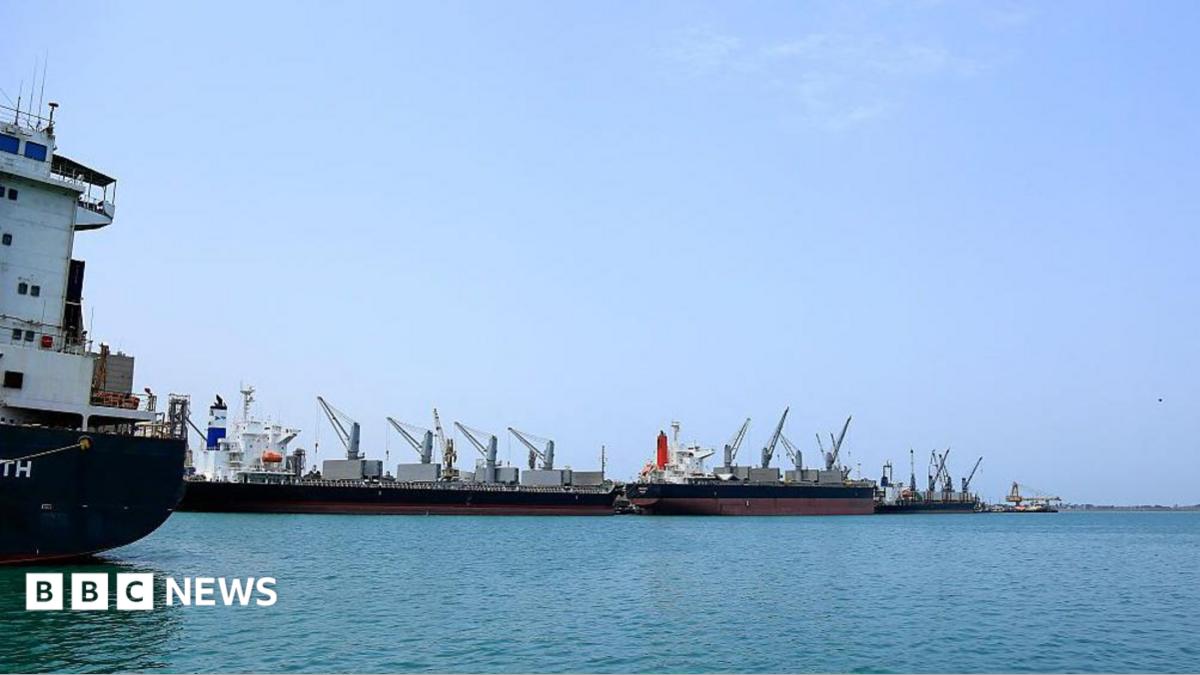
The US has maintained a naval blockade of Iranian ports in the region, while another blockade is in place on Saudi Arabia's ports in the Red Sea, imposed by Yemen's Iran-backed Houthis since 20 July.
asserted
blockade → maintain → July
The US and Israel launched wide-ranging strikes on Iran on 28 February, with Iran responding by attacking Israel and US-allied states in the Gulf, and effectively closing the Strait of Hormuz.
asserted
Iran → launch → Hormuz
Iran's then Supreme Leader, Ayatollah Ali Khamenei, was killed in that first attack, after which he was succeeded by his son Mojtaba Khamenei.
asserted
he → kill → son
The younger Khamenei was wounded in the same strikes that launched the war and has not appeared in public since.
asserted
that → wound → public
Iran's President Masoud Pezeshkian said on Wednesday that communication with Khamenei was "difficult at the moment".
"In any case, his presence is a very great source of strength for us so that we can continue," Pezeshkian said, according to state media.
uncertain
Pezeshkian → say → media
The younger Khamenei, who did not appear at his father's funeral ceremonies last month, has communicated through written statements but his low profile has led to speculation about his relations with other top officials.
asserted
profile → appear → officials
Pezeshkian insisted he had been able to hold productive meetings with him and been met with "kindness and very sound logic".
asserted
he → insist → kindness
"Unfortunately, the current situation allows some malicious people to describe him differently and to present a different image of him," he said.
asserted
he → allow → him
 The Aporia