Photo via CBS News

The AI revolution is likely to drive up your electricity bill. Here's why.

Read the original at CBS News ↗
Cite

Cunningham, M. (2026, October 2). The AI revolution is likely to drive up your electricity bill. Here's why. CBS News. https://www.cbsnews.com/news/artificial-intelligene-ai-data-centers-electricity-bill-energy-costs/

Dated when The Aporia collected the article, usually within hours of publication. Check the original for its exact date and byline.

CBS News · collected 2026-10-02 · by Mary Cunningham

Quick Summary

Earlier this year, New Jersey's public utilities board warned residents about potential electricity bill increases up to 20%, citing data centers as a key factor in the surge. According to a Schneider Electric report, U.S. electricity demand is projected to rise by 16% by 2029 due to expanding data center operations for AI and cloud computing services. With thousands of new data centers across the country since 2021, experts like Dave Turk note that these facilities are using significantly more power; AI alone consumes ten times as much electricity as standard internet searches according to a study from the Electric Power Research Institute.
Written by AI on 2026-10-02, from this article's own text only (the story summary below draws on all the coverage).

AI analysis

Story summary

New Jersey residents faced potential electricity bill hikes of up to 20% starting June 1 due to the rapid growth of data centers requiring substantial power for artificial intelligence and cryptocurrency operations. According to a report by Schneider Electric, national electricity demand is projected to increase by 16% by 2029, primarily because of these facilities' energy consumption. This surge in usage strains existing infrastructure, as utilities rush to build new systems while raising rates without sufficient public oversight. Mark Wolfe, executive director of the National Energy Assistance Directors Association, warned that American ratepayers will likely bear the cost of this increased demand and infrastructure development.

Written for “AI Energy Consumption” on 2026-11-18, grounded in this article and the 0 other(s) covering the same event.

Compared with similar articles

This article reads unscored and hedges 31% of its claims. Each row says how that neighbour differs.
BBC News
Hedges 5 of 33 claims Outlet record 65/100
“The articles discuss different aspects of rising energy costs without describing the same specific incident or occurrence.”
Toronto Star
Hedges 5 of 102 claims Outlet record 64/100
“The articles discuss different aspects of electricity usage and pricing concerns related to AI data centers but do not describe the same specific incident or occurrence.”
New York Post
Hedges 0 of 8 claims Outlet record 66/100
“The articles discuss related issues but describe different aspects and impacts of rising electricity costs in distinct regions (New Jersey vs. New York) with separate data points.”
Fox News
Leans strongly right Hedges 2 of 31 claims Outlet record 67/100
“The articles discuss different aspects of AI's impact on electricity usage—one focusing on geopolitical implications and another on potential increases for residential electricity bills due to data centers.”

Story

AI Energy Consumption
Technology · 1 article(s) covering the same event.
How this article was measured signals, leaning charts, publisher record, byline, topics and claims

Signals How these are calculated →

Claims extracted
29
sentences that state something as happening or true
Uncertain
31%
9 of 29 hedged ("reportedly", "may", "according to")
Leaning
withheld
no quote in the article backed the model's score
Publisher signals
67/100
CBS News's corrections and hedging, across everything collected from it. Not a measure of accuracy.
Outlets on this story
1
Technology
Same framing elsewhere
1
articles that frame the event the way this one does
Analyzed 2026-10-02 · how these are computed

How this is being covered How these are calculated →

Article leaning vs. publisher reliability
Source leaning vs. consistency

Publisher

CBS News · 5751 article(s) · 10 correction(s) detected
Running correction rate · 10 correction(s)

Who wrote this

Mary Cunningham
63 article(s) here · 1 carrying a prediction
— This is a developing story and will be updated
Anthropic's is set to launch on Thursday, a milestone that will test investor enthusiasm for the company behind the popular Claude chatbot and the burgeoning artificial intelligence sector.
Kalshi is pausing markets that allow users to bet on what President Trump will say in response to a federal agency's request, a spokesperson for the prediction market confirmed.
The company expects to roll out the services later this year, following its July acquisition of the New York-based broker FB Securities, which will facilitate stock trading on Kalshi.
Cody Acree, an equity research analyst at StoneX, thinks Nvidia shares could also struggle as the chip giant searches for a new leader and amid uncertainty over the AI sector.
Last week, the International Energy Agency raised its oil production forecast, predicting a surplus in the fourth quarter of this year. "The oil market is showing tentative signs of rebalancing, with global oil supplies surpassing demand for the first time since the outbreak of the war in Iran," the organization said in its November report.
The risk could grow as the companies rely more on their own AI models to develop future platforms without human intervention, a concept known as "recursive self-improvement," according to the suit.
The board's announcement of Huang's departure said that Colette Kress, the company's chief financial officer, will serve as interim CEO until it selects a permanent replacement.
Anti-hunger advocates are denouncing a Trump administration proposal that would tighten eligibility requirements for the Supplemental Nutrition Assistance Program (SNAP).
Tesla is extending a deadline it set to finish Cybertruck production to give the company more time to fulfill its orders, CEO Elon Musk announced Wednesday.
Also by Mary Cunningham
Nothing else under this byline is closely related to this article, so these are simply their most recent.
All 63 articles by Mary Cunningham →

Topics

Americans CBS MoneyWatch New Jersey Schneider Electric U.S.

Subjects

U.S. GPE · 4× CBS MoneyWatch ORG · 2× Turk PERSON · 2× Virginia GPE · 2× Americans NORP · 1× California GPE · 1× Mark Wolfe PERSON · 1× New Jersey GPE · 1× Schneider Electric ORG · 1× the National Energy Assistance Directors Association ORG · 1×

Narrative

In a recent report, the North American Electric Reliability Corp said that facilities that service AI and cryptocurrency companies are being developed at a faster pace than the power plants and transmission lines to support them, "resulting in lower system stability.
framing: mixed · carried by 1 article(s) · first seen 2026-10-02
New Jersey residents got some bad news earlier this year when the state's public utilities board warned that their electricity bills could surge up to 20% starting on June 1.

Claims (29 extracted, 9 hedged)

New Jersey residents got some bad news earlier this year when the state's public utilities board warned that their electricity bills could surge up to 20% starting on June 1. uncertain
bills → get → June
The spread of these large-scale computing facilities across the U.S. amid growing demand for artificial intelligence, data storage and other technology services is projected to increase electricity consumption to record highs in the coming years, according to experts. uncertain
spread → compute → experts
A report from Schneider Electric, a company that specializes in digital automation and energy management, projects that electricity demand will increase 16% by 2029, mainly due to the proliferation of data centers. asserted
demand → specialize → centers
Most data centers rely on the nation's electrical grid for energy, meaning it will be Americans ratepayers who pick up the tab, Mark Wolfe, executive director of the National Energy Assistance Directors Association, a group that represents states on energy issues. asserted
that → rely → issues
"As utilities race to meet skyrocketing demand from AI and cloud computing, they're building new infrastructure and raising rates, often without transparency or public input," he told CBS MoneyWatch in an email. asserted
he → race → email
"That means higher electricity bills for everyday households, while tech companies benefit from sweetheart deals behind closed doors. asserted
companies → mean → doors
More data centers, more power Thousands of data centers now dot the country, with the largest concentrations in Virginia, California and Texas. asserted
Thousands → dot → Virginia
The number of data centers in the U.S. nearly doubled between 2021 and 2024, according to a report from Environment America, a network of environmental groups. uncertain
number → double → groups
It's not just the number of data centers that are expected to rise, but the size. asserted
that → expect → centers
"The trend has been bigger data centers," Dave Turk, the former deputy secretary of the U.S. Department of Energy, told CBS MoneyWatch. asserted
Turk → tell → MoneyWatch
"They tend to be more energy efficient. asserted
They → tend → ?
" Spurring that expansion is the rapid growth of "generative" AI companies that are consuming vast amounts of electricity to train so-called Large Language Models like ChatGPT and power. asserted
that → spur → ChatGPT
AI searches use 10 times more electricity than normal internet searches, according to a study from the Electric Power Research Institute, a nonprofit organization. uncertain
searches → use → Institute
"AI is an increasing part of data centers and certainly responsible for increased electricity demand," Turk said. asserted
Turk → increase → demand
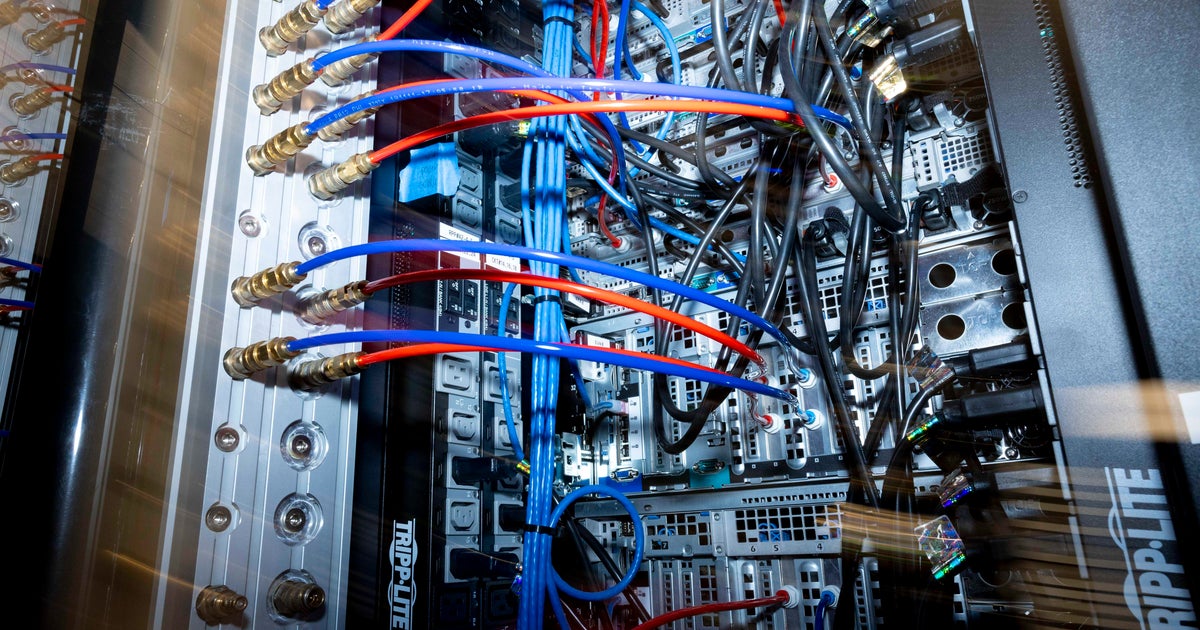
Data centers, which contain thousands of computer servers, networking gear and other infrastructure, also require power to cool their systems and keep them from overheating. asserted
which → contain → them
Torsten Sløk, chief economist at asset management firm Apollo Global Management, estimates that data centers will require an additional 18 gigawatts of power capacity by 2030. asserted
centers → estimate → 2030
To put that into context, New York City power demand is about 6 gigawatts. asserted
demand → put → context
About 4.4% of U.S. electricity went to power data centers in 2023, according to a Department of Energy's Lawrence Berkeley National Laboratory study. uncertain
% → go → study
Not all of that demand is related to AI, but it represents a portion, Turk said. asserted
Turk → relate → portion
Other factors pushing up prices The spread of data centers isn't the only reason U.S. electricity prices are surging. asserted
prices → push → centers
The price of natural gas, inflation, ongoing electrification of buildings and vehicles, and other factors also play an important role. asserted
price → play → role
But utilities are factoring the high demand from data centers into their pricing models. asserted
utilities → factor → models
For example, when Dominion Energy, one of the Virginia's largest utilities, in April proposed a price hike of $8.51 per month in 2026, the company also floated the idea of a "new rate class for high energy users, including data centers. asserted
company → propose → centers
Electricity prices have risen 4.5% in the last year, according to recent data from the Labor Department, and are estimated to . uncertain
prices → rise → Department
Energy costs also drift higher if a Republican-backed budget package, dubbed the is passed and signed into law by President Trump. asserted
package → drift → Trump
Analysts from Rhodium Group predict that the bill, which would repeal a slate of tax credits created under the Inflation Reduction Act, could increase a family's energy expenditures by nearly $400 a year. uncertain
which → predict → 400
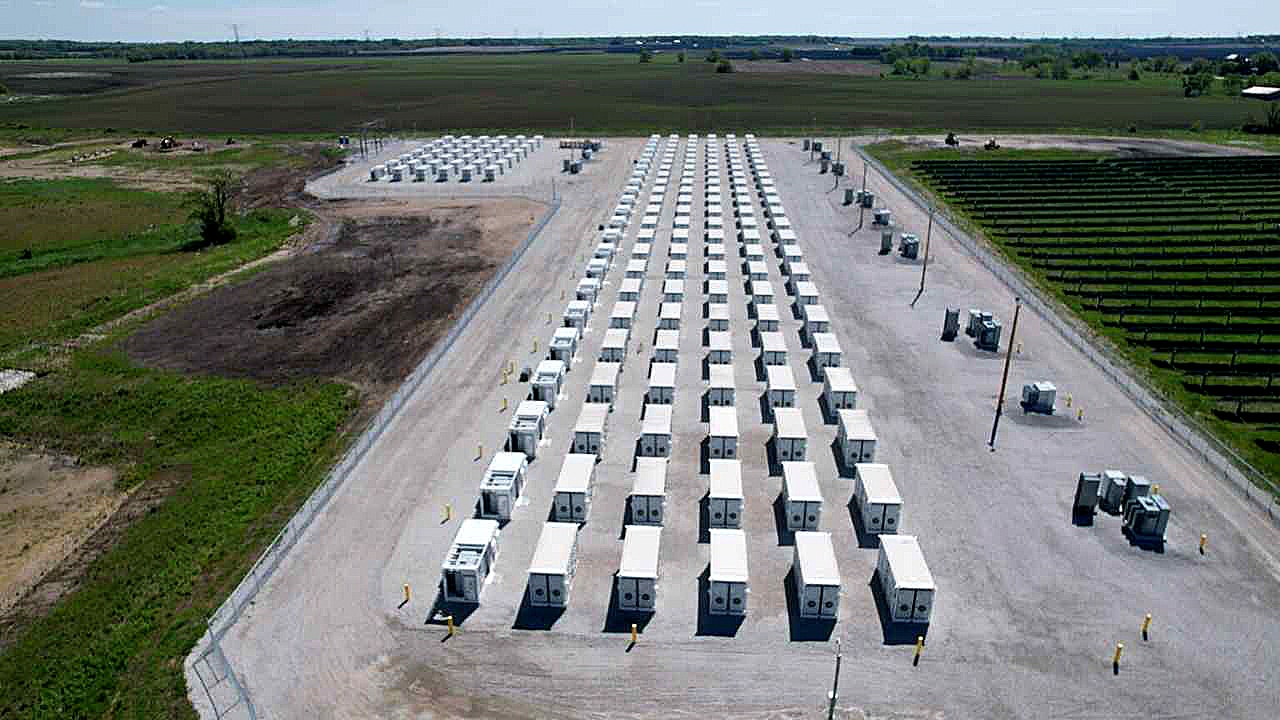
Beyond price increases, the heightened energy demand from data centers could also compromise the reliability of the grid, according to experts. uncertain
demand → heighten → experts
In a recent report, the North American Electric Reliability Corp said that facilities that service AI and cryptocurrency companies are being developed at a faster pace than the power plants and transmission lines to support them, "resulting in lower system stability. asserted
that → say → stability
PJM, a grid operator in 13 states plus Washington, D.C., cited data center demand as one of the factors that could lead to capacity shortages in its 2025 forecast. uncertain
that → cite → forecast

Give feedback · no sign-in needed

No sign-in needed for now. Your note is sent without a name, so it cannot be answered.

History Support