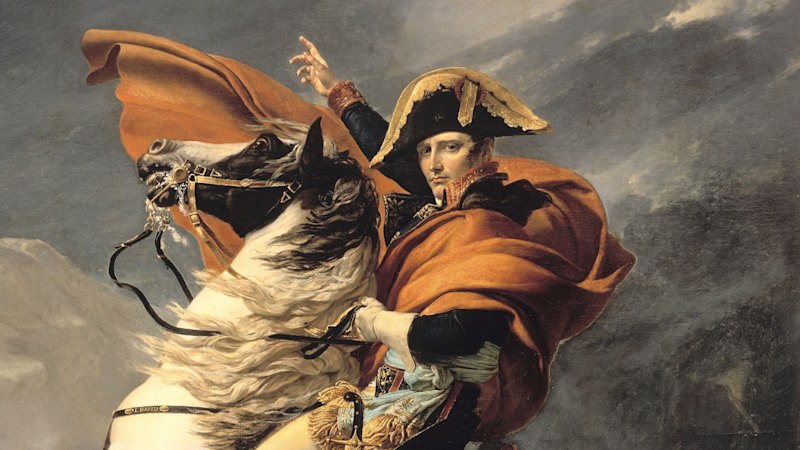
Napoleon's code is cracked after 217 years: Scientist uses AI to read a mysterious letter written by the Emperor in 1809

Read the original at Daily Mail ↗
Daily Mail · collected 2026-10-02 · by Shivali Best

Quick Summary

Carter Church used artificial intelligence to decode a mysterious letter written by Napoleon Bonaparte to his general Auguste de Marmont in 1809. The bulk of the letter was encoded with two-digit numbers and symbols, and AI model GPT-6 Astra successfully deciphered it within six hours. The decoded message reveals strategic details about French and allied army locations and advises Marmont not to be intimidated by his isolated position during a time when Austria faced multiple threats from enemy forces.
Written locally by qwen2.5:14b on 2026-10-04, using this article's own text rather than the other coverage of the same event (that is the story summary below).

AI analysis runs on qwen2.5:14b, locally

Story summary

Carter Church, an AI engineer at SentinelOne, successfully decrypted a coded message from Napoleon Bonaparte to his general Auguste de Marmont using OpenAI’s GPT-6 Astra system after 217 years. The letter, sent by Napoleon's stepson Eugène, contained details about French and Austrian troop movements on the eve of war between France and the Habsburg Empire in 1809. The ciphered note had 1300 characters, including letters and symbols, and was a mystery until GPT-6 Astra transcribed it within six hours by employing simulated annealing techniques. This breakthrough highlights the potential of AI in solving complex historical puzzles beyond human capabilities.

Written for “Napoleon Code Cracked” on 2026-10-05, grounded in this article and the 1 other(s) covering the same event.

Signals How these are calculated →

Claims extracted
25
claim-shaped sentences
Uncertain
12%
3 of 25 hedged
Leaning
not political
takes no side on a contested political question
Correction & hedging signals
64.9
corrections and hedging in what we collected; not a measure of accuracy
Outlets on this story
2
Technology
Narrative spread
1
articles carrying this framing
Analyzed 2026-10-04 · how these are computed

Story

📰 Napoleon Code Cracked
Technology · 2 article(s) covering the same event. See how they differ ↓

How this is being covered How these are calculated →

Article leaning vs. publisher reliability
Source leaning vs. consistency

Compared with similar articles

This article reads unscored and hedges 12% of its claims. Each row says how that neighbour differs.
The Sydney Morning Herald · 0.87 cosine similarity
⚖️ leaning not scored 🔴 5% hedged 1 of 20 📰 publisher trust 61
“Both articles describe the identical incident of an AI engineer cracking Napoleon's coded message sent in 1809, using details about the letter's content and recipient.”

Publisher

Daily Mail · 3681 article(s) · 12 correction(s) detected
Running correction rate · 12 correction(s)
2026-10-04
Prison chief stands down over botched execution
2026-10-03
Tennessee prison chief who oversaw botched execution of Christa Pike resigns, governor announces
2026-09-25
Twisted teacher who started school FIGHT CLUB and encouraged children to attack each other is given shockingly lenient punishment
2026-09-22
Melbourne inmate vanished without trace while carrying his brother's coffin 150 days ago - and cops are still hunting him
2026-09-21
Magistrate blasts Melbourne marketing mum Christina Georgiou over 'despicable' $50,000 fraud: How a master's graduate with a drug debt ended up rorting Covid and flood relief schemes
2026-09-18
Female corrections officer fired and arrested over claims she sneaked her home cooked meals into jail to give to inmates
2026-09-18
Woke NYC mayor offers condolences after alleged murderer, 20, dies in custody... but makes NO mention of his disabled victim
2026-09-15
Infamous prisoner known for his 'stop snitching' slogan DISAPPEARS during transfer from one federal prison to another
2026-09-15
Charles Manson's 'right-hand man' dies in prison at 83 after his parole was blocked 8 times
2026-09-15
Jeffrey Epstein's suicide watch 'companion' insists paedophile financier DID kill himself after becoming 'defeated' in his final days
2026-09-07
The evidence Epstein did NOT kill himself: Lawyer and pathologist reveal details they claim indicate the paedophile WAS murdered in jail in new documentary
2026-09-06
Clarifications and corrections

Who wrote this

Shivali Best
8 article(s) here · 1 carrying a prediction
🔮 He explained: 'Chucking things into the toilet may feel like a quick way to discard items like wet wipes, period products, nail clippings, dead pet goldfish or even those leftover baked beans not eaten at lunchtime, but these items do not break down easily or quickly and are likely to accumulate in your drainage systems.' Experts at Initial Washroom Hygiene have revealed the most unusual items they've recovered from toilets across the UK '
🔮 While the letter would have originally come with a key, this has long been lost – meaning the contents have been a mystery.
🔮 In their study, the team stuck googly eyes on takeaway food boxes to test whether it would affect their appeal to hungry gulls.
🔮 But a new study might make you think twice before choosing certain varieties for your family.
🔮 Worryingly, the scientists say this could just be a taste of what's to come as global temperatures continue to rise.
🔮 A researcher at a leading AI company has quit over concerns that big tech firms are in an 'out of control' race to build systems that could wipe out humanity.
🔮 - READ MORE: Area affected by wildfires in Europe will TRIPLE by 2100 - See more Daily Mail on Google - save us as a Preferred Source Over the summer, devastating wildfires have swept across Europe, displacing thousands of people.
🔮 But new analysis might make you think twice before splashing the cash at certain popular high street chains.
Also by Shivali Best
Nothing else under this byline is closely related to this article, so these are simply their most recent.
All 8 articles by Shivali Best →

Topics

Astra Dalmatia French GPT-6 Astra Paris

Subjects

Church PERSON · 4× Marmont PERSON · 4× Napoleon PERSON · 4× Auguste de Marmont PERSON · 3× Eugene PERSON · 3× French NORP · 3× Dalmatia GPE · 2× Napoleon Bonaparte PERSON · 2× OpenAI ORG · 2× Paris GPE · 2×

Narrative

What makes this impressive isn't actually the codebreaking, but that Astra completed the entire multi-modal workflow in six hours from a single image and goal,' he explained on X. A mysterious letter written by Napoleon Bonaparte has been decoded for the first time after more than 200 years On March 16, 1809, Napoleon wrote from Paris to his stepson, Eugene, asking him to send a letter to Auguste de Marmont – a friend of the Emperor, whose troops were positioned in Dalmatia, on the far side of the Adriatic.
framing: assertive · carried by 1 article(s) · first seen 2026-10-04
🔮 While the letter would have originally come with a key, this has long been lost – meaning the contents have been a mystery.

Claims (25 extracted, 3 hedged)

A mysterious letter written by Napoleon Bonaparte has been decoded for the first time in more than 200 years. asserted
letter → write → years
The letter was sent to French general Auguste de Marmont by Napoleon's stepson, Eugene, the Viceroy of Italy, in 1809. asserted
letter → send → 1809
The first line is written in French, but the 24 lines that follow consist of two-digit numbers, stray letters, and invented symbols. asserted
that → write → numbers
While the letter would have originally come with a key, this has long been lost – meaning the contents have been a mystery. asserted
contents → come → key
Now, Carter Church, an engineer at cybersecurity company SentinelOne, has cracked the code using AI. asserted
Church → crack → AI
'I used GPT–6 Astra to break an unsolved cipher to one of Napoleon's generals that had gone unread for 217 years. asserted
that → use → years
What makes this impressive isn't actually the codebreaking, but that Astra completed the entire multi-modal workflow in six hours from a single image and goal,' he explained on X. A mysterious letter written by Napoleon Bonaparte has been decoded for the first time after more than 200 years On March 16, 1809, Napoleon wrote from Paris to his stepson, Eugene, asking him to send a letter to Auguste de Marmont – a friend of the Emperor, whose troops were positioned in Dalmatia, on the far side of the Adriatic. asserted
troops → make → Adriatic
With Austrian territory between them and every other French army, Marmont would have been isolated if war came. asserted
war → isolate → them
The first line is in French, and reads: 'Vous avez dû recevoir, Monsieur le Général Marmont, mes lettres des 8, 14 et 20 courant.' This translates to: 'You must have received, General Marmont, my letters of the 8th, 14th, and 20th of this month. asserted
You → read → month
However, with the rest of the letter written in code, its meaning has been unclear. uncertain
meaning → write → code
To crack it, Mr Church turned to GPT-6 Astra – an AI model created by OpenAI. asserted
Church → crack → OpenAI
Over six hours, the bot was able to decipher the message. asserted
bot → decipher → message
'Astra cut the 1,202 by 1,836 plate into rows, read the signs, decided which of 175 hand–drawn marks were the same sign written twice, and only then began breaking the cipher,' Mr Church explained in a blog post. asserted
Church → cut → post
The letter lays out the location of every other French and allied army, and urges Marmont to 'not be intimidated' by his isolated position. asserted
letter → lay → position
'The Russians are marching against Austria, and the army [of] Friuli today numbers eighty thousand men,' it reads. asserted
it → march → men
'Add the Dalmatian corps, without counting the reserves being organised everywhere in the rear, and you see that Austria will be attacked at once on every side. ' asserted
Austria → add → side
She is consequently hastening toward her ruin. asserted
She → hasten → ruin
'When you receive the order to march, you must not allow yourself to be intimidated by a few troops or a gathering of rabble.' To crack it, Mr Church turned to GPT-6 Astra – an AI model created by OpenAI. asserted
Church → receive → OpenAI
Over six hours, the bot was able to decipher the message On 16 March 1809, Napoleon (pictured in painting) wrote from Paris to his stepson, Eugene, asking him to send a letter to Auguste de Marmont – a friend of the Emperor, whose troops were positioned in Dalmatia, on the far side of the Adriatic asserted
troops → decipher → Adriatic
According to Mr Church, the cipher itself wasn't actually difficult to crack. uncertain
cipher → accord → Church
However, he admits it would have taken humans much longer than the AI, which was able to whizz through it in just six hours. asserted
which → admit → hours
He added: 'The cipher itself isn't difficult, and cryptographers could have cracked this easily given the time/energy. uncertain
cryptographers → add → energy
'But, the work to transcribe, catalog, translate, then crack is involved and multi-disciplinary. asserted
work → transcribe → ?
Every field has an unsolved backlog of niche problems that specialists don't have the bandwidth to tackle. asserted
specialists → have → bandwidth
'The takeaway here is that the people shortening those lists will increasingly be outsiders who were simply curious.' asserted
who → shorten → lists

💬Give feedback
🕘History 🎫Support