- Published
Almost 100% of Nepal's electricity comes from hydropower, and it produces so much it earns nearly $200m (£147m) each year exporting hydroelectricity to India and Bangladesh.
asserted
it → publish → India
But the very glaciers and mountains giving Nepal this massive natural advantage are succumbing to global warming - and last Wednesday's deadly floods have laid bare the risks to the nation's hydropower ambitions.
asserted
floods → give → ambitions
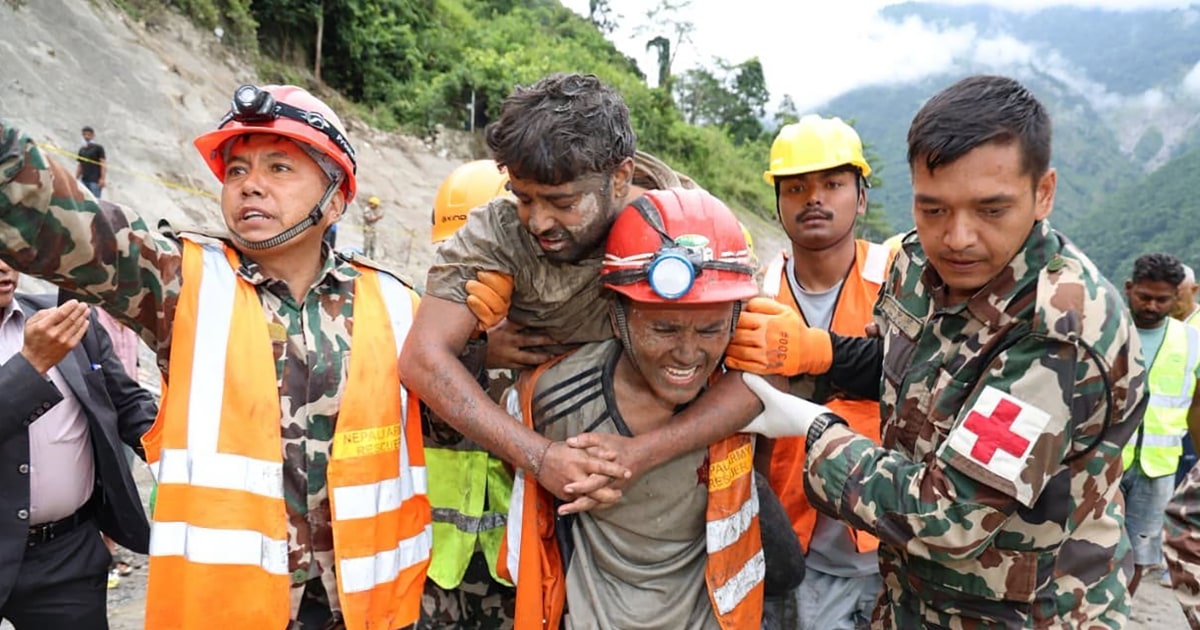
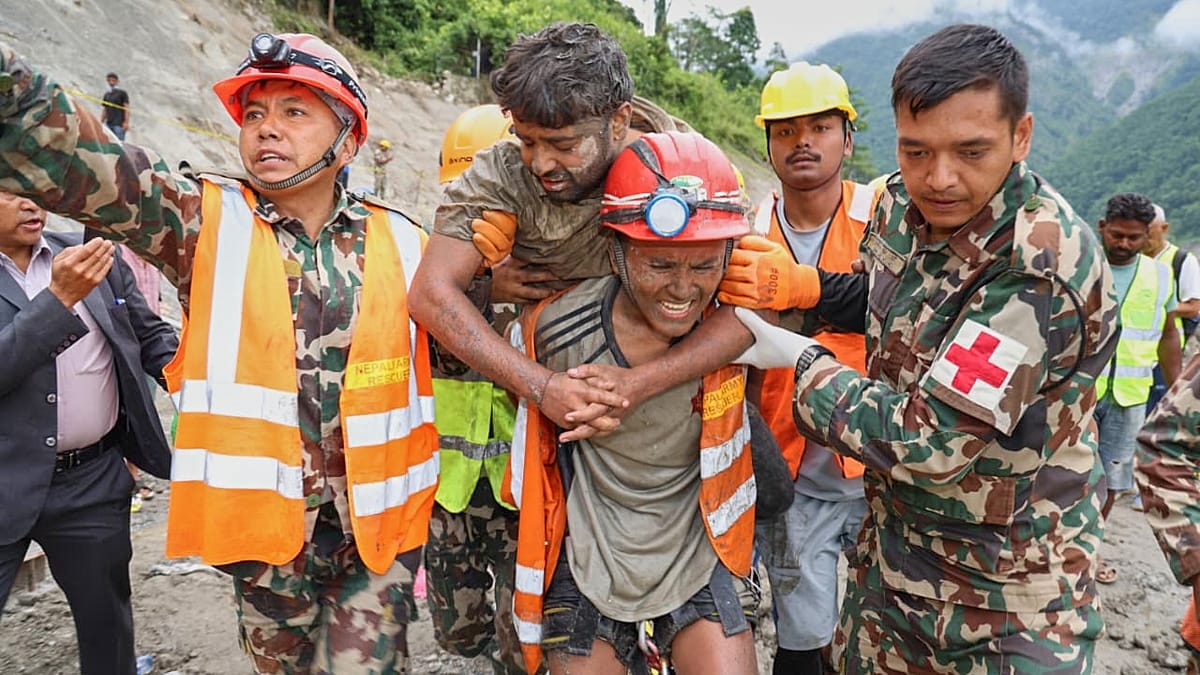
More than 1,300 people were killed, while thousands more are still missing.
asserted
thousands → kill → ?
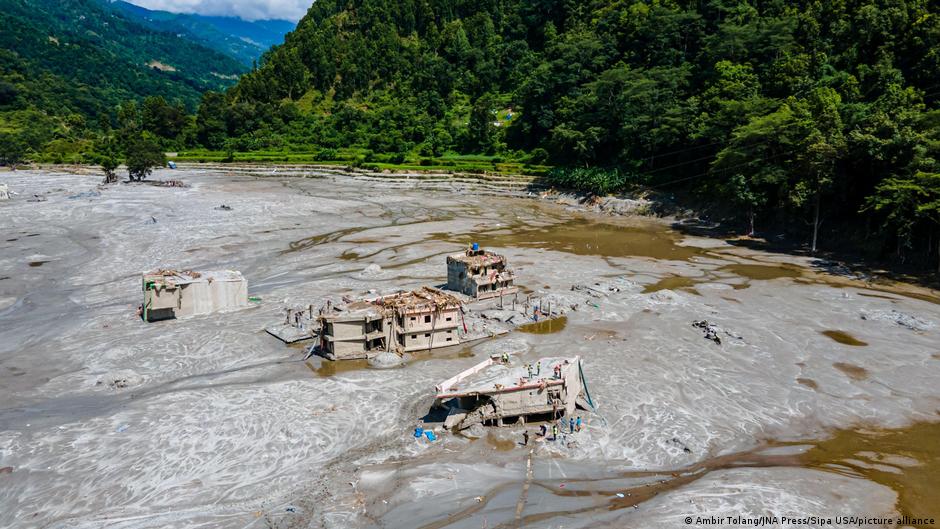
The floods, which destroyed entire villages near the border of Nepal and Tibet, severely damaged 12 hydropower plants in the Trishuli River basin and knocked out more than 10% of Nepal's total power generation capacity.
asserted
which → destroy → capacity
Operators tell the BBC they don't yet know if any of these facilities can be brought back to operation.
asserted
any → tell → operation
The state-owned Nepal Electricity Authority, which owns six of the 12 damaged facilities, has assured Nepalese households that supply remains adequate.
asserted
supply → own → households
But its spokesman Rajan Dhakal acknowledges that with climate-related disasters becoming more frequent, "the time has come for a rethink of our hydropower policy".
asserted
time → acknowledge → policy
Only two-thirds of people in Nepal had access to electricity in 2010, and even connected households would face power cuts for up to 16 hours a day.
asserted
households → have → hours
An expansion of hydropower infrastructure alongside efforts to tackle corruption and boost energy imports from India to fill seasonal gaps meant that by 2018, most of Nepal was enjoying 24 hours of power supply per day.
asserted
most → tackle → day
Hundreds more such facilities are either being constructed or in the pipeline.
asserted
facilities → construct → pipeline
Most of them are built high up in the mountains, where they can seize fast-flowing currents to generate power.
asserted
they → build → power
These projects require little to no storage system.
asserted
projects → require → system
However, with the high-altitude regions of the Himalayas warming 50% faster than the global average, they face greater environmental risks.
asserted
they → warm → risks
Preliminary investigations have pointed to a collapsed glacier and its bedrock as the cause of last week's flash flood.
asserted
investigations → point → flood
While scientists say it is too soon to draw any firm links to climate change, Nepal's Disaster Risk Reduction and Management Authority previously said more than nine in 10 disaster events recorded between 2018 and 2024 were "related to climate".
asserted
events → say → climate
Nepal's former Energy Minister Kulman Ghising, who called the catastrophic deluge a "once-in-a-century" event, says it holds lessons for designing plants and picking sites where they are built.
asserted
they → call → sites
"We need to design the plants [to be more] resilient to the floods and, most importantly, adopt early-warning systems as well as robust emergency evacuation measures," he told environmental news outlet Mongabay.
asserted
he → need → Mongabay
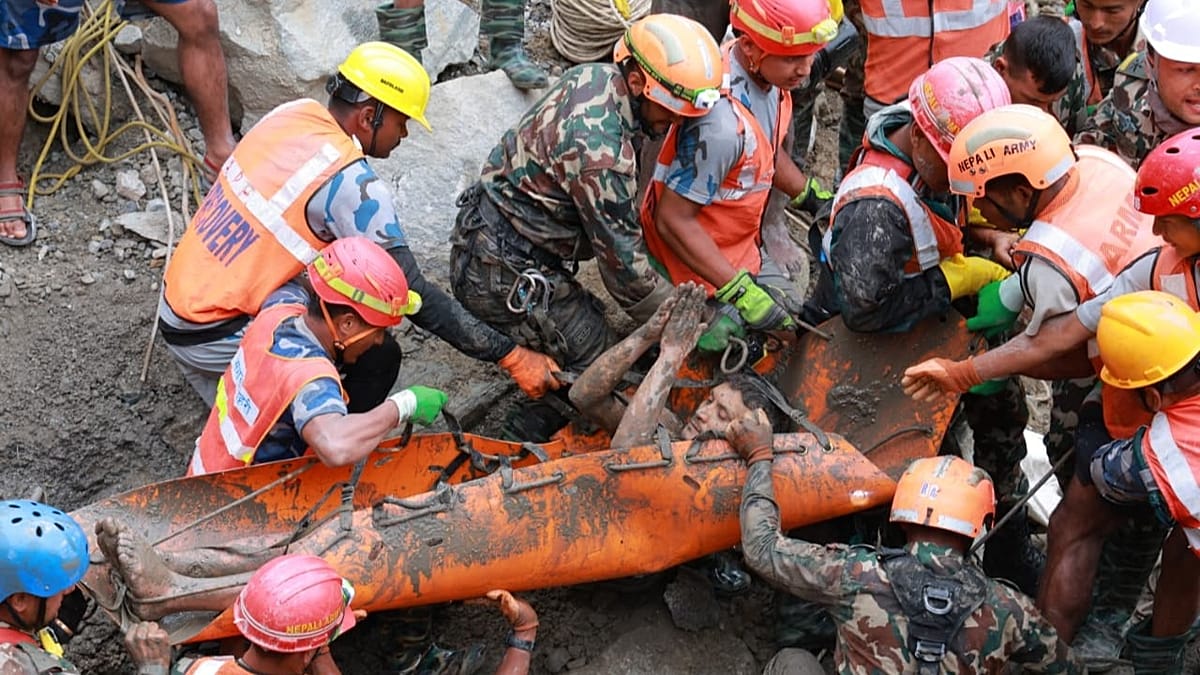
Potentially hundreds of hydropower labourers, engineers and residents are thought to be trapped inside the mud-filled tunnels of these plants since the floods hit.
asserted
floods → think → plants
A "rethink" of Nepal's hydropower strategy could involve reservoir-based plants that need not be situated up in the mountains, says Dhakal from the Nepal Electricity Authority.
uncertain
Dhakal → involve → Authority
These could allow water to be stored and released as needed, but would also involve significant economic and environmental costs.
uncertain
water → allow → costs
Some question if Nepal has been too reliant on hydropower.
"We should not be putting all our eggs in one basket in these dangerous times," says renewable energy expert Kushal Gurung, who founded the clean tech firm WindPower Nepal.
asserted
who → put → firm
"We need to seriously embrace other alternatives as well, like solar and wind.
asserted
We → need → solar
And for that we will need to revise our energy policy that is at the moment very pro-hydropower," he says.
asserted
he → need → moment
The claim is echoed by Vivek Shastry, researcher at Columbia University's Center on Global Energy Policy, who argues that "meaningful additions of wind and solar generation is a resilience strategy that can limit single-point or interconnected electricity system failures in the future".
uncertain
that → echo → future
A report from the German aid agency suggests the technical potential for energy production from solar power in Nepal is around 10 times larger, external than that of hydropower.
uncertain
potential → suggest → hydropower
Puspa Sharma, a senior research fellow at the National University of Singapore's Institute of South Asian Studies, agrees Nepal has to diversify its energy sources, but warns this can be done "only to a limited extent".
"While there is untapped capacity in wind and solar, hydropower really is the one that gives Nepal massive competitive advantage vis-a-vis its South Asian neighbours," he says, citing various studies comparing renewable energy potential in the region.
asserted
he → agree → region
Hydropower continues to dominate large-scale investments in Nepal, and some climate activists say the funding has continued despite known disaster risks.
asserted
funding → continue → risks
The Upper Trishuli-1 project, which has been all but destroyed after last week's floods, was one of Nepal's largest foreign direct investment ventures, valued at about $647m.
asserted
which → destroy → 647
Its backers include the Asian Development Bank (ADB) and the International Finance Corporation (IFC).
asserted
backers → include → Bank
The Upper Trishuli 3A, which has also been severely hit, was funded by China's Export-Import Bank.
asserted
which → hit → Bank
Himanshu Thakkar, coordinator of the South Asia Network on Dams, Rivers & People, says international lenders were "acutely aware of the extreme danger to which they were exposing thousands of labourers, officials, residents, rivers, infrastructure and landscape".
asserted
they → say → labourers
"Their own reports repeatedly highlighted it.
asserted
reports → highlight → it
But they did not take any preventive steps, did not demand stringent checks and balances, nor were they prepared for a calamity they knew could occur," he says.
uncertain
he → take → calamity
The ADB and IFC told the BBC the project design of Upper Trishuli-1 "reflected findings from independent technical assessments that looked at the risks of flooding and landslides affecting the project site, using studies of the glaciers and glacial lakes and historical evidence available at the time".
asserted
that → tell → time
The project's early warning system was strengthened following a flood in 2024, they said, and further work to assess risks was taken out after another flood in 2025.
asserted
work → strengthen → 2025
"The precise causes of the August 2026 disaster, the extent of the damage, the performance of the Project's design, and protective measures including the early warning system, is being gathered and remains to be verified as well as assessed."
The BBC has contacted the China's Export-Import Bank for comment.
asserted
BBC → include → comment
History has already shown the Trishuli River basin to be volatile, Thakkar says, pointing to how it had been hit by floods in the last two years.
asserted
it → show → years
In September 2024, an unprecedented cloudburst over the Trishuli and Bhote Koshi river basins sparked flash floods in Rasuwa, Nuwakot and Dhading - settlements by the river that are also among the hardest hit from last week's floods.
asserted
that → spark → floods
Then in July 2025, a glacial lake in Tibet's Gyirong county burst and swept down this very same stretch of river into Nepal, killing at least 11 people.
asserted
lake → burst → people
That flood damaged critical infrastructure and halted trade along the busy Nepal-China corridor.
asserted
flood → damage → corridor
…and 10 more, not listed.
 The Aporia