Federal report says pilots weren’t warned about wind before Amazon cargo plane crashed in Miami
By
asserted
plane → say → Miami
Despite regulations requiring it, an air traffic controller failed to tell the pilots of an Amazon cargo plane about the potential for strong tailwinds as they landed in Miami, careening off the runway and killing five people last month, according to a preliminary report Thursday from the National Transportation Safety Board.
uncertain
they → require → Board
Just four minutes before clearing the plane for landing, an air traffic controller had provided a wind advisory to a different flight, noting gusts of up to 25 mph from the south.
But the controller “did not issue information about the wind” to the pilots of the Amazon cargo plane, the report said.
asserted
report → clear → plane
According to federal regulations, “both wind direction and velocity were required to be stated when authorizing use of a runway when a tailwind component exists,” the NTSB report said.
uncertain
report → accord → runway
The preliminary report did not list a cause of the crash.
asserted
report → list → crash
The ongoing investigation could take more than a year to complete.
uncertain
investigation → take → year
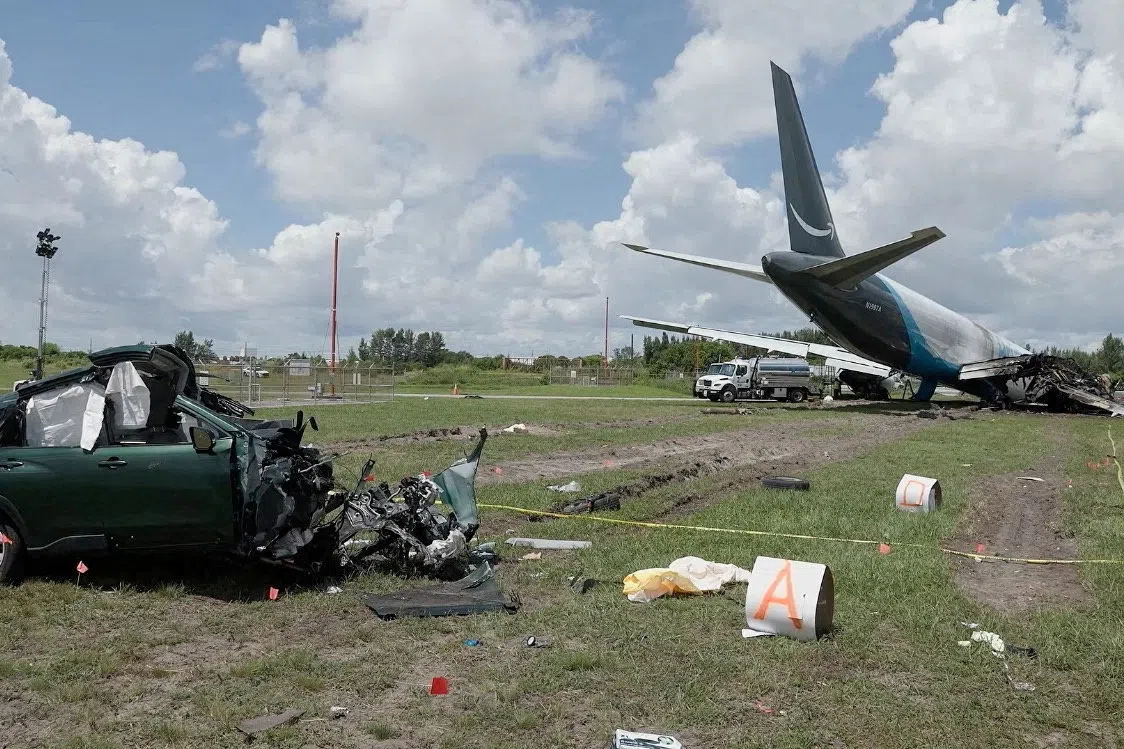
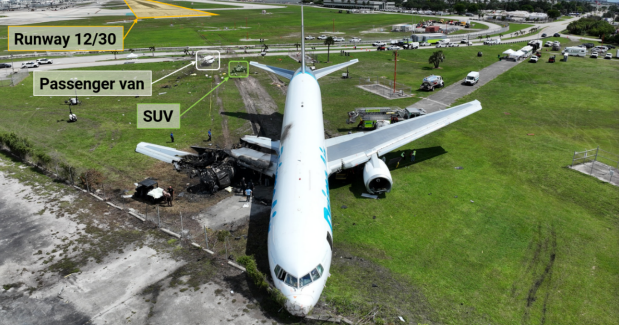
The airplane, carrying packages of contact lenses for Amazon, came in fast after a flight from Puerto Rico and barreled roughly 1,200 feet past the end of the runway at Miami International Airport on Sept. 6.
asserted
airplane → carry → Sept.
It smashed into a van carrying workers for a company that cleans airplanes.
asserted
that → smash → airplanes
“When you’ve got winds like that, it is your responsibility as a controller to issue that to a pilot, especially on landing and especially when you have gusts,” said Tony Mello, a former Federal Aviation Administration official who oversaw air traffic control services in the central US.
asserted
who → get → US
Landing with a gusting tail wind “requires more concentration on the part of the pilot” but is not impossible, said former NTSB member John Goglia.
asserted
Goglia → guste → pilot
Failing to share the wind conditions “was a significant omission but, in and of itself, would not have caused a crash,” Goglia said.
asserted
Goglia → fail → crash
That’s just one event.”
asserted
That → ’ → ?
The plane had little runway left when it touched down
A summary of cockpit voice recordings previously released by the NTSB said one of the pilots repeatedly warned his counterpart that they were going too fast as they approached for landing and after touchdown.
asserted
they → have → touchdown
But the fellow pilot never gave “a consistent verbal response” to the warnings, the NTSB said.
asserted
NTSB → give → warnings
The two pilots had flown together for the first time just earlier that day, according to the preliminary NTSB report.
uncertain
pilots → fly → report
The cockpit audio recordings also captured a series of automated warnings from the plane about the speed of descent and the approaching terrain.
asserted
recordings → capture → descent
Start your day with all you need to know
Morning Report delivers the latest news, videos, photos and more.
asserted
Report → start → news
When it touched down, the plane was traveling at 184 mph and was already about three-quarters of a mile past the start of the runway, the NTSB report said.
asserted
report → touch → runway
The pilots may have tried too late to abort the landing.
uncertain
pilots → try → landing
Data from the plane show its wheel brakes were applied, then released as the engines throttled to “go-around” thrust values before the brakes again were applied with about 415 feet of runway remaining.
asserted
brakes → show → runway
The plane ran off the pavement while still traveling at 130 mph, then struck some airport equipment and the cleaning crew’s van before crashing through a perimeter fence, hitting a car on a public road and coming to rest with its nose in a parking lot fence, the preliminary report said.
asserted
report → run → fence
Plane’s operator says it is focused on safety
asserted
it → say → safety
After the crash, Amazon suspended its partnership with 21 Air, which operated the plane.
asserted
which → suspend → plane
The North Carolina carrier had flown packages for Amazon since 2024.
asserted
carrier → fly → 2024
The Boeing 767 that crashed was 32 years old and originally built to carry passengers.
asserted
that → crash → passengers
It was converted to a cargo plane in June 2016, the preliminary NTSB report said.
asserted
report → convert → June
The plane’s operator, 21 Air, said in a written statement Thursday that safety is “a core focus” of its organization.
asserted
safety → say → organization
“We are reviewing the information in the NTSB preliminary report closely, alongside our own internal safety and operational protocols, and we will take all appropriate action to improve our safety based on the facts as they are established,” the company said.
asserted
company → review → facts
The Miami crash came less than a year after a UPS cargo plane crashed at Louisville’s Muhammad Ali International Airport after losing its engine while accelerating down the runway.
asserted
plane → come → runway
That crash killed all three pilots and 12 people on the ground.
asserted
crash → kill → ground
Twenty-three more were injured.
asserted
three → injure → ?
 The Aporia