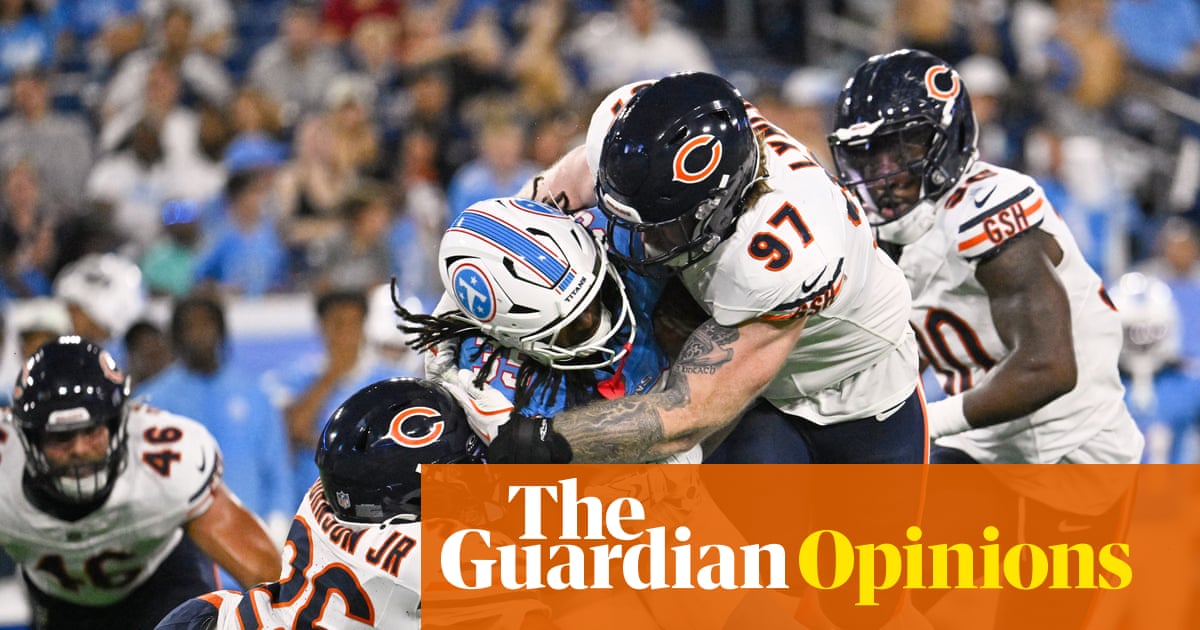
As a new NFL season begins this Wednesday, the danger of America’s most-watched sport has never been more clear.
asserted
danger → begin → sport
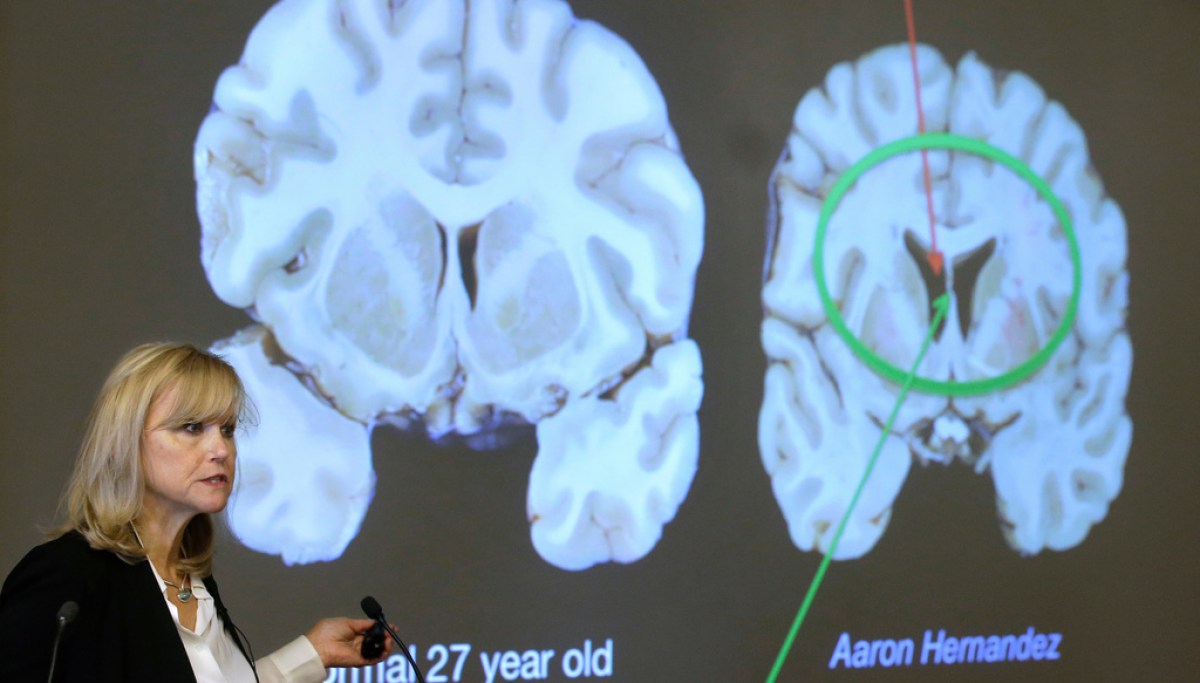
A new and widely circulated study published in the British Medical Journal examined the donated brains of former NFL players who died between 2016 and 2021 and compared them with the overall number of players who died during that period.
asserted
who → circulate → period
Of the 235 donated brains in that period, 215 had evidence of the degenerative brain condition chronic traumatic encephalopathy (CTE).
asserted
215 → donate → condition
That group of 215 comprised 24.5% of the former players who died during that period in total.
asserted
who → comprise → total
Given the finding, the study’s authors estimate that the prevalence of CTE among players who died in that period was at minimum 24.5% to a maximum of 97.7%, with the actual rate likely somewhere in between.
asserted
rate → give → between
The implication of that finding cannot be overstated: it suggests that CTE is a disease that may affect a substantial share of those who spend their careers in the NFL.
uncertain
who → overstate → NFL
are being exposed to the same fundamental risk: the repeated blows to the head that have been linked to the disease.
asserted
that → expose → disease
When we watch players deliver and receive those devastating if also thrilling hits, when we watch the lines collide on every play, we are watching the repetitive head trauma that puts players at risk of developing CTE.
asserted
that → watch → CTE
We are watching lives being permanently altered in ways that will in the end result in heartbreak.
asserted
that → watch → heartbreak
And yet, as recently as Friday, the Wall Street Journal published an op-ed by former senator Ben Sasse that makes the titular claim “America needs its boys to play football.”
uncertain
boys → publish → football
That sentiment isn’t just a vestige of should-be-antiquated gender politics – it is better understood as tantamount to child endangerment.
asserted
it → antiquate → endangerment
Because, perhaps the most disconcerting statistic is one that we already know: every 2.6 years of participation in football doubles the chances of developing CTE, in large part because a typical high school or college football season can deliver between 600 and 1,000 subconcussive blows to a single athlete, and that these blows heavily predict later-life clinical depression, apathy, executive dysfunction and cognitive impairment.
asserted
blows → know → depression
We also know that participation in football increases the chances of developing Parkinson’s disease by 61% compared with athletes in other organized sports (and that risk is 2.93 times greater for those who play football at the college/pro level compared with youth/high school).
asserted
who → know → school
When you put these figures in the context of the reality that in many parts of the United States, children are enrolled in tackle football as early as 5 years old, it becomes clear that this is a potential public health crisis.
asserted
this → put → football
The statistics only tell part of the story.
asserted
statistics → tell → story
In our 2024 book The End of College Football: On The Human Cost of an All-American Game, we talked to former big-time college football players – a level lower than the NFL, meaning fewer total head impacts than those at the pinnacle of the game – about how their lives had been affected by head injury in the sport.
asserted
lives → talk → sport
These players understood that their lives were at stake.
asserted
lives → understand → stake
One told us frankly: “I feel like there’s a good chance that I will have CTE.
asserted
I → tell → CTE
Especially if I kept playing, it’ll probably be guaranteed.
asserted
it → keep → ?
But I won’t find out until I die, which isn’t comforting at all.”
asserted
which → find → ?
Another explained, “The scariest part about that for me is I don’t know the price that I paid in terms of cognitive ability, in terms of how many concussions did I play through, how many times did I have a concussion and didn’t report it?”
asserted
I → explain → it
A third player told us that his career had bequeathed him a “panic disorder related to probably all the sub-concussive blows”.
asserted
career → tell → blows
One player said that after enduring 10 concussions, “I could barely do school. …
uncertain
I → say → school
I would forget what I was talking about mid-sentence.
asserted
I → forget → what
I’d be forgetting everything that happened like 10 minutes ago.
asserted
that → forget → everything
I would just completely zone out sometimes.
asserted
I → zone → ?
I couldn’t really control it.
asserted
I → control → it
Still a different player told us, “I played with guys in the NFL that took their own lives and then were diagnosed with CTE when they did the autopsy, so you think about that, like, ‘Boy, I hit my head against that guy’s head, so what’s going on with me if that was obviously was going on with him?’
asserted
that → tell → him
No one wants to see football players die for this sport.
asserted
players → want → sport
In 2025 alone, nine former NFL players under the age of 48 died.
asserted
players → die → 48
Seven of those deaths were a result of suicide, underscoring the fears surrounding the long-term neurological and psychiatric consequences of repeated head trauma.
asserted
Seven → underscore → trauma
The tragedy of death by football is thus happening whether we realize it or not.
asserted
we → happen → it
Far too much evidence now exists that the sport systematically produces
asserted
sport → exist → ?
life-altering head trauma for us to continue with business as usual when we know that football is morally unsustainable
asserted
football → alter → business
The NFL will of course never turn itself off.
asserted
NFL → turn → itself
So, starting this season, it’s up to us as fans to do that.
asserted
it → start → that
-
In the US, you can call or text the National Suicide Prevention Lifeline on 988, chat on 988lifeline.org, or text HOME to 741741 to connect with a crisis counselor.
asserted
you → call → counselor
In the UK and Ireland, Samaritans can be contacted on freephone 116 123, or email jo@samaritans.org or jo@samaritans.ie.
asserted
Samaritans → contact → jo@samaritans.org
Other international helplines can be found at befrienders.org
asserted
helplines → find → befrienders.org
 The Aporia