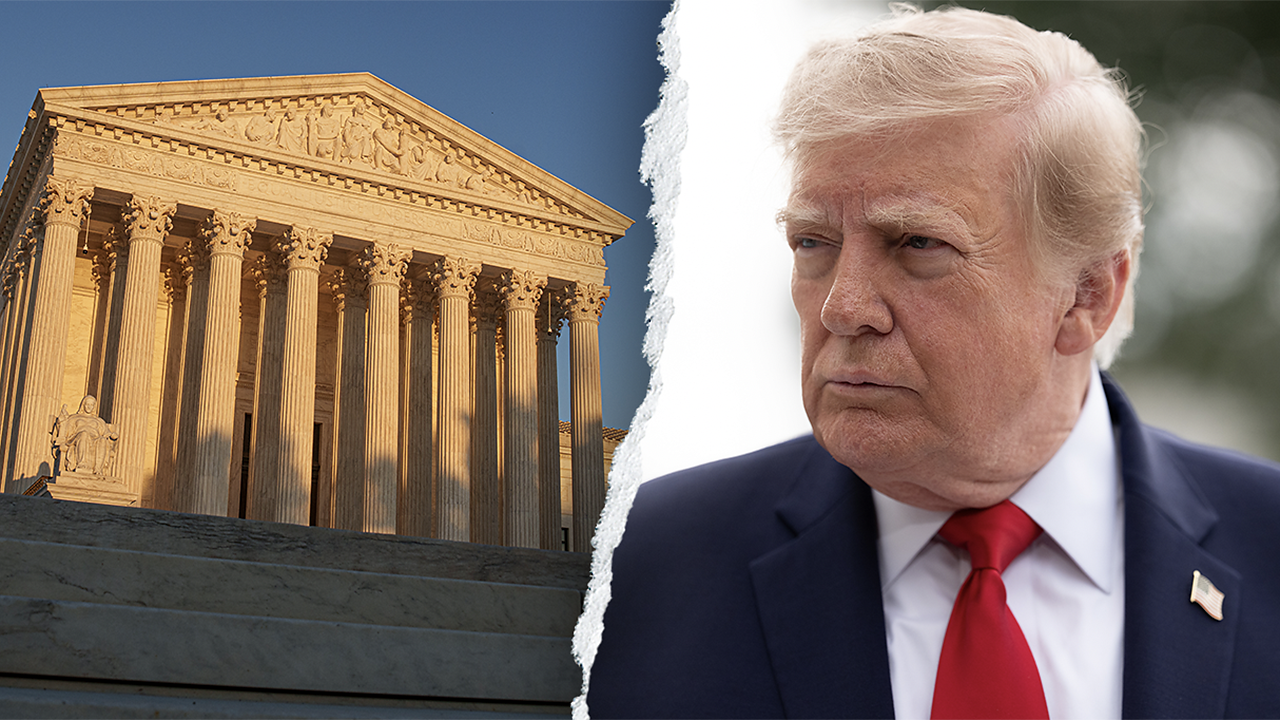
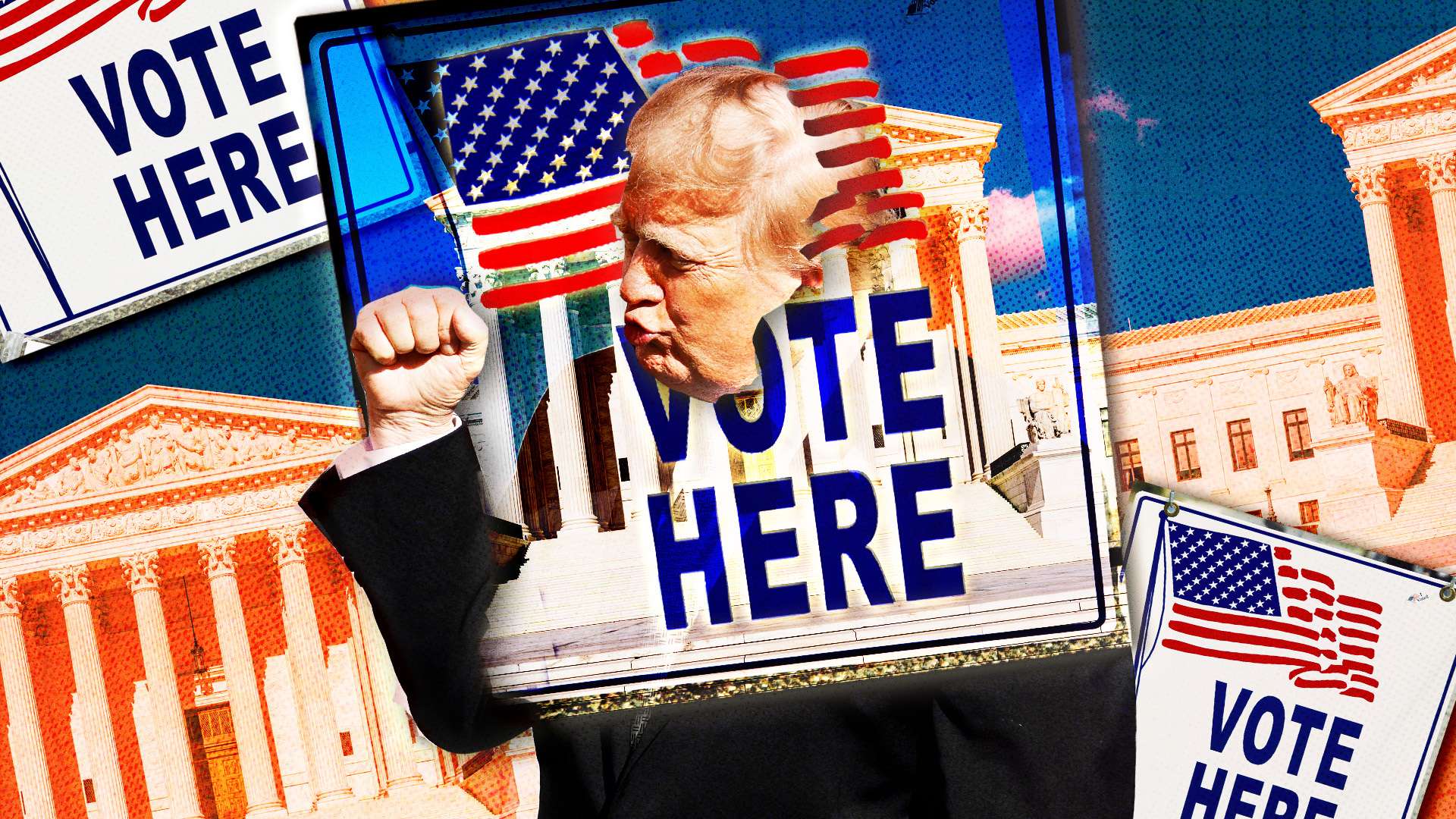
While President Donald Trump battles growing pushback from lawmakers and American voters on multiple fronts, he is continuing to score victories in another arena: the Supreme Court’s so-called “shadow docket.”
asserted
he → battle → arena
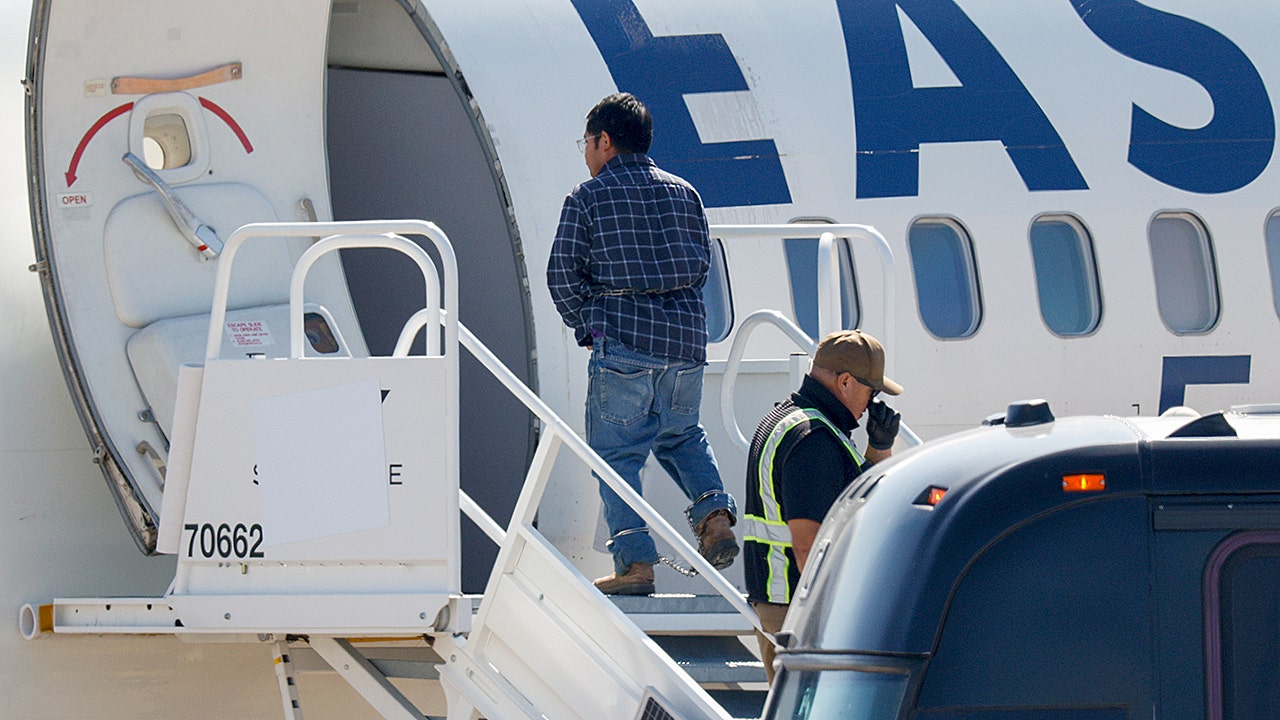
On Tuesday, the Court issued an emergency order allowing Trump to resume deporting people to “third countries” other than their own, temporarily lifting a lower court’s block.
asserted
Trump → issue → block
Days earlier, in response to another emergency request from the Trump Administration, the Court permitted the use of a controversial Department of Homeland Security (DHS) database in verifying the eligibility of voters ahead of the November midterms amid the Trump Administration's aggressive effort to crack down on alleged non-citizen voting.
asserted
Court → permit → voting
In both cases, the orders were unsigned and gave no vote count, but the Court’s three liberal Justices publicly dissented.
asserted
Justices → give → count
The rulings are only the latest in a string of mostly favorable decisions the Trump Administration has received from the Supreme Court in response to a flurry of requests for emergency relief it has made as it fights to implement the President’s second term agenda amid an array of legal challenges.
asserted
it → receive → challenges
Trump has already made significantly more of those requests than any other President in recent history.
asserted
Trump → make → history
And the Administration has shown no signs of slowing the pace of its emergency petitions to the Court.
asserted
Administration → show → Court
On Monday, it submitted yet another such request, asking the Justices to allow it to place restrictions on gender-affirming care for transgender inmates in federal prisons after the policy was halted by a district court judge in Washington, D.C.
Legal experts tell TIME that the Supreme Court has been far more permissive towards the Administration’s frequent emergency requests than in the past, allowing Trump to move forward his executive agenda with less legal constraint than his predecessors.
asserted
Trump → submit → predecessors
“The Supreme Court has changed the rules for when the executive branch can obtain this kind of emergency relief in ways that it is completely different from what they've done in the past,” Carolyn Shapiro, a professor of law and the founder of the Chicago-Kent College of Law's Institute on the Supreme Court, tells TIME.
asserted
Shapiro → change → TIME
“The Trump Administration has taken that invitation.”
asserted
Administration → take → invitation
The Supreme Court’s emergency docket, also known as its “shadow docket,” is the process by which the Court receives and responds to requests for expedited review in ongoing cases.
asserted
Court → know → cases
Justices can respond to those requests by temporarily overturning lower courts’ decisions on, say, Executive Orders that judges deemed unconstitutional.
asserted
judges → respond → Orders
Unlike the high court’s traditional merits docket, which involves extensive legal review, oral arguments, months of deliberation by the justices, and a written decision on each case, the shadow docket’s process is accelerated and produces decisions that do not require vote counts or written rationale.
asserted
that → involve → counts
Traditionally, an application to the shadow docket must still satisfy certain legal criteria in order for that request to be approved.
asserted
request → satisfy → criteria
The applicant must show that irreparable harm may occur if a lower court’s order is not paused, or that approval would serve in the public’s interest.
uncertain
approval → show → interest
But critics of the Supreme Court’s shadow docket rulings during Trump’s second term say that in many cases, the high court has failed to show that those criteria have been satisfied and simply approved Trump’s requests.
asserted
criteria → say → requests
“It is rarely a genuine emergency for the executive branch to be thwarted in trying to implement one of its policies while litigation is pending,” Kate Shaw, an expert on the Supreme Court and a professor at the University of Pennsylvania’s law school, tells TIME.
asserted
professor → thwart → TIME
“And yet again and again, the court has concluded or appeared to conclude that the executive is experiencing this irreparable harm, such that the policy should be put into effect—regardless of how flagrantly unlawful lower courts have found the proposed policy to be.”
asserted
policy → conclude → effect
How has the Trump Administration benefitted from the emergency docket?
asserted
Administration → benefit → docket
Because the Supreme Court is not required to provide the same legal reasoning or evidence for its decisions as lower courts, Shapiro explains, the high court can therefore discard evidence or analysis provided in a lower court’s previous ruling.
asserted
court → require → ruling
“You have these lower courts that are working incredibly hard to have evidentiary hearings, and make factual findings on the record, to do deep legal analysis and to do it really quickly,” Shapiro says.
asserted
Shapiro → have → it
“And the Supreme Court … in virtually every shadow docket case where it has stayed a lower court injunction, it has ignored the factual findings.”
asserted
it → stay → findings
The impact of this, she contends, has been to disenfranchise lower courts’ authority over the President and infuse the executive branch with more power.
asserted
she → contend → power
“It's had the effect of allowing the Administration to do things that are almost certainly illegal,” Shapiro says, “without even a hint from the Supreme Court that they think that's problematic.”
asserted
that → have → Court
Past Administrations have used the shadow docket relatively sparingly: President Obama submitted three applications to the docket over both of his terms.
asserted
Obama → use → terms
Biden submitted 19.
asserted
Biden → submit → 19
Trump, however, submitted 41 applications in his first term, and has already made the same number of requests in his second term.
asserted
Trump → submit → term
And he’s had a high success rate: Since Trump returned to office last January, the Supreme Court has issued 32 decisions on shadow docket rulings concerning his Administration.
asserted
Court → have → Administration
Of those cases, 24 have been decided in favor of the Administration.
asserted
24 → decide → Administration
Those rulings have allowed Trump to move ahead with actions related to his sweeping immigration crackdown, government cuts, and contentious construction projects, among a number of other issues.
asserted
Trump → allow → issues
Last month alone, along with its decisions to permit third-country deportations and the use of the revamped DHS database in verifying voter eligibility, the Supreme Court also allowed Trump to temporarily withhold $4 billion in foreign aid, ruling that "the asserted harms to the Executive’s conduct of foreign affairs appear to outweigh the potential harm" to the groups that would have received it.
asserted
that → permit → it
Inside Trump’s Move to Cancel $810 Million in Federal Funding
In yet another September ruling responding to a Trump Administration request, however, the Court sided against the Administration, declining to allow Trump to enforce restrictions on mail-in ballots ahead of the upcoming midterms.
asserted
Trump → cancel → midterms
A Justice Department official defends the Administration’s use of the emergency docket to TIME, arguing that it has been used to accomplish the President’s agenda without bypassing legal procedure.
“The Justice Department has a strong record before the Supreme Court on emergency applications, which reflects how often lower courts have blocked lawful policies without justification,” a Justice Department (DOJ) official tells TIME.
asserted
official → defend → TIME
“Without timely relief, any administration's priorities could be tied up in litigation for years.
uncertain
priorities → tie → years
Asking the Supreme Court to step in when it is warranted does not undermine the judicial system.
asserted
it → ask → system
It is how the system is designed to work.
asserted
system → design → ?
"
But critics of the Supreme Court’s increasingly frequent shadow docket rulings—a group that includes the Court’s liberal justices, several lower-court judges, and legal scholars—have sounded alarms about the practice’s potential impact on the American legal system.
asserted
that → include → system
Justice Ketanji Brown Jackson expressed worry over the Supreme Court’s shadow docket rulings last week.
asserted
Jackson → express → rulings
“There is a serious concern that the Supreme Court’s modern stay practices are having a disruptive and potentially corrosive effect,” she said while speaking at University of the District of Columbia’s law school last week.
asserted
she → be → school
“If we’re not careful, the emergency docket can and will become an end-run around the standard review process.”
asserted
docket → ’re → process
…and 11 more, not listed.
 The Aporia