Photo via Reason

Second Federal Court Rules Against Trump's $100,000 H-1B Visa Fee

Read the original at Reason ↗
Cite

Somin, I. (2026, October 1). Second Federal Court Rules Against Trump's $100,000 H-1B Visa Fee. Reason. https://reason.com/volokh/2026/10/01/second-federal-court-rules-against-trumps-100000-h-1b-visa-fee/

Dated when The Aporia collected the article, usually within hours of publication. Check the original for its exact date and byline.

Reason · collected 2026-10-01 · by Ilya Somin

Quick Summary

Federal District Judge Haywood Gilliam, Jr., in the Northern District of California, has ruled against the Trump administration's proposed $100,000 fee for H-1B visa applications, citing violations of the Administrative Procedure Act due to insufficient notice and comment rule-making procedures. This decision follows a similar ruling by a federal court in Massachusetts in June, which also blocked the fee on grounds that it usurps Congress’s power to tax and violates the APA. The California judge's decision adds weight to the challenge against the administration's policy but does not immediately alter its implementation due to an existing block from the earlier Massachusetts ruling.
Written by AI on 2026-10-01, from this article's own text only (the story summary below draws on all the coverage).
See how they differ ↓

AI analysis

Story summary

On September 30, a second US federal judge blocked President Donald Trump’s proposed US$100,000 fee on new H-1B visas for highly skilled foreign workers. Judge Haywood Gilliam in Oakland, California, ruled that the Department of Homeland Security and the State Department did not follow necessary rule-making procedures before implementing the fee. This decision aligns with a previous ruling from June by a federal judge in Boston who also halted the same fee due to similar procedural issues. The coalition challenging the fee includes unions, employers, and nonprofits arguing that the agencies violated US administrative law by failing to engage in proper notice-and-comment rulemaking processes before imposing such a high cost on new visa applications.

Written for “H1B Visa Fee Blocked” on 2026-11-18, grounded in this article and the 2 other(s) covering the same event.

How they differ

3 outlets covered “H1B Visa Fee Blocked”.

What each outlet says

One AI summary per outlet of its latest article on this story, written from that article alone and checked against it. Open the article for the outlet's own words.

ReasonThis outlet1 Oct

Federal District Judge Haywood Gilliam, Jr., in the Northern District of California, has ruled against the Trump administration's proposed $100,000 fee for H-1B visa applications, citing violations of the Administrative Procedure Act due to insufficient notice and comment rule-making procedures. This decision follows a similar ruling by a federal court in Massachusetts in June, which also blocked the fee on grounds…

Second Federal Court Rules Against Trump's $100,000 H-1B Visa Fee (this article)
The Straits Times1 Oct

On September 30, US District Judge Haywood Gilliam in Oakland blocked President Donald Trump's imposition of a $100,000 fee for new H-1B visas for skilled foreign workers, citing improper rule-making procedures by the agencies involved. This ruling follows an initial blockage by a federal judge in Boston and aligns with ongoing legal challenges from various groups opposing the fee’s implementation, which was…

Second judge blocks Trump’s US$100,000 fee for new H-1B worker visas →
Times of India1 Oct

Judge Haywood Gilliam in Oakland has blocked President Donald Trump’s $100,000 H-1B visa fee, agreeing with plaintiffs who argued that USCIS and the State Department failed to follow required rule-making procedures. This ruling follows a similar decision by Judge Leo Sorokin in Boston, leaving the fee halted while cases proceed. The original fee was set to expire on September 21 but was extended until 2027, although…

Legal setback for Trump: Second judge halts $100,000 H-1B visa fee →

Where they agree and split

Framing

How the first headlines put it

Stated as fact2
The headlines (2)

Second judge blocks Trump’s US$100,000 fee for new H-1B worker visas The Straits Times · stated as fact

Legal setback for Trump: Second judge halts $100,000 H-1B visa fee Times of India · stated as fact

The full story: what happened, how it changed, and all 3 articles →

Compared with similar articles

This article reads leans left and hedges 13% of its claims. Each row says how that neighbour differs.
The Straits Times
Leans right further right than this Hedges 1 of 20 claims Outlet record 64/100
Times of India
Leans left Hedges 4 of 33 claims Outlet record 59/100
Times of India
Hedges 0 of 15 claims Outlet record 59/100
“The articles describe different events: one is about a court ruling against Trump's H-1B visa fee, while the other is about JD Vance's criticism of the H-1B visa program.”
Washington Examiner
Hedges 0 of 2 claims Outlet record 67/100
“Article A describes the signing and implementation of an executive order imposing a $100,000 fee on H-1B visas, while Article B reports on a federal court ruling that blocks this fee.”
Daily Mail
Leans left Hedges 0 of 16 claims Outlet record 70/100
“The articles describe two different court rulings against Trump administration policies: one about H-1B visa fees and another about fines for illegal migrants.”
Washington Examiner
Hedges 0 of 2 claims Outlet record 67/100
“Article A describes the second court ruling against Trump's $100,000 H-1B visa fee in California, while Article B discusses the initial imposition and previous rulings on the same fee but does not detail the specific event covered in Article A.”

Story

H1B Visa Fee Blocked
Politics · 3 article(s) covering the same event. Compare every outlet's account →
How this article was measured signals, leaning charts, publisher record, byline, topics and claims

Signals How these are calculated →

Claims extracted
15
sentences that state something as happening or true
Uncertain
13%
2 of 15 hedged ("reportedly", "may", "according to")
Leaning
Leans left
of the writing, not the subject · beta estimate
Publisher signals
67/100
Reason's corrections and hedging, across everything collected from it. Not a measure of accuracy.
Outlets on this story
3
Politics
Same framing elsewhere
1
articles that frame the event the way this one does
Analyzed 2026-10-01 · how these are computed

How this is being covered How these are calculated →

Article leaning vs. publisher reliability
Source leaning vs. consistency

Publisher

Reason · 1377 article(s) · 4 correction(s) detected
Running correction rate · 4 correction(s)

Who wrote this

Ilya Somin
38 article(s) here · 1 carrying a prediction
Among other things, it would allow the federal government to suspend the writ of habeas corpus (and thereby detain people - including US citizens - without due process) at any time.
Just months ago, the Supreme Court in Learning Resources applied those fundamental principles to hold that the President may not use a general grant of authority to "regulate … importation" to impose tariffs, because the power to "regulate" is not the power to tax and Congress did not clearly delegate its taxing power.
A few of my own experiences with Posner and his work may shed some small additional light on the man and his achievements.
2026-11-12 · assertive framing · Judge Richard Posner, RIP
The Republicans may be able to effectively bottle up the impeachment in committee for the rest of the current Congress (which ends on January 3, 2027).
2026-11-11 · mixed framing · The Hegseth Impeachment is Far From Over
Even if they don't pass in the narrowly Republican-controlled lame duck Congress, they will almost certainly do so in the incoming Democratic one.
2026-11-09 · assertive framing · Andrew McCarthy on the Hegseth Impeachment
That makes it very likely it will happen.
2026-11-08 · assertive framing · Impeach Pete Hegseth
In each case, he illegally tried to transform relatively narrow delegations to the executive into a blank check to impose tariffs at will.
I address a variety of counterarguments, including claims that voting for a lesser evil makes you morally complicit in that candidate's wrongdoing, arguments that it's better to cast a "protest vote" for a candidate that has no chance of winning, arguments based on the very low probability that your vote will be decisive, and more.
If Section 338 is still valid and does grant the kind of nearly unlimited authority Trump claims, that would violate the constitutional "nondelegation" doctrine, which restricts delegation of legislative power to the executive…
Today, in United States v. Alaska, federal district Judge Sharon Gleason ruled against the Trump administration's lawsuit seeking to block certification of Alaska Senate election results on the grounds that doing so might be necessary to prevent "voter confusion" caused by the presence of two candidates with very similar names on the ballot.
Also by Ilya Somin
Judge Richard Posner, RIP
2026-11-12 · Reason
Nothing else under this byline is closely related to this article, so these are simply their most recent.
All 38 articles by Ilya Somin →

Topics

APA Global Nurse Force v. Trump Massachusetts the Northern District of California the US District Court

Subjects

Massachusetts GPE · 3× Congress ORG · 1× Global Nurse Force v. Trump ORG · 1× Haywood Gilliam, Jr. PERSON · 1× the First Circuit ORG · 1× the Northern District of California GPE · 1× the Supreme Court ORG · 1× the Trump Administration's ORG · 1× the US Court of Appeals ORG · 1× the US District Court ORG · 1×

Narrative

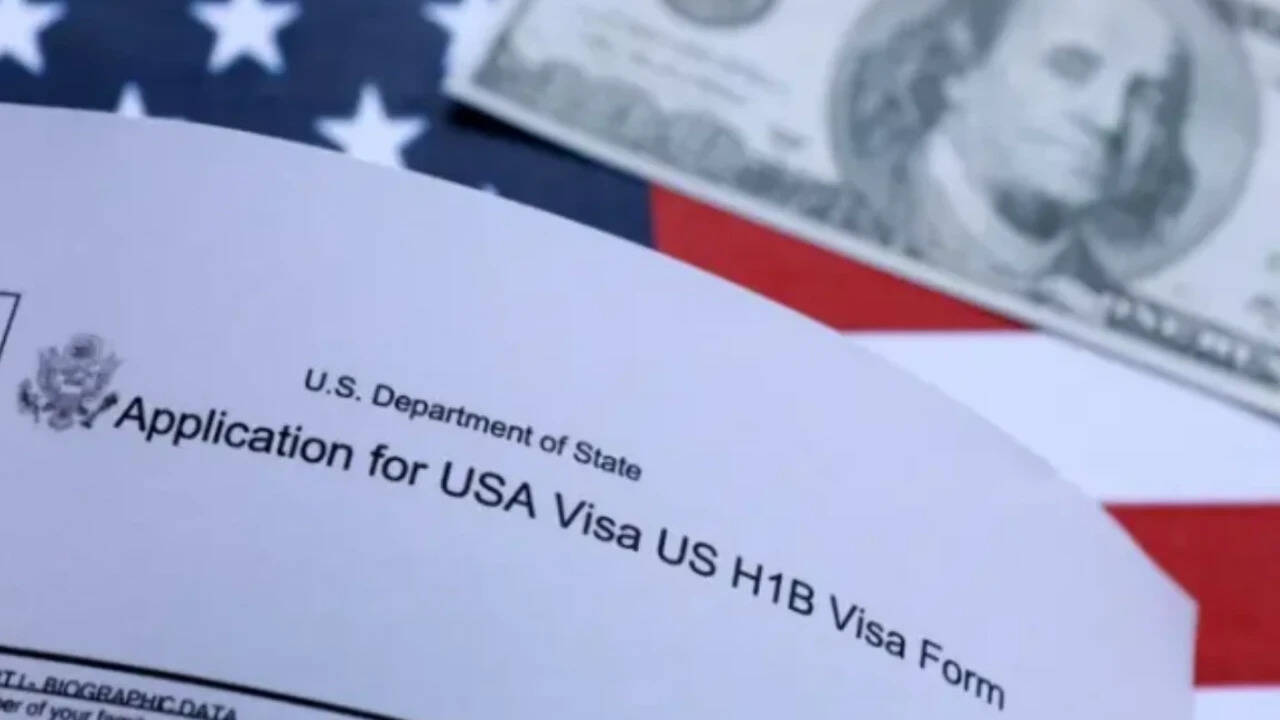
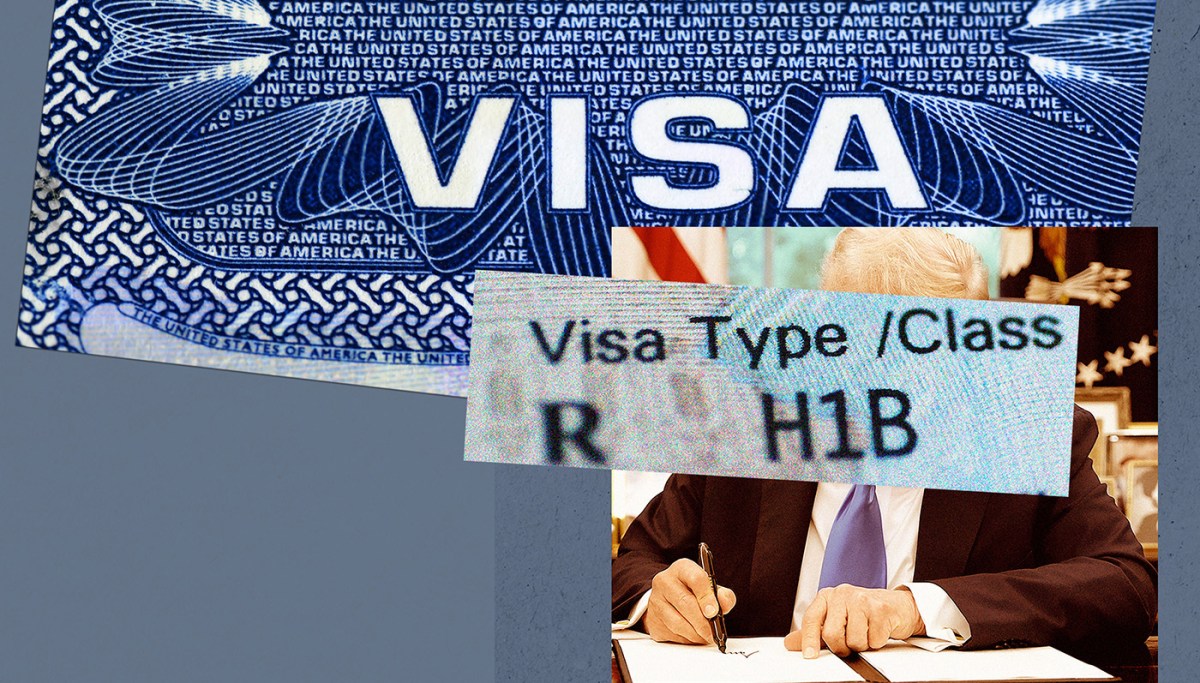
Yesterday, in Global Nurse Force v. Trump, the US District Court for the Northern District of California issued a decision blocking the Trump Administration's $100,000 fee on applications for H-1B visas (which are used by tech firms, research institutions, and other organizations to hire immigrant workers with various specialized skills).
framing: assertive · carried by 1 article(s) · first seen 2026-10-01
That suggests appellate courts (and, ultimately, perhaps, the Supreme Court) might rule the same way.
2026-10-01 · Reason
Second Federal Court Rules Against Trump's $100,000 H-1B Visa Fee · assertive framing

Claims (15 extracted, 2 hedged)

Yesterday, in Global Nurse Force v. Trump, the US District Court for the Northern District of California issued a decision blocking the Trump Administration's $100,000 fee on applications for H-1B visas (which are used by tech firms, research institutions, and other organizations to hire immigrant workers with various specialized skills). asserted
which → issue → skills
Federal district Judge Haywood Gilliam, Jr. ruled that the imposition of the fee violated the Administrative Procedure Act (APA) because, among other things, the administration failed to go through "notice and comment" rule-making as required by the Act. asserted
administration → rule → Act
The first one, issued in June by a federal district court in Massachusetts, relied in part on different grounds. asserted
one → issue → grounds
It held that the imposition of the fee is a usurpation of Congress's power to tax, and that the relevant federal statutes do not delegate that power. asserted
statutes → hold → power
I agree with the earlier ruling, which I wrote about in detail here. asserted
I → agree → detail
The Massachusetts decision also held that imposition of the fee violates the APA. asserted
imposition → hold → APA
Because the earlier ruling already blocks imposition of the $100,000 fee and the US Court of Appeals for the First Circuit refused to stay the , the new decision does not have any immediate impact. asserted
decision → block → impact
But it is nonetheless significant that a second federal court has ruled against the policy, and on a different ground. asserted
court → rule → ground
That suggests appellate courts (and, ultimately, perhaps, the Supreme Court) might rule the same way. uncertain
courts → suggest → ?
As is sometimes the case, different arguments might appeal to different judges. uncertain
arguments → appeal → judges
From the perspective of plaintiffs challenging the fee, it helps that they have multiple potential pathways to victory. asserted
they → challenge → victory
I will not attempt analyze yesterday's decision in detail because I am not an APA expert. asserted
I → attempt → detail
So I will conclude by noting that I hope appellate courts will ultimately uphold these district court rulings. asserted
courts → conclude → rulings
The Cato Institute, Prof. Michael McConnell and I plan to file an amicus brief supporting affirmance of the Massachusetts decision, in the US Court of Appeals for the First Circuit. asserted
Institute → plan → Circuit
I previously criticized the $100,000 H-1B fee on both legal and policy grounds here, here, and here. asserted
I → criticize → grounds
Give feedback · no sign-in needed

No sign-in needed for now. Your note is sent without a name, so it cannot be answered.

History Support