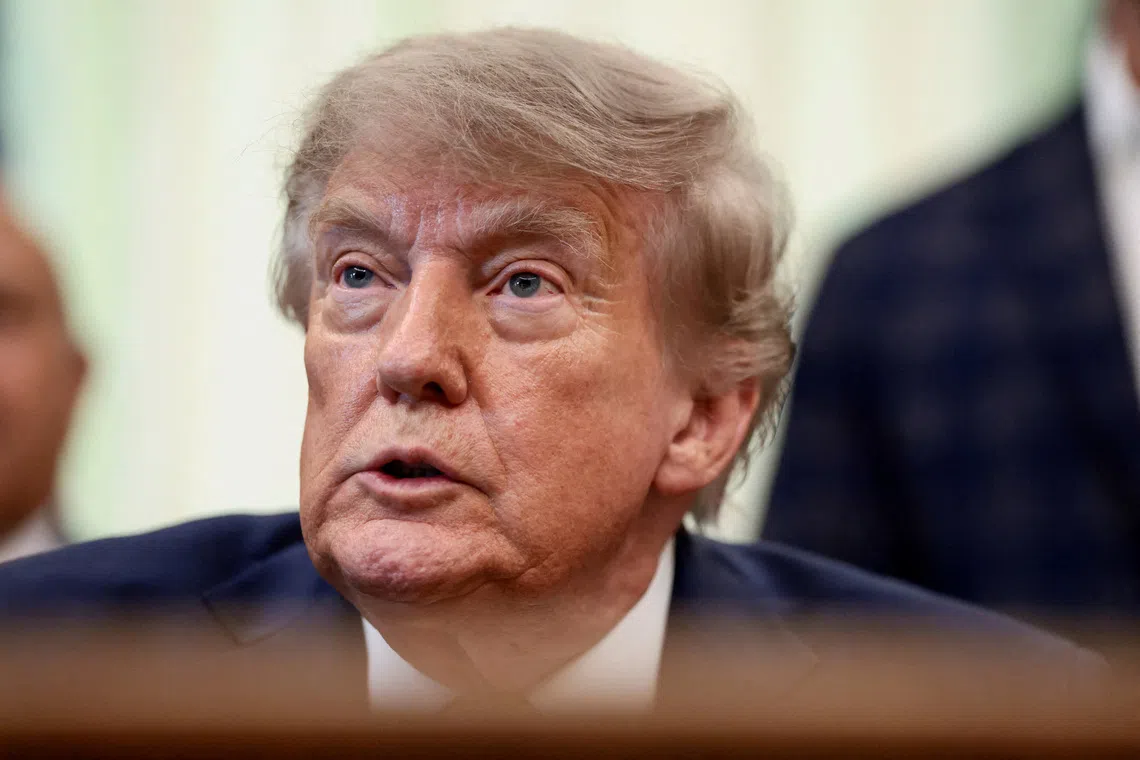
A second US federal judge has blocked US President Donald Trump’s $100,000 fee on new H-1B visas for highly skilled foreign workers, dealing another legal setback to the administration’s attempt to sharply increase the cost of the programme.
asserted
judge → block → programme
US district judge Haywood Gilliam in Oakland, California, ruled that US Citizenship and Immigration Services (USCIS) and the State Department failed to follow required rule-making procedures before putting the fee into effect.
asserted
Services → rule → effect
Gilliam granted a request from a coalition of unions, employers and nonprofit organisations that are challenging the fee in court.
asserted
that → grant → court
The ruling prevents the agencies from implementing the charge while that case proceeds.
asserted
case → prevent → charge
The plaintiffs argued that federal agencies could not introduce the fee without following the notice-and-comment procedures required under US administrative law.
uncertain
agencies → argue → law
Gilliam agreed that the agencies had failed to follow those procedures before implementing the fee.
asserted
agencies → agree → fee
The ruling comes after another federal judge in Boston separately blocked the fee in June in a case brought by 20 US states.
asserted
judge → come → states
That judge, US District Judge Leo Sorokin, concluded that the administration had exceeded its authority by imposing the charge without congressional approval.
asserted
administration → conclude → approval
A Boston-based federal appeals court in July declined to put that ruling on hold, leaving the fee blocked in that case while the administration's appeal continues.
asserted
appeal → base → case
Why did Trump impose the $100,000 fee?
asserted
Trump → impose → fee
The H-1B programme allows US employers to hire foreign workers in specialty occupations that typically require specialised education or training.
asserted
that → allow → education
Congress created the programme in 1990.
asserted
Congress → create → 1990
It provides 65,000 visas each year, with another 20,000 reserved for workers with advanced US degrees.
asserted
It → provide → degrees
H-1B visas are particularly important to technology companies, which rely on them to recruit specialised workers from countries including India and China.
asserted
which → rely → India
The visas generally allow workers to remain in the US for three to six years.
asserted
workers → allow → years
Before Trump's fee was introduced, employers typically paid around $2,000 to $5,000 in government fees depending on the circumstances of the application.
asserted
employers → introduce → application
Trump introduced the fee as part of his broader immigration crackdown, arguing that companies had abused the H-1B programme by using foreign workers to replace Americans with cheaper labour.
asserted
companies → introduce → labour
His administration has also introduced enhanced scrutiny of H-1B applicants and proposed changes to the visa selection process that would favour higher-skilled and higher-paid workers.
asserted
that → introduce → workers
The administration invoked presidential powers under federal immigration law to restrict the entry of foreign nationals whose admission it said could be detrimental to US interests.
uncertain
it → invoke → interests
The $100,000 charge represented a dramatic increase over the programme's traditional fees.
asserted
charge → represent → fees
What happens to the fee now?
asserted
What → happen → fee
Trump's original fee was due to expire on September 21, but the White House extended it for another year.
asserted
House → expire → year
The extension would keep the policy in place through September 2027, although the fee is currently blocked by court orders.
asserted
fee → keep → orders
Separately, the Department of Homeland Security has proposed a permanent fee of about $103,000.
asserted
Department → propose → 103,000
That proposal is being pursued through a formal rule-making process, meaning it raises different legal questions from the lawsuits challenging Trump's original $100,000 charge.
asserted
it → pursue → charge
The proposed fee is also likely to face legal challenges.
asserted
fee → propose → challenges
The US Chamber of Commerce, the country's largest business lobbying group, has filed another lawsuit challenging the $100,000 fee.
asserted
Chamber → file → fee
It is appealing after a judge rejected its claims that Trump lacked authority to impose the charge.
uncertain
Trump → appeal → charge
Few employers have paid the $100,000 fee since it was introduced, according to Reuters.
What does this mean for Indian H-1B applicants?
The H-1B programme is particularly significant for Indian professionals because Indian nationals make up a large share of H-1B workers and technology companies are among the programme's biggest users.
The original $100,000 fee does not apply to every H-1B worker.
uncertain
fee → pay → worker
It was aimed at certain new H-1B applicants seeking to enter the US from abroad and did not apply to renewals of existing visas or to foreign nationals already in the US on student visas who transition to H-1B status.
asserted
who → aim → status
The current court rulings therefore do not amount to a cancellation of the H-1B programme.
asserted
rulings → amount → programme
They concern the administration's attempt to impose the additional $100,000 charge.
asserted
They → concern → charge
For employers and prospective workers, however, the competing court cases and the separate proposal for a roughly $103,000 permanent fee leave the future cost and rules surrounding new H-1B hiring uncertain.
asserted
cost → compete → hiring
 The Aporia