Photo via Washington Examiner

Treasury Department sanctions Iran’s automotive and rail sectors, areas Tehran has increasingly relied on due to blockade

Read the original at Washington Examiner ↗
Cite

Brest, M. (2026, October 1). Treasury Department sanctions Iran’s automotive and rail sectors, areas Tehran has increasingly relied on due to blockade. Washington Examiner. https://www.washingtonexaminer.com/policy/foreign-policy/4750366/treasury-department-targets-iran-automotive-railway-sanctions/

Dated when The Aporia collected the article, usually within hours of publication. Check the original for its exact date and byline.

Washington Examiner · collected 2026-10-01 · by Mike Brest

Quick Summary

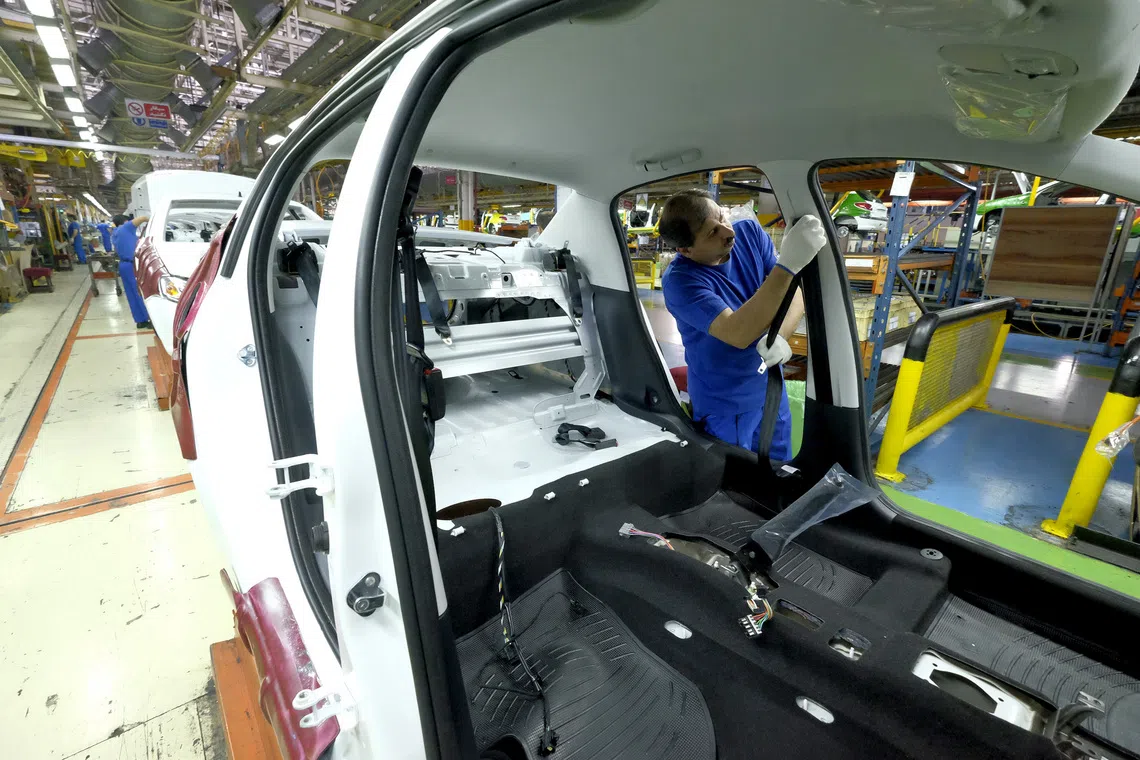
On Thursday, the Treasury Department imposed sanctions on Iran’s automotive and railway sectors as part of Operation Economic Outcast to pressure the Islamic Revolutionary Guard Corps financially. Sanctions target two major car manufacturers—Iran Khodro Company and SAIPA Iranian Automobile Manufacturing Company—which together control over 90% of Iran's domestic car market, along with other entities involved in manufacturing, mining, and metals. Treasury Secretary Scott Bessent emphasized that these actions aim to significantly reduce funding for the Guard’s operations and terror activities globally.
Written by AI on 2026-10-01, from this article's own text only (the story summary below draws on all the coverage).
See how they differ ↓

AI analysis

Story summary

The US Treasury Department on October 1 announced new sanctions targeting Iran's automotive and railway sectors, including major companies like Iran Khodro Company (IKCO) and SAIPA Iranian Automobile Manufacturing Company, which together represent more than 90% of Iran’s domestic auto market. This move is part of the ongoing "Operation Economic Outcast," aimed at reducing funding for the Islamic Revolutionary Guard Corps (IRGC) by squeezing Tehran's economic lifelines beyond its oil industry. The sanctions also target railway companies such as the Islamic Republic of Iran Railway Company, Raja Passenger Trains Company, and a private freight line, Sherkat-E Rah Ahan-E Khamle-O-Naghle, in response to the Iranian regime’s attempts to circumvent previous economic restrictions through alternative transportation methods. The US aims to force Iran into negotiations by severely limiting its ability to generate revenue outside of oil exports.

Written for “US Sanctions On Iran” on 2026-11-18, grounded in this article and the 1 other(s) covering the same event.

How they differ

2 outlets covered “US Sanctions On Iran”.

What each outlet says

One AI summary per outlet of its latest article on this story, written from that article alone and checked against it. Open the article for the outlet's own words.

Washington ExaminerThis outlet1 Oct

On Thursday, the Treasury Department imposed sanctions on Iran’s automotive and railway sectors as part of Operation Economic Outcast to pressure the Islamic Revolutionary Guard Corps financially. Sanctions target two major car manufacturers—Iran Khodro Company and SAIPA Iranian Automobile Manufacturing Company—which together control over 90% of Iran's domestic car market, along with other entities involved in…

Treasury Department sanctions Iran’s automotive and rail sectors, areas Tehran has increasingly relied on due to blockade (this article)
The Straits Times1 Oct

The Trump administration imposed new sanctions on Thursday against Iran's auto and rail sectors, including companies like Iran Khodro and SAIPA which control over 90% of Iran's domestic car market. These measures are part of a broader effort to economically isolate Iran by cutting off funding for its military activities and the Islamic Revolutionary Guard Corps. The sanctions aim to counteract the impact of Iran’s…

US sanctions target Iran's auto, rail sectors after blockade chokes shipping lanes →

Compared with similar articles

This article reads leans right and hedges 0% of its claims. Each row says how that neighbour differs.
The Straits Times
Leans strongly right further right than this Hedges 1 of 10 claims Outlet record 64/100
Fox News
Hedges 0 of 21 claims Outlet record 67/100
“Article A reports on a prediction by Treasury Secretary Scott Bessent about Iran's remaining oil shipments, while Article B describes new sanctions against Iran’s automotive and rail sectors as part of Operation Economic Outcast. These are different specific actions occurring at distinct times.”
The Independent
Hedges 3 of 43 claims Outlet record 59/100
“Article A discusses oil prices rising due to Trump's denial of offering sanctions relief, while Article B reports on new sanctions against Iran's automotive and rail sectors.”
The Independent
Leans left further left than this Hedges 1 of 14 claims Outlet record 59/100
“Article A discusses an appeal by Iran's Revolutionary Guard to U.S. voters, while Article B reports on new sanctions levied by the Treasury Department against Iranian automotive and rail sectors in response to Iran's evasion tactics. These are distinct actions occurring at different times.”
Al Jazeera
Hedges 3 of 14 claims Outlet record 60/100
“The articles discuss different aspects related to U.S. sanctions against Iran; Article A focuses on new sanctions targeting automotive and rail sectors, while Article B reports on Iran urging Iraq to lift flight bans due to existing sanctions.”
New York Post
Leans strongly right further right than this Hedges 2 of 30 claims Outlet record 66/100
“Article A discusses the overall impact of Trump's strategy against Iran, while Article B reports on a specific sanction action by the Treasury Department. Although related, they describe different occurrences.”
The Straits Times
Hedges 1 of 11 claims Outlet record 64/100
“Article A discusses sending envoys to pressure countries to isolate Iran economically, while Article B reports new sanctions on Iran's automotive and rail sectors as part of Operation Economic Outcast. Although related, they describe different specific actions.”
Toronto Star
Leans right Hedges 0 of 2 claims Outlet record 64/100
“While both articles discuss sanctions against Iran in the context of Operation Economic Outcast, they describe different specific actions taken on different dates.”

Story

US Sanctions On Iran
Politics · 2 article(s) covering the same event. See how they differ ↑
How this article was measured signals, leaning charts, publisher record, byline, topics and claims

Signals How these are calculated →

Claims extracted
17
sentences that state something as happening or true
Uncertain
0%
0 of 17 hedged ("reportedly", "may", "according to")
Leaning
Leans right
of the writing, not the subject · beta estimate
Publisher signals
67/100
Washington Examiner's corrections and hedging, across everything collected from it. Not a measure of accuracy.
Outlets on this story
2
Politics
Same framing elsewhere
1
articles that frame the event the way this one does
Analyzed 2026-10-01 · how these are computed

How this is being covered How these are calculated →

Article leaning vs. publisher reliability
Source leaning vs. consistency

Publisher

Washington Examiner · 5103 article(s) · 11 correction(s) detected
Running correction rate · 11 correction(s)

Who wrote this

Mike Brest
57 article(s) here · 0 carrying a prediction
This was Cao’s first time testifying on Capitol Hill in a public hearing since May, and he faced questions about the Iran war, specifically about the well-being of sailors and Marines aboard vessels in the region as well as the physical costs of the conflict.
I was proud to execute them, and I would do it again tomorrow.”
The Trump administration is optimistic that its trilateral talks with Russian and Ukrainian officials set for Tuesday and Wednesday in the United Arab Emirates could result in legitimate progress that allows them to continue the talks on the way to a lasting peace.
Outgoing Republican Rep. Thomas Massie (R-KY) reintroduced articles of impeachment against War Secretary Pete Hegseth on Monday when Congress returned to Washington, D.C., kicking off what’s expected to be rigorous oversight of the Department of War and its leader in the weeks and months ahead.
Trump announced a framework that is “going to involve more than Ukraine” and “might involve all of Europe.”
The Ukrainian government is “optimistic” that U.S. first lady Melania Trump may be able to broker additional localized ceasefires to provide humanitarian aid to the most desperate communities suffering from the war.
We are more determined than ever, more resolute than ever to finish what we have started, we will stand, we will fight, and we will defend this republic from all enemies foreign and domestic.”
The department’s $1.5 trillion defense budget request was broken into two: a base budget of $1.15 trillion and a reconciliation bill for $350 billion, which could be passed with only Republican support.
Democrats have been salivating at the possibility of taking back the majority in one or both parties to conduct aggressive oversight of the Pentagon, and Tuesday’s “bluenami” will give them that opportunity.
Secretary of War Pete Hegseth maintains President Donald Trump’s support but faces a tidal wave of opposition following the midterm elections, which could threaten his job security.
Also by Mike Brest
Nothing else under this byline is closely related to this article, so these are simply their most recent.
All 57 articles by Mike Brest →

Topics

Iran Iranian Operation Economic Outcast The Treasury Department U.S.

Subjects

Iran GPE · 9× Iranian NORP · 6× U.S. GPE · 5× Guard ORG · 2× Hong Kong GPE · 2× Keshvardoust PERSON · 2× The Treasury Department ORG · 2× The United States GPE · 2× Treasury ORG · 1× the Islamic Revolutionary Guard Corps’ ORG · 1×

Narrative

Two car companies — Iran Khodro Company and SAIPA Iranian Automobile Manufacturing Company — combine to represent higher than 90% of the country’s domestic car market, and a treasury department release calls it “Iran’s largest economic sector outside of oil and gas, remains a core contributor to Iran’s industrial base and is a major revenue generator for the regime.”
framing: assertive · carried by 1 article(s) · first seen 2026-10-01

Claims (17 extracted, 0 hedged)

The Treasury Department announced on Thursday afternoon new sanctions levied against Iran’s leading automotive and railway companies in response to the Islamic Revolutionary Guard Corps’ use of both to evade the U.S. naval blockade. asserted
Department → announce → blockade
These sanctions are the latest in Operation Economic Outcast, which is the name given to the department’s ongoing effort to squeeze the Iranian economy to the detriment of the Guard. asserted
which → give → Guard
The United States has already issued sanctions on Iran’s aviation, shipping, technology, digital assets, gold, as well as petroleum and petrochemical sectors. asserted
States → issue → sectors
“The Iranian regime’s ability to fund its war machine and inflict terror on the world has been severely diminished thanks to Operation Economic Outcast,” said Treasury Secretary Scott Bessent. asserted
Bessent → fund → Outcast
“Today’s action directly targets Iran’s enablers and lays the groundwork for the United States and our partners to drain the regime’s revenue once and for all.” asserted
States → target → all
Two car companies — Iran Khodro Company and SAIPA Iranian Automobile Manufacturing Company — combine to represent higher than 90% of the country’s domestic car market, and a treasury department release calls it “Iran’s largest economic sector outside of oil and gas, remains a core contributor to Iran’s industrial base and is a major revenue generator for the regime.” asserted
release → combine → regime
A motorcycle company called Niroo Motor Shiraz Industrial and Manufacturing Company, the largest one in Iran, was also sanctioned because it closely cooperates with the Guard and the domestic state security apparatus, known as the Basij, including by providing motorcycles to plainclothes intelligence officers on patrol. asserted
it → call → patrol
Other companies outside Iran, including the UAE-based Troy Trading Arac Parcalari Sanayi Ve Ticket Limited Sirketi, Hong Kong-based Hessenberg Co., Limited, and Tanex Global Trading Hong Kong Limited, were sanctioned because they support Iran’s auto industry. asserted
they → include → industry
Multiple entities involved in the Iranian railway system, which the Treasury Department alleges has been used to circumvent the U.S. naval blockade by transporting oil via key land routes, were sanctioned as well. asserted
Department → involve → routes
A handful of companies involved in manufacturing, mining, and metals, such as steel, were sanctioned as well. asserted
handful → involve → steel
Ramin Keshvardoust and Mehnoosh Poursaraf Hamedani, both of whom are Hong Kong-based Iranian business people, were sanctioned as well. asserted
both → base → whom
The former, Keshvardoust, used companies and accounts under his control to facilitate shipments of Iranian steel and oil totaling tens of millions of dollars, while Hamedani is a shareholder of one of the steel companies Keshvardoust operates. asserted
Keshvardoust → use → companies
The various rounds of sanctions combined with the naval blockade have led Iran’s rial currency to hit a new record low compared to the U.S. dollar earlier this week. asserted
currency → combine → dollar
The U.S. military began a naval blockade of Iranian ports back in April, shortly after President Donald Trump announced the April 7 ceasefire. asserted
Trump → begin → ceasefire
It continued until mid-June when it was paused following the signing of the Memorandum of Understanding, which lasted only until mid-July. asserted
which → continue → July
The Navy resumed its blockade when the collapse of the MOU occurred. asserted
collapse → resume → MOU
U.S. Central Command, the combatant command in charge of the Middle East region, said on Wednesday that as of Sept. 30, U.S. forces have redirected 125 commercial vessels. asserted
forces → say → vessels
Give feedback · no sign-in needed

No sign-in needed for now. Your note is sent without a name, so it cannot be answered.

History Support