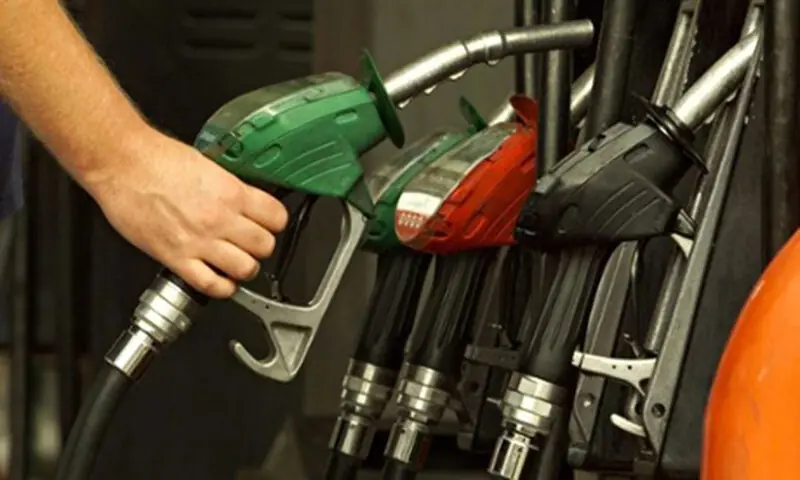
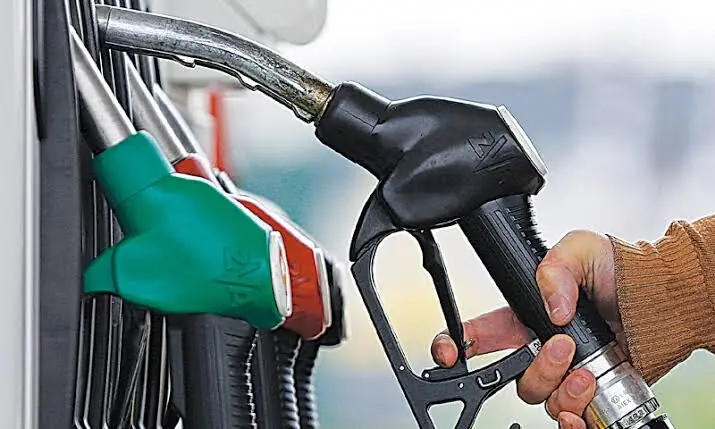
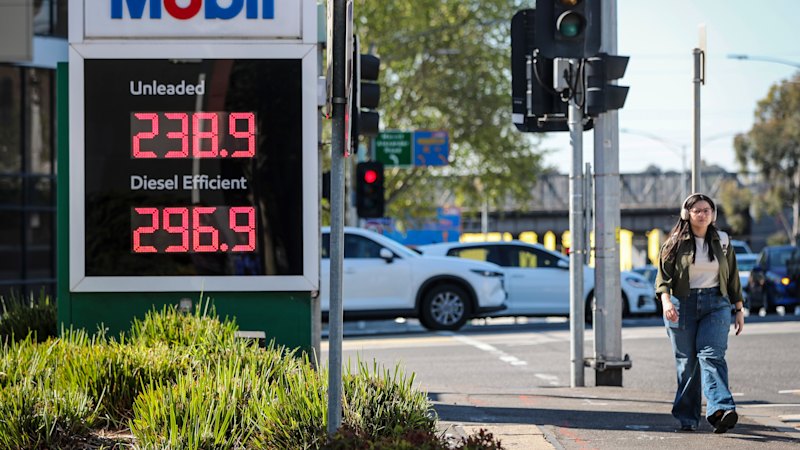
On Thursday, the government adjusted fuel prices in Pakistan, increasing petrol by Rs3.26 to Rs390.66 per litre while decreasing high-speed diesel (HSD) by Rs1.01 to Rs399.34 per litre. The price changes follow a trend influenced by international market fluctuations and are part of ongoing efforts to manage the economic impact of rising fuel costs, including reduced official vehicle fuel allocations and extended business hours curfews.
Written locally by qwen2.5:14b on 2026-10-01,
using this article's own text rather than the other coverage of the
same event (that is the story summary below).
Story summary
The Government of Pakistan adjusted fuel prices on October 2, increasing the price of petrol by Rs3.26 per litre to Rs390.66, while reducing high-speed diesel (HSD) rates by Rs1.01 to Rs399.34. Taxes and duties remain unchanged at Rs114 per litre for petrol and Rs100 for diesel. This price revision follows a peak of Rs520.35 for HSD in April, which had begun rising due to the US-Iran conflict starting February 28, and a peak of Rs458.41 for petrol, beginning its upward trend from March.
Deputy Prime Minister Ishaq Dar acknowledged the success of the fuel subsidy scheme during a meeting on September 29, praising the collaboration between various ministries and authorities, including Ogra (the Oil and Gas Regulatory Authority) and all provinces. In response to rising fuel costs and the Middle East conflict, additional austerity measures have been introduced, such as market closure by 9pm and reducing official vehicle fuel allocations by 50% for three months.
Written for “Petrol Price Adjustments” on 2026-10-05,
grounded in this article and the 0 other(s) covering the same event.
The government on Thursday raised the price of petrol by Rs3.26 per litre, but reduced that of high-speed diesel (HSD) by Rs1.01 per litre.
asserted
government → raise → litre
Following the revision, petrol will retail at Rs390.66 per litre, while HSD will cost Rs399.34 per litre.
asserted
HSD → follow → litre
The government continues to levy Rs114 per litre in taxes and duties on petrol and Rs100 per litre on diesel.
asserted
government → continue → diesel
According to the Petroleum Division’s notification, the new prices are applicable for Oct 2 (Friday).
uncertain
prices → accord → Oct
The price of HSD has come down from a peak of Rs520.35 recorded on April 3.
asserted
price → come → April
Its price had started rising from Rs281 per litre after the US-Iran war broke out on February 28.
asserted
war → start → February
The petrol price had peaked at Rs458.41 on April 3 after beginning its upward trajectory from Rs266 in the first week of March.
asserted
price → peak → March
Meanwhile, the government has reintroduced a raft of austerity measures in response to rising fuel prices amid the ongoing Middle East conflict.
asserted
government → reintroduce → conflict
Under these measures, markets are required to close by 9pm and fuel allocations for official vehicles has been cut by 50 per cent for three months.
asserted
allocations → require → months
On September 13, Prime Minister Shehbaz Sharif also announced a “relief scheme” for users of motorcycles, autos and vehicles of up to 800cc to “alleviate the burden” of rising global oil prices.
asserted
Sharif → announce → prices
Deputy Prime Minister and Foreign Minister Ishaq Dar on Sept 29 appreciated the success of the scheme, saying that it reflected a “whole of government” approach.
Chairing a meeting of the National Steering Committee on Fuel Subsidy to review the implementation of the scheme, the deputy premier noted that the information, IT and petroleum ministries, as well as the Oil and Gas Regulatory Authority (Ogra), the State Bank of Pakistan (SBP) and all provinces, had made “concerted” efforts for the scheme.
asserted
ministries → appreciate → scheme
It was noted that to date, around 7.60 million registrations have been successfully made, and the token redemption process has entered the second week.
asserted
process → note → week
Moreover, 7.71m tokens have been redeemed.
asserted
tokens → redeem → ?
Previously, on July 17, Petroleum Minister Ali Pervaiz Malik announced that fuel prices would now be fixed on a daily basis due to fluctuations in international market prices following renewed hostilities between Iran and the US.
asserted
prices → announce → Iran
Prior to this, the government had been announcing weekly revisions to fuel prices since early March, alongside measures for the conservation of fuel amid possible oil supply disruptions due to the ongoing conflict in the Middle East.
asserted
government → announce → East
The federal government in April also announced targeted relief measures to provide subsidised fuel.
asserted
government → announce → fuel
The petroleum minister stated that the cabinet and the prime minister had decided to give the Oil and Gas Regulatory Authority (Ogra) the responsibility of deciding fuel prices on a daily basis based on international market trends.
asserted
cabinet → state → trends
Petrol is mainly used in private transport, small vehicles, rickshaws and two-wheelers, and changes in its price affect the middle and lower-middle classes.
asserted
changes → use → classes
Similarly, changes in diesel prices also impact the public at large, as it is mainly used in the heavy transport sector, power plants and large generators.
asserted
it → impact → sector
Petrol and high-speed diesel (HSD) are the major revenue earners, with monthly sales of about 700,000 to 800,000 tonnes, compared to just 10,000 tonnes of monthly demand for kerosene.
asserted
Petrol → compare → kerosene
 The Aporia