The Loophole That Likely Doomed the Cornell Rape Case Before It Even Started

Read the original at Mother Jones ↗
Mother Jones · collected 2026-10-01 · by Inae Oh

Quick Summary

Tompkins County District Attorney Matthew Van Houten discussed a rape case involving allegations at a fraternity house where the victim admitted to voluntarily consuming drugs and alcohol without alleging physical helplessness or unconsciousness. The district attorney's statement highlights New York’s voluntary intoxication loophole, which requires victims to prove they were unable to consent due to extreme incapacitation for charges beyond third-degree rape. Advocates argue this law discourages prosecution by placing undue burden on victims.
Written locally by qwen2.5:14b on 2026-10-02, using this article's own text rather than the other coverage of the same event (that is the story summary below).

AI analysis runs on qwen2.5:14b, locally

Story summary

In October 2024, a woman at Cornell University filed a lawsuit against seven fraternity members and the university itself, accusing them of gang-raping her while she was under the influence of drugs and alcohol. Known only as Jane Doe in court documents, she is using New York's legal provision that allows anonymity for sexual assault victims. However, some online users are attempting to uncover her identity, leading to harassment and threats against her. In response, women across social media platforms like Instagram, TikTok, and Threads have started declaring themselves as Jane Doe in solidarity with the accuser, sharing their own experiences of sexual assault to protect her anonymity and support her case. This movement is reminiscent of the #MeToo era, aiming to amplify voices against sexual violence and encourage more people to come forward without fear of stigma or retaliation.

Written for “Jane Doe Solidarity Cornell Rape Case” on 2026-10-04, grounded in this article and the 114 other(s) covering the same event.

Signals How these are calculated →

Claims extracted
95
claim-shaped sentences
Uncertain
2%
2 of 95 hedged
Leaning
Leans left
of the writing, not the subject · beta estimate
Correction & hedging signals
95.3
corrections and hedging in what we collected; not a measure of accuracy
Outlets on this story
115
Crime & Law
Narrative spread
1
articles carrying this framing
Analyzed 2026-10-01 · how these are computed

Story

📰 Jane Doe Solidarity Cornell Rape Case
Crime & Law · 115 article(s) covering the same event. See how they differ ↓

How this is being covered How these are calculated →

Article leaning vs. publisher reliability
Source leaning vs. consistency

Compared with similar articles

This article reads leans left and hedges 2% of its claims. Each row says how that neighbour differs.
CBS News
⚖️ leaning not scored 🔴 no claims extracted 📰 publisher trust 66
“The articles discuss related legal aspects of a rape case at Cornell but do not describe the same specific incident or occurrence.”
Toronto Star
⚖️ leaning not scored 🔴 7% hedged 2 of 27 📰 publisher trust 63
“While both articles discuss the legal challenges surrounding sexual assault cases due to intoxication at Cornell University, they do not describe a single specific incident but rather the broader context and legal issues.”
The Independent
⚖️ Leans left 🔴 7% hedged 2 of 30 📰 publisher trust 59
“While both articles discuss the same legal issue and context involving a sexual assault case at Cornell University, they refer to different time points in the investigation process.”
New York Post
⚖️ leaning not scored 🔴 8% hedged 2 of 26 📰 publisher trust 64
“Both articles discuss the 'voluntary intoxication loophole' in New York law related to the 'Cornell 7' case, focusing on how it impacts rape cases involving intoxicated victims.”
CBS News
⚖️ Leans left 🔴 0% hedged 0 of 2 📰 publisher trust 66
“Both articles discuss the same Cornell University rape investigation and focus on New York's voluntary intoxication loophole affecting prosecution.”
Fox News
⚖️ Leans left 🔴 7% hedged 2 of 27 📰 publisher trust 69
“Both articles discuss the reconsideration of a Cornell University rape case by Tompkins County District Attorney Matthew Van Houten in light of New York's voluntary intoxication loophole, referencing the same legal scrutiny and timeframe.”
New York Post
⚖️ leaning not scored 🔴 8% hedged 1 of 12 📰 publisher trust 64
“While both articles discuss the reopening of an investigation into alleged sexual assault involving seven Cornell students, Article B focuses on legal details and a loophole in New York law that may affect prosecution, which is not the main focus of Article A.”
The Sydney Morning Herald
⚖️ Leans left 🔴 5% hedged 2 of 44 📰 publisher trust 61
“While both articles discuss the reopening of an investigation into gang-rape allegations from a Cornell University fraternity house, Article A focuses on the initial lawsuit and public response to the reopened investigation, while Article B analyzes legal aspects and the voluntary intoxication loophole that influenced the original decision not to prosecute.”
New York Post
⚖️ leaning not scored 🔴 31% hedged 8 of 26 📰 publisher trust 64
“While both articles discuss the decision by Tompkins County District Attorney Matthew Van Houten not to charge several Cornell University fraternity brothers in a rape case, they do not describe the same specific incident or occurrence. Article A focuses on Hostin's comments and interpretation of the accuser's statement, while Article B provides additional context about the legal loophole that influenced the decision.”
Washington Examiner
⚖️ Leans left 🔴 8% hedged 4 of 53 📰 publisher trust 72
“Article A focuses on the legal loophole related to voluntary intoxication in a rape case, while Article B discusses the political debate triggered by reopening the investigation of similar allegations.”

Publisher

Mother Jones · 225 article(s) · 0 correction(s) detected
No corrections detected for this publisher. That may mean careful reporting, or simply that nothing has been checked.

Who wrote this

Inae Oh
4 article(s) here · 1 carrying a prediction
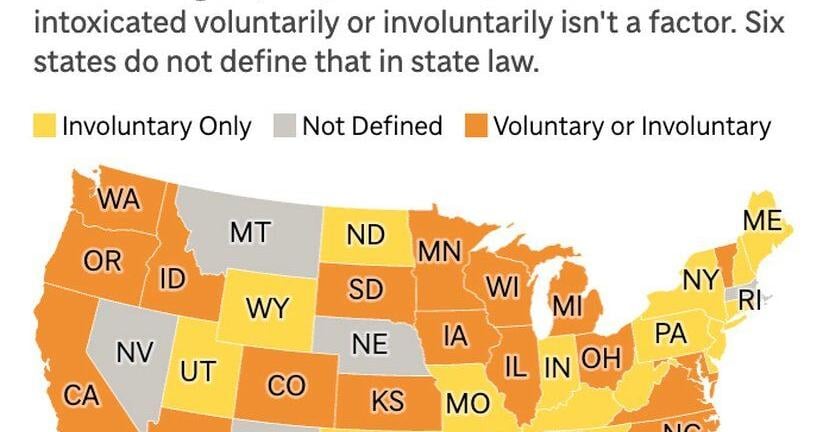
🔮 But the controversial law—which many say requires an extraordinarily high bar for victims of rape who willingly became intoxicated to prove that they were unable to consent to sex—seems to animate nearly every turn of his remarks.
🔮 She was recalling her time attending Students for Fair Admissions v. Harvard, the landmark case that would later reach the Supreme Court and dismantle race-based affirmative action, as part of her nearly decade-long research process for American Hagwon, the much-anticipated third installment of a planned quartet dedicated to Korean diasporas.
2026-09-29 · assertive framing · The Education of Min Jin Lee
🔮 “It will be called the Trump Dividend,” he said at Wednesday’s GOP convention in Dallas, as a beaming Scott Bessent, the Treasury secretary, applauded along.
2026-09-11 · assertive framing · Your Deadbeat President Is Never Giving You $5,000
🔮 The scenes unfolding in Judge William Sullivan’s courtroom in Plymouth, Massachusetts, have been excruciating.
2026-08-27 · assertive framing · Did the Lindsay Clancy Trial Need to Happen?
Also by Inae Oh
The Education of Min Jin Lee
2026-09-29 · Mother Jones
Nothing else under this byline is closely related to this article, so these are simply their most recent.

Topics

Cornell New York’s State Assembly Tompkins County Women’s Equal Justice

Subjects

Cornell ORG · 4× New York’s GPE · 2× Jane Doe PERSON · 1× Jane Manning PERSON · 1× Matthew Van Houten PERSON · 1× New York GPE · 1× New York State GPE · 1× State Assembly ORG · 1× Tompkins County GPE · 1× Women’s Equal Justice ORG · 1×

Narrative

So if a rape victim did, by some miracle, make it onto the witness stand, it was perfectly legal for the cross-examination to start with the question, “Were you a virgin before this happened?” and to spend hours cross-examining the victim about her unrelated sexual history.
framing: assertive · carried by 1 article(s) · first seen 2026-10-01
🔮 But the controversial law—which many say requires an extraordinarily high bar for victims of rape who willingly became intoxicated to prove that they were unable to consent to sex—seems to animate nearly every turn of his remarks.

Claims (95 extracted, 2 hedged)

“She never says that she was drugged without her knowledge. asserted
she → say → knowledge
She admits to taking drugs and alcohol voluntarily and with knowledge. asserted
She → admit → knowledge
She does not allege that she was forced to engage in any acts. asserted
she → allege → acts
She does not say that she was physically helpless or unconscious or incapacitated at any point during the time at the fraternity house.” asserted
she → say → house
Tompkins County District Attorney Matthew Van Houten didn’t directly refer to New York’s voluntary intoxication loophole in his statement confirming this week that his office is taking a fresh look at rape allegations at Cornell after declining to do so in 2024. asserted
office → refer → 2024
But the controversial law—which many say requires an extraordinarily high bar for victims of rape who willingly became intoxicated to prove that they were unable to consent to sex—seems to animate nearly every turn of his remarks. asserted
they → say → remarks
Specifically, that the victim in the incident, identified as Jane Doe, “admits to taking drugs and alcohol voluntarily and with knowledge,” and that she does “not say that she was physically helpless.” asserted
she → identify → knowledge
Take a look, and much of the same language appears in the state’s laws on rape. asserted
much → take → rape
If that strikes you as victim-blaming, you’re not alone; advocates of sexual assault victims and a majority of New York’s State Assembly members have long condemned the law for exactly the same. asserted
advocates → strike → same
Now, amid national outrage over the allegations, questions have emerged about whether the statutes may have deterred prosecutors from pursuing the case. uncertain
statutes → emerge → case
I talked to Jane Manning, director of Women’s Equal Justice, about the laws’ likely role in tanking the Cornell case back in 2024, the history behind the statutes and the movement to reform them—and the person standing in the way of change. asserted
I → talk → change
Let’s give a brief overview of the rape laws surrounding the Cornell allegations. asserted
’s → let → allegations
First-degree rape requires that the victim either be the victim of forcible compulsion, meaning that extreme violence took place, or that the victim be “physically helpless.” asserted
victim → require → place
Rape in the second degree applies when a victim is involuntarily drugged, such as a drink being spiked. asserted
drink → apply → degree
Rape in the third degree applies where none of the above statutes apply, but the victim gives an express verbal declaration of non-consent. asserted
victim → apply → consent
Those laws also include other provisions, including age-related provisions. asserted
laws → include → provisions
But these are the statutes that mainly apply in a situation like the Cornell case where a person is intoxicated. asserted
person → apply → case
How does the law determine “physical helplessness? asserted
law → determine → helplessness
Under New York State law, being physically helpless is defined as being unconscious or physically unable to communicate a lack of consent. asserted
being → define → consent
That word “physically unable” is really important because what that means is that it’s not enough if the person is severely mentally disoriented or confused. asserted
person → mean → what
They have to be physically unable to speak, and case law basically says that means unconscious. asserted
that → have → ?
That language excludes somebody who is severely intoxicated to the point where they are falling down, or when they are so disoriented that they don’t know where they are, or when their speech is slurred. asserted
speech → exclude → point
None of those things is enough to deem a person incapable of consent if they are voluntarily intoxicated. asserted
they → deem → consent
The suggestion that an accuser who became voluntarily intoxicated and engaged in sex cannot be raped feels extremely antiquated. asserted
who → become → sex
But where does it come from? asserted
it → come → where
What’s the history behind this exception? asserted
history → ’ → exception
Our rape statutes were written decades ago, at a time when women were gravely underrepresented in the legislature, and when we understood far less about rape than we understand now. asserted
we → write → rape
Most survivors of rape were in the shadows because of a culture that silenced them, and so many of our statutes do not reflect a modern understanding or a survivor-centered understanding of the realities of rape and sexual assault. asserted
many → silence → rape
Can you give me an example of what other rape laws were like decades ago? asserted
laws → give → what
There were special corroboration requirements that applied only to rape and not to any other crime. asserted
that → be → crime
It had an earnest resistance requirement, saying that if you didn’t fight back, it wasn’t rape. asserted
it → have → requirement
That no matter how the person threatened you or frightened you or overpowered you, if you didn’t fight back, it wasn’t rape. asserted
it → threaten → you
New York didn’t have a rape shield law in the 1950s, either. asserted
York → have → 1950s
So if a rape victim did, by some miracle, make it onto the witness stand, it was perfectly legal for the cross-examination to start with the question, “Were you a virgin before this happened?” and to spend hours cross-examining the victim about her unrelated sexual history. asserted
this → make → history
This routinely happened. asserted
This → happen → ?
How did these laws change? asserted
laws → change → ?
All those laws that I just mentioned to you have been reformed. asserted
I → mention → you
But they did not reform themselves. asserted
they → reform → themselves
They were reformed because of survivors and feminists who banded together and demanded changes in the law. asserted
who → reform → law
Over the years, including recently, others have been reformed. asserted
others → include → years
…and 55 more, not listed.

💬Give feedback
🕘History 🎫Support