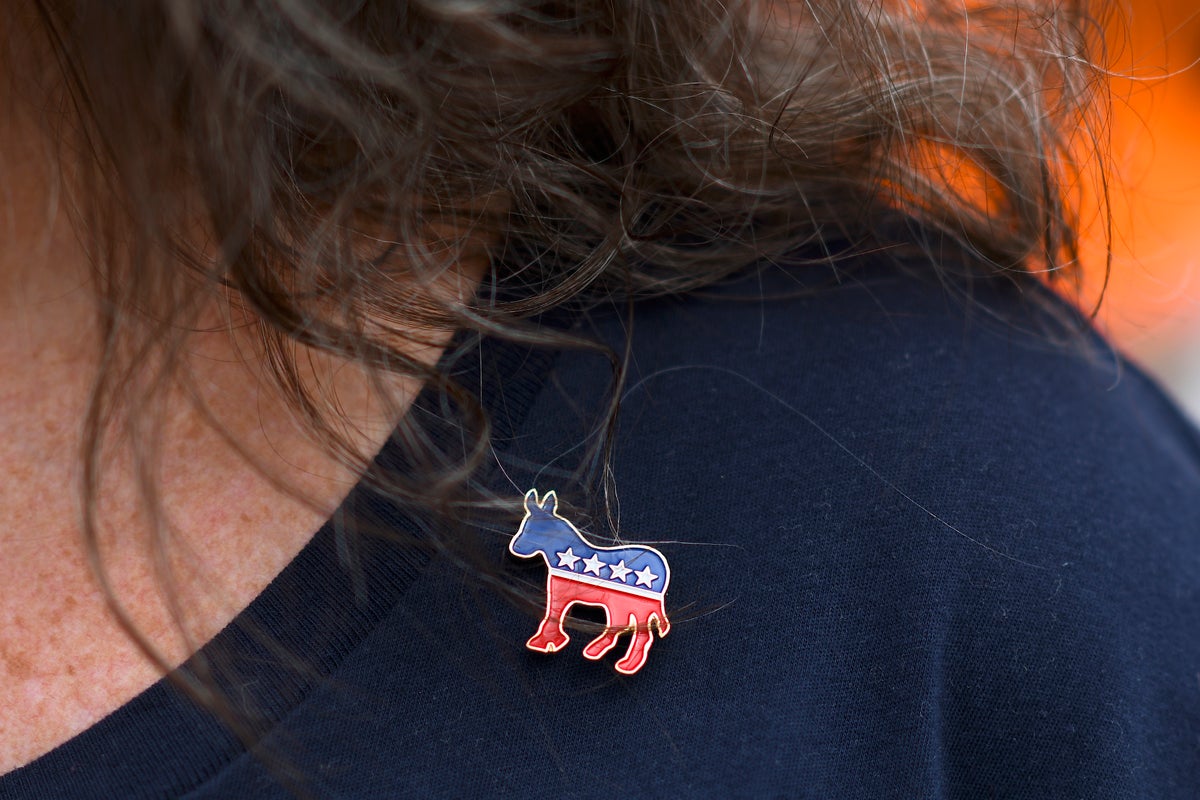
Gallup's quarterly data shows that 49% of voters now identify as Democrats, while only 39% lean Republican, a 10-point spread that marks a sharp reversal from the previous year when Republicans held a four-point advantage. This shift is attributed to President Donald Trump's unpopularity, with his approval rating dwindling from 52% in January 2025 to 38%, and 58% of voters now disapproving of his performance. The data suggests that Democrats are poised to take advantage of this trend, potentially retaking the US House of Representatives in midterm elections this November. A growing share of American voters have been identifying as independents in recent years, with 45% doing so by last year.
Written by the local model on 2026-09-05,
using this article's own text rather than the other coverage of the
same event.
Claims extracted
14
claim-shaped sentences
Uncertain
29%
4 of 14 hedged
Leaning
Leans left
of the writing, not the subject
Publisher trust
95.3
red-flag proxy, not a credibility rating
Outlets on this story
unclustered
not grouped into a story yet
Narrative spread
1
articles carrying this framing
Why this leaning score
The article's own words the score was based on. Each is quoted
verbatim and was checked against the article text before being
stored, so you can find it in the original.
Leaning score -0.35 for article 4928 (high confidence, 1 verified quote) · logged 2026-09-05
More voters are identifying as Democrats and shying away from calling themselves Republican, according to the latest quarterly data published by Gallup.
uncertain
voters → identify → Gallup
Some 49% of voters surveyed leaned Democrat, including independent voters asked to pick one party or the other.
asserted
% → survey → party
Only 39% of respondents leaned Republican.
asserted
% → lean → Republican
That 10-point spread marks a sharp reversal from the four-point advantage that Republicans held over Democrats in the fourth quarter of 2024, when voters sent Donald Trump back to the White House and Republicans swept both houses of Congress.
asserted
Republicans → mark → Congress
Democrats are seeing their most sizable advantage since 2008, when Barack Obama was elected president, according to the New York Times.
uncertain
Obama → see → Times
The data offers the latest evidence that Trump’s second term has proved unpopular with voters, driving a potential backlash.
asserted
term → offer → backlash
Trump’s approval rating stood at 52% at the time of his second inauguration in January of 2025, according to an average of polls published by the New York Times.
But his popularity dwindled immediately, as he cleaved the federal workforce, imposed price-inflating tariffs, passed a profligate spending bill and launched a rudderless war with Iran.
uncertain
he → stand → Iran
Some 58% of voters now disapprove of his performance, with only 38% approving, according to the Times.
uncertain
% → disapprove → Times
Democrats are hoping to take advantage of Trump’s tanking popularity.
asserted
Democrats → hop → popularity
Liberals are likely to retake the US House of Representatives in midterm elections this November.
asserted
Liberals → retake → elections
The party is much less certain to retake the US Senate, though polling is giving Democrats reasons to feel optimistic.
asserted
polling → retake → reasons
A growing share of American voters have not identified with either party in recent years.
asserted
share → grow → years
Back in 2002, roughly a third of voters surveyed by Gallup identified as either Republican, Democrat or independent.
asserted
third → survey → Republican
By last year, 45% of respondents called themselves independents, with only 27% identifying as either Democrat or Republican.
asserted
% → call → Democrat