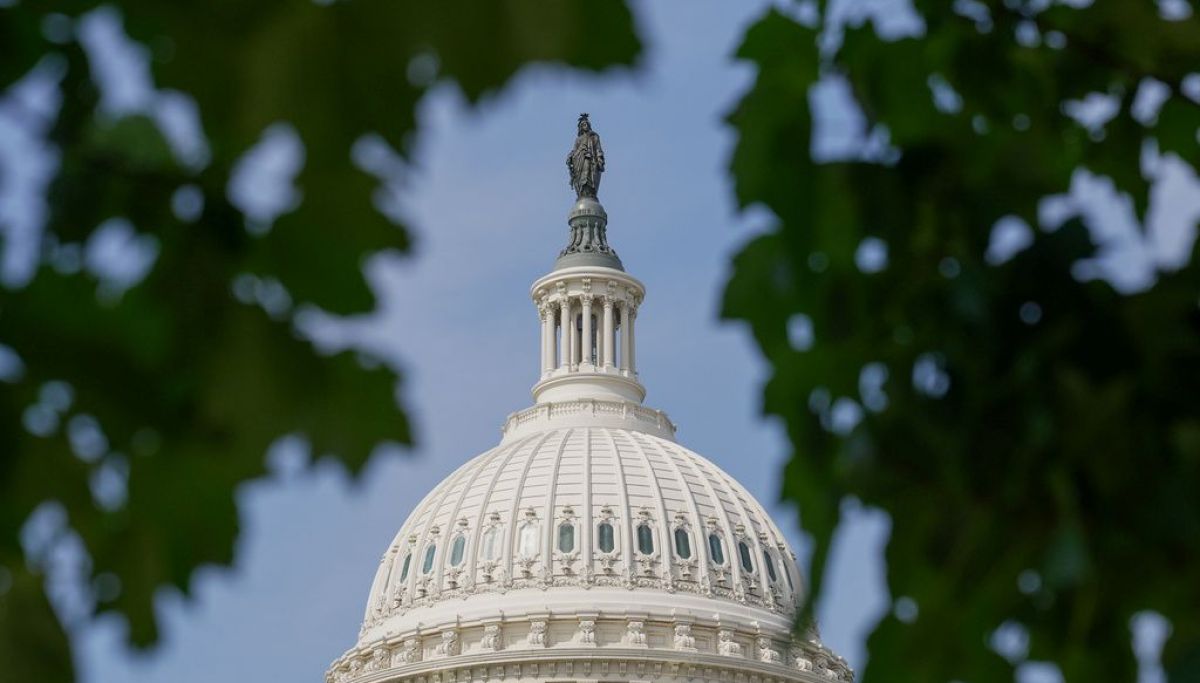
The United States’s national debt surpassed $40 trillion last month, marking a grim milestone for the richest country in the world.
asserted
debt → surpass → world
But a stream of other major economies have a similar debt-to-GDP ratio, provoking the question: Does Washington’s debt crisis really matter?
asserted
crisis → have → question
The total government gross debt-to-GDP ratio in the U.S. is 125.8%, according to the International Monetary Fund’s tracker.
uncertain
ratio → accord → tracker
France’s is 118%, Canada’s is 110%, China’s stands at 106%, and the United Kingdom’s is 103%.
asserted
Kingdom → stand → %
Recommended Stories
Fiscal experts told the Washington Examiner that the United States is in a stronger position to handle staggering debt than other countries for a variety of reasons, but warned that Washington’s financial trajectory is ultimately unsustainable.
asserted
trajectory → tell → reasons
What puts the U.S. in a stronger position?
asserted
What → put → position
The U.S. is different than countries such as France, Great Britain, and Canada because its economy is bigger and healthier, Dr. Allen Mendenhall said.
asserted
Mendenhall → say → France
The world relies on the dollar as the dominant global reserve currency, and Washington’s debt “is really important in global financial markets
asserted
debt → rely → markets
,” said Mendenhall, who is a senior adviser for the Free Enterprise Initiative at The Heritage Foundation.
asserted
who → say → Foundation
“The GDP of California, New York, and Texas — those three states all have a larger GDP than Canada, and then Florida is not all that far behind Canada.
asserted
Florida → have → Canada
So you’re talking like four of our 50 states are almost as economically powerful as all of Canada,” Mendenhall said.
asserted
Mendenhall → talk → Canada
“So clearly, our economy is in a better position to handle debt than Canada is.”
asserted
Canada → handle → debt
Adam Michel, the director of tax policy studies at the Cato Institute, said the capitalist underpinnings of Washington’s economic model have helped set the U.S. apart from other countries, giving it a “longer runway before the whole house of cards falls apart.”
asserted
house → say → cards
The free-market economy has fostered innovation that other countries rely on, created a degree of flexibility for reforms during crises, and helped the U.S. dollar become the leading global reserve currency, he suggested.
uncertain
he → foster → crises
The model has allowed the U.S. to be in a position where it can take on “more debt for longer before it all collapses.”
asserted
it → allow → debt
“Because the United States has historically had relatively low taxes, a smaller government, a less burdensome regulatory state, and more raw innovation and risk-taking than basically any other country in the world, that has allowed the U.S. government to sustain what otherwise would be an unsustainable fiscal policy,” he said.
asserted
he → have → world
“International debt markets are sort of like a beauty contest,” Michel added.
asserted
Michel → add → contest
“If I’m an investor that wants to buy government debt, the U.S. is still, relative to all of the other options around the world, not a terrible bet.
asserted
U.S. → ’m → world
Like if I’m choosing between putting my money in Chinese debt, or Greek debt, or Italian debt, or U.S. debt, there’s still like more productive economic activity in the U.S. that could potentially sustain this and a functioning political system …
uncertain
that → choose → this
we’re sort of the least ugly of all the ugly ducklings out there.”
asserted
we → ’re → ducklings
Can Washington grow the economy out of the crisis?
asserted
Washington → grow → crisis
The $40 trillion debt milestone Washington reached in August marked the first time since World War II that the federal government’s debt grew to the size of the entire U.S. economy.
asserted
debt → reach → economy
To a certain extent, an economy like the U.S. can grow itself out of heavy debt, Medenhall said, pointing to how Washington did just that following World War II.
asserted
Washington → grow → II
But he warned against banking on the same scenario in the modern era.
asserted
he → warn → era
While the workforce boomed with returning soldiers and families exploded after WWII, birth rates are down in the U.S. in 2026 as the country faces an aging population, a devastating indicator for long-term economic growth, Mendenhall noted.
asserted
Mendenhall → boom → growth
“It’s just a different situation.
asserted
It → ’ → ?
It’s harder to grow just naturally under those conditions.
asserted
It → ’ → conditions
It’s just that it’s harder to,” he said.
asserted
he → ’ → ?
Michel agreed that the U.S. is in a fundamentally different place than in the 1940s, noting that the underlying reasons for the debt were also very different.
asserted
reasons → agree → debt
In that era, debt was spurred by the war, naturally fading to an extent with the conflict’s end and in the blush of post-war population growth and labor-sector expansion.
asserted
debt → spur → growth
That contrasts with today, where one of the major underlying causes of the current debt crisis, entitlement spending, will only worsen if the economy were to grow, he warned.
asserted
he → contrast → crisis
“We cannot grow our way out of our debt and deficit problem because our debt growth is driven almost exclusively by healthcare spending and Social Security spending on old-age pensions, and both of those programs we spend more on the wealthier we are,” Michel said.
asserted
Michel → grow → more
“On healthcare, people consume more healthcare services when they are wealthier, and so we should expect that to continue if we have more growth.
asserted
we → consume → growth
And Social Security is indexed to wage growth, so the extent that productivity boosts wages, the fiscal burden of Social Security will also continue to grow.”
asserted
burden → index → Security
What role does AI play?
asserted
AI → play → role
The growth of artificial intelligence, which can be used to scale productivity, is one bright light that Mendenhall suggested could contribute to the push to grow the economy out of the debt crisis.
uncertain
Mendenhall → use → crisis
He called “the increase in the production of knowledge” a “useful” development in terms of spurring positive economic outcomes.
asserted
He → call → outcomes
“Not all the numbers we’ve seen have been positive this year, in terms of if you look at the different jobs reports and inflation numbers and other things that are out there, you know, there are some numbers that aren’t great, but the numbers that are good — a lot of them linked to AI,” Mendenhall said.
asserted
Mendenhall → see → AI
“It increases the productivity of each individual worker for people to use it, you know, whether you’re an accountant or a lawyer or whatever,” he said.
asserted
he → increase → it
Some experts believe AI accounted for a third of economic growth in 2026.
asserted
AI → believe → 2026
…and 23 more, not listed.
 The Aporia