Swiss glaciers suffer 'disastrous' year of ice loss, threatening water supplies

Read the original at BBC News ↗
BBC News · collected 2026-10-01 · by Mark Poynting

Quick Summary

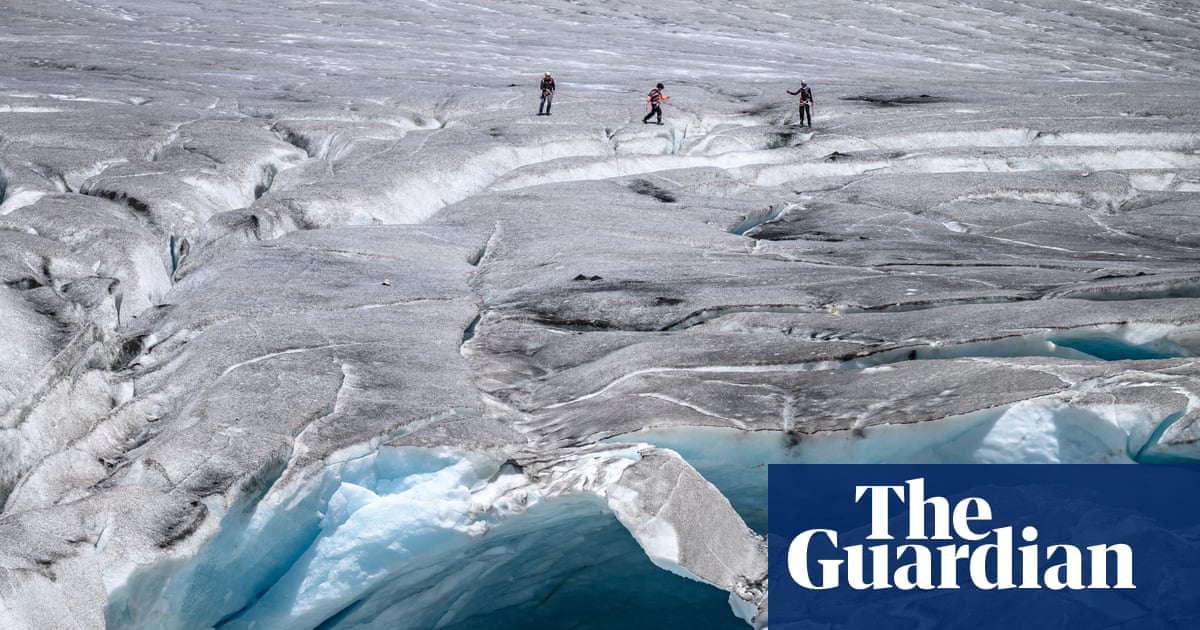
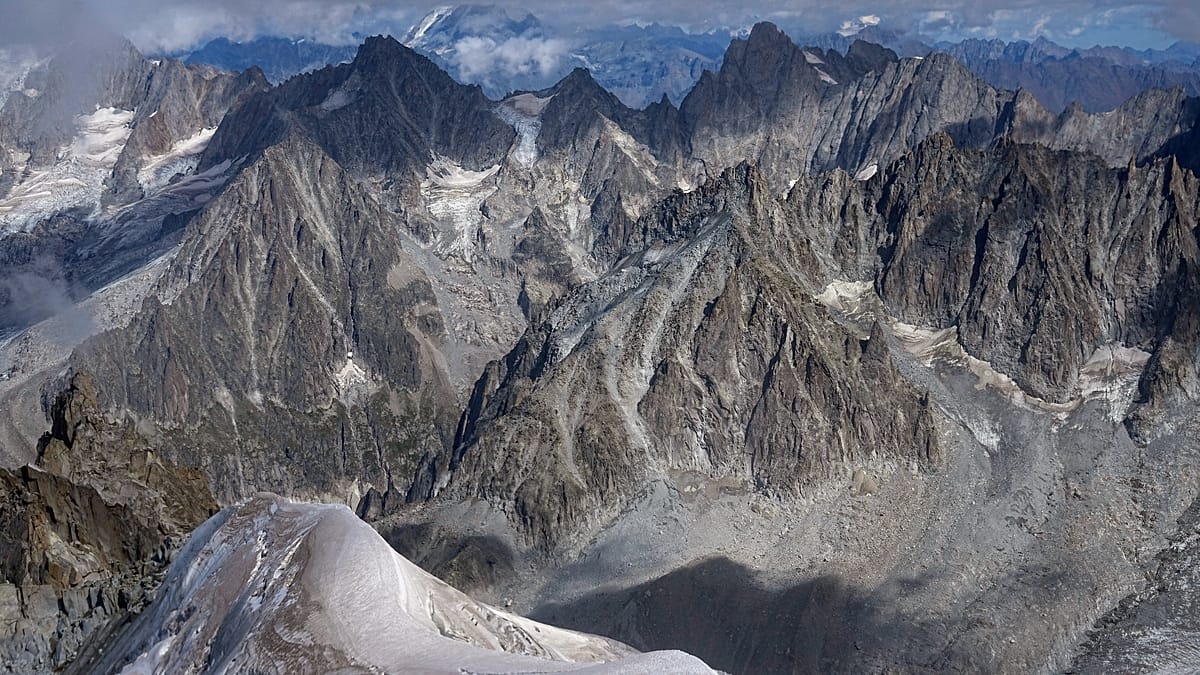
Swiss glaciers lost more than 5% of their remaining ice in 2026 due to intense summer heatwaves, according to new data. Dr. Matthias Huss from Glacier Monitoring Switzerland describes the loss as "disastrous," noting that previously a 2% annual loss was considered extreme. This rapid melting threatens water supplies for farming, hydropower, and transport while also increasing landslide risks. Scientists emphasize that these losses are driven by climate change and highlight concerns about future water shortages.
Written locally by qwen2.5:14b on 2026-10-01, using this article's own text rather than the other coverage of the same event (that is the story summary below).

AI analysis runs on qwen2.5:14b, locally

Story summary

In 2026, Swiss glaciers experienced significant ice loss, with more than 5% of the remaining glacier volume disappearing over the year. This near-record melt is attributed to intense summer heatwaves following a winter with little snowfall, accelerating long-term climate-driven glacial retreat. Since 2021, Switzerland has lost nearly 20% of its glaciers, making it one of the most dramatic losses observed globally. Scientists from organizations like GLAMOS warn that such rapid melting could threaten water supplies for farming, hydropower, and transport in coming decades, destabilizing mountain slopes and increasing landslide risks. Researchers stress that without human-induced climate change and fossil fuel emissions, this warming would not be occurring, underscoring the urgent need to address global warming.

Written for “Swiss Glaciers Melting” on 2026-10-05, grounded in this article and the 7 other(s) covering the same event.

Signals How these are calculated →

Claims extracted
35
claim-shaped sentences
Uncertain
11%
4 of 35 hedged
Leaning
Leans left
of the writing, not the subject · beta estimate
Correction & hedging signals
78.1
corrections and hedging in what we collected; not a measure of accuracy
Outlets on this story
8
Environment
Narrative spread
1
articles carrying this framing
Analyzed 2026-10-01 · how these are computed

Story

📰 Swiss Glaciers Melting
Environment · 8 article(s) covering the same event. See how they differ ↓

How this is being covered How these are calculated →

Article leaning vs. publisher reliability
Source leaning vs. consistency

Compared with similar articles

This article reads leans left and hedges 11% of its claims. Each row says how that neighbour differs.
Al Jazeera · 0.90 cosine similarity
⚖️ leaning not scored 🔴 0% hedged 0 of 1 📰 publisher trust 60
“Both articles describe the near-record loss of more than 5% of Swiss glacier ice in 2026 due to intense heatwaves and lack of winter snow, at the same specific time and place.”
ABC News (AU)
⚖️ leaning not scored 🔴 14% hedged 4 of 29 📰 publisher trust 61
“Both articles describe the near-record loss of ice in Swiss glaciers during 2026, citing more than 5% ice volume loss as reported by the Swiss Glacier Monitoring Network.”
The Guardian · 0.91 cosine similarity
⚖️ leaning not scored 🔴 5% hedged 1 of 20 📰 publisher trust 68
“Both articles describe the near-record loss of Swiss glacier ice in 2026, with similar data and timeframe.”
Euronews
⚖️ leaning not scored 🔴 0% hedged 0 of 5 📰 publisher trust 60
“Both articles describe the near-record ice loss from Swiss glaciers specifically in 2026 due to summer heatwaves and climate change.”
CBC News
⚖️ leaning not scored 🔴 0% hedged 0 of 25 📰 publisher trust 60
“Both articles describe the near-record ice loss for Swiss glaciers in 2026 due to intense summer heatwaves, citing the exact percentage of ice volume lost and similar expert warnings.”
South China Morning Post · 0.91 cosine similarity
⚖️ leaning not scored 🔴 20% hedged 1 of 5 📰 publisher trust 67
“The articles describe glacier loss over different time periods and focus on separate aspects of the same issue.”
Al Jazeera · 0.88 cosine similarity
⚖️ leaning not scored 🔴 10% hedged 4 of 41 📰 publisher trust 60
“While both articles discuss significant glacial ice loss in Switzerland due to climate change, they describe different periods of time (one focuses on a single year's near-record losses, the other covers five years of cumulative loss).”

Publisher

BBC News · 2509 article(s) · 2 correction(s) detected
Running correction rate · 2 correction(s)
2026-10-03
Tennessee prison chief to resign after Christa Pike's failed execution, governor says
2026-09-21
Watch: BBC tracks down abusive teacher secretly released early

Who wrote this

Mark Poynting
5 article(s) here · 1 carrying a prediction
🔮 They warn that such rapid melting is no longer a surprise given the pace of climate change, but it could threaten water supplies for farming, hydropower and transport in the decades ahead. The loss of glacier ice can also destabilise mountain slopes and increase the risk of landslides in some places - which can lead to flash flooding in extreme cases, as seen in Nepal in August.
🔮 The agency also said it would take steps to prevent future administrations from regulating power plant emissions.
🔮 - Published The impact of this summer's extreme temperatures on western Europe can now be seen from space after successive heatwaves since May.
🔮 A comparison of satellite imagery of the UK in May and July shows the stark differences in plant health.
🔮 Both will be buried on Thursday, the statement added.
Also by Mark Poynting
Nothing else under this byline is closely related to this article, so these are simply their most recent.

Topics

Glacier Monitoring Switzerland Nepal Swiss the University of Bristol

Subjects

Swiss NORP · 5× Huss PERSON · 3× Fabien Maussion PERSON · 1× Glacier Monitoring ORG · 1× Glacier Monitoring Switzerland ORG · 1× Matthias Huss PERSON · 1× Maussion PERSON · 1× Nepal GPE · 1× the University of Bristol ORG · 1×

Narrative

The notable finding from this latest report is not so much that Swiss glaciers are shrinking - which is to be expected in our warming climate, driven primarily by fossil fuel emissions - but the sheer pace of melting.
framing: assertive · carried by 1 article(s) · first seen 2026-10-01
🔮 They warn that such rapid melting is no longer a surprise given the pace of climate change, but it could threaten water supplies for farming, hydropower and transport in the decades ahead. The loss of glacier ice can also destabilise mountain slopes and increase the risk of landslides in some places - which can lead to flash flooding in extreme cases, as seen in Nepal in August.

Claims (35 extracted, 4 hedged)

- Published Swiss glaciers have suffered a near-record loss of ice in 2026, new data shows, as intense summer heatwaves take their toll on Alpine peaks. asserted
heatwaves → publish → peaks
More than 5% of the country's remaining glacier ice has disappeared in the last 12 months, which scientists say is "extraordinary". asserted
scientists → remain → months
They warn that such rapid melting is no longer a surprise given the pace of climate change, but it could threaten water supplies for farming, hydropower and transport in the decades ahead. The loss of glacier ice can also destabilise mountain slopes and increase the risk of landslides in some places - which can lead to flash flooding in extreme cases, as seen in Nepal in August. uncertain
which → warn → August
There were multiple factors involved in that event, which was triggered when a large area of bedrock and glacier ice collapsed. asserted
area → be → bedrock
But scientists say long-term glacier thinning and the thawing of frozen ground likely raised the risks. asserted
thinning → say → risks
The notable finding from this latest report is not so much that Swiss glaciers are shrinking - which is to be expected in our warming climate, driven primarily by fossil fuel emissions - but the sheer pace of melting. asserted
which → shrink → melting
Until recently, glaciologists in the Alps considered 2% of ice lost in a single year to be "extreme". asserted
% → consider → year
This year has seen an estimated 5.5% disappear. asserted
% → see → ?
"It's really just disastrous," said Dr Matthias Huss, director of Glacier Monitoring Switzerland, which produced the report. asserted
which → say → report
Swiss glaciers started the summer in an already difficult place, covered by less snow than usual after a mild winter. asserted
glaciers → start → winter
And much of that snow disappeared quickly in the early and intense heatwaves of May and June, exposing the glacier ice below. uncertain
much → disappear → ice
Bare ice is darker and less reflective than fresh snow, so absorbs more of the Sun's energy. asserted
ice → absorb → energy
That left glaciers vulnerable to melting even faster in subsequent heatwaves. asserted
That → leave → heatwaves
"Ten years ago, I wouldn't have thought that it's possible to lose glaciers so quickly," said Dr Fabien Maussion, a glaciologist at the University of Bristol, who was not involved in the Swiss report. asserted
who → think → report
"What's happened over the summer now is extremely distressing… but at the same time it was to be expected from a climate scientist's perspective," he added. asserted
he → happen → perspective
Scientists estimate that Swiss glaciers released 2.2 trillion litres of meltwater between July and September. asserted
glaciers → estimate → July
Although that helped to ease water shortages this summer, it has rapidly diminished the frozen supply. asserted
it → help → supply
The loss of ice could pose long-term challenges, Huss warned, with smaller glaciers unable to top up water levels to the same extent. uncertain
glaciers → pose → extent
"Every drop of water that runs off during these heatwaves is kind of old water that's been stocked in the glacier ice centuries or decades ago," said Huss. asserted
Huss → run → ice
"It's helping us [now] but it's unsustainable, so we won't have it at [our] disposal in the next heatwave." asserted
we → help → heatwave
The River Rhine reached record lows in places this summer, affecting shipping navigation routes and increasing transport costs. asserted
Rhine → reach → costs
One of the most ominous findings is what researchers observed at measurement sites at the highest elevations, where temperatures are lowest and glaciers are typically snow-covered. asserted
glaciers → observe → elevations
Even as high as 3,500 metres above sea level, scientists found no snow remaining at the end of summer. asserted
scientists → find → summer
"At some glaciers we've seen four metres of ice loss at the highest point, where they should be covered by several metres of winter snow at this time of the year," said Huss, from Glacier Monitoring Switzerland. asserted
Huss → see → Switzerland
Snow is like glacier food - and under stable conditions some of it would eventually compact into ice. asserted
some → compact → ice
But if no snow survives the summer, it cannot replace the ice lost to melting at lower, warmer elevations. asserted
it → survive → elevations
The glacier will starve, shrink and eventually disappear. asserted
glacier → starve → ?
"Glaciers are complex because they gain mass at the top and they flow downstream, so there is a lot of physics," explained Maussion. asserted
Maussion → gain → physics
"But in its simplest form, what we see right now is that we took an ice cube out of the fridge and it's just melting in front of our eyes." asserted
it → see → eyes
Scientists say the climate is now too warm for many Alpine glaciers to survive. asserted
glaciers → say → ?
Some, like Plattalva in eastern Switzerland, have already disappeared. asserted
Some → disappear → Switzerland
But researchers stress that sharp cuts to carbon emissions can still save much of the world's glacier ice. asserted
cuts → stress → ice
This is particularly the case for the Himalayas and the polar regions, where most of the planet's ice resides. asserted
most → reside → ice
"There we still can make a big difference with protecting the climate," said Huss. asserted
Huss → make → climate
"If these ice masses can be saved or stabilised, we can limit the rise of global sea levels… which could affect billions of people living along the coast." uncertain
which → save → coast

💬Give feedback
🕘History 🎫Support