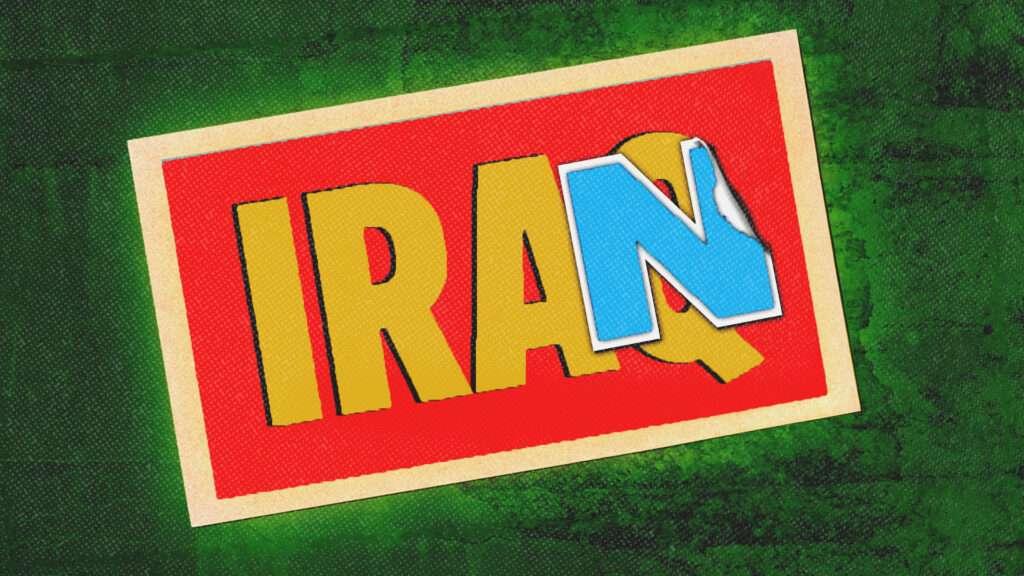
The George W. Bush administration and its camp followers in the media sold the Iraq War with lies and spin.
asserted
administration → sell → lies
Before the war, hawkish pundits such as CNN host Fareed Zakaria and New York Times columnist Thomas L. Friedman promised that it would bring reform to the Arab world.
asserted
it → promise → world
Once the war started, Fox News host Brit Hume gloated that critics got it "completely wrong," and his colleague Tony Snow declared a "relatively bloodless victory"—two statements that aged very badly as the new Iraq collapsed into decades of war, with U.S. troops in the line of fire.
asserted
troops → start → fire
So it went in Iran.
asserted
it → go → Iran
Pro-war journalists and TV talking heads predicted that the Iranian government would collapse at the first push.
asserted
government → talk → push
Once the war started, they ignored signs that things were not going as planned.
asserted
things → start → signs
Unlike the Iraq War, the war in Iran has not turned into a drawn-out insurgency.
asserted
war → turn → insurgency
The U.S. did not even topple the government, instead accepting a ceasefire after four weeks.
asserted
U.S. → topple → weeks
But that ceasefire did not hold.
asserted
ceasefire → hold → ?
At press time, the U.S. and Iran were fighting over the Strait of Hormuz, a key chokepoint for trade that had been fully open before the war.
asserted
that → fight → war
*
Before the U.S. attacked Iran on February 28, a chorus of media personalities, including several with direct lines to President Donald Trump, argued that a war with Iran would last only a few days.
asserted
war → attack → Iran
Washington Post columnist Marc Thiessen predicted that the Iranian government would quickly fall because "the Iranian people are the boots on the ground."
asserted
people → predict → ground
Mark Dubowitz, CEO of the neoconservative Foundation for Defense of Democracies, told The Hugh Hewitt Show that Ali Khamenei, then Iran's supreme leader, would not fight back because "that's the end of his regime."
asserted
that → tell → regime
Fox News host Mark Levin claimed Iran physically couldn't fight back.
asserted
Iran → claim → ?
Reza Pahlavi, the crown prince of Iran overthrown in the 1979 revolution, was frequently featured on Fox News as a pro-war Iranian voice.
asserted
Pahlavi → overthrow → voice
Although he had some support among Iranians, the suburban dad formerly known as prince was making wild promises he couldn't keep.
asserted
he → have → promises
In a February 12 interview with the German magazine Der Spiegel, Pahlavi urged U.S. intervention, claiming he had recruited an army of 100,000 defectors.
asserted
he → urge → defectors
Not a single uprising against the Iranian government happened during the war.
asserted
uprising → happen → war
John Podhoretz, heir to the neoconservative magazine Commentary, at least admitted that his predictions fell flat.
asserted
predictions → admit → magazine
In the first hours of the war, he wrote that the U.S. military would leave "quick work for Iranians themselves to kick the mullahs to the curb."
asserted
Iranians → write → curb
On a Commentary podcast four months later, he said "there is no person on Earth who is going to say that America didn't lose the war."
asserted
America → say → war
Other pundits simply refused to acknowledge when things were not going their way.
asserted
things → refuse → way
Week after week, Fox News commentator Jack Keane said the war would be over in two or three more weeks.
asserted
war → say → weeks
Many of these pundits' arguments were simply an appeal to shut up and trust the leader.
asserted
Many → shut → leader
In mid-March, retired British Army officer Richard Kemp complained in The Telegraph about an excess of "doom mongering."
asserted
Kemp → complain → mongering
The media, he claimed, were simply "not privy" to the genius of Trump's plans.
asserted
he → claim → plans
On CNN a few days before the April ceasefire, former Bush administration official Scott Jennings said "there is no doubt we have defanged this regime."
asserted
we → say → regime
Zineb Riboua, a research fellow with the neoconservative Hudson Institute, complained a few days after the ceasefire that the West was ignoring the "lived experience" of Arabs, who she claimed supported the war.
asserted
she → complain → war
Public opinion polling from both before and after the war suggested that Arab publics were increasingly rooting for Iran and opposing the war.
uncertain
publics → suggest → war
Riboua also claimed the war was "all about" weakening China by, among other things, eliminating a cheap source of oil.
asserted
war → claim → oil
Three months after the ceasefire, China was snapping up discounted oil from Iran's rivals.
asserted
China → snap → rivals
Soon after the ceasefire, Trump attempted to pressure Iran further by blockading its ports, and the Foundation for Defense of Democracies published a prediction that Iran would be forced to shut down its oil wells within 13 days, causing permanent damage.
asserted
Iran → attempt → damage
Trump repeated a similar timeline on Fox News, predicting that the wells would literally explode at the end of April.
asserted
wells → repeat → April
That didn't happen.
asserted
That → happen → ?
Many of the cheerleaders for war with Iran were the same people who had cheered on the invasion of Iraq, often with the same arguments.
asserted
who → cheer → arguments
Fox News host Sean Hannity, who predicted in February 2003 that the Iraq War was "going to be over very quickly," said almost exactly the same thing in February 2026: "It's not going to be a forever war.
asserted
It → predict → February
It's going to be overwhelming military might and force, and then it's going to be up to the people of Iran.
uncertain
it → go → Iran
If they want a chance at freedom, they will have it, I believe, within the next few weeks."
asserted
I → want → weeks
New York Times columnist Bret Stephens, who bragged in 2023 about his lack of regrets about the Iraq War, whined in March 2026 about "our inability to appreciate the advantages we now possess."
asserted
we → brag → advantages
Benjamin Netanyahu, testifying before the U.S. Congress as a retired prime minister and private citizen in 2002, said invading Iraq would have "enormous positive reverberations."
asserted
invading → testify → reverberations
…and 6 more, not listed.
 The Aporia