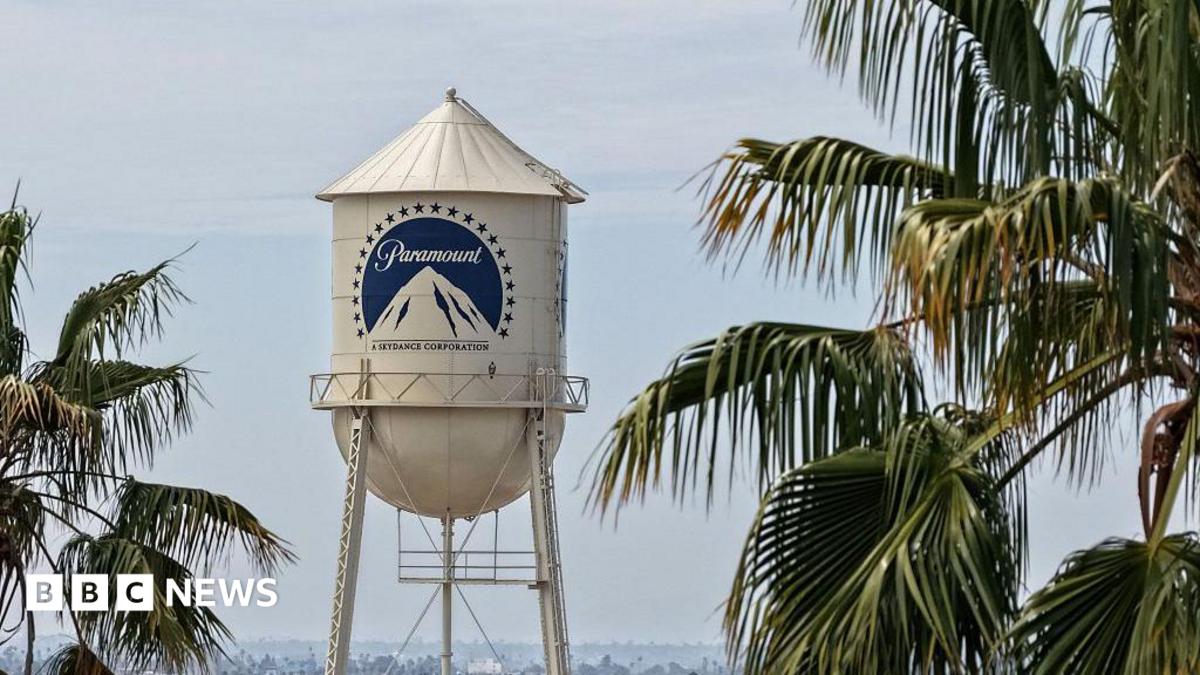
Paramount Skydance chief executive David Ellison has defended his company's $110bn takeover of Warner Bros. Discovery in an op-ed published by The New York Times, arguing that the merged entity will not exert excessive control over the market or erode newsroom independence. Ellison claims that a combined Paramount-Warner would account for less than 20% of US television watch time, and highlights commitments to expand traditional production with $30bn in annual content investment. He acknowledged that "nobody can dictate what audiences will love," but emphasized the importance of sustaining creative workers against technology platforms driven by engagement algorithms. The takeover is currently on hold due to ongoing legal challenges, including a trial scheduled for 2 March 2027.
Written by the local model on 2026-08-21,
using this article's own text rather than the other coverage of the
same event (that is the story summary below).
Story summary
Paramount Skydance chief executive David Ellison has spoken out in defense of his company's $110bn takeover of Warner Bros. Discovery, which has been met with opposition due to concerns over excessive market control and newsroom independence. In an op-ed published by The New York Times, Ellison argued that these worries are based on a "vision of Hollywood that no longer exists". He rejected claims that the merged media giant would exert too much control, stating that news outlets like Paramount's CBS and Warner's CNN will remain non-partisan and committed to reporting the truth. To address antitrust concerns, Ellison pointed out that the combined company would only account for around 13% of US television watch time, including YouTube views, as it competes with tech giants like Netflix, Amazon, and Apple. The merger has been put on hold due to an ongoing legal battle between Paramount and Warner Bros., but Ellison emphasized his commitment to expanding traditional production, promising 30 new films per year.
Written for “Paramount and Warner Bros Merger” on 2026-08-31,
grounded in this article and the 0 other(s) covering the same event.
Why this leaning score
The article presents a sympathetic view of Paramount CEO David Ellison's comments, framing his defense of the merger as a necessary response to outdated opposition, and downplaying concerns over market control and newsroom independence. The text also highlights Ellison's commitments to expand traditional production and increase content investment, which may be seen as spin in favor of the merger.
Written under an earlier scoring contract, which gave a paragraph
rather than checkable quotes. Re-analysing this article replaces it.
Leaning score +0.65 for article 476 · logged 2026-08-05
- Published
Paramount Skydance chief executive David Ellison has broken his silence, defending his company's $110bn (£86bn) takeover of Warner Bros. Discovery.
asserted
Ellison → publish → Discovery
Opposition to the mega-merger relies on a vision of Hollywood that "no longer exists," he wrote in an op-ed published by The New York Times.
asserted
he → rely → Times
In his first public comments on the transaction, Ellison rejected claims that a combined media giant would exert excessive control over the market or erode newsroom independence.
uncertain
giant → reject → independence
The public intervention comes as Paramount and Warner Bros. continue an intense legal battle to close their massive deal, which was recently put on hold.
asserted
which → come → hold
Addressing concerns over the future of Paramount's CBS and Warner's CNN, Ellison insisted the news outlets would remain non-partisan and stay positioned to "tell it straight down the middle."
asserted
outlets → address → middle
To counter antitrust concerns, Ellison pointed out that a merged Paramount-Warner would account for less than 20% of US television watch time – dropping to around 13% when accounting for YouTube – as it competes against tech giants like Netflix, Amazon, and Apple whose resources "dwarf ours."
asserted
resources → counter → ours
He also highlighted commitments to expand traditional production, promising 30 theatrical films and 170 television series annually backed by more than $30bn in annual content investment.
asserted
He → highlight → investment
Scaling up content investment is vital to sustain creative workers against technology platforms driven by engagement algorithms, he argued.
asserted
he → scale → algorithms
Even so, Ellison acknowledged that "nobody can dictate what audiences will love."
asserted
audiences → acknowledge → what
The legal battle escalated in July when 12 state attorneys generals, led by California's Rob Bonta, alongside the Writers Guild of America, filed antitrust lawsuits to halt the merger.
asserted
generals → escalate → merger
They argued that the merger would violate the Clayton Act by reducing competition and harming opportunities for writers.
asserted
merger → argue → writers
The US Department of Justice and international regulators, including the European Union, have already granted approval for the transaction, but domestic legal challenges have effectively frozen progress in the US.
asserted
challenges → include → US
Federal proceedings currently remain on hold, with the trial pushed until 2 March 2027.
asserted
trial → remain → March