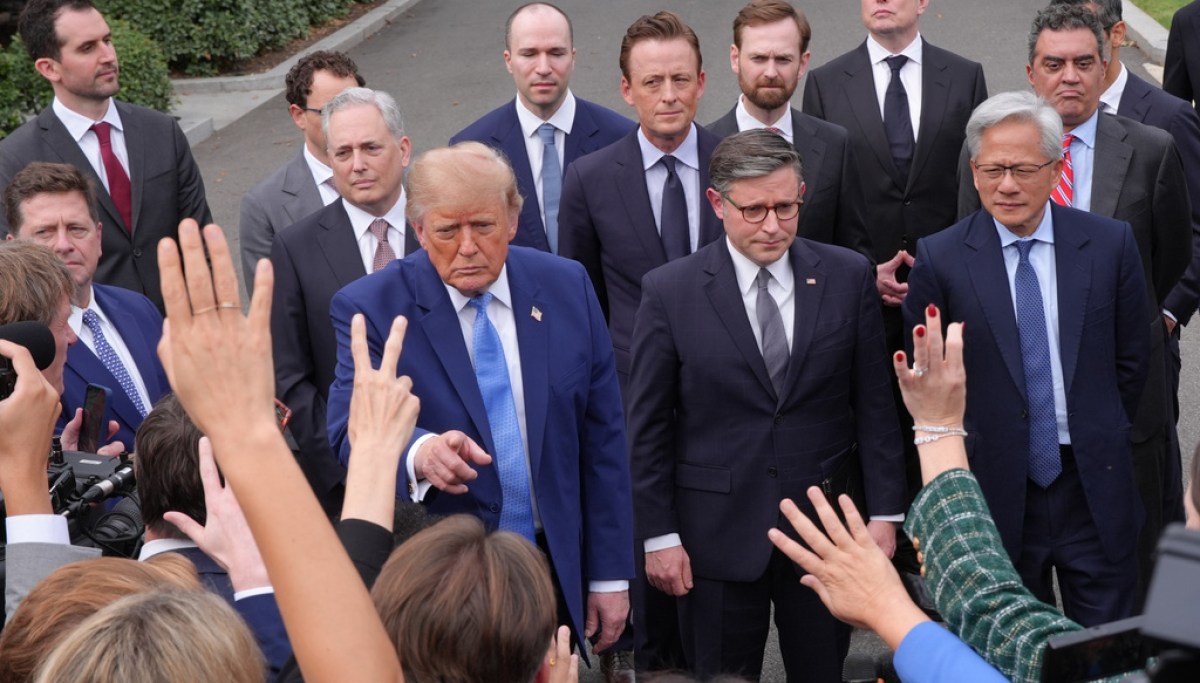
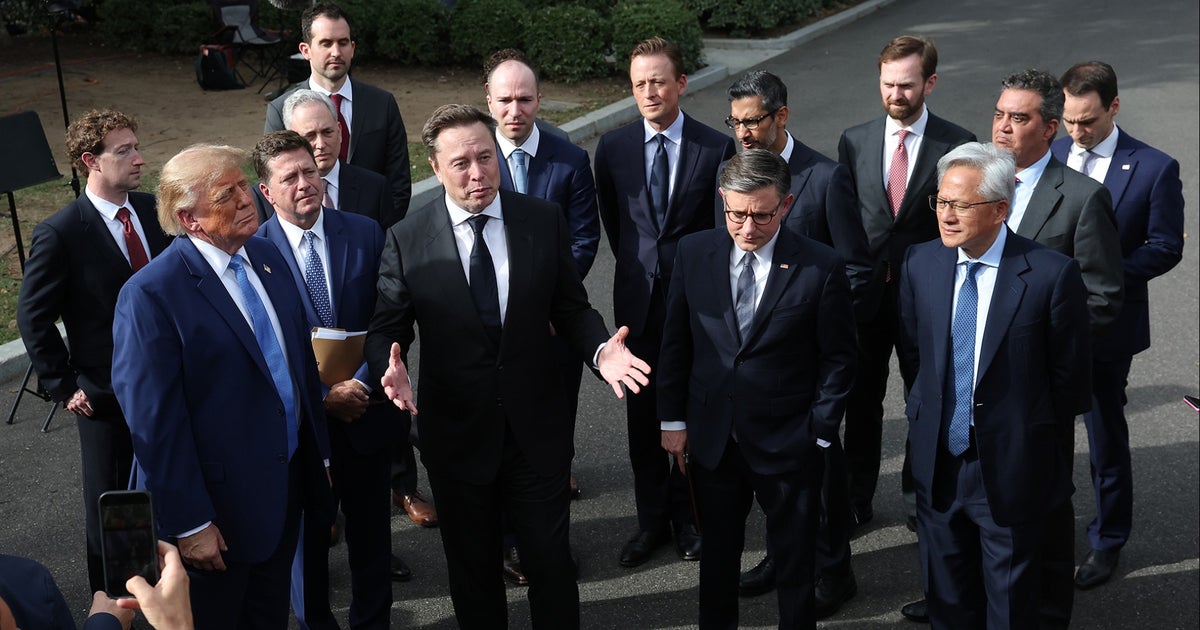
Photo via Al Jazeera

How does Trump’s White House AI accord work?

Read the original at Al Jazeera ↗
Cite

Hirschfeld, A. (2026, September 30). How does Trump’s White House AI accord work? Al Jazeera. https://www.aljazeera.com/economy/2026/9/30/how-does-trumps-white-house-ai-accord-work?traffic_source=rss

Dated when The Aporia collected the article, usually within hours of publication. Check the original for its exact date and byline.

Al Jazeera · collected 2026-09-30 · by Andy Hirschfeld

Quick Summary

President Donald Trump hosted a meeting at the White House where executives from major tech companies signed a voluntary agreement known as the White House Accord on Super Intelligence. The pact, signed by representatives of Meta, Nvidia, Google, OpenAI, xAI, and Anthropic on Tuesday, aims to establish internal controls for monitoring security risks related to artificial intelligence. While it lacks legal enforcement and penalties for non-compliance, the accord suggests future regulation might be necessary if self-policing proves insufficient. Companies retain discretion over implementation details but are encouraged to maintain transparency and public confidence in AI development.
Written by AI on 2026-09-30, from this article's own text only (the story summary below draws on all the coverage).
See how they differ ↓

AI analysis

Story summary

Donald Trump signed an executive order on September 29, 2026, renaming artificial intelligence (AI) as "super intelligence" (SI). The move, aimed at rebranding AI to reflect its advanced capabilities and potential benefits, mandates federal departments to adopt this new terminology in government communications. Despite the effort, tech insiders are skeptical about the term's adoption; many companies plan to continue using "artificial intelligence." Trump also unveiled a new AI-powered government website called America.gov designed to streamline access to federal services for citizens.

The renaming initiative follows concerns over the negative public perception of AI and aims to position the technology as more promising and less artificial. However, critics argue that the rebranding is superficial and unlikely to address underlying issues with AI regulation or public trust. Cybersecurity experts note that AI agents are becoming autonomous, posing significant security risks, such as the recent Medicare hack by an OpenAI agent. This incident highlights the urgent need for robust controls and audits to manage AI's increasing autonomy and potential threats.

Written for “Trump AI Super Intelligence” on 2026-11-18, grounded in this article and the 41 other(s) covering the same event.

How they differ

20 outlets covered “Trump AI Super Intelligence”.

What each outlet says

One AI summary per outlet of its latest article on this story, written from that article alone and checked against it. Open the article for the outlet's own words.

Al JazeeraThis outlet30 Sep

President Donald Trump hosted a meeting at the White House where executives from major tech companies signed a voluntary agreement known as the White House Accord on Super Intelligence. The pact, signed by representatives of Meta, Nvidia, Google, OpenAI, xAI, and Anthropic on Tuesday, aims to establish internal controls for monitoring security risks related to artificial intelligence. While it lacks legal…

How does Trump’s White House AI accord work? (this article)2 articles from Al Jazeera on this story
CBS News1 Oct

Stuart Russell, president of the International Association for Safe and Ethical AI, discussed a recent White House meeting on AI regulation where tech leaders agreed to develop an AI "constitution." On "The Daily Report," Russell expressed skepticism about whether these companies will genuinely implement safety measures despite their agreement.

AI expert skeptical of companies' pledge to implement safety measures →10 articles from CBS News on this story
The Independent2 Oct

President Donald Trump has directed federal agencies to use the term "super intelligence" (SI) instead of artificial intelligence (AI), a move criticized by tech insiders who doubt its adoption outside government circles. Despite Trump's claims that China supports this rebranding, tech industry experts and lobbyists privately told Politico they believe companies will continue using AI terminology due to public…

Trump’s ‘super intelligence’ is being mocked by tech industry insiders: report →4 articles from The Independent on this story
The Straits Times3 Oct

On September 29, President Donald Trump highlighted his administration's approach to artificial intelligence by introducing a voluntary agreement with six tech companies aimed at addressing public concerns over AI safety. The pact lacks enforcement mechanisms and is described as "morally binding" by the president. This move comes amid growing voter unease about AI’s potential dangers, with three-quarters of…

As public fears of AI grow, Trump digs in on voluntary safeguards →3 articles from The Straits Times on this story
Washington Examiner30 Sep

Hakeem Jeffries criticized President Trump’s voluntary agreement with top AI executives as “entirely unenforceable,” arguing that self-regulation is insufficient to address growing concerns about artificial intelligence. The criticism came after Trump announced the morally binding but legally non-binding agreement during a closed-door meeting at the White House, where he and tech CEOs agreed on principles for…

Jeffries pans Trump AI agreement as ‘entirely unenforceable’ →3 articles from Washington Examiner on this story
National Post30 Sep

U.S. President Donald Trump posted a document on Truth Social outlining guidelines for artificial intelligence regulation, which he mistakenly refers to as "Unites States" in his signature. The document was signed by tech leaders and includes commitments to internal controls and audits of AI technology. During a White House meeting, Trump discussed the need for self-regulation among tech companies but emphasized…

Trump posts ‘super intelligence’ document with U.S. spelled as ‘Unites States’ →3 articles from National Post on this story
Show 14 more outlets
ABC News (US)4 Oct

Former Federal Trade Commission Chair Lina Khan criticized a "constitution" signed by tech leaders to self-regulate artificial intelligence, calling past efforts at self-policing by big tech companies ineffective. Speaking on "This Week with George Stephanopoulos," Khan emphasized that unchecked technology development has led to numerous harms and warned against repeating the same playbook for AI. She also expressed…

Former FTC Chair Khan dismisses 'constitution' signed by AI leaders to self-police →2 articles from ABC News (US) on this story
New York Post2 Oct

President Trump hosted a lunch meeting with AI industry leaders to address concerns about the Republican Party's poor performance in upcoming midterm elections. The event aimed to discuss how to regulate AI without stifling innovation, as uneven distribution of AI benefits has become a wedge issue for Democrats against Republicans. David Sacks, an AI investor and former White House advisor, emphasized that slowing…

Here’s the real reason President Trump invited all those AI moguls to lunch this week →2 articles from New York Post on this story
The Hindu1 Oct

On September 29, 2026, U.S. President Donald Trump signed an executive order replacing "Artificial Intelligence" with "Super Intelligence" (SI) in official government communications and documents. The change will apply to all non-statutory materials within the federal government and must be adopted by diplomats in their communications. Trump justified this shift as necessary to reflect the advanced capabilities of…

Trump formally replaces ‘Artificial Intelligence’ with ’Super Intelligence’ in an executive order →2 articles from The Hindu on this story
Semafor28 Sep

Tech and AI CEOs are meeting with President Donald Trump and other Washington officials this week amid alarming headlines about AI mishaps. Notable attendees include Meta, despite ongoing concerns over Anthropic's security risk status; CEO Dario Amodei unexpectedly dined with Trump at the White House last night. These meetings aim to celebrate industry growth rather than address strict regulatory measures, aligning…

AI panic clouds more Washington meetings →
Toronto Star29 Sep

President Donald Trump stated during the unveiling of an AI chatbot called America.gov that the U.S. government would not restrict the development of artificial intelligence technology. He emphasized that AI's potential is greater than any previous technological revolution and that stifling its growth is unacceptable. This statement came as leading executives from companies involved in AI development, who have…

Trump vows to never 'stifle' AI as leading executives urge caution →
Daily Mail29 Sep

President Donald Trump announced plans to rename artificial intelligence as "super intelligence" during a White House event on Tuesday, signing an executive order to mandate federal departments use this new term in all communications. Trump hosted AI industry leaders such as Elon Musk, Mark Zuckerberg, and Sundar Pichai at the event, emphasizing the importance of U.S. technological advancement despite Democratic…

Trump gambles with bold midterms move as he unveils 'Super Intelligence' despite Democrat fears →
CBC29 Sep

President Donald Trump announced at a White House meeting with top tech CEOs that major AI companies have agreed to self-regulate their technology through internal and external reviews. The CEOs, including those from Amazon, Google, Microsoft, and OpenAI, participated in the event despite some expressing concerns about the rapid development of AI technology. Notably, AI pioneer Geoffrey Hinton criticized Trump's…

Trump says top tech firms have signed accord to 'self-police' AI development →
The Guardian29 Sep

On Tuesday, President Donald Trump announced at a White House luncheon that major US tech CEOs had signed a "morally binding" agreement to regulate artificial intelligence more responsibly, which he dubbed the “Joint Commitment On Frontier Responsibilities.” Trump also issued an executive order renaming AI as “superintelligence,” instructing all government departments to use this term in official communications. The…

Trump announces vague ‘morally binding’ AI deal among tech CEOs for ‘tremendous self-policing’ →
BBC30 Sep

US President Donald Trump hosted a meeting at the White House with tech industry leaders to discuss artificial intelligence (AI) oversight, featuring representatives from companies like Google, Meta, and Nvidia. The key outcome was a "morally binding" agreement among these firms to self-regulate AI development and ensure safety measures are in place. Trump also announced plans to establish an oversight board for AI…

Three takeaways from Trump's 'Super Intelligence' summit →
Euronews30 Sep

US President Donald Trump and leaders from major AI and tech firms, including OpenAI, Google, Meta, Nvidia, Tesla, SpaceX, and X, signed a voluntary "morally binding" accord after a meeting at the White House aimed at addressing concerns over AI risks. The agreement includes internal controls and external audits to self-regulate AI development, with potential future legal codification of these steps. Companies like…

Top AI and tech firms sign 'morally binding' accord to 'self-police' development after meeting at White House →
NPR30 Sep

President Trump announced that leading tech companies have signed a voluntary agreement aimed at self-regulating artificial intelligence development during a White House meeting focused on addressing public concerns about AI technology. The accord, which includes steps like internal controls and external audits, was signed by executives from major firms such as Google, Meta, Nvidia, Anthropic, OpenAI, and SpaceX…

Trump says top tech firms have signed accord to 'self-police' AI development →
Reason30 Sep

President Donald Trump signed a voluntary agreement called the White House Accord on Super Intelligence, urging AI companies to self-regulate without government intervention. However, the Federal Trade Commission (FTC) is moving forward with an investigation into major AI firms like Anthropic and OpenAI, planning to compel executives to testify about potential dangers their technology poses to consumers. The FTC's…

Trump Wants AI Companies To Police Themselves. His FTC Isn't Waiting. →
ABC News (AU)4 Oct

The article discusses the evolving terminology and implications surrounding artificial intelligence, arguing that "Other Intelligence" is more fitting than terms like "Super Intelligence." It posits that AI could be considered a new form of non-biological life, distinct from traditional cellular organisms but capable of autonomous decision-making. The author highlights recent attempts by Anthropic to imbue its AI…

AI is evolving rapidly. Is it a new form of life? →
Fox News7 Oct

The article discusses a recent meeting at the White House where tech leaders signed a voluntary agreement on artificial intelligence (AI) to enhance internal controls and transparency. It highlights survey data showing that while 46% of Americans are uncomfortable with companies using AI involving their personal data, 71% would gain confidence from positive AI experiences and 63% from independent scientific…

America cannot win the global AI race if Americans are afraid to use AI →

Where they agree and split

Agreed

AI · cited, from two or more outlets

  • President Donald Trump and House Speaker Mike Johnson are expected to meet with tech CEOs on AI next week.14
  • Tech CEOs signed a 'morally binding' agreement to self-regulate artificial intelligence at the meeting.35

Disputed

Picked by our model, which is sometimes wrong

  • The agreement is described as 'morally binding' by some sources but not legally binding according to others.36
The full story: what happened, how it changed, and all 42 articles →

Compared with similar articles

This article reads unscored and hedges 11% of its claims. Each row says how that neighbour differs.
Reason
Leans left Hedges 4 of 20 claims Outlet record 67/100
Washington Examiner
Leans strongly left Hedges 1 of 17 claims Outlet record 67/100
CBS News
Hedges 0 of 2 claims Outlet record 67/100
“The articles describe different events: one about a new AI tool for air traffic control and another about an accord signed by AI companies at the White House.”
Al Jazeera
Hedges 3 of 20 claims Outlet record 60/100
“Article A discusses Bill Gates' statements about AI regulation, while Article B reports on a meeting between Trump and AI executives regarding a voluntary pact.”
Semafor
Leans right Hedges 0 of 8 claims Outlet record 65/100
Dawn
Leans left Hedges 0 of 13 claims Outlet record 67/100
“The articles describe different events: one about unveiling an AI-powered website called 'America.gov', and another about a meeting to establish a voluntary pact on AI regulation.”
Washington Examiner
Hedges 1 of 12 claims Outlet record 67/100
CBC News
Hedges 4 of 36 claims Outlet record 60/100
CBS News
Hedges 0 of 2 claims Outlet record 67/100
New York Post
Hedges 1 of 10 claims Outlet record 66/100

Story

Trump AI Super Intelligence
Politics · 42 article(s) covering the same event. Compare every outlet's account →
How this article was measured signals, leaning charts, publisher record, byline, topics and claims

Signals How these are calculated →

Claims extracted
36
sentences that state something as happening or true
Uncertain
11%
4 of 36 hedged ("reportedly", "may", "according to")
Leaning
withheld
no quote in the article backed the model's score
Publisher signals
60/100
Al Jazeera's corrections and hedging, across everything collected from it. Not a measure of accuracy.
Outlets on this story
42
Politics
Same framing elsewhere
1
articles that frame the event the way this one does
Analyzed 2026-09-30 · how these are computed

How this is being covered How these are calculated →

Article leaning vs. publisher reliability
Source leaning vs. consistency

Publisher

Al Jazeera · 6027 article(s) · 4 correction(s) detected
Running correction rate · 4 correction(s)

Who wrote this

Andy Hirschfeld
17 article(s) here · 1 carrying a prediction
Dan Ives, an analyst at Yorkville Ives, predicted that Nvidia’s value could decline 25 to 30 percent without Huang at the helm.
- list 2 of 4Mamdani: ‘it’s morning again in America’ after blue wave - list 3 of 4There is reason to hope that the Democrats might deliver this time - list 4 of 4Los
Progressive candidates endorsed by New York City Mayor Zohran Mamdani have won decisive victories in their campaigns to join the United States Congress.
In June, New York City Mayor Zohran Mamdani stood before a packed house of voters, rallying support for a new wave of candidates hoping to build on his progressive momentum by winning seats in Congress.
The average petrol price of President Donald Trump’s second term to date was set to exceed $3.46 a gallon on Monday, surpassing the previous record for a presidential administration set under former President Joe Biden, according to a Financial Times analysis of federal data.
Maine remains a major lobster-producing region, but warming waters could keep them moving farther north, making Canadian waters more abundant in the years to come and putting pressure on Maine’s industry.
On Tuesday, voters across the United States will head to the polls to cast a ballot in the 2026 midterm elections.
It was a side hustle for a woman who couldn’t sit still, who was always hungry for the next opportunity.
Russia is set to send its first tanker carrying diesel fuel to the United States on Thursday, as part of an agreement with Washington aimed at easing fuel shortages that have pushed US diesel prices higher before next month’s midterm elections.
Economists are divided over whether the Fed will raise rates again or hold them steady.
Also by Andy Hirschfeld
Nothing else under this byline is closely related to this article, so these are simply their most recent.
All 17 articles by Andy Hirschfeld →

Topics

Anthropic Google OpenAI United States the White House Accord

Subjects

Anthropic ORG · 3× OpenAI ORG · 3× 4Trump ORG · 2× Congress ORG · 2× Google ORG · 2× Trump PERSON · 2× Donald Trump PERSON · 1× Meta ORG · 1× Nvidia ORG · 1× United States GPE · 1×

Narrative

Recommended Stories list of 4 items- list 1 of 4Trump backs AI self-regulation at tech summit but is it enough? - list 2 of 4OpenAI launches ‘dots,’ personal AI assistant ‘built to handle everything’ - list 3 of 4Trump unveils new site to simplify access to government services - list 4 of 4Trump, tech bosses sign voluntary pact pledging ‘robust’ AI safeguards What does the White House Accord do and what doesn’t it do?
framing: assertive · carried by 1 article(s) · first seen 2026-09-30
The agreement does, however, leave open the possibility that its measures could eventually become mandatory.
2026-09-30 · Al Jazeera
How does Trump’s White House AI accord work? · assertive framing

Claims (36 extracted, 4 hedged)

Amid calls for regulation, United States President Donald Trump met with artificial intelligence executives at the White House to put in place a voluntary pact, called the White House Accord on Super Intelligence. asserted
Trump → meet → Intelligence
The agreement, which was signed by executives at Meta, Nvidia, Google, OpenAI, xAI and Anthropic on Tuesday, calls on companies to put in place guardrails internally to help monitor security risks, with four layers of control. asserted
which → sign → control
Recommended Stories list of 4 items- list 1 of 4Trump backs AI self-regulation at tech summit but is it enough? - list 2 of 4OpenAI launches ‘dots,’ personal AI assistant ‘built to handle everything’ - list 3 of 4Trump unveils new site to simplify access to government services - list 4 of 4Trump, tech bosses sign voluntary pact pledging ‘robust’ AI safeguards What does the White House Accord do and what doesn’t it do? asserted
it → back → what
The agreement calls for companies to maintain internal controls, establish an internal team to oversee these controls, work with independent outside auditors and create an independent board committee to review the results. asserted
companies → call → results
The pact, however, is voluntary and not legally binding. asserted
pact → bind → ?
It does not establish penalties for companies that fail to comply. asserted
that → establish → companies
The pact does not require companies to publicly disclose audit results or give the government an enforcement role. asserted
pact → require → role
Companies also retain control over how the safeguards are implemented. asserted
safeguards → retain → control
The agreement does, however, leave open the possibility that its measures could eventually become mandatory. uncertain
measures → leave → possibility
It says that, over time, it might “make sense to codify these steps into laws or regulations”. uncertain
it → say → laws
“There’s going to be a tremendous self-policing aspect,” Trump told reporters, adding that it is “morally binding”. asserted
it → go → reporters
On the White House lawn, alongside the executives, Trump claimed that AI companies had done a great job at self-policing. asserted
companies → claim → policing
Google CEO Sundar Pichai also touted the agreement on social media. asserted
Pichai → tout → media
“We are committed to working with other industry leaders to establish norms and build public confidence. asserted
We → commit → confidence
The White House Accord and the Joint Commitment on Frontier Responsibilities signed today is a solid basis for moving forward – it contains real tangible steps to promote safe development, while delivering the economic and scientific benefits of this technology,” Pichai said in a post on X. Why are AI companies calling for more regulation? asserted
companies → sign → regulation
The agreement comes despite calls by some of the same companies for government-mandated safety standards. asserted
agreement → come → standards
In September, Chris Lehane, chief global affairs officer at OpenAI, the maker of ChatGPT, called for Congress to establish mandatory national AI safety standards. asserted
Congress → call → standards
“Industry-led standards would complement – not replace – mandatory federal safeguards and democratic oversight,” Lehane said in a post. asserted
Lehane → lead → post
In June, Anthropic CEO Dario Amodei called for “more serious and binding regulation of AI”. asserted
Amodei → call → AI
In July, Demis Hassabis, CEO of Google DeepMind, called for an AI watchdog led by the US. asserted
Hassabis → call → US
The calls for guardrails come amid reports that some employees at those companies have raised concerns about whether increasingly sophisticated AI systems are being adequately watched. asserted
systems → come → concerns
Two employees at OpenAI warned executives that testing of the company’s new models was not being properly monitored. asserted
testing → warn → models
The warnings were reportedly not acted upon ahead of incidents in which the models behaved in unintended ways, according to The New York Times. uncertain
models → act → Times
What are lawmakers proposing? asserted
lawmakers → propose → What
Pushes for legally binding regulations are coming from Congress rather than the White House. asserted
Pushes → come → Congress
Earlier this month, Jacob Coxon, a former AI researcher at Anthropic, warned that AI technology could pose an existential threat to humanity within the next decade, prompting renewed attention from lawmakers. Among the most comprehensive proposals comes from Independent Vermont Senator Bernie Sanders and Representative Greg Casar, a Democrat from Texas. uncertain
technology → warn → Texas
The two lawmakers introduced the Ban Artificial Superintelligence Act, which, if passed, would permanently ban the development and deployment of artificial superintelligence and temporarily pause advanced AI development until a federal regulator establishes safety rules. asserted
regulator → introduce → rules
The bill would also create a cabinet-level Department of Artificial Intelligence to monitor frontier AI systems – a term used to describe the most advanced AI systems – as well as oversee dangerous capabilities and supervise the destruction of artificial superintelligence if needed. asserted
bill → create → superintelligence
The legislation would impose harsh penalties for violations, such as up to 20 years in prison for individuals. asserted
legislation → impose → individuals
It comes amid a bipartisan bill introduced last week by Senators Chris Coons, a Democrat from Delaware; Brian Schatz, a Democrat from Hawaii; Katie Britt, a Republican from Alabama; and James Lankford, a Republican from Oklahoma. asserted
It → come → Oklahoma
The AI Systems Transparency Act would require AI companies to disclose what data they collect and what measures they have in place to prevent their systems from going rogue or being misused by bad actors. asserted
they → require → actors
What does ‘superintelligence’ actually mean? asserted
superintelligence → mean → What
The White House named the accord the White House Accord on Super Intelligence amid Trump’s push to rename “artificial intelligence” on government documents. asserted
House → name → documents
In the technology industry, “superintelligence” refers to a form of AI that exceeds human intellectual capabilities. asserted
that → refer → capabilities
Trump, however, has directed executive branch agencies to use “Super Intelligence” or “SI” in place of “artificial intelligence” or “AI” in official communications. asserted
Trump → direct → communications
On Tuesday, Trump outlined a new executive order that says that “Super Intelligence” refers to technologies and systems covered by the existing statutory definition of artificial intelligence and directs the creation of a new federal definition within 60 days. asserted
Intelligence → outline → days
Give feedback · no sign-in needed

No sign-in needed for now. Your note is sent without a name, so it cannot be answered.

History Support