Photo via NPR

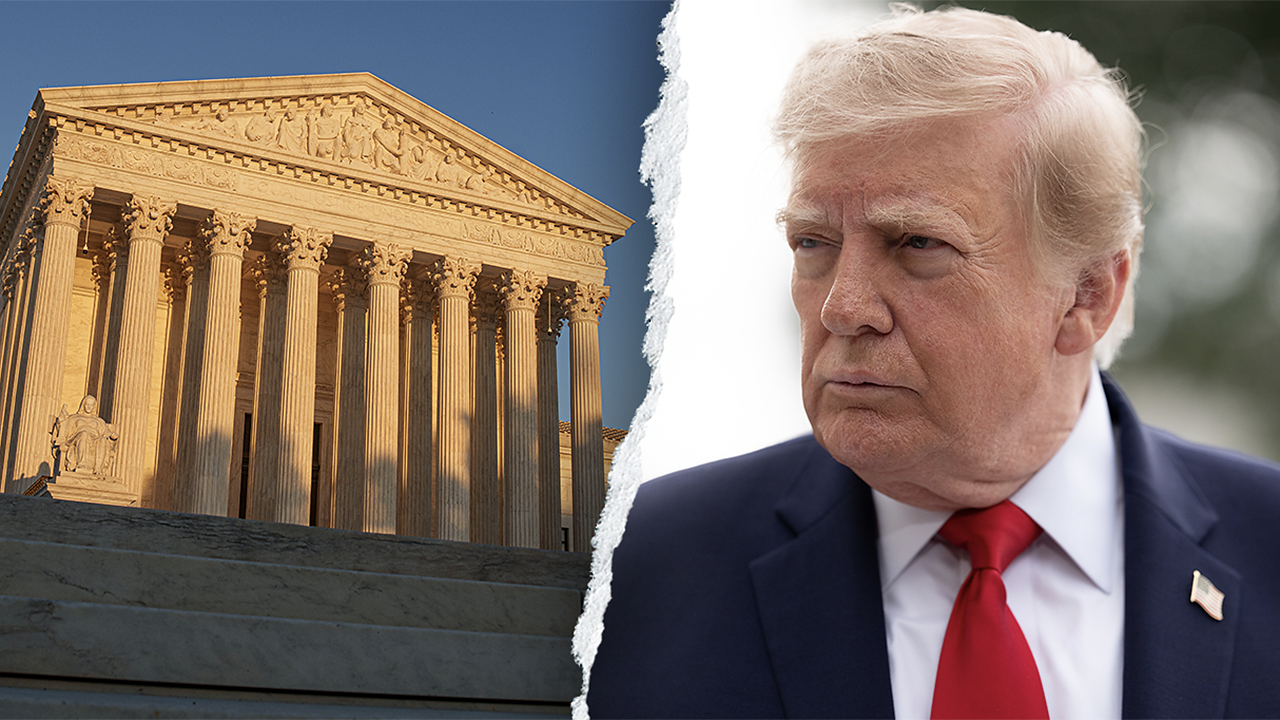
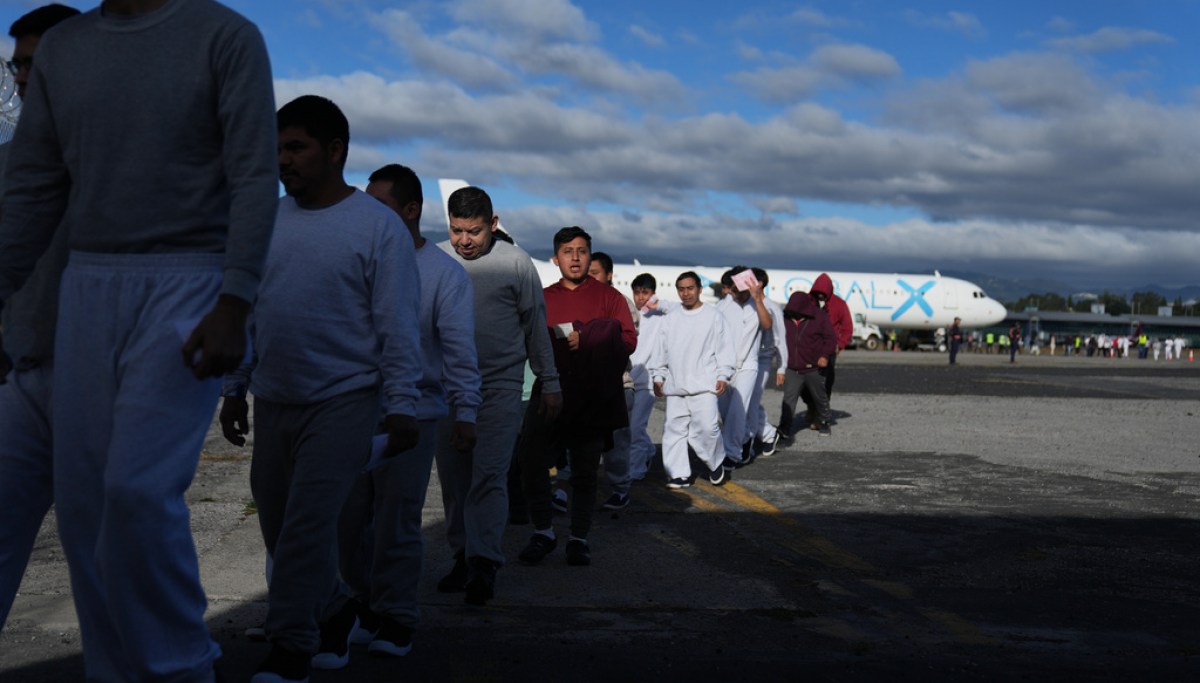
U.S. Supreme Court sides with Trump administration in third-country deportations

Read the original at NPR ↗
Cite

Johnson, C. (2026, September 29). U.S. Supreme Court sides with Trump administration in third-country deportations. NPR. https://www.npr.org/2026/09/29/g-s1-145266/supreme-court-trump-third-country-deportations

Dated when The Aporia collected the article, usually within hours of publication. Check the original for its exact date and byline.

NPR · collected 2026-09-29 · by Carrie Johnson

Quick Summary

The U.S. Supreme Court permitted the Trump administration to resume deporting migrants to countries other than those listed in their removal orders, despite objections from liberal justices and legal challenges claiming violations of due process rights. The court will hear full arguments on this policy in December. The administration argues that deportations to third countries are essential for removing dangerous criminals, while opponents claim these actions lead to human rights abuses against migrants who face torture or abuse upon deportation.
Written by AI on 2026-09-29, from this article's own text only (the story summary below draws on all the coverage).
See how they differ ↓

AI analysis

Story summary

The Trump administration asked the U.S. Supreme Court to allow it to continue swiftly deporting immigrants to third countries, different from their country of origin, after a federal appeals court blocked such deportations due to insufficient process protections for migrants. Attorney General Todd Blanche announced on X that the government would seek immediate relief from the high court, which previously allowed similar removals. Over 25,000 people have been deported under this policy since March 2025, with most sent to Mexico and others to more than two dozen countries. The administration argues these deportations are crucial for public safety, targeting individuals who pose a criminal threat or whose home countries refuse them entry. However, critics claim the policy lacks due process protections and targets those granted legal protection from deportation back to their home countries. On September 24th, the Supreme Court temporarily allowed the policy to continue while it considers full oral arguments in December, despite objections from Justices Sonia Sotomayor, Elena Kagan, and Ketanji Brown Jackson.

Written for “Third Country Deportations Policy” on 2026-11-18, grounded in this article and the 17 other(s) covering the same event.

How they differ

13 outlets covered “Third Country Deportations Policy”.

What each outlet says

One AI summary per outlet of its latest article on this story, written from that article alone and checked against it. Open the article for the outlet's own words.

NPRThis outlet29 Sep

The U.S. Supreme Court permitted the Trump administration to resume deporting migrants to countries other than those listed in their removal orders, despite objections from liberal justices and legal challenges claiming violations of due process rights. The court will hear full arguments on this policy in December. The administration argues that deportations to third countries are essential for removing dangerous…

U.S. Supreme Court sides with Trump administration in third-country deportations (this article)
ABC News (US)29 Sep

The Supreme Court has allowed the Trump administration to proceed with its policy of quickly deporting migrants to third countries without providing prior notice, suspending a lower court’s order that had halted this controversial practice. The court granted the government's request for a stay on Tuesday and will hear oral arguments regarding the case in December.

Supreme Court rules Trump admin can continue deporting migrants to 3rd countries →2 articles from ABC News (US) on this story
Toronto Star29 Sep

The Supreme Court has allowed the Trump administration's policy of expelling migrants to third countries without giving them an opportunity to contest their deportation to proceed, pending a decision on its legality. The ruling came in response to lower court injunctions that required such objections to be heard first. Six justices supported this temporary measure, while three dissented.

Supreme Court lets quick deportations to third countries resume for now while it weighs Trump policy →2 articles from Toronto Star on this story
Reason30 Sep

On September 29, the Supreme Court granted an emergency stay blocking a Boston District Court order that halted third-country removals just 40 minutes after the Solicitor General filed its reply brief. The Court treated this application as a petition for certiorari and set arguments for December, addressing specific legal questions related to jurisdiction, authority of the district court, and legality of government…

SCOTUS Stays Third-Party Removal Injunction 40 Minutes After Reply Filed →2 articles from Reason on this story
Washington Examiner1 Oct

The Supreme Court has allowed the Trump administration to resume deporting people who have final removal orders but no clear country of return. This decision came after three liberal justices dissented, while the article's author supports the policy, arguing that those who entered illegally and were ordered out should be sent to countries willing to accept them. About 25,000 individuals have already been removed…

Last call in America: You don’t have to go home, but you can’t stay here →2 articles from Washington Examiner on this story
Fox News3 Oct

The Department of Homeland Security (DHS) is defending its use of third-country deportation policies despite criticism from human rights advocates and legal challenges. DHS General Counsel James Percival argues that these measures are lawful under existing statutes, emphasizing the difficulty in finding countries willing to accept deportees who cannot return to their home nations. The Supreme Court recently allowed…

DHS exposes dilemma behind SCOTUS deportation fight: ‘We have two choices’ →2 articles from Fox News on this story
Show 7 more outlets
The Straits Times25 Sep

The Trump administration requested intervention from the US Supreme Court on September 24, asking it to allow continued deportations of migrants to countries other than their home nations without providing them an opportunity to demonstrate potential harm. This request came after Boston-based Judge Brian Murphy ruled that the Department of Homeland Security’s policy was unlawful and following the 1st US Circuit…

Trump administration asks US Supreme Court to intervene to allow third-country deportations →
CBS News29 Sep

The Supreme Court has temporarily allowed the Trump administration to implement its policy of deporting individuals to third countries without ties, while scheduling arguments for December. This decision overturns a lower court ruling that mandated more due process for deportees. The case will likely be decided by summer 2027, with Justice Department lawyers arguing that the policy does not violate federal law or…

Supreme Court revives Trump's third-country deportation policy for now →
The Guardian29 Sep

On Tuesday, the US Supreme Court allowed the Trump administration to resume deporting immigrants to third countries without giving them a chance to contest humanitarian risks involved, based on a brief order from the six-justice conservative majority. The ruling temporarily overrides a lower court decision and will be in effect until December when oral arguments are scheduled. The three liberal justices—Sotomayor…

US supreme court allows Trump officials to resume deportations to third countries →
Al Jazeera29 Sep

The U.S. Supreme Court has temporarily allowed President Trump’s administration to continue third-country deportations, overriding a lower court's ruling that paused these removals over due process concerns. The decision came in response to an emergency request from the administration and will be revisited when arguments are heard in December. Critics argue that some of the countries involved have records of human…

US Supreme Court allows Trump to continue third-country deportations →
South China Morning Post30 Sep

The US Supreme Court allowed the Trump administration to resume rapidly deporting migrants to third countries without considering objections from those affected. The decision came after the government requested an emergency exemption from a previous lower court ruling that had halted this practice. The justices will hear arguments on the legality of these expulsions in December, with Justices Sotomayor, Kagan, and…

US Supreme Court lets Trump resume deportations to third countries →
Time1 Oct

President Trump has secured several victories through the Supreme Court's "shadow docket," which processes emergency requests for expedited review without extensive deliberation or public explanation. Recently, the Court allowed Trump to resume deportations and use a controversial voter eligibility database after his administration made these requests. Legal experts note that the Court has been more lenient toward…

What Is the Supreme Court’s ‘Shadow Docket,’ and How Has Trump Used It to Advance His Agenda? →
Semafor2 Oct

Immigrant advocates are facing a setback due to the Supreme Court's decision allowing the Trump administration to continue third-country deportations, leaving the policy unchanged for months until further rulings. Trina Realmuto from the National Immigration Litigation Alliance describes this as a “devastating result,” warning that migrants could be sent to unsafe countries where they may face severe risks. The…

Third-country decision a ‘devastating result,’ lawyer says →

Where they agree and split

Agreed

AI · cited, from two or more outlets

  • More than 25,000 migrants have been deported to 29 countries under the policy implemented in 2025, with the vast majority going to Mexico.45

Disputed

Picked by our model, which is sometimes wrong

  • The administration argues that third-country deportations are a legal and invaluable tool to stem illegal immigration, while critics warn migrants could be sent to countries where they may face persecution or grave danger.15

Framing

How the first headlines put it

  • ABC News frames the event as an administrative request for swift deportations, while The Straits Times emphasizes the Trump administration's intervention to allow third-country deportations.14
  • The Toronto Star presents the Supreme Court decision as a temporary resumption of quick deportations, whereas Fox News frames it as part of an ongoing fight over the legality of Trump’s deportation policy.23
Stated as fact4
The headlines (4)

Administration to ask Supreme Court to allow swift deportations to 3rd countries ABC News · stated as fact

Trump administration asks the Supreme Court to allow quick third-country deportations to continue Toronto Star · stated as fact

Because KBJ Denied Administrative Stay in Third-Country Removal Case, The Application Should Be Referred To The Full Court Now Reason · stated as fact

Trump administration asks US Supreme Court to intervene to allow third-country deportations The Straits Times · stated as fact

Words to watch (1)

Third-country decision a ‘devastating result,’ lawyer says Semafor

The full story: what happened, how it changed, and all 18 articles →

Compared with similar articles

This article reads leans right and hedges 19% of its claims. Each row says how that neighbour differs.
Al Jazeera
Leans right Hedges 4 of 22 claims Outlet record 60/100
South China Morning Post
Leans right Hedges 0 of 4 claims Outlet record 62/100
CBS News
Hedges 0 of 19 claims Outlet record 67/100
ABC News (US)
Leans right Hedges 0 of 5 claims Outlet record 67/100
The Guardian
Leans right Hedges 1 of 5 claims Outlet record 64/100
Washington Examiner
Leans right Hedges 3 of 12 claims Outlet record 67/100
Toronto Star
Leans right Hedges 0 of 2 claims Outlet record 64/100
Fox News
Leans right Hedges 6 of 20 claims Outlet record 67/100
Washington Examiner
Leans strongly right further right than this Hedges 3 of 45 claims Outlet record 67/100
Semafor
Leans left further left than this Hedges 1 of 10 claims Outlet record 65/100

Story

Third Country Deportations Policy
Politics · 18 article(s) covering the same event. Compare every outlet's account →
How this article was measured signals, leaning charts, publisher record, byline, topics and claims

Signals How these are calculated →

Claims extracted
16
sentences that state something as happening or true
Uncertain
19%
3 of 16 hedged ("reportedly", "may", "according to")
Leaning
Leans right
of the writing, not the subject · beta estimate
Publisher signals
60/100
NPR's corrections and hedging, across everything collected from it. Not a measure of accuracy.
Outlets on this story
18
Politics
Same framing elsewhere
1
articles that frame the event the way this one does
Analyzed 2026-09-29 · how these are computed

How this is being covered How these are calculated →

Article leaning vs. publisher reliability
Source leaning vs. consistency

Publisher

NPR · 1333 article(s) · 4 correction(s) detected
Running correction rate · 4 correction(s)

Who wrote this

Carrie Johnson
4 article(s) here · 1 carrying a prediction
And they pointed out two other controversial times that judges named outside lawyers to evaluate a bid to dismiss criminal charges: one in the case of former Trump national security adviser Michael Flynn; and another in the case of former New York City Mayor Eric Adams.
On Monday, the Supreme Court will hear his case, which could determine whether federal law enforcement officers can be held to account when they violate constitutional rights.
The dispute could have ramifications far beyond the climate, to other areas where states are trying to hold companies accountable for their alleged harms to local communities.
The court also said it would take up the case for full oral argument in December.
Also by Carrie Johnson
Nothing else under this byline is closely related to this article, so these are simply their most recent.

Topics

Mexico Nation The U.S. Supreme Court U.S. U.S. Supreme Court

Subjects

Trump PERSON · 4× Boston GPE · 1× Brian Murphy PERSON · 1× John Sauer PERSON · 1× Mexico GPE · 1× Nation ORG · 1× Sauer PERSON · 1× The U.S. Supreme Court ORG · 1× U.S. GPE · 1× U.S. Supreme Court ORG · 1×

Narrative

U.S. Supreme Court sides with Trump administration in third-country deportations The U.S. Supreme Court on Tuesday allowed the administration to resume, for now, deportations of migrants to countries that are not identified in their removal orders, handing President Trump another victory in his aggressive immigration agenda.
framing: assertive · carried by 1 article(s) · first seen 2026-09-29
The court also said it would take up the case for full oral argument in December.

Claims (16 extracted, 3 hedged)

U.S. Supreme Court sides with Trump administration in third-country deportations The U.S. Supreme Court on Tuesday allowed the administration to resume, for now, deportations of migrants to countries that are not identified in their removal orders, handing President Trump another victory in his aggressive immigration agenda. asserted
that → side → agenda
The court also said it would take up the case for full oral argument in December. asserted
it → say → December
The court's brief order granting the petition did not outline a reason for staying a lower-court order that blocked the third-country deportations. asserted
that → grant → deportations
But it asked both sides to argue whether lower courts had the jurisdiction to rule on the issue and order nationwide relief, as well as whether the Trump policy is legal or whether it violated the due process clause or conventions against torture. asserted
it → ask → torture
Solicitor General John Sauer told the justices the third-country deportation policy amounted to "an essential tool to remove certain aliens, including some of the worst criminal aliens," in court papers earlier this month. asserted
policy → tell → papers
The administration said it has used the policy to deport tens of thousands of noncitizens to Mexico and countries in Africa and Latin America after the migrants' home countries refused to accept them. asserted
countries → say → them
"While certain aliens may benefit from stalling their removal, the Nation does not," Sauer wrote in an emergency application Sept. 24. uncertain
Sauer → benefit → application
The court's brief order on Tuesday noted that the three liberal justices objected to staying the order. asserted
justices → note → order
The action by the high court marks the third time the justices have rejected efforts by U.S. District Judge Brian Murphy in Boston to pause the deportations, which the judge said violate due process rights and fail to give detainees meaningful notice to raise arguments that they have credible fears of torture or abuse in the countries where they could be sent. uncertain
they → mark → countries
The National Immigration Litigation Alliance, which is representing migrants facing deportation, said in court papers that their clients are facing significant harms. asserted
clients → represent → harms
"The record shows that class members removed without meaningful notice or an opportunity to present country-specific protection claims have faced prolonged and arbitrary detention, beatings and sexual assault, disappearance, and chain refoulement to countries from which the United States had already granted them protection," wrote lawyer Trina Realmuto. uncertain
Realmuto → show → protection
"These harms cannot be undone." asserted
harms → undo → ?
The Department of Homeland Security said Murphy's rulings have created a logistical nightmare, including canceled flights, potential diplomatic clashes, and a lag in removing people convicted of assault and drug crimes. asserted
rulings → say → assault
The administration argued that if a country has assured Secretary of State Marco Rubio that it will not engage in persecution or torture, that should be enough to deport a noncitizen to a country that's not their own. asserted
that → argue → country
The Supreme Court's conservative supermajority has recognized the president has substantial authority over the border. asserted
president → recognize → border
Last summer, in a 6-to-3 decision, the court ruled President Trump has sweeping power to end the temporary protected status program for people who can't return to their home countries because of wars and natural disasters. asserted
who → rule → wars

Give feedback · no sign-in needed

No sign-in needed for now. Your note is sent without a name, so it cannot be answered.

History Support