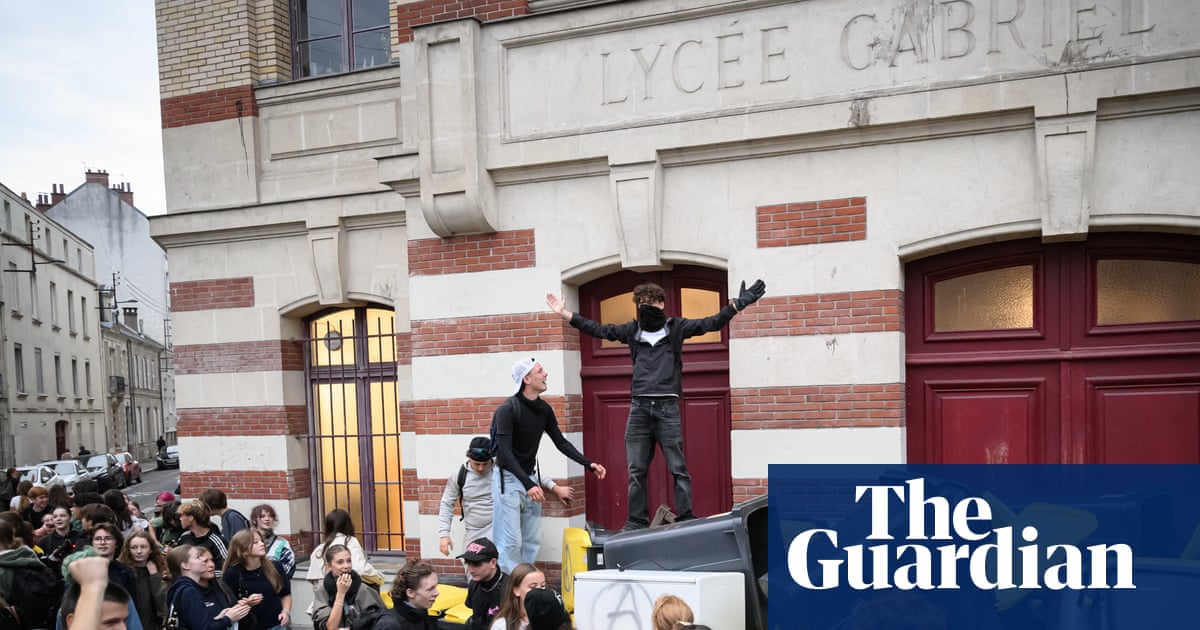
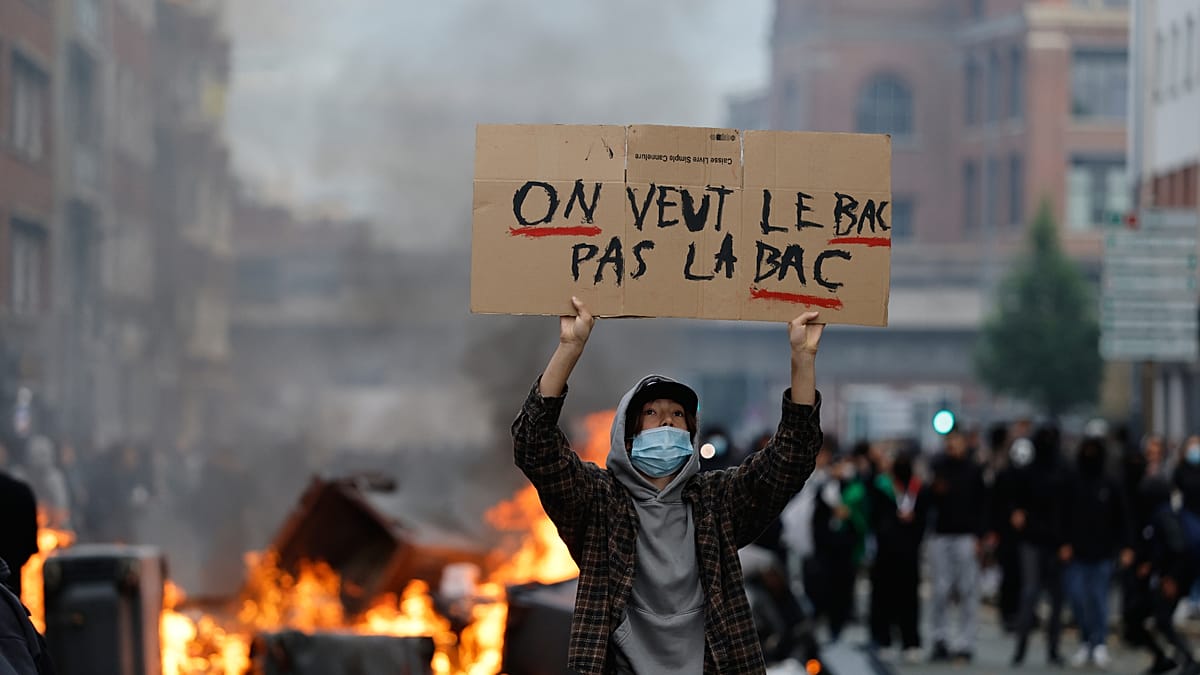
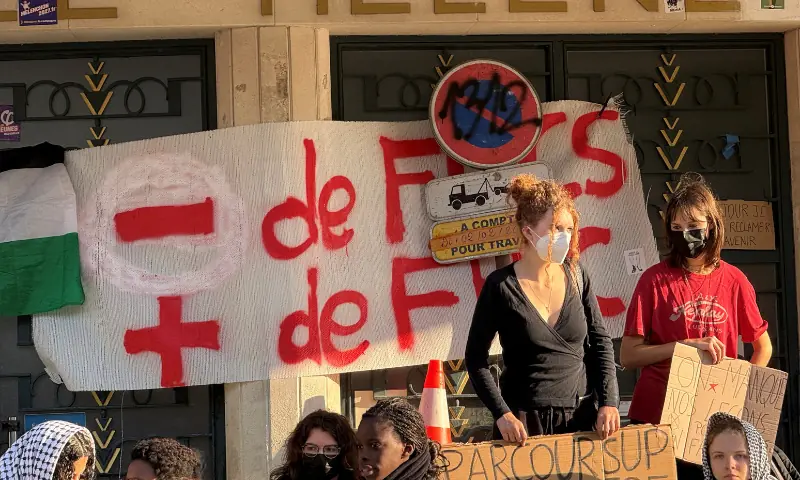
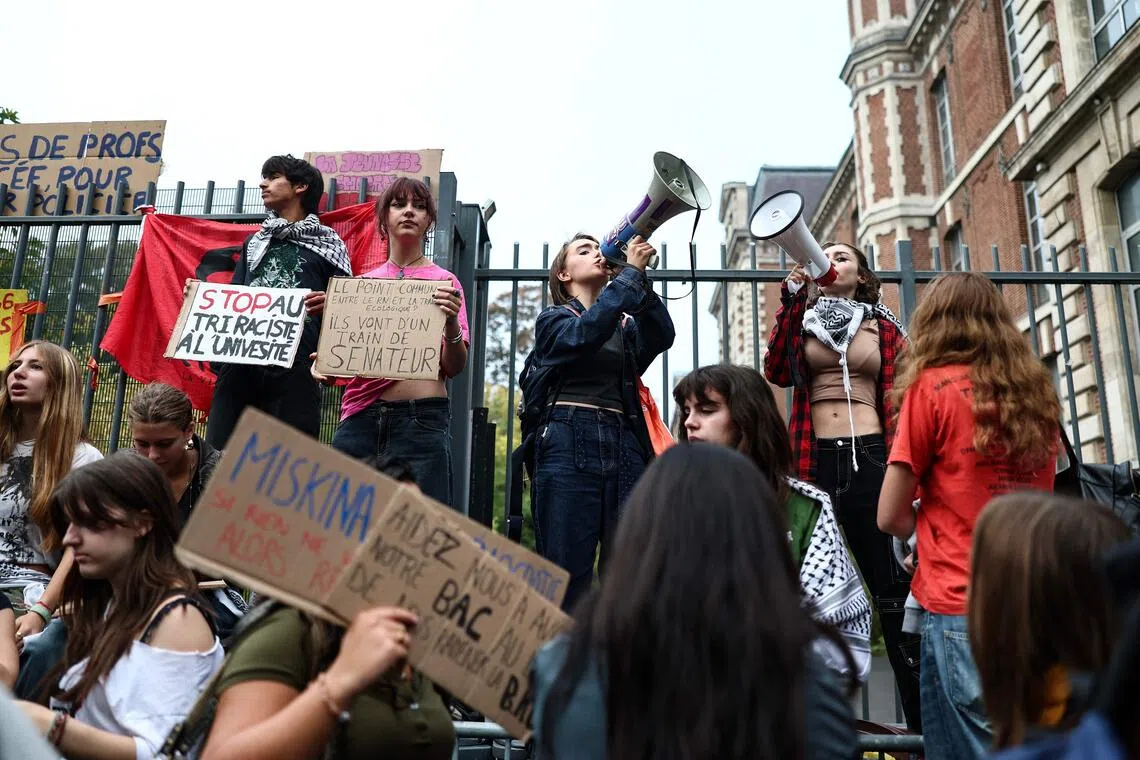
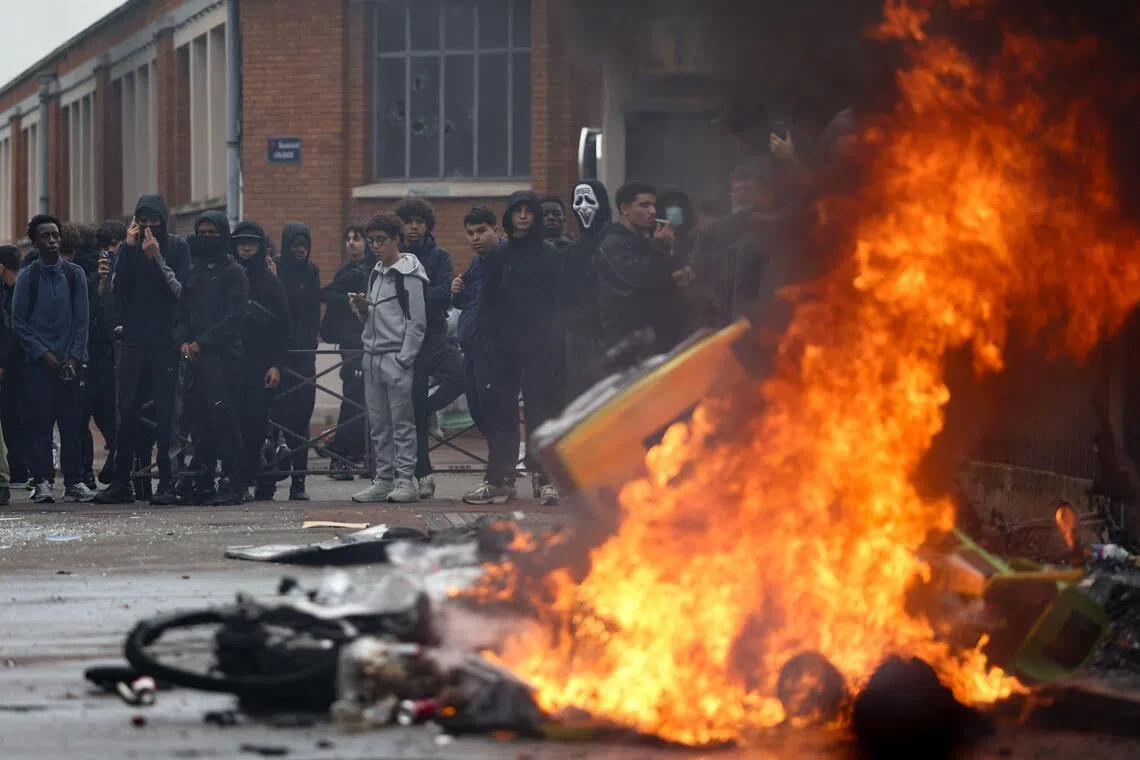
French students protesting against large class sizes, teacher shortages, and long school hours have clashed with police in multiple cities across France. On Tuesday alone, there were violent confrontations in Lille, Bordeaux, Rennes, Nantes, and Marseille, resulting in the arrest of 40 more individuals and ten injuries to students and staff. The government reported that protests had spread to 300 high schools by midday Tuesday. Politicians are trading criticism; Prime Minister Sébastien Lecornu condemned the violence while hard-left leader Jean-Luc Mélenchon accused the government of a racist crackdown on harmless protesting youth.
Written locally by qwen2.5:14b on 2026-09-29,
using this article's own text rather than the other coverage of the
same event (that is the story summary below).
Story summary
French Prime Minister Sébastien Lecornu warned against escalating student protests after 164 people were arrested on Monday, following clashes in several cities including Paris, Lille, and Nantes. The protests, which began last week around Paris, involve high school students blockading schools over issues such as overcrowded classes, teacher shortages, and long timetables. On Tuesday, 440 people, mostly minors, were detained with 48 law enforcement officers injured across France as the demonstrations spread to over 300 schools nationwide. Interior Minister Laurent Nuñez cited incidents of violence, including fires set by protesters and projectiles thrown at police who responded with tear gas in Lille and Nantes. While the government criticized the protests, a French union defended the students' actions as "legitimate."
Written for “French Student Protests Over Educatio…” on 2026-10-05,
grounded in this article and the 59 other(s) covering the same event.
French teenagers blockading their schools in protest at class sizes, teacher shortages and long timetables have clashed with police, as politicians traded verbal blows over how to respond.
asserted
politicians → blockade → blows
Demonstrations that began in Paris last week have escalated and spread across France, with the authorities reporting the arrests of 164 people on Monday.
asserted
authorities → begin → Monday
On Tuesday, high school pupils in Lille, northern France, set fire to dustbins and threw bottles, paving stones and other projectiles at police, who responded with teargas after protesters vandalised bus shelters and advertising hoardings.
asserted
protesters → set → shelters
At the Lamartine lycée, in the north of Paris, students waved placards complaining they had exhausting timetables.
asserted
they → wave → timetables
One read: “8am-6pm.
asserted
One → read → 8am-6pm
On Monday, the interior minister, Laurent Nuñez, said protests had broken out at 180 schools, and 12 officers, 12 students and three school staff had been injured.
asserted
officers → say → schools
By midday on Tuesday, the education ministry was reporting protests at 300 high schools, a further 40 arrests and that 10 students and staff had been injured.
asserted
students → report → schools
The prime minister, Sébastien Lecornu, said earlier that escalating the demonstrations would be “irresponsible”.
asserted
escalating → say → demonstrations
He posted on X: “Fireworks, fires, violence near high schools: nothing justifies endangering students staff or police.”
asserted
nothing → post → staff
Jean-Luc Mélenchon, leader of the hard-left France Unbowed (LFI), responded to ministers’ instructions to police, posting on X on Monday: “The high school students protesting are harmless.
asserted
students → leave → Monday
The Lecornu government has ordered a crackdown.
asserted
government → order → crackdown
This brutality is irresponsible and has a clear racist undertone.
asserted
brutality → have → undertone
Elected officials and France Unbowed activists, step in wherever you can.”
asserted
you → step → ?
Lecornu, responding on X, called Mélenchon’s intervention an “irresponsible escalation”.
asserted
intervention → respond → X
“The duty of an elected official of the republic is to protect young people and call for calm.
asserted
duty → elect → calm
Exploiting their anger for partisan purposes is wrong,” he wrote.
asserted
he → exploit → purposes
He added that Mélenchon’s accusation of racism was “an insult”.
asserted
accusation → add → racism
The protests came as French unions went on strike over the government’s budget plans, which include €54m in public spending cuts.
asserted
which → come → cuts
Many public sector workers stopped work on Tuesday, including an estimated 40% of primary school teachers.
asserted
workers → stop → teachers
Ryad Rani, president of the Union Syndicale Lycéene (the high school students’ union) had called for a total blockade of France’s high schools as a parallel action but urged protesters to “remain peaceful”.
asserted
Rani → call → protesters
He said the union was protesting about a “general lack of resources, overcrowded classrooms of sometimes 32-35 students and the shortage of teachers and staff”.
asserted
union → say → teachers
He said a circular sent by the interior and the education ministries to the police, telling them to maintain public order outside high schools “with a proportionate use of force”, was a “absolute scandal”.
asserted
circular → say → force
“We’re talking about pupils of 15-18 years old and the government’s only response is automatic and institutionalised repression.
asserted
response → talk → years
It’s unacceptable.
asserted
It → ’ → ?
High school pupils are taking action to demand fairer and more equitable conditions and they’re being met with the BAC [anti-criminal brigade] and the CRS [riot police],” Rani said.
asserted
Rani → take → BAC
He added that some teachers and school staff had stood in front of students to protect them from police.
asserted
teachers → add → police
“Those are the images you should be showing,” Rani told BFM TV.
asserted
Rani → show → TV
Caroline Chevé, secretary general of the main teachers’ union the Fédération Syndicale Unitaire (FSU – Unitary Trade Union Federation), who joined protesters at a march in central Paris on Tuesday, said she understood pupils’ frustration.
asserted
she → join → frustration
“They’re facing the same challenges as we are.
asserted
we → face → challenges
They’re in overcrowded classrooms.
asserted
They → ’re → classrooms
Sometimes they don’t have enough teachers because of staffing shortages.
asserted
they → have → shortages
They see the same reality as we do, and they’re angry,” Chevé said.
asserted
Chevé → see → reality
 The Aporia