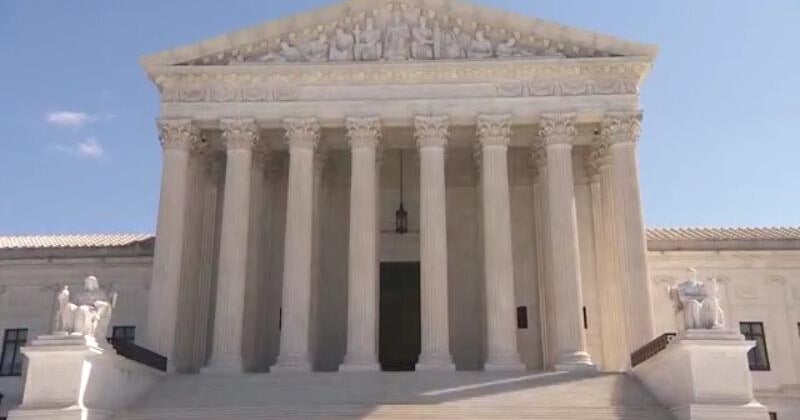
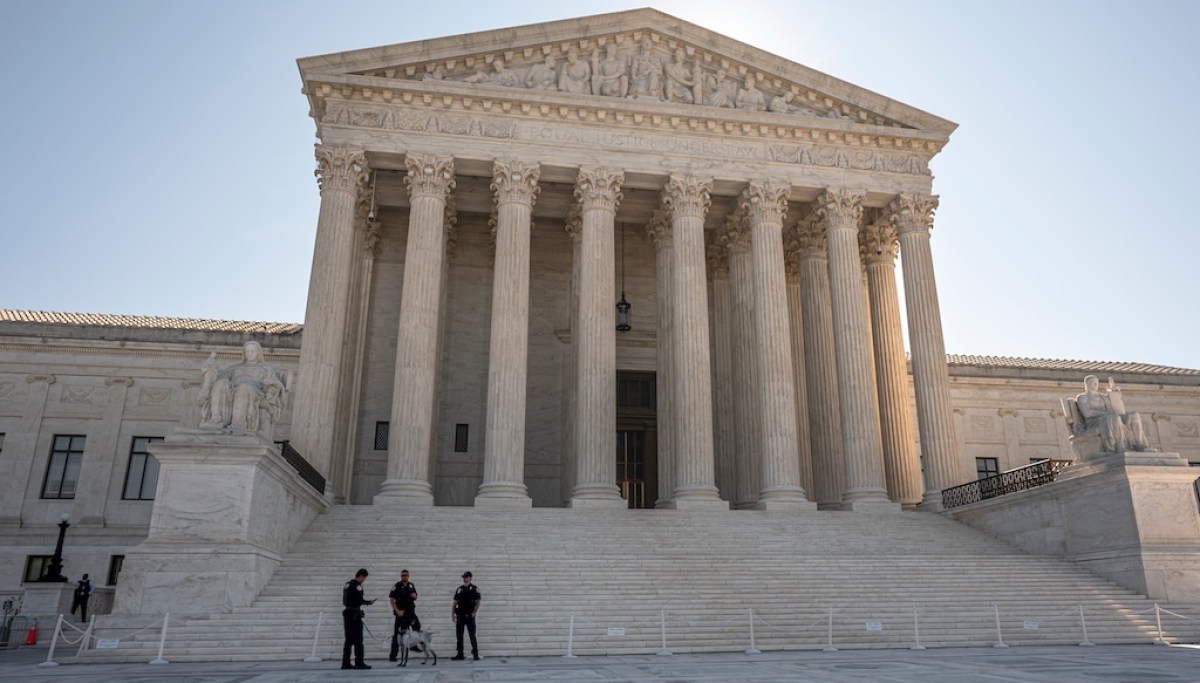
The Supreme Court on Friday granted Republicans' request to halt a lower court decision that prevented political party committees from receiving more favorable broadcast advertising rates, giving the GOP a win weeks before the November elections.
asserted
that → grant → elections
The order from the high court restores guidance from the Federal Communications Commission that allows political parties and committees access to cheaper rates for political ads in the run-up to the midterms.
asserted
that → restore → midterms
The decision could be a boon for national Republican groups, which have amassed bigger war chests than their Democratic counterparts and can flood the airwaves with more ads in support of GOP candidates.
uncertain
which → amass → candidates
The National Republican Congressional Committee has reserved $10.8 million in television ads for 23 House races this month, according to the group and AdImpact.
uncertain
Committee → reserve → group
The move by the NRCC, which aims to expand Republicans' ranks in the House, comes after the Supreme Court in June
on the amount of money political committees can spend in coordination with federal candidates.
asserted
committees → aim → candidates
In an unsigned decision, the Supreme Court said the appeals court likely did not have jurisdiction to address the challenge to the FCC's policy that was brought by a group of Democratic candidates for the House and Senate.
asserted
that → say → House
Ossoff and McDonald Rivet are seeking reelection, and Brown and Cooper are both running for the Senate in their respective states.
asserted
Brown → seek → states
The high court also said the GOP party committees are likely to be harmed by the 4th Circuit's decision, since they said broadcasters are already withdrawing favorable rates in light of the lower court's ruling.
asserted
broadcasters → say → ruling
"Current and future recissions will require the party committees to pay more for advertising space, thereby hampering their efforts to reach the electorate in the critical weeks leading up to the midterms," the Supreme Court said.
asserted
Court → require → midterms
"That injury, which implicates their First Amendment rights to speak and coordinate their political activities freely, cannot be remedied after the fact through refunds or reimbursements."
asserted
which → implicate → refunds
Justice Ketanji Brown Jackson dissented.
asserted
Jackson → dissent → ?
Cooper, who is running for Senate in North Carolina against Republican Michael Whatley, castigated the Supreme Court's ruling,
"The Supreme Court has just ignored the clear language of the law and given a massive TV ad discount to billionaires and other big money donors, further eroding the power of everyday people," said Jeff Allen, Cooper for North Carolina campaign manager.
asserted
Allen → run → Carolina
"Former RNC Chair Michael Whatley will be first in line to benefit from the RNC's $130 million warchest to bail out his flailing campaign.
asserted
Whatley → benefit → campaign
The dispute involves the rates that broadcasters charge for political ads in the run-up to federal elections.
asserted
broadcasters → involve → elections
Under federal law, stations must give candidates and their campaign committees favorable rates during election season.
asserted
stations → give → season
These lesser rates are known as the "lowest unit charge" rates and take effect 60 days before a general election, which for the upcoming midterms is Friday.
asserted
which → know → midterms
In March, a component of the Federal Communications Commission issued a public notice on the rules for political ad buys that directed broadcasters to offer discounted rates to joint fundraising committees and political parties spending in coordination with candidates.
asserted
that → issue → candidates
Soon after that guidance was issued, the four Democratic candidates asked the FCC to review the policy.
asserted
candidates → issue → policy
After the FCC took no immediate action on the Democrats' request, they turned to the U.S. Court of Appeals for the 4th Circuit and argued the policy is unlawful.
asserted
policy → take → Circuit
In a divided decision last month, the 4th Circuit agreed to set aside the public notice.
asserted
Circuit → agree → notice
In its 2-1 ruling, the 4th Circuit said that the FCC's guidance is unlawful because neither political parties nor joint fundraising committees are entitled to the discounted rates.
asserted
parties → say → rates
The two judges in the majority said that the more favorable rates are only for candidates for public office in connection with his campaign.
asserted
rates → say → campaign
Writing in dissent, Judge Harvie Wilkinson said that the 4th Circuit got involved too soon, since the FCC has not yet issued a final order in response to the Democrats' application for review.
asserted
FCC → write → review
In their request for emergency relief to the Supreme Court, the National Republican Senatorial Committee and NRCC said they have budgeted "tens of millions of dollars" in ad buys at the cheaper rates.
asserted
they → say → rates
But it said broadcast stations are rescinding those rates because of the 4th Circuit's ruling.
asserted
stations → say → ruling
They argued that the 4th Circuit did not review final action by the FCC, but rather a "staff-level guidance document," so the court should not have gotten involved at that stage.
asserted
court → argue → stage
"In the midst of election season, a divided Fourth Circuit panel just rewrote longstanding rules about preferential broadcast rates for political ads," the Republicans wrote, adding that the Democrats were seeking to "upend the status quo" by limiting access to favorable ad rates to candidates.
asserted
Democrats → rewrite → candidates
The Trump administration, including the FCC, backed the GOP committees.
asserted
administration → include → committees
In a brief to the Supreme Court, Solicitor General D. John Sauer argued the Democratic candidates did not have the legal right to sue, and the 4th Circuit did not have jurisdiction to review the public notice.
asserted
Circuit → argue → notice
Sauer also asserted that the FCC's guidance applies equally to candidates of both political parties.
asserted
guidance → assert → parties
"The notice does not grant favored treatment to one side or the other; instead, the notice's interpretation offers the same benefit to all sides, including the challengers themselves and the committees and parties supporting them," he said.
asserted
he → grant → them
But lawyers for the Democrats said the 4th Circuit's decision was "well-grounded," since federal law allows cheaper ad rates only for a "legally qualified candidate" for public office.
asserted
law → say → office
"That covers advertisements purchased by the candidate or their principal campaign committee on their behalf, but not advertisements that are purchased by party committees or JFCs who are not … acting on behalf of candidates when purchasing the ads in question," they wrote in a Supreme Court filing.
asserted
they → cover → filing
The Democrats argued that if the lower rates were extended to political parties and joint fundraising committees, their access to them would be unlawfully diluted.
asserted
access → argue → them
As a result, the candidates"would face a higher volume of opposing advertising, and in their competition with other advertisers for scarce television inventory.
asserted
candidates"would → face → inventory
"
"In each case, the unlawful dilution requires them to raise and spend more money in response," they said.
asserted
they → require → response
 The Aporia