Economists warn that while temporarily banning U.S. diesel exports could initially lower domestic diesel prices, prolonging such a ban might increase gasoline prices significantly. Goldman Sachs estimates a 25 cent per gallon reduction in diesel costs but also predicts a potential 30 cent per gallon rise in gas prices for each additional week the ban continues due to reduced overall fuel production. This scenario would strain supplies of both diesel and gasoline, as they are typically refined together, potentially harming businesses reliant on stable fuel pricing.
Written locally by qwen2.5:14b on 2026-09-28,
using this article's own text rather than the other coverage of the
same event (that is the story summary below).
Story summary
Summary
As of mid-October 2023, U.S. President Donald Trump is considering a temporary ban on diesel exports to address record-high domestic fuel prices ahead of November's midterm elections. Average national diesel prices have surged past $6.50 per gallon due to the war in Iran and strikes against Russian refineries by Ukrainian forces. The proposal has gained traction among Republican candidates in key states like Iowa, Michigan, and Kansas, who are facing pressure from constituents affected by soaring fuel costs.
However, experts and industry groups warn that such a ban could exacerbate global diesel shortages and lead to even higher prices both domestically and internationally. U.S. Treasury Secretary Scott Bessent acknowledged the administration is evaluating whether a full or partial export ban would be feasible and beneficial. Nevertheless, many congressional Republicans are skeptical of this approach, fearing it might backfire and increase gasoline costs while further alienating them from Big Oil allies.
Meanwhile, some Republican officials advocate for lifting state-level restrictions on diesel production to mitigate price hikes instead. The potential for a policy backlash looms as the midterm elections draw near, with Democrats hoping to capitalize on voter discontent over economic hardships fueled by escalating conflicts abroad. Overall, the debate highlights the complex interplay between political expediency and economic pragmatism in addressing pressing issues like fuel scarcity during wartime conditions.
Written for “Trump Diesel Export Ban Controversy” on 2026-10-05,
grounded in this article and the 15 other(s) covering the same event.
A move by the U.S. to temporarily halt diesel exports amid
would initially lower costs, but a prolonged ban could drive up domestic gasoline prices, according to Goldman Sachs.
uncertain
ban → halt → Sachs
President Trump on Sunday told reporters his administration is "very seriously" considering a ban on diesel exports.
asserted
administration → tell → exports
Calls to restrict exports of U.S.-refined diesel have picked up in recent weeks, mostly from Republican lawmakers, as a lever they believe will help lower prices.
asserted
they → restrict → prices
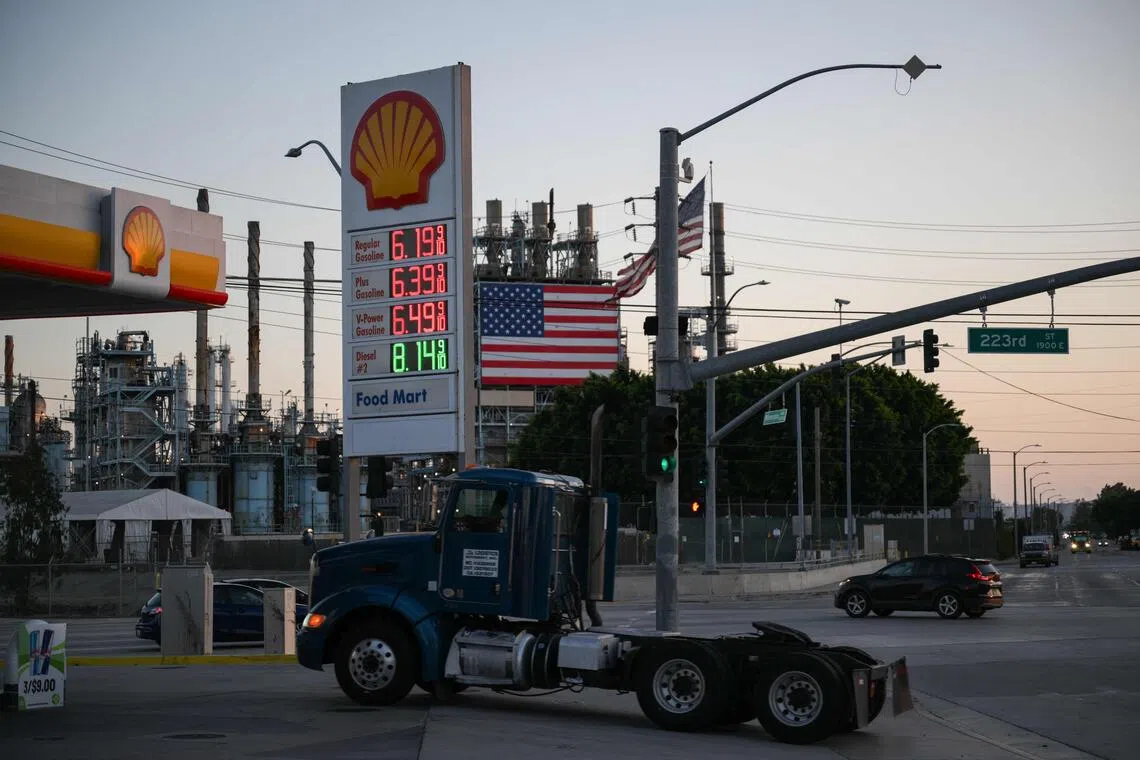
Diesel hit a record $6.53 a gallon on Sept. 22, and has only eased slightly since then, slipping to $6.45 a gallon on Monday, according to AAA data.
uncertain
Diesel → hit → data
Supporters of an export ban note that U.S. energy companies refine more diesel than Americans can consume, resulting in net exports of about 1.5 million barrels a day, according to S&P Global Energy.
uncertain
Americans → note → Energy
By halting those exports, the thinking goes, domestic diesel prices would drop due to a flood of fresh supply, lowering costs for farmers, commercial trucking companies and thousands of other businesses that rely on the fuel.
asserted
that → halt → fuel
How much would a diesel export ban lower prices?
asserted
ban → lower → prices
Goldman Sachs estimated that a diesel export ban could cut prices by about 25 cents a gallon while refiners have storage space for their excess diesel production.
uncertain
refiners → estimate → production
However, once diesel storage reached capacity, each additional week a ban was in place could cause gas prices to jump by 30 cents per gallon, according to the investment bank.
uncertain
prices → reach → bank
"The longer a diesel export ban lasts, the more disruptive it would likely be by putting upward pressure on gasoline prices because diesel, gasoline and jet fuel are largely produced together," Goldman Sachs analysts said in the report.
asserted
analysts → last → report
"Therefore, downward pressure on diesel production can mean downward pressure on gasoline production, i.e. upward price pressure on gasoline."
asserted
pressure → mean → gasoline
The White House didn't immediately respond to a request for comment.
asserted
House → respond → comment
Although diesel prices would likely initially drop if an export ban were to be introduced, U.S. energy companies would respond by cutting their refining output, according to industry experts.
uncertain
companies → drop → experts
Gasoline is refined alongside diesel, so a drop in production would also reduce gas supplies, driving up prices for U.S. consumers.
asserted
drop → refine → consumers
American Fuel & Petrochemical Manufacturers, a trade group for energy producers, warned Friday that blocking refiners from exporting excess diesel supplies would cause them "to cut fuel production overall, including gasoline, putting upward pressure on prices and increasing America's reliance on imported fuel.
asserted
them → warn → fuel
"
Shifting the cost burden to gas
Wood Mackenzie, an energy consulting company, also predicts that Americans could face sharply higher gas prices if the Trump administration implemented a full diesel export ban.
uncertain
administration → shift → ban
"The irony of a U.S. diesel export ban is that it would likely increase costs for American consumers," Alan Gelder, an analyst at Wood Mackenzie, said in a statement.
asserted
Gelder → increase → statement
"Cutting crude runs to manage the oversupply would shift the cost burden from diesel to gasoline, meaning a policy designed to bring relief at the diesel pump could end up driving prices higher at the gasoline pump.
uncertain
policy → cut → pump
"
If an export ban extended longer than 30 days, cracks would appear in the economics of refining diesel and gas, according to JPMorgan analysts.
"
uncertain
cracks → extend → analysts
Refiners can't indefinitely produce excess supply.
asserted
Refiners → produce → supply
And since a refinery can't simply stop making diesel while continuing to produce the same amount of gasoline, crude runs eventually would have to fall," JPMorgan analysts wrote in a Sept. 24 report.
asserted
analysts → stop → report
"At this point, some of the initial price relief would begin to reverse — the opposite of what policymakers want."
asserted
policymakers → begin → what
 The Aporia