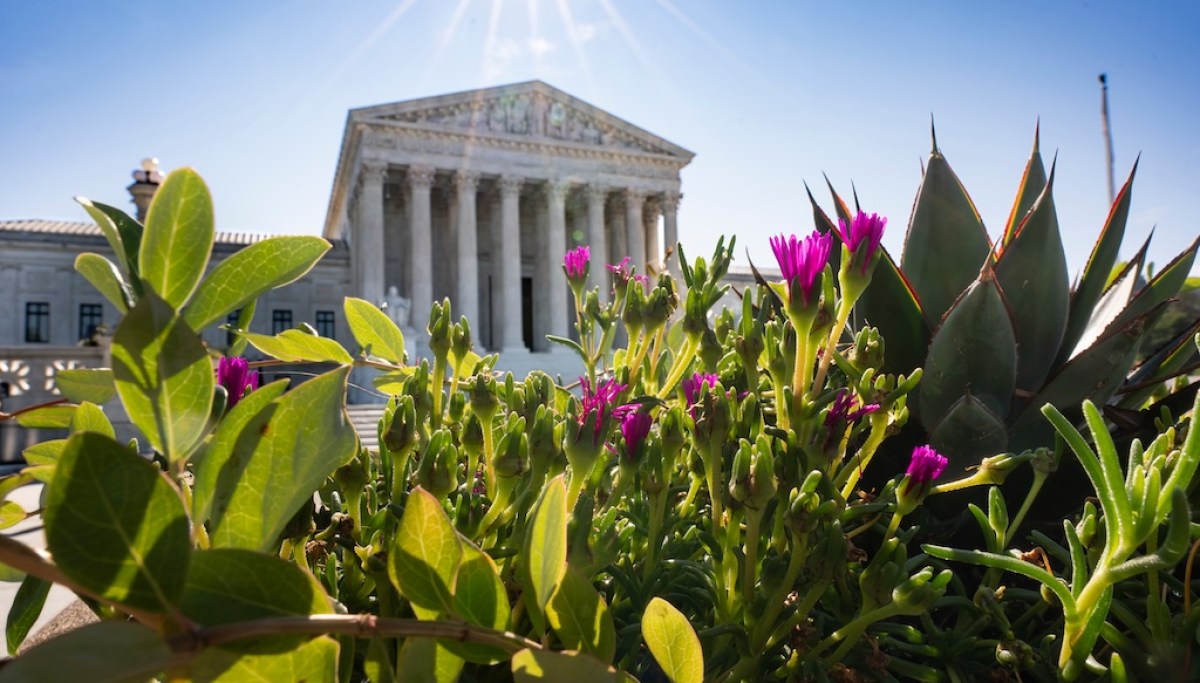
Photo via Washington Examiner

Supreme Court to consider free speech, lobster surveillance, and thousands of cases at long conference

Read the original at Washington Examiner ↗
Cite

Birle, J. (2026, September 28). Supreme Court to consider free speech, lobster surveillance, and thousands of cases at long conference. Washington Examiner. https://www.washingtonexaminer.com/news/supreme-court/4741342/supreme-court-free-speech-lobster-surveillance-long-conference/

Dated when The Aporia collected the article, usually within hours of publication. Check the original for its exact date and byline.

Washington Examiner · collected 2026-09-28 · by Jack Birle

Quick Summary

The Supreme Court justices will convene for their first closed-door conference on Monday to review thousands of cases petitioned since the last term ended in June. This long conference precedes the new term starting next week and includes significant First Amendment cases such as Majestic Realty Co. v. Salazar, which challenges state laws mandating free speech activities on private property; D.A. ex rel. B.A. v. Tri County Area Schools, involving a ban on "Let's Go Brandon" sweatshirts in schools; and Khatibi v. Lawson, questioning the legality of mandatory implicit bias training programs.
Written by AI on 2026-09-28, from this article's own text only (the story summary below draws on all the coverage).

AI analysis

Story summary

Supreme Court justices returned to Washington for a closed-door conference on Monday to review thousands of petitions from the previous term, which ended June 30. The long conference typically precedes the start of the new Supreme Court term and usually results in the court accepting only a small fraction of cases for oral arguments. Among the notable disputes under consideration are First Amendment challenges like D.A. ex rel. B.A. v. Tri County Area Schools, which questions if Michigan schools violated students' free speech rights by prohibiting them from wearing "Let's Go Brandon" sweatshirts, and another case involving a lobster surveillance dispute. The justices have already accepted 25 cases for oral arguments this term and are expected to add more in the coming months.

Written for “Supreme Court Conference Cases” on 2026-11-18, grounded in this article and the 0 other(s) covering the same event.

Compared with similar articles

This article reads unscored and hedges 12% of its claims. Each row says how that neighbour differs.
Reason
Hedges 4 of 13 claims Outlet record 67/100
“The articles describe different aspects of the Supreme Court's activities around the same time but do not refer to the same specific incident.”
Reason
Leans left Hedges 4 of 28 claims Outlet record 67/100
“The articles discuss different aspects of the Supreme Court's activities over a period of time and do not describe the exact same conference or event.”
NBC News
Outlet record 78/100
“The articles refer to different events in the Supreme Court timeline - Article A describes the long conference before the new term starts, while Article B discusses decisions during the new term.”
NPR
Leans left Hedges 8 of 51 claims Outlet record 60/100
“The articles discuss different aspects of the Supreme Court's activities - one focuses on the long conference before the term starts, while the other discusses the start and significance of a new term.”
NBC News
Hedges 4 of 42 claims Outlet record 78/100
“The articles describe different phases of Supreme Court activities, one about a preliminary conference before the new term and the other about the beginning of the new term with implications for Trump.”

Story

Supreme Court Conference Cases
Politics · 1 article(s) covering the same event.
How this article was measured signals, leaning charts, publisher record, byline, topics and claims

Signals How these are calculated →

Claims extracted
26
sentences that state something as happening or true
Uncertain
12%
3 of 26 hedged ("reportedly", "may", "according to")
Leaning
not political
takes no side on a contested political question
Publisher signals
67/100
Washington Examiner's corrections and hedging, across everything collected from it. Not a measure of accuracy.
Outlets on this story
1
Politics
Same framing elsewhere
1
articles that frame the event the way this one does
Analyzed 2026-09-28 · how these are computed

How this is being covered How these are calculated →

Article leaning vs. publisher reliability
Source leaning vs. consistency

Publisher

Washington Examiner · 5103 article(s) · 11 correction(s) detected
Running correction rate · 11 correction(s)

Who wrote this

Jack Birle
54 article(s) here · 1 carrying a prediction
The Supreme Court ruled 6-3 earlier this year in Trump v. Slaughter that the president could fire officials at most independent agencies within the executive branch, but held 5-4 in the case Trump v. Cook that the Federal Reserve was uniquely insulated from the broad at-will firing power the president enjoys over the executive branch.
The Supreme Court will hear a major Second Amendment case over state assault weapons bans next month, but Justice Clarence Thomas is calling on the high court to consider another major legal war over gun laws in the coming terms.
“Implicit bias training” is a type of diversity, equity, and inclusion program, which proponents argue educates people about bias they may have against different races or people of the opposite sex, while opponents claim it pushes a hard-left view of race and sex.
President Donald Trump has touted plans to renovate East Potomac Golf Links and build a “World Class Championship Golf Course,” posting plans last month that would remove the popular public access and paths along the golf course on Hains Point.
The Supreme Court announced Friday it will hear a case over the legality of President Donald Trump’s January 2025 executive order that largely barred people from applying for asylum at the southern border.
A Utah judge ruled on Monday that Tyler Robinson will go to trial in 2028 on murder charges related to the September 2025 killing of conservative activist Charlie Kirk.
As Sen. Cindy Hyde-Smith (R-MS) narrowly trails her Democratic challenger Scott Colom by just a few hundred votes in the unexpectedly close Senate race in Mississippi, Republicans are now hoping a Supreme Court loss on late-arriving mail ballots earlier this year will help save their senator from being the latest victim of the blue tsunami.
President Donald Trump’s first term in office was highlighted by the avalanche of judicial nominees he was able to get confirmed to the bench, but with Democrats set to take control of the Senate in January, the race is on to push through nominations before time runs out next year.
The coalition of Catholic schools argued that asking them to admit families who do not follow Catholic teachings would sacrifice their beliefs, which they say violates their First Amendment rights.
Also by Jack Birle
Nothing else under this byline is closely related to this article, so these are simply their most recent.
All 54 articles by Jack Birle →

Topics

California First Amendment Majestic Realty Co. Supreme Court The Supreme Court

Subjects

The Supreme Court ORG · 5× California GPE · 3× Ozurumba PERSON · 3× Blanche PERSON · 2× Khatibi PERSON · 2× Lawson PERSON · 2× Majestic Realty Co. ORG · 2× Salazar PERSON · 2× Supreme Court ORG · 2× Tri County Area Schools ORG · 2×

Narrative

In D.A. ex rel. B.A. v. Tri County Area Schools, the Supreme Court is being asked to review whether A Michigan school district violated the First Amendment rights of students by barring two of them from wearing sweatshirts reading, “Let’s Go Brandon,” which became a popular euphemism for the phrase “F*** Joe Biden” in 2021.
framing: assertive · carried by 1 article(s) · first seen 2026-09-28
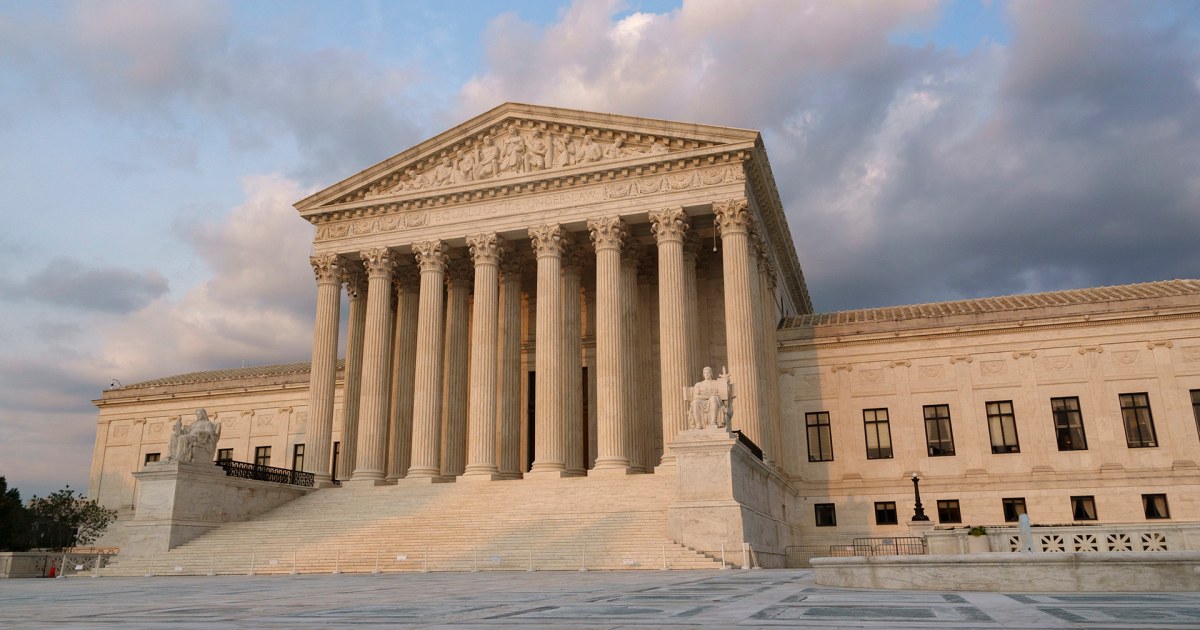
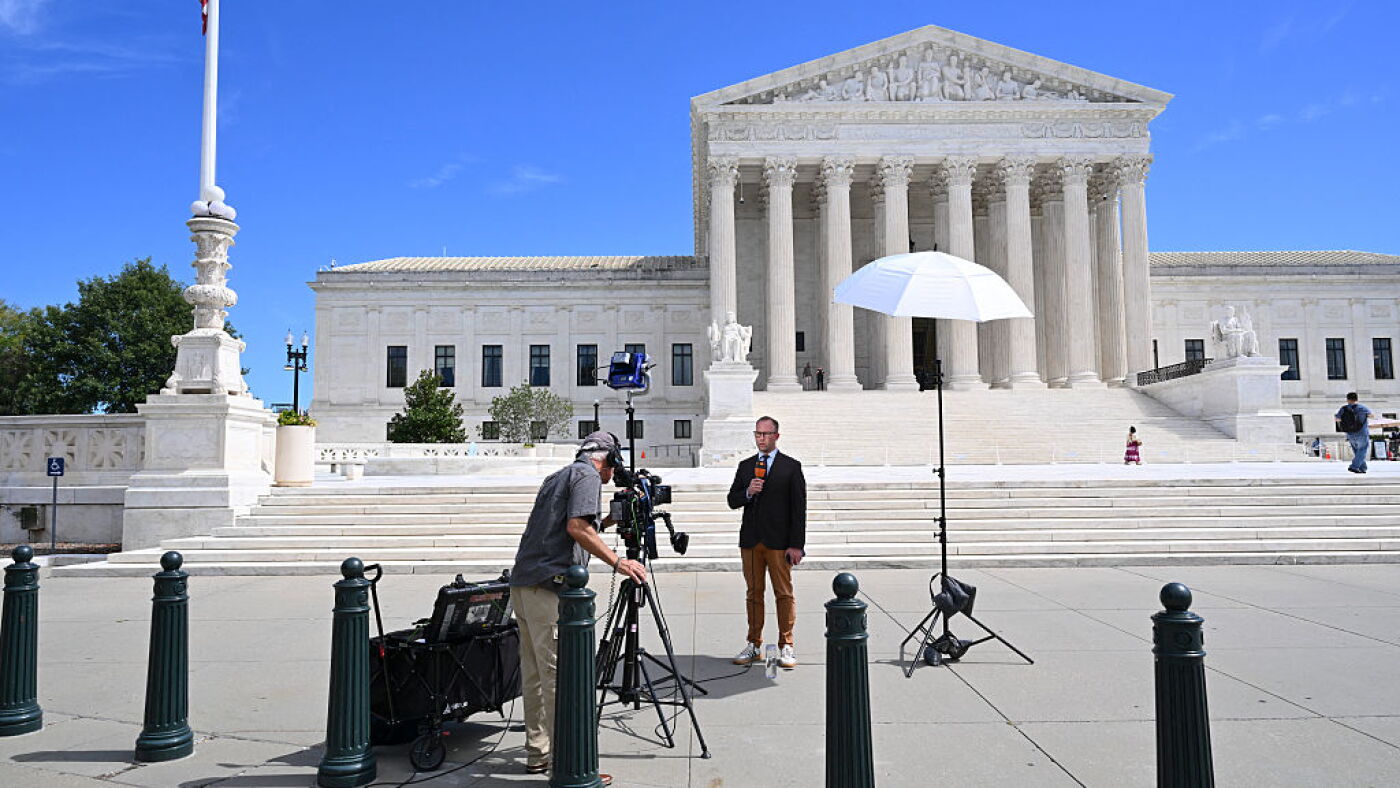
Supreme Court justices will return to Washington on Monday for their first closed-door conference to discuss cases petitioned to them, a week ahead of the beginning of the high court’s new term featuring several major cases.

Claims (26 extracted, 3 hedged)

Supreme Court justices will return to Washington on Monday for their first closed-door conference to discuss cases petitioned to them, a week ahead of the beginning of the high court’s new term featuring several major cases. asserted
justices → return → cases
The high court’s “long conference,” held the week before the new Supreme Court term, will feature thousands of petitions that have piled up during the three months since the last term ended with the final opinion day on June 30. asserted
term → hold → June
The Supreme Court will likely decline to take up nearly all of the cases for argument, but some will be relisted for another conference for further discussion or accepted for oral arguments. asserted
some → decline → arguments
The justices have already accepted 25 cases for oral argument for the upcoming term and are expected to add dozens more in the coming months, including from the long conference. asserted
justices → accept → conference
The Supreme Court will go through thousands of cases for consideration to be heard by the justices, including several notable disputes ranging from “implicit bias training” to bans on “Let’s Go Brandon” clothes. asserted
’s → go → clothes
First Amendment cases are commonplace on the Supreme Court’s docket, and the justices could add to their jurisprudence on the speech rights with several cases it will consider at the long conference. uncertain
it → add → conference
Majestic Realty Co. v. Salazar With Majestic Realty Co. v. Salazar, the high court is being asked to look at whether a state violates the takings clause and the First Amendment when it mandates that shopping center owners must allow “unwanted expressive activity on their land.” asserted
owners → ask → land
The case stems from an activist who sued a group of shopping centers claiming that, under California’s free speech constitutional protection, he should be allowed to distribute leaflets expressing his beliefs on their private property. asserted
he → stem → property
State courts in California sided with the activist, rejecting the shopping centers’ argument that it violates their rights under the U.S. Constitution, leading them to the U.S. Supreme Court. asserted
it → side → Court
Another First Amendment case involves free speech rights of students at school, specifically regarding political speech that is not explicit or crude. asserted
that → involve → speech
In D.A. ex rel. B.A. v. Tri County Area Schools, the Supreme Court is being asked to review whether A Michigan school district violated the First Amendment rights of students by barring two of them from wearing sweatshirts reading, “Let’s Go Brandon,” which became a popular euphemism for the phrase “F*** Joe Biden” in 2021. asserted
which → ask → 2021
If the justices agree to take up the case, they would have to decide whether First Amendment precedent “permits schools to censor nondisruptive political speech that is not plainly profane or lewd.” asserted
that → agree → speech
With the petition in the case Khatibi v. Lawson, the Supreme Court is being asked to review a challenge to “implicit bias training” which has been mandated by state and local governments, along with some private companies. asserted
which → ask → companies
“Implicit bias training” is a type of diversity, equity, and inclusion program, which proponents argue educates people about bias they may have against different races or the opposite sex, while opponents claim it pushes a hard-left view of race and sex for participants to adopt. uncertain
participants → argue → race
The lawsuit, brought by two California doctors, challenges the Golden State’s mandate that implicit bias training be part of the process for renewing their medical licenses on First Amendment grounds. asserted
training → bring → grounds
The two doctors claim the training unlawfully forces participants to adopt government-approved viewpoints to maintain their medical licenses. uncertain
training → claim → licenses
Blanche v. Ozurumba One of the immigration petitions the Supreme Court will consider during its long conference is Blanche v. Ozurumba, which deals with a noncitizen who entered the United States at the southern border in 2023, then applied for asylum. asserted
who → consider → asylum
Ozurumba’s asylum request was denied because an immigration judge found he provided “material support” for a terrorist organization, after he was recruited by and later forced to cook for the terrorist group in Nigeria. asserted
he → deny → Nigeria
A federal appeals court reversed the finding that he provided “material support” for a terrorist organization, narrowing the scope of what constitutes sufficient support to be disqualified from receiving asylum. asserted
what → reverse → asylum
The Justice Department appealed the appeals court’s ruling to the Supreme Court, centering on the threshold for what constitutes providing material support for a terrorist organization. asserted
what → appeal → organization
Another petition the Supreme Court will review for possible oral arguments is in Thompson v. Wilson and involves the surveillance of a lobsterman. asserted
Court → review → lobsterman
Frank Thompson, a lobsterman in Maine, brought the lawsuit claiming that the state’s regulations requiring fishermen to have GPS trackers on their boats, submitting information to the state to keep their fishing licenses, violate the Fourth Amendment’s protections against unreasonable search and seizure. asserted
regulations → bring → search
Maine has defended the rule as one of many laws it uses to regulate the lobster industry. asserted
it → defend → industry
The questions presented to the justices ask them to determine if the law “constitutes an unreasonable trespassory search in violation of the Fourth Amendment. asserted
law → present → Amendment
The Supreme Court will hold its first oral arguments of the new term on Oct. 5, beginning with a major case about the ability for counties and states to levy costly climate change lawsuits against oil producers. asserted
counties → hold → producers
The high court will continue oral arguments for the term through the end of April 2027, with all decisions in all of the argued cases expected by the end of June 2027. asserted
decisions → continue → June

Give feedback · no sign-in needed

No sign-in needed for now. Your note is sent without a name, so it cannot be answered.

History Support