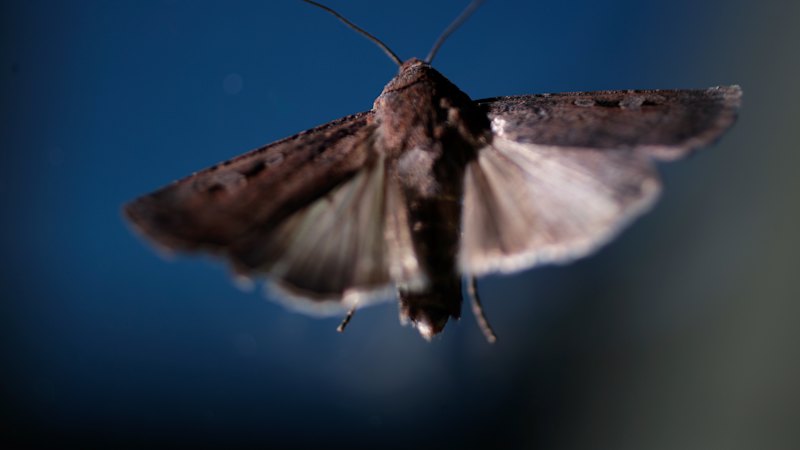
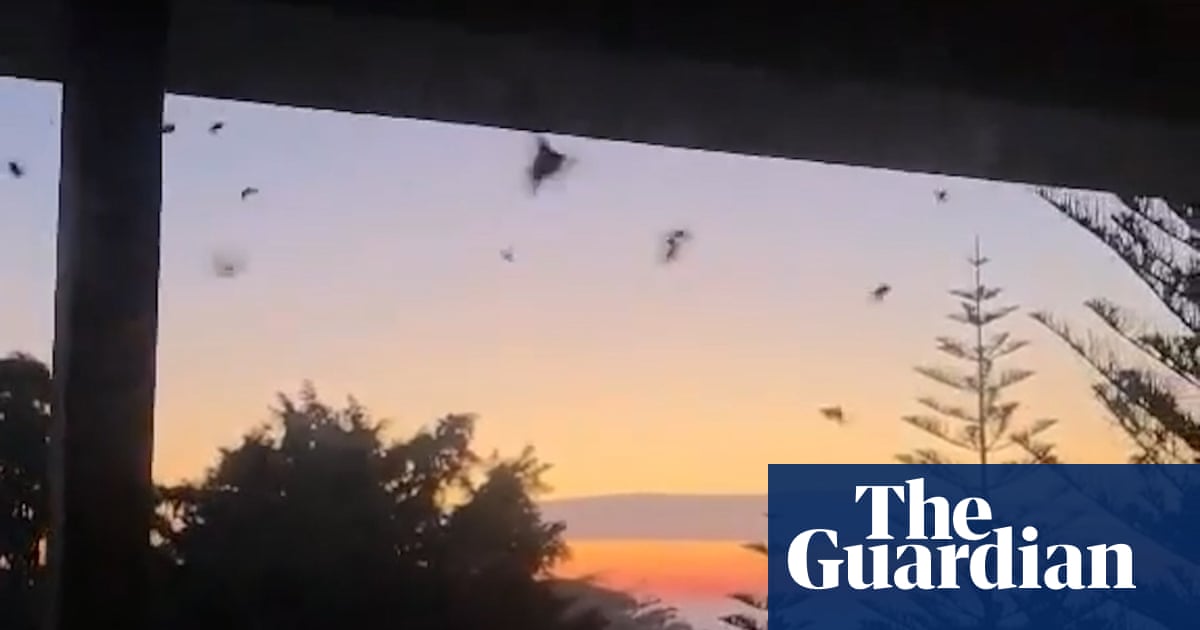
Homes invaded by 'millions' of migrating bogong moths

Read the original at ABC News (AU) ↗
Cite

McGuirk-Scolaro, M., Williams, E., & Bowring, a. D. (2026, September 28). Homes invaded by 'millions' of migrating bogong moths. ABC News (AU). https://www.abc.net.au/news/2026-09-28/bogong-moths-increase/107202604

Dated when The Aporia collected the article, usually within hours of publication. Check the original for its exact date and byline.

ABC News (AU) · collected 2026-09-28 · by Mikayla McGuirk-Scolaro, Eddie Williams, and Declan Bowring

Quick Summary

Bogong moths are swarming across New South Wales as part of their annual migration to the Snowy Mountains. Over 800 sightings have been logged on iNaturalist since Friday, with many homes seeing millions of moths. Researchers suggest increased rainfall and warmer winter temperatures may be contributing to this year's dramatic influx, offering hope for the endangered species.
Written locally by qwen2.5:14b on 2026-09-28, using this article's own text rather than the other coverage of the same event (that is the story summary below).

AI analysis runs on qwen2.5:14b, locally

Story summary

Bogong moths, which had seen their numbers plummet by over 99% between 2017 and 2019 due to severe drought in their lowland breeding areas, are making a surprising comeback this spring in New South Wales (NSW), Australia. Listed as endangered since 2021, the moths are now being spotted in large numbers, delighting naturalists and researchers who track them using citizen science platforms like iNaturalist. Master's student Ayesha Kelly from the University of Western Sydney has reported a significant increase in moth activity at her light traps near Sydney. The insects, each weighing about as much as a Tic Tac, migrate up to 1,000 kilometers for their annual journey to cool caves in the Snowy Mountains to escape summer heat. Researchers speculate that increased rainfall and warmer winter conditions have contributed to this resurgence, with hundreds of sightings logged on iNaturalist recently. The moths' return is seen as a positive sign for conservation efforts despite them not being listed under federal laws.

Written for “Bogong Moth Recovery” on 2026-10-17, grounded in this article and the 3 other(s) covering the same event.

Story

📰 Bogong Moth Recovery
Environment · 4 article(s) covering the same event. Compare every outlet's account →

Compared with similar articles

This article reads unscored and hedges 9% of its claims. Each row says how that neighbour differs.
The Sydney Morning Herald
⚖️ leaning not scored 🔴 3% hedged 1 of 33 📰 publisher trust 61
“Both articles describe the resurgence and migration of bogong moths in NSW on the same day, with similar details about their population increase and impact.”
The Guardian · 0.88 cosine similarity
⚖️ leaning not scored 🔴 0% hedged 0 of 29 📰 publisher trust 67
“Both articles describe the same specific occurrence of swarms of bogong moths migrating to NSW coastal areas and Snowy Mountains in September 2026.”
BBC News
⚖️ leaning not scored 🔴 0% hedged 0 of 3 📰 publisher trust 69
“While both articles discuss a similar phenomenon of bogong moths migrating in large numbers, Article A specifically mentions NSW and Batemans Bay, while Article B focuses on Sydney and Canberra.”
How this article was measured signals, leaning charts, publisher record, byline, topics and claims

Signals How these are calculated →

Claims extracted
35
sentences that state something as happening or true
Uncertain
9%
3 of 35 hedged ("reportedly", "may", "according to")
Leaning
not political
takes no side on a contested political question
Publisher signals
71/100
ABC News (AU)'s corrections and hedging, across everything collected from it. Not a measure of accuracy.
Outlets on this story
4
Environment
Same framing elsewhere
1
articles that frame the event the way this one does
Analyzed 2026-09-28 · how these are computed

How this is being covered How these are calculated →

Article leaning vs. publisher reliability
Source leaning vs. consistency

Publisher

ABC News (AU) · 3200 article(s) · 7 correction(s) detected
Running correction rate · 7 correction(s)

Who wrote this

Mikayla McGuirk-Scolaro
2 article(s) here · 1 carrying a prediction
🔮 "For some of these little individuals that people might see, they're going to be travelling hundreds, if not thousands, of kilometres."
2026-09-28 · assertive framing · Homes invaded by 'millions' of migrating bogong moths
🔮 Scientists will use an increase of recorded online observations of untagged moths to track how the insects travel.
Also by Mikayla McGuirk-Scolaro
Nothing else under this byline is closely related to this article, so these are simply their most recent.
Eddie Williams
3 article(s) here · 1 carrying a prediction
🔮 Finding accommodation for workers on major infrastructure projects might seem like a thoroughly modern problem, but history shows that is not the case.
🔮 "For some of these little individuals that people might see, they're going to be travelling hundreds, if not thousands, of kilometres."
2026-09-28 · assertive framing · Homes invaded by 'millions' of migrating bogong moths
🔮 Scientists will use an increase of recorded online observations of untagged moths to track how the insects travel.
Also by Eddie Williams
Nothing else under this byline is closely related to this article, so these are simply their most recent.
and Declan Bowring
1 article(s) here · 1 carrying a prediction
🔮 "For some of these little individuals that people might see, they're going to be travelling hundreds, if not thousands, of kilometres."
2026-09-28 · assertive framing · Homes invaded by 'millions' of migrating bogong moths
The only article under this byline in the corpus.

Topics

Batemans Bay Invertebrates Australia NSW Western Sydney University iNaturalist

Subjects

Hochuli PERSON · 3× 702 ABC Sydney ORG · 2× Drinkwater PERSON · 2× Emneby PERSON · 2× Invertebrates Australia ORG · 2× NSW GPE · 2× Batemans Bay GPE · 1× Hill ORG · 1× Reina Hill PERSON · 1× iNaturalist ORG · 1×

Narrative

"If there is wind going the way of the migration, they'll fly at that level in the same way you descend or ascend in a hot air balloon." Increase in numbers the 'norm' University of Sydney biologist Dieter Hochuli said the moths would be found hiding in crevices in the day to avoid predation by birds.
framing: assertive · carried by 1 article(s) · first seen 2026-09-28
🔮 "For some of these little individuals that people might see, they're going to be travelling hundreds, if not thousands, of kilometres."
2026-09-28 · ABC News (AU)
Homes invaded by 'millions' of migrating bogong moths · assertive framing

Claims (35 extracted, 3 hedged)

In short: Swarms of bogong moths are being reported across NSW as the endangered species makes its annual pilgrimage to the Snowy Mountains. asserted
species → report → Mountains
Researchers are speculating that increased rainfall, a warmer winter and northerly winds have caused the dramatic influx. asserted
rainfall → speculate → influx
Researchers from Invertebrates Australia are urging those who spot a bogong moth to log sightings to the online citizen scientist platform iNaturalist. asserted
who → urge → platform
Reina Hill is playing the reluctant host to some unexpected visitors in her Batemans Bay home. asserted
Hill → play → home
Since Friday, her house has been swarmed by bogong moths. asserted
house → swarm → moths
"I walked out my door and was hit in the face by thousands of them,"she said. asserted
I → walk → thousands
"I swear there was millions of them layered on various areas under my deck, under my eaves and all around the windows." asserted
I → swear → windows
Ms Hill was not alone in noticing the sudden influx of the endangered insects. asserted
Hill → notice → insects
About 800 moth sightings have been logged on the citizen science platform iNaturalist since Friday, with more than 200 logged in the past 24 hours. asserted
200 → log → hours
Every year, the peanut-sized moths migrate to the NSW Alps to escape the summer heat before returning to their inland breeding grounds in autumn. But the insect's population has fallen steadily since the 1980s due to drought and warming temperatures. asserted
population → migrate → drought
In 2017, numbers crashed by as much as 99.5 per cent, and in 2021 they were listed as endangered. asserted
they → crash → 2021
'Just trying to migrate' Western Sydney University Entomologist Eleanor Drinkwater told 702 ABC Sydney it was pleasing to see the moths in such significant numbers. "The last few years we haven't seen so many bogong moths," she said. asserted
she → try → moths
Dr Drinkwater said the moths were on their way to the high country around Mount Kosciuszko as the weather warmed up. asserted
weather → say → Kosciuszko
"They're not trying to get into your house, they're just trying to migrate," she said. asserted
she → try → house
"For some of these little individuals that people might see, they're going to be travelling hundreds, if not thousands, of kilometres." uncertain
they → see → kilometres
Bogong Watch Project manager at Invertebrates Australia Linnea Emneby said many people had forgotten what a migration looks like. asserted
migration → say → what
"We have seen a decline in bogong moths this decade, which has changed people's perception of what a migration looks like," she said. asserted
she → see → what
"It's just incredibly encouraging to see them actually bouncing back." asserted
them → see → ?
According to Ms Emneby, there were several theories that might explain the phenomenon. uncertain
that → accord → phenomenon
One is that increased rainfall in northern parts of the state has produced an abundance of food for larvae. asserted
rainfall → produce → larvae
Another theory is that warmer weather has caused the flowers that attract the moths to bloom earlier than normal, luring them south. asserted
that → cause → them
But Ms Emneby said the small creatures had likely used recent north-westerly winds to travel to the alps. asserted
creatures → say → alps
"Bogong moths are known to kind of hitch a ride on winds,"she said. " asserted
moths → know → ride
They're very small creatures and they travel vast distances. asserted
they → travel → distances
"If there is wind going the way of the migration, they'll fly at that level in the same way you descend or ascend in a hot air balloon." Increase in numbers the 'norm' University of Sydney biologist Dieter Hochuli said the moths would be found hiding in crevices in the day to avoid predation by birds. asserted
moths → be → birds
"There's a lot of birds and mammals and everything that's going to want to eat them.," asserted
that → be → them
Mr Hochuli told 702 ABC Sydney. asserted
Hochuli → tell → Sydney
"So, basically, they're just finding a good spot to spend the day." asserted
they → find → day
Mr Hochuli said while the moth was listed as endangered by the International Union for Conservation of Nature (IUCN), they were not listed as endangered in NSW or federally. asserted
they → say → NSW
"The reason there are concerns is that they have these massive population fluctuations and cycles," Mr Hochuli said. " asserted
Hochuli → be → fluctuations
They're a complicated animal for an endangered animal because there could be billions of them. uncertain
They → endanger → them
"Those of us that are old enough to remember the Sydney Olympics or the opening of Parliament House will remember we had similar kinds of events, just massive numbers." asserted
we → remember → events
Dr Drinkwater encouraged capturing and releasing the moths if they were stuck inside, or turning outside lights on and turning indoor lights off to draw them out of homes. asserted
they → encourage → homes
She also called for submissions of photos to iNaturalist and the Moth Tracker website to help researchers understand their migration. asserted
researchers → call → migration
“This is a brilliant opportunity for us to learn more about what they're doing," Dr Drinkwater said. Loading... asserted
Drinkwater → learn → what

💬Give feedback
🕘History 🎫Support