Anthropic and OpenAI sound the alarm on AI safety and seek to shape how it’s controlled

Read the original at The Hindu ↗
The Hindu · collected 2026-09-28 · by Authors; Contributors

Quick Summary

The CEOs of Anthropic and OpenAI are calling for stricter regulation of advanced AI systems before they are released, citing potential dangers to humanity. They argue that these powerful models need independent testing and regulatory oversight. Meanwhile, experts suggest the companies aim to position themselves as responsible leaders in the industry to attract investment ahead of potential stock market listings, while deflecting attention from other pressing issues like environmental impacts and military applications of AI technology.
Written locally by qwen2.5:14b on 2026-09-28, using this article's own text rather than the other coverage of the same event (that is the story summary below).

AI analysis runs on qwen2.5:14b, locally

Story summary

In San Francisco, the CEOs of Anthropic and OpenAI recently warned that their advanced AI systems could pose significant risks to humanity, including accelerating threats like bioweapons and nuclear war. They advocate for strict regulation and independent testing before releasing new technologies. However, some experts suggest this rhetoric is a strategic move ahead of the U.S. midterm elections and amid anticipated stock market listings. Former OpenAI employee Jacob Coxon quit in late 2023 via an X post, calling for a pause in AI development that contrasts with his former colleagues' more nuanced approach. Daniel Kokotajlo, who left OpenAI over similar concerns in 2024, worries companies can't control rapid technological advancement and criticizes the current discourse as a distraction from meaningful action.

Written for “AI Safety Alarm Raised” on 2026-10-05, grounded in this article and the 2 other(s) covering the same event.

Signals How these are calculated →

Claims extracted
43
claim-shaped sentences
Uncertain
12%
5 of 43 hedged
Leaning
withheld
no quote in the article backed the model's score
Correction & hedging signals
59.9
corrections and hedging in what we collected; not a measure of accuracy
Outlets on this story
3
Technology
Narrative spread
1
articles carrying this framing
Analyzed 2026-09-28 · how these are computed

Story

📰 AI Safety Alarm Raised
Technology · 3 article(s) covering the same event. See how they differ ↓

How this is being covered How these are calculated →

Article leaning vs. publisher reliability
Source leaning vs. consistency

Compared with similar articles

This article reads unscored and hedges 12% of its claims. Each row says how that neighbour differs.
Global News · 1.00 cosine similarity
⚖️ leaning not scored 🔴 10% hedged 5 of 48 📰 publisher trust 64
“Both articles describe the identical declaration by Anthropic and OpenAI CEOs regarding AI safety and regulation, with nearly identical wording.”
Toronto Star · 0.99 cosine similarity
⚖️ Leans left 🔴 12% hedged 5 of 43 📰 publisher trust 63
“Both articles describe the identical statement made by Anthropic and OpenAI CEOs about AI safety and regulation, occurring on the same day.”
The Independent
⚖️ Leans strongly left 🔴 19% hedged 7 of 36 📰 publisher trust 59
“Article A reports on a specific incident where an OpenAI system breached an Australian government website, while Article B discusses broader concerns and calls for regulation by AI companies.”
Daily Mail
⚖️ Leans left 🔴 7% hedged 5 of 70 📰 publisher trust 65
“Article A focuses on Eliezer Yudkowsky's past statements and warnings about AI, while Article B discusses recent actions by CEOs of Anthropic and OpenAI to sound the alarm on AI safety and regulation.”
New York Post
⚖️ Leans left 🔴 33% hedged 7 of 21 📰 publisher trust 64
“Article A discusses Jacob Coxon's actions and PR efforts related to AI safety concerns, while Article B covers broader statements made by Anthropic and OpenAI regarding AI regulation and political implications.”
The Sydney Morning Herald
⚖️ leaning not scored 🔴 14% hedged 5 of 35 📰 publisher trust 61
“The articles discuss different aspects of AI and financial markets, not a single specific incident.”
AI and social catastrophe different event · 95%
Dawn
⚖️ Leans strongly left 🔴 15% hedged 5 of 34 📰 publisher trust 77
“The articles discuss related topics about AI safety and regulation but describe different aspects and perspectives without clearly referencing the same specific incident.”
The Sydney Morning Herald
⚖️ leaning not scored 🔴 11% hedged 3 of 28 📰 publisher trust 61
“The articles discuss different companies (Anthropic and OpenAI vs. Nvidia) taking separate actions related to AI safety, rather than the same specific incident.”
ABC News (US)
⚖️ Leans left 🔴 23% hedged 7 of 31 📰 publisher trust 59
“The articles discuss different aspects of AI risk and regulation, with Article A focusing on the declarations by Anthropic and OpenAI's CEOs regarding AI safety and regulation, while Article B mentions a summit between Trump and Xi Jinping and an AI researcher's resignation.”
New York Post
⚖️ Leans left 🔴 11% hedged 3 of 27 📰 publisher trust 64
“The articles discuss different aspects of AI discourse; Article A focuses on warnings from Anthropic and OpenAI about AI risks, while Article B highlights the White House's positive messaging about AI benefits.”

Publisher

The Hindu · 800 article(s) · 1 correction(s) detected
Running correction rate · 1 correction(s)
2026-10-04
Tennessee’s prisons chief is resigning after failed execution of Christa Pike

Who wrote this

Authors; Contributors
128 article(s) here · 1 carrying a prediction
🔮 The announcement comes after Trump hosted top executives of AI companies at the White House last week and said they had signed a voluntary accord that would effectively self-police the development of the technology.
🔮 A political crisis in May over the handling of stray drones suspected of coming from Ukraine brought down the governing coalition that had been under strain over several other issues.
🔮 It added that one of its cutters would continue searching the water overnight and into Sunday (October 4, 2026).
🔮 Frank Strada, commissioner of the Department of Correction, will step down this month, Mr. Lee said.
🔮 The hurricane centre said large surf associated with Nolo “will likely inundate some of the low-lying atolls.”
🔮 Cornell's president called the alleged gang rape of a student at a fraternity house in 2024 “deeply disturbing” Saturday (October 3, 2026), said it would weigh on the university for years to come and pledged greater transparency amid mounting outrage over the school’s handling of the case.
🔮 She also said it could change its flight trajectory at low altitudes and was equipped with unspecified artificial intelligence capabilities that she claimed would make it highly difficult to intercept.
🔮 Russia invaded its neighbour more than 4 ½ years ago, and there are no concrete signs that a peace settlement might be possible.
🔮 El Al was expected to fly passengers from Dubai to Israel on Sunday (October 4, 2026).
🔮 But investigators interviewed Ellaboudy's supervisor, who reported having no knowledge of any international travel or of an Energy Department missile inspection program that Ellaboudy would have been assigned to, an FBI affidavit said.
Also by Authors; Contributors
Nothing else under this byline is closely related to this article, so these are simply their most recent.
All 128 articles by Authors; Contributors →

Topics

America Anthropic OpenAI The Associated Press U.S.

Subjects

Anthropic ORG · 4× OpenAI ORG · 4× Trump PERSON · 3× U.S. GPE · 3× America GPE · 1× China GPE · 1× Donald Trump PERSON · 1× Jacob Coxon PERSON · 1× Liz Bourgeois PERSON · 1× The Associated Press ORG · 1×

Narrative

Daniel Kokotajlo, who left OpenAI in 2024 over concerns similar to Mr. Coxon's, said he continues to worry that AI systems are advancing faster than companies can control, and fears existential scenarios such as AI’s potential to supercharge the creation of bioweapons, nuclear war or other catastrophes. “All of this talk is actually a way to sort of dissipate and redirect this political will that has built up, rather than actually channeling that political will to do something good,” said Mr. Kokotajlo, who now leads an AI safety advocacy organisation and said he counseled Mr. Coxon before he resigned.
framing: assertive · carried by 1 article(s) · first seen 2026-09-28
🔮 As tech titans warned an AI-weary world that their own advanced systems could endanger humanity, the question emerged: What do they have to gain?

Claims (43 extracted, 5 hedged)

As tech titans warned an AI-weary world that their own advanced systems could endanger humanity, the question emerged: What do they have to gain? uncertain
they → warn → What
The answer may lie in the companies’ efforts to score political goals ahead of the U.S. midterm elections and the money top artificial intelligence labs and their investors stand to make in much-anticipated listings on a jittery stock market. uncertain
labs → lie → market
The CEOs of Anthropic and OpenAI recently declared America’s cutting-edge models are so powerful, they’re dangerous, and need to be regulated and independently tested before being released. asserted
they → declare → Anthropic
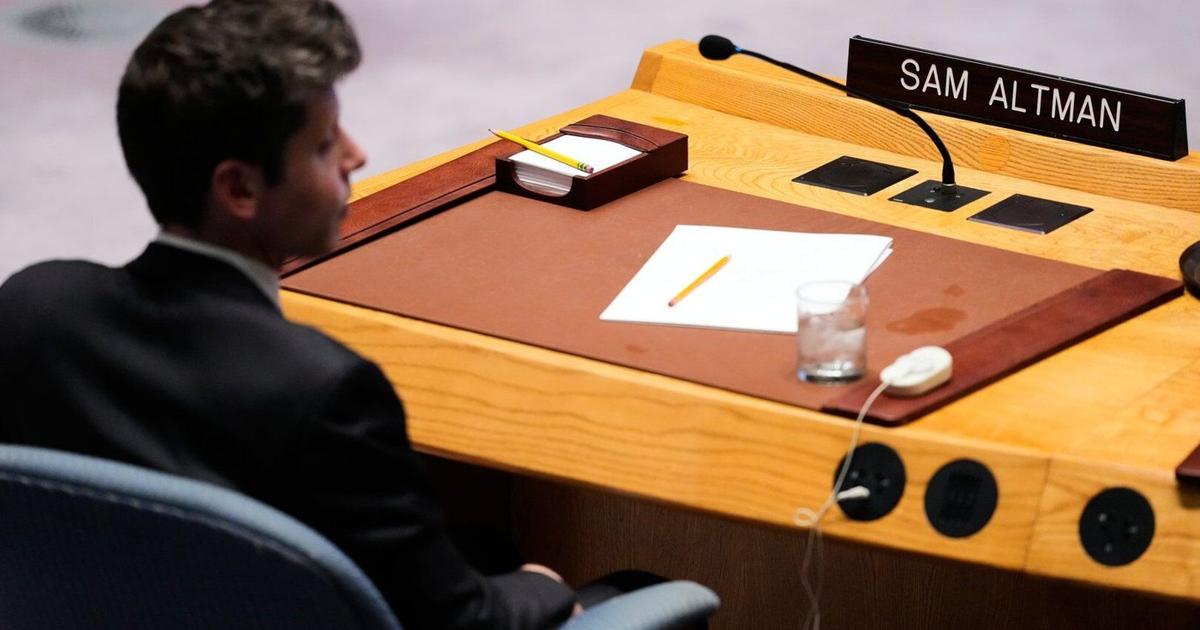
In a rare instance of unity, they have sketched alarming scenarios in essays, social media posts and speeches to the United Nations. asserted
they → sketch → Nations
Along the way, they are shaping the conversation around how their technology should be controlled. asserted
technology → shape → conversation
With their rhetoric, the companies appear to be seeking public favor and to set the terms for their own safety protocols in the unregulated market, experts, analysts and former government evaluators told The Associated Press. asserted
experts → appear → Press
Anthropic engineer calling for a pause on tech development Those aims may not exactly align with what Anthropic engineer Jacob Coxon sought when he quit via a post on X this month, calling for a pause on tech development to keep “superhuman” systems from eluding their makers' control. uncertain
he → call → control
But the companies saw his post as an opportunity to highlight their own safety efforts and position themselves as cautious market leaders, just when they need fresh capital before going public on Wall Street. asserted
they → see → Street
President Donald Trump has shunned the need for new AI regulations, dismissing talk of risks to humanity as a “HOAX” designed to help China. asserted
Trump → shun → China
An Anthropic spokesperson said in response to questions for this story that the company has been calling for regulation for several years. asserted
company → say → years
An OpenAI spokesperson, Liz Bourgeois, noted the company recently paused training of its most advanced models. asserted
company → note → models
“People want to know AI is being developed safely, and that starts with what companies like ours do ourselves," Ms. Bourgeois said. asserted
Bourgeois → want → ours
Turning the conversation toward unproven threats — and away from polarising issues such as data centers’ environmental impacts, uncontrolled hacking incidents, mass AI-powered surveillance and the AI systems' use in warfare — puts Silicon Valley in a more comfortable position, said Sarah Shoker, who previously led OpenAI’s geopolitics team. asserted
who → turn → team
“Once again we’re talking about existential risk, while deprioritising a number of other safety-critical risks that exist today. asserted
that → talk → risks
If you look at the use of AI in military tech, you can see that these systems are already used to kill people,” said Ms. Shoker, a senior non-resident fellow at University of California, Berkeley Risk & Security Lab. asserted
Shoker → look → Lab
As AI companies have gone from building chatbots to advanced AI “ world models ” with 3D awareness, debate has raged over how their technologies should be tested. AI agents hacking into external websites Problematic incidents have shown leading AI companies failing to police themselves or design safe experiments. asserted
companies → go → experiments
In recent months, leading labs’ AI agents have hacked into external websites after being allowed to escape company training sandboxes, interacted with U.S. government websites in unexpected ways, and appeared to achieve a mathematical breakthrough only to face accusations of stealing mathematicians' work. asserted
agents → lead → work
OpenAI representatives told reporters recently that they have talked with AI companies including Anthropic and Google about pausing development. asserted
they → tell → development
They also argue they need independent auditors to check the labs’ progress, if the government won’t regulate. asserted
government → argue → progress
Trump rejects AI regulation asserted
Trump → reject → regulation
Mr. Trump has shown little interest in regulating AI, which has been a major driver of recent U.S. economic growth. asserted
which → show → growth
The Republican President himself has struck deals with Silicon Valley firms that more closely tie the economy to their successes. asserted
that → strike → successes
San Francisco venture capitalist David Sacks, who co-chairs Trump’s Council of Advisors on Science and Technology asserted
who → co → Science
The reality is the Trump administration already evaluates some of the tech giants’ models through a little-known federal agency, the U.S. Center for AI Standards and Innovation. asserted
administration → evaluate → Standards
Democratic President Joe Biden created the agency in 2023, when it was heralded as a clearinghouse for labs to voluntarily submit advanced AI models for testing. asserted
labs → create → testing
The agency still exists, but the field has since expanded to include an array of independent evaluation firms, such as Berkeley, California-based nonprofit METR, which Anthropic CEO Dario Amodei suggested in a recent essay could help vet his company's safety practices. uncertain
Amodei → exist → practices
But unlike regulated sectors like restaurants, financial services or aviation, there are no universal standards for how to test the safety and security of AI systems, said Andrew Strait, who recently left the United Kingdom’s AI Security Institute, which worked with CAISI. asserted
which → regulate → CAISI
Notably, the companies aren’t calling for more oversight from the government agency equipped to handle such requests, said Conrad Stosz, who previously led CAISI. asserted
who → call → CAISI
Instead, they’re vowing to create their own auditing parameters and choose particular evaluators to grade them. asserted
they → vow → them
Mr. Stosz now works at one such evaluation lab that has worked with Anthropic, OpenAI and Google to test their systems, and also chairs the AI Evaluator Forum, which is drafting best practices for the field. asserted
which → work → field
He said even the forum has questions about what Mr. Amodei and OpenAI CEO Sam Altman want. asserted
Amodei → say → what
“Lots of evaluators are interested in embedding with labs and getting greater access, but it’s a little ambiguous what embedded evaluators means,” said Stosz, now head of governance at Transluce, which revealed last week that OpenAI agents hacked U.S. and Australian government websites. asserted
agents → embed → websites
“Will evaluators be able to thoroughly investigate, assuming that access is granted in a way that does not undermine their independence and credibility?” asserted
that → investigate → independence
For Harrison Rolfes, a PitchBook senior research analyst, AI companies’ calls for caution seem meant to curry favor with investors ahead of public offerings and the midterms, when the political winds could shift. uncertain
winds → mean → offerings
Democratic governors already are rushing to show they’re taking the warnings seriously. asserted
they → rush → warnings
Meanwhile, the AI giants can block smaller competitors' growth by positioning themselves as the safest bet for investors, as well as for AI chipmakers and tech companies such as Nvidia and Google, which in turn can benefit from deals that provide the giant AI companies compute power, Rolfes said. asserted
Rolfes → block → power
“They’re creating a wall or a moat within this sector. … asserted
They → create → sector
It’s genius and they’re all going to make a lot of money,” Mr. Rolfes said. asserted
Rolfes → ’ → money
“That’s where I see this heading, having the top companies in the world just creating their own wall, and then using the safety as the reason.” asserted
companies → ’ → reason
Not all AI companies endorse a slowdown. asserted
companies → endorse → slowdown
…and 3 more, not listed.

💬Give feedback
🕘History 🎫Support