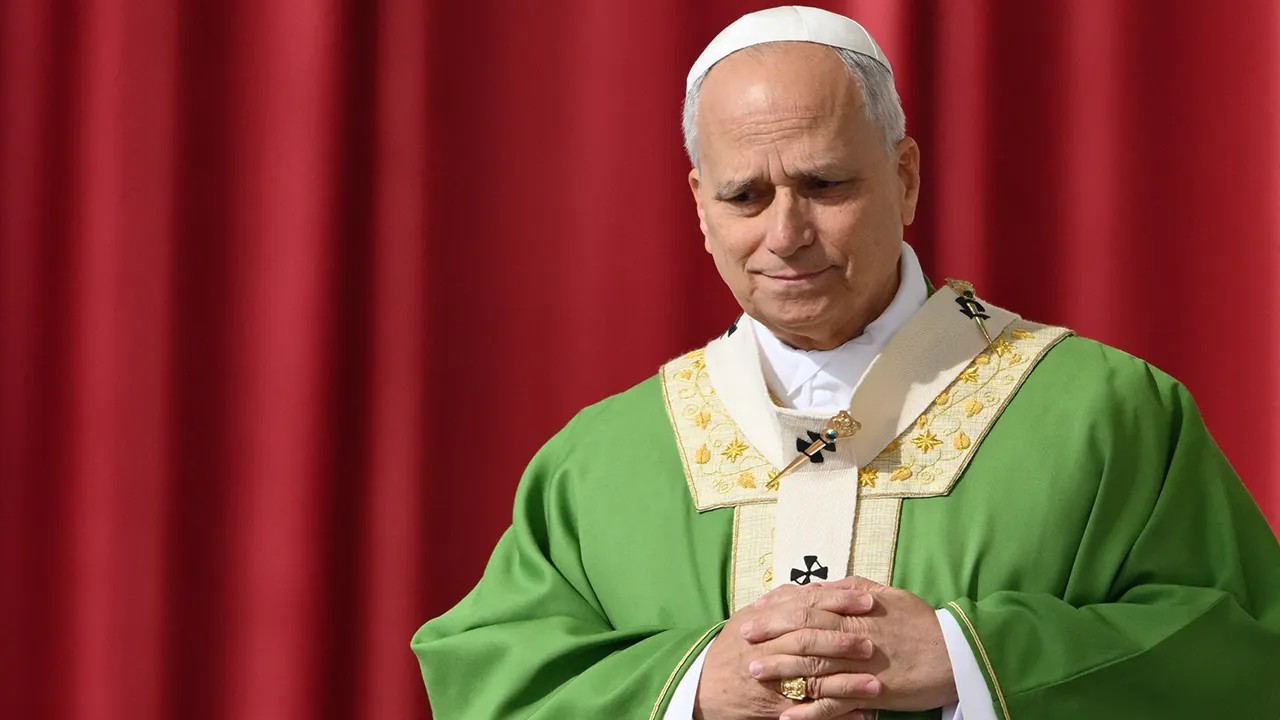
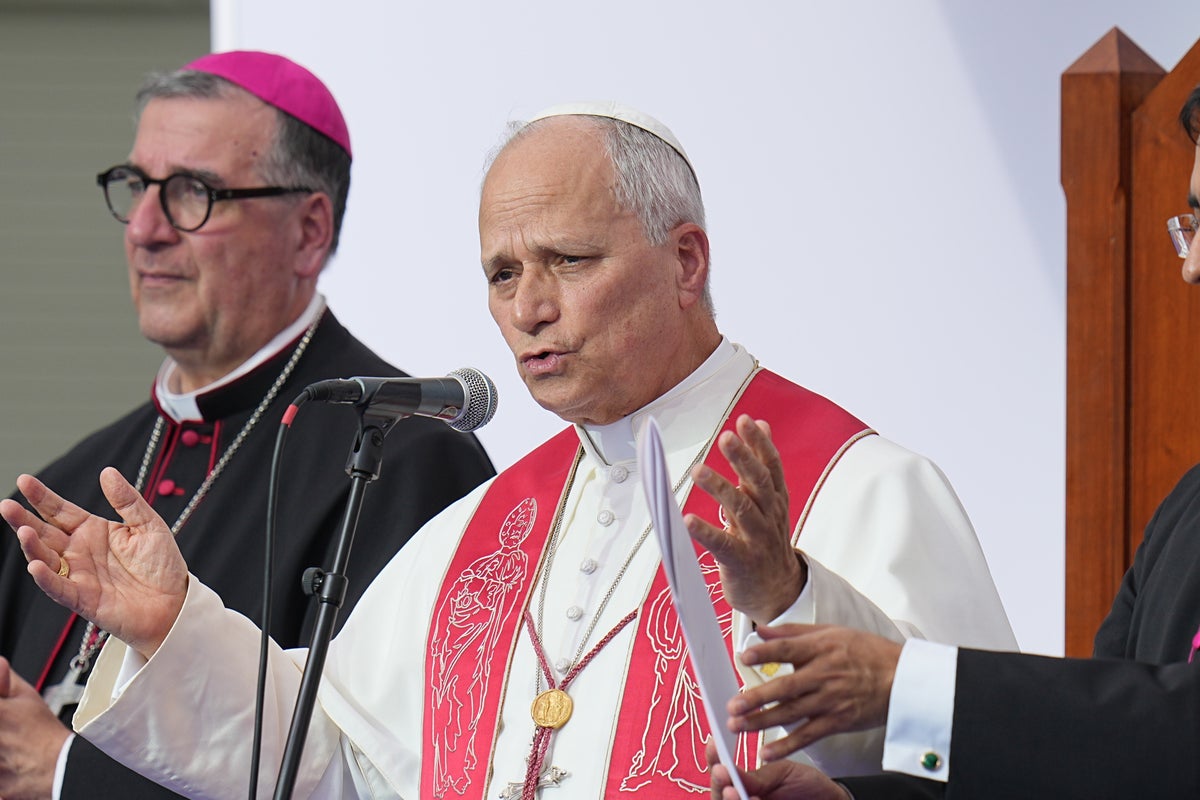
Pope Leo XIV spoke out against medically assisted suicide during a visit to medical facilities in Lourdes, France, on Sunday, urging the healthcare community to prioritize care for the sick over eliminating life. The pope emphasized that causing death cannot be considered normal and is not morally justifiable, even if it is legal. This comes amid criticism of Canada’s Medical Assistance in Dying (MAID) program, highlighted by a case where an 83-year-old woman reportedly died after undergoing MAID despite her family's concerns about her comprehension and consent.
Written locally by qwen2.5:14b on 2026-09-27,
using this article's own text rather than the other coverage of the
same event (that is the story summary below).
Story summary
On September 27, 2026, Pope Leo XIV visited Lourdes, France, where he addressed a crowd of 150,000 people, many in wheelchairs, and condemned medically assisted dying as immoral "false compassion." This stance reaffirmed Catholic teachings on the sanctity of life amid recent French legislation allowing adults with incurable illnesses to receive lethal medication. Pope Leo’s three-day visit to France drew massive crowds; over 800,000 people gathered for his Mass in Paris' Place de la Concorde. During his trip, he also met with seven survivors of clergy sexual abuse and reinforced the Church's opposition to abortion and assisted dying, emphasizing that human dignity cannot be diminished by any law or algorithm.
Written for “Pope On Assisted Dying” on 2026-10-05,
grounded in this article and the 6 other(s) covering the same event.
This story discusses suicide.
asserted
story → discuss → suicide
If you or someone you know is having thoughts of suicide, please contact the Suicide and Crisis Lifeline at 988 or 800-273-TALK (8255).
asserted
you → know → 988
Pope Leo XIV called for an end to medically assisted suicide during a visit to medical facilities in Lourdes, France, on Sunday.
asserted
XIV → call → Sunday
The pope gave Mass in Lourdes before addressing a large crowd who cheered as he emphatically affirmed the dignity of all human lives and admonished listeners to reject the "false compassion" of assisted suicide.
asserted
he → give → suicide
"It is precisely in the name of this inalienable dignity of the human person that we must reject the temptation to cause death under the guise of false compassion," the pope said, speaking in French.
asserted
pope → reject → French
"It is impossible to regard causing death as something normal.
asserted
It → regard → something
What is legal is not necessarily moral," he continued.
asserted
he → continue → ?
"Here in Lourdes, the city of the sick and of hope, I appeal to the entire healthcare community to remember the profound meaning of your vocation, which is to care for a suffering person, not to eliminate that person.
asserted
which → appeal → person
"
"No one ever has the right based on laboratory algorithms to decide the life of a given embryo or elderly person.
asserted
one → have → embryo
Medicine must never become the servant of programmed death," he said.
asserted
he → become → death
Assisted suicide is legal in many Western countries, including France.
asserted
suicide → assist → France
The practice has come under heavy criticism, particularly in Canada where it has seen widespread use.
asserted
it → come → use
Last week, the family of an 83-year-old Canadian woman demanded answers after she died through the country's medical assistance in dying program despite allegedly becoming distraught when told the procedure would end her life.
uncertain
procedure → demand → life
The Daily Mail reported that 83-year-old Christian grandmother Brigitte Stegemann was killed under Canada’s physician-assisted suicide program, called Medical Assistance in Dying (MAID), on July 10.
asserted
Stegemann → report → July
Her granddaughter, Brigitte Kranendonk, said that she was her grandmother’s primary caregiver and that her family had decided to place Stegemann at The Pearl care home in Cannifton due to physical and mental decline.
asserted
family → say → decline
But according to Kranendonk, her grandmother still had a good appetite even following a stomach cancer diagnosis, and rejected the idea of using MAID when it was presented as an option.
uncertain
it → accord → option
Kranendonk said she was present for Stegemann's second MAID assessment, and said that the doctor used "really loose terms, never using the words death or dying."
"She explains MAID to my grandmother by saying: 'We’re going to give you medicine, you’re going to feel at peace.
asserted
you → say → peace
And I just want you to know that you won’t have a bowel movement,'" Kranendonk said.
asserted
Kranendonk → want → movement
When Kranendonk interjected and said, "She doesn’t understand what you’re saying," the doctor allegedly looked at Stegemann and said, "We’re going to make sure you won’t have any more pain."
According to a doctor, Stegemann was "deemed fit for MAID, and we're going to proceed," The Daily Mail reported.
uncertain
Mail → interject → MAID
Kranendonk said that two days before Stegemann's death, she asked her grandmother directly whether she understood that the scheduled procedure meant she would die.
asserted
she → say → grandmother
According to Kranendonk's account to the outlet, Stegemann began crying and said she had "made a mistake."
Stegemann was allegedly told by the doctor her grandmother could "deny" MAID on the day of the procedure, but Stegemann was already unsure if her grandmother had actually consented to it, did not want to cause her more stress, and wanted to enjoy what could be the last few days she had left with her grandmother.
uncertain
she → accord → grandmother
 The Aporia