Your Book Review: The Tale Of Genji

Astral Codex Ten · collected 2026-09-04 · by Scott Alexander commentary
Read the original at Astral Codex Ten ↗

Summary

This review is an opinion piece written by an anonymous reader who will be competing in a 2026 book review contest. The article discusses their experience reading "The Tale of Genji", a novel written over a thousand years ago by Murasaki Shikibu, which they found challenging to relate to due to its outdated characters and behaviors. According to the reviewer, the novel's complex etiquette rules and relationships between high-ranking women and men can only be fully understood with the help of footnotes. The reviewer estimates that Genji falls in love "a lot" and has numerous romantic conquests throughout his life.
Written by the local model on 2026-09-04, using this article's own text rather than the other coverage of the same event (that is the story summary below).

Signals How these are calculated →

Claims extracted
386
claim-shaped sentences
Uncertain
11%
42 of 386 hedged
Leaning
not political
takes no side on a contested political question
Publisher trust
not scored
Commentary is not rated for newsroom trust
Outlets on this story
1
Other
Narrative spread
1
articles carrying this framing
Analyzed 2026-09-04 · how these are computed

AI analysis (generated at analysis time, not now)

Story summary

Around 1000 AD, the Imperial Court of Japan in Kyoto was a world of luxury, beauty, and ambition, isolated from the lives of regular commoners. The elite were governed by complex etiquette rules, and relationships were intertwined with politics and power struggles. In this world, Murasaki Shikibu, an educated lady in Empress Shōshi's court, wrote The Tale of Genji, widely considered to be the oldest novel in the world. The book is a masterful portrayal of life in 11th-century Japan, where high-ranking women and men could have passionate love affairs without seeing each other's faces. It explores themes of power, wealth, and social status, reflecting the intricate rules that governed the lives of the elite.

Written for “The Tale of Genji novel review” on 2026-09-05, grounded in this article and the 0 other(s) covering the same event.
Why this leaning score
This article does not take a side on a contested political question, so it has no leaning score. That is an answer rather than a gap: a match report or a rescue can be warmly or critically written without being left or right, and scoring it anyway is how approval of a subject gets recorded as a political position.
No political leaning scored for article 3911 · logged 2026-09-04

Story

📰 The Tale of Genji novel review
Other · 1 article(s) covering the same event. This is the one the site leads with.

How this is being covered How these are calculated →

Article leaning vs. publisher reliability
Source leaning vs. consistency

Compared with similar articles

Nothing to compare against. No article is close enough to this one for the pipeline to have linked or judged the pair.

Publisher

Astral Codex Ten · 29 article(s) · 2 correction(s) detected

Commentary. The three signals behind a trust score all measure a newsroom's record with its own reporting, so they are not computed for this source. How trust is scored.

No corrections detected for this publisher. That may mean careful reporting, or simply that nothing has been checked.

Who wrote this

Scott Alexander
28 article(s) here · 1 carrying a prediction
🔮 [This is one of the finalists in the 2026 book review contest, written by an ACX reader who will remain anonymous until after voting is done.
2026-09-04 · assertive framing · Your Book Review: The Tale Of Genji
🔮 We don’t even need for there to be a crash to make improvements – we test proactively, we build in redundancy, and we monitor for deviations which could be a threat.
2026-09-03 · assertive framing · Nicholas Decker In Hell
🔮 Content warning: the first part of this review contains medical details that some people might find gruesome; I am bad at judging these things since I can no longer feel disgust or fear myself, and have tried to err on the side of completeness.
2026-09-03 · assertive framing · Absurd Adventure And Amygdalectomy Advocacy
🔮 [This is one of the finalists in the 2026 book review contest, written by an ACX reader who will remain anonymous until after voting is done.
🔮 This year’s survey will probably take 30 - 45 minutes.
2026-08-27 · assertive framing · Take The 2026 ACX Survey
🔮 It’s not necessarily wrong to deprioritize a topic because it vaguely reminds you of something that you have negative affect toward, but I would prefer these people admit they’re dismissing/ignoring it rather than claim to be engaging with it.
🔮 I don’t know, but he may have misinterpreted my original tweet as saying income doesn’t matter at all, in which case this data functions as an effective rebuttal.
2026-08-25 · assertive framing · Re: Re: Re: Pritchard On Liberal Happiness
🔮 [This is one of the finalists in the 2026 book review contest, written by an ACX reader who will remain anonymous until after voting is done.
🔮 Matt says his highest priority colleges that don’t have an organizer yet are MIT, Claremont, Northwestern, Carnegie Mellon, Amherst, Notre Dame, Duke, CalTech, Georgetown, UCLA, Dartmouth, Vanderbilt, Harvard, NYU, Williams, GWU, American University, Rutgers, and UNC Chapel Hill.
2026-08-24 · assertive framing · Open Thread 448
🔮 We (ACX and an effective altruist organization called Nest who are sponsoring this) will give you free advertising and cover your costs.
2026-08-21 · assertive framing · College EA Meetups Everywhere: Call For Organizers
Also by Scott Alexander
Nicholas Decker In Hell
2026-09-03 · Astral Codex Ten
Absurd Adventure And Amygdalectomy Advocacy
2026-09-03 · Astral Codex Ten
Open Thread 449
2026-08-31 · Astral Codex Ten
Nothing else under this byline is closely related to this article, so these are simply their most recent.
All 28 articles by Scott Alexander →

Topics

ACX Chinese Japan Kyoto the Imperial Court of Japan

Subjects

Genji PERSON · 8× Tyler GPE · 2× ACX ORG · 1× Chinese NORP · 1× Japan GPE · 1× Kyoto GPE · 1× Murasaki Shikibu PERSON · 1× Royall Tyler PERSON · 1× Shōshi PERSON · 1× the Imperial Court of Japan ORG · 1×

Narrative

The original poem in classical Japanese, written on a single line in hiragana like how it likely would have been written by Murasaki Shikibu: わくらばにゆきあふみちをたのみしも なほかひなしやしほならぬうみ The same, but each phrase rendered on its own line, to showcase the 5-7-5-7-7 structure, which the original reader would have been able to parse when reading it in a single line: わくらばに ゆきあふみちを たのみしも なほかひなしや しほならぬうみ Tyler’s take, in his characteristic two-line approach to translating waka: I had little doubt that we would meet after all on the Ōmi road, yet those waters were too fresh not to betray my fond hope.
framing: assertive · carried by 1 article(s) · first seen 2026-09-04
🔮 [This is one of the finalists in the 2026 book review contest, written by an ACX reader who will remain anonymous until after voting is done.
2026-09-04 · Astral Codex Ten
Your Book Review: The Tale Of Genji · assertive framing

Claims (386 extracted, 42 hedged)

[This is one of the finalists in the 2026 book review contest, written by an ACX reader who will remain anonymous until after voting is done. asserted
voting → write → reader
I’ll be posting about one of these a week for several months. asserted
I → post → months
When you’ve read them all, I’ll ask you to vote for a favorite, so remember which ones you liked asserted
you → read → ones
[Content warning: Sexual and relationship practices from a thousand years ago, from a time and place with a very different morality than what you probably subscribe to. asserted
you → subscribe → what
Isolated from the lives of regular commoners, every aspect of the lives of the elite were governed by complex etiquette rules, and relationships were thoroughly intertwined with politics and the ambition for power and wealth. asserted
relationships → isolate → power
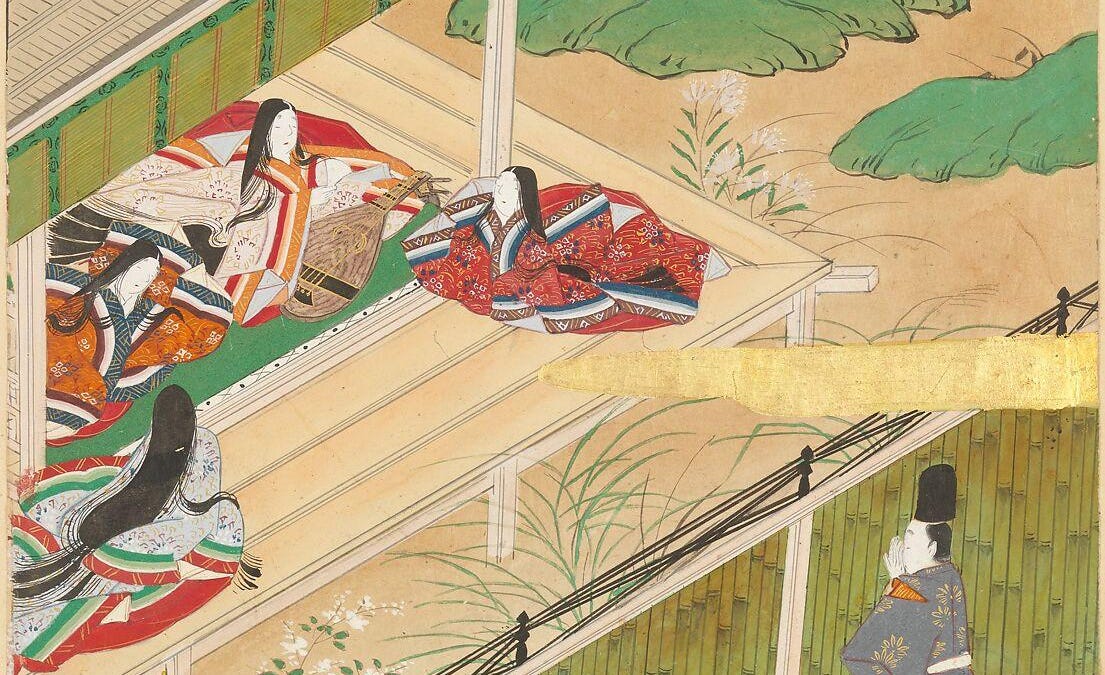
High-ranking women and men lived lives so separate that they might have a passionate love affair without properly seeing each other’s faces. uncertain
they → rank → faces
It was in this world that Murasaki Shikibu, an intelligent and educated lady in Empress Shōshi’s court, wrote The Tale of Genji, which is widely considered to be the world’s oldest novel. asserted
which → educate → Genji
It is an extraordinary masterpiece and a highly questionable soap opera, and I’ve never read anything like it. asserted
I → read → it
Royall Tyler (2001) begins the introduction to his translation of Genji like this: The Tale of Genji was written a thousand years ago in Japan, but anyone can read it today. asserted
anyone → begin → it
The notes are useful but not required. asserted
notes → require → ?
So great a classic, written in an ancient language about a vanished world, has been studied intensively, but its characters’ thoughts and feelings remain as fresh as ever. asserted
thoughts → write → world
I disagree with Tyler, hard. asserted
I → disagree → Tyler
The footnotes are critically important if you want to understand a world so completely different from the one we live in, and the characters generally behave, think, and feel in ways that are so outdated as to be completely unrelatable. asserted
that → want → ways
In this review, I will walk you through my experience of reading Genji and learning about its world, so that you can judge for yourself whether Tyler is right and anyone can read it today. asserted
anyone → walk → it
The Tale of Genji tells the fictional tale of Genji, the son of the Emperor and one of his low-ranking concubines, throughout his life. asserted
Tale → tell → life
A few things to know about Genji: He is incredibly beautiful. asserted
He → know → Genji
Men and women weep at the sight of him. asserted
Men → weep → him
Monks and nuns weep when he leaves, distraught that someone like him has to live in this wretched world. asserted
someone → weep → world
He is better than others at nearly every skill that marks a sophisticated and educated man, such as composing poetry, calligraphy, playing music, singing, dancing, painting, and knowledge of Chinese literature. asserted
that → mark → literature
When he demonstrates these skills, everyone weeps. asserted
everyone → demonstrate → skills
He dresses and behaves immaculately. asserted
He → dress → ?
Pretty sure someone weeps about that, too. asserted
someone → weep → that
He falls in love a lot, and is known for his numerous romantic conquests. asserted
He → fall → conquests
He doesn’t have the official title of Prince, nor is he in the line of succession to become Emperor, and he has to work hard to advance his political career in the Court. asserted
he → have → Court
But most of the story focuses on him longing after and pursuing various women, whether it’s a good idea or not, and often it’s not. asserted
it → focus → women
Usually all involved parties weep. asserted
parties → weep → ?
He often thinks about resigning his worldly life and becoming a monk, but, unfortunately, he has so many worldly attachments that it would be pretty difficult. asserted
it → think → attachments
I will gladly admit I fail to relate to Genji and his struggles. asserted
I → admit → Genji
The narrator and the other characters try to convince the reader of Genji’s absolute magnificence, while Genji himself is busy doing the opposite. asserted
Genji → try → opposite
Please enjoy the following reconstruction of my early days of reading Genji, as I kept interrupting whatever my partner was doing to tell them what Genji is up to: asserted
Genji → enjoy → what
Okay, so… the Emperor had a favourite… concubine, I guess? asserted
I → have → concubine
And he had a child with the concubine, and that child is Genji, but his mother died because… all the other women in the Emperor’s court were jealous and mean to her? asserted
women → have → her
Anyway, the Emperor took a new wife because she looks like Genji’s mother, and she is SIXTEEN. asserted
she → take → mother
And the Emperor wants the two of them to spend a lot of time together so that she can become a new mother to Genji. asserted
she → want → Genji
“Welp, now Genji has fallen in love with his stepmother. asserted
Genji → fall → stepmother
His dad is just happy that he managed to find a new mother for him.” asserted
he → manage → him
You won’t believe this. asserted
You → believe → this
Genji is hanging out on a mountain and comes across a house, and sneaks around peeping through holes in the walls and sees a lovely 10-year-old girl who reminds him of his stepmother. asserted
who → hang → stepmother
Then he finds out the girl actually is the niece of his stepmother, so of course now he wants to have her. asserted
he → find → her
And he is imagining how great it would be to raise the child himself, so he could be sure to shape her into ‘the perfect woman’.” uncertain
he → imagine → woman
…and 346 more, not listed.

💬 Give feedback
🕘 History 🎫 Support