Photo via Washington Examiner

Russia and China unite against US over Iran and Cuba in UN speeches

Read the original at Washington Examiner ↗
Cite

Parks, M. (2026, September 26). Russia and China unite against US over Iran and Cuba in UN speeches. Washington Examiner. https://www.washingtonexaminer.com/news/world/4744152/russia-china-unite-iran-cuba-un-speech/

Dated when The Aporia collected the article, usually within hours of publication. Check the original for its exact date and byline.

Washington Examiner · collected 2026-09-26 · by Molly Parks

Quick Summary

During speeches at the United Nations General Assembly on Saturday, Russian Foreign Minister Sergey Lavrov and Chinese Vice President Han Zheng criticized U.S. actions against Iran and its embargo on Cuba. Both officials condemned U.S.-Israeli attacks in Iran, highlighting concerns over civilian infrastructure damage and global energy trade disruptions. They also urged the U.S. to lift economic sanctions on Cuba and remove it from the state sponsors of terrorism list, emphasizing respect for countries' sovereignty and regional peace.
Written by AI on 2026-09-26, from this article's own text only (the story summary below draws on all the coverage).

AI analysis

Story summary

At the United Nations General Assembly on Saturday, Russia and China criticized the United States over its stance towards Iran and Cuba. Russia's Foreign Minister Sergey Lavrov denounced US and Israeli aggression in Iran, including attacks that targeted civilian infrastructure, calling for stability in the Strait of Hormuz, crucial for global energy trade. China’s Vice President Han Zheng urged the relevant country to immediately lift sanctions against Cuba, referring indirectly to President Donald Trump's policies without naming him explicitly. Both Russia and China emphasized their opposition to military actions by the US and its allies, highlighting their support for Iran and Cuba despite ongoing tensions with those nations.

Written for “Russia China Unite Against US” on 2026-11-18, grounded in this article and the 0 other(s) covering the same event.

Compared with similar articles

This article reads unscored and hedges 0% of its claims. Each row says how that neighbour differs.
The Straits Times
Leans strongly left Hedges 2 of 14 claims Outlet record 64/100
“The articles describe different points in time during the UN General Assembly: ARTICLE A covers Trump's meetings on September 22, while ARTICLE B discusses speeches by Russia and China against the US on September 26.”
Times of India
Hedges 1 of 19 claims Outlet record 59/100
“Article A reports on a warning given by Trump to Xi regarding China's support for Iran, while Article B discusses UN speeches where Russia and China criticize the US over its actions towards Iran.”
New York Post
Hedges 4 of 14 claims Outlet record 66/100
“The articles describe different events: one is a conversation between Trump and Xi about Iran's support during a summit, while the other involves Russia and China criticizing the US at the UN General Assembly.”
CBS News
Hedges 0 of 3 claims Outlet record 67/100
“The articles discuss different aspects involving distinct parties: Article A focuses on a conversation between Trump and Xi regarding Iran, while Article B covers Russia and China's united stance against the US over Iran at the UN.”
Times of India
Hedges 0 of 14 claims Outlet record 59/100
“While both articles discuss China's speech at the UN General Assembly regarding Iran and Cuba, they differ in details such as the mention of Russia and specific criticisms.”
The Straits Times
Hedges 2 of 8 claims Outlet record 64/100
“Article A describes a meeting between Russian and Iranian foreign ministers, while Article B reports on speeches given by delegates from Russia and China at the UN General Assembly.”
The Straits Times
Leans left Hedges 0 of 13 claims Outlet record 64/100
“While both articles report on speeches at the UN General Assembly criticizing U.S. actions regarding Iran and Cuba, they differ in focus with Article B mentioning Russia's involvement and specific details about Iran not present in Article A.”
New York Post
Leans strongly right Hedges 0 of 19 claims Outlet record 66/100
“Article A focuses on Russia and China's united stance against US regarding Iran and Cuba, while Article B centers on Russian Foreign Minister Lavrov attacking Western allies as warmongers during his speech at the UN.”
The Hindu
Leans left Hedges 0 of 14 claims Outlet record 60/100
“While both articles discuss China's speech at the UN criticizing U.S. policies towards Iran and Cuba, Article B includes content from Russia's foreign minister Sergey Lavrov that is not present in Article A.”
CBC News
Hedges 0 of 16 claims Outlet record 60/100
“While both articles discuss China's stance against the U.S. at the UN on Iran and Cuba, Article B also includes Russia's position and mentions a specific event (the death of Ayatollah Khamenei) not covered in Article A.”

Story

Russia China Unite Against US
Politics · 1 article(s) covering the same event.
How this article was measured signals, leaning charts, publisher record, byline, topics and claims

Signals How these are calculated →

Claims extracted
25
sentences that state something as happening or true
Uncertain
0%
0 of 25 hedged ("reportedly", "may", "according to")
Leaning
withheld
no quote in the article backed the model's score
Publisher signals
67/100
Washington Examiner's corrections and hedging, across everything collected from it. Not a measure of accuracy.
Outlets on this story
1
Politics
Same framing elsewhere
1
articles that frame the event the way this one does
Analyzed 2026-09-26 · how these are computed

How this is being covered How these are calculated →

Article leaning vs. publisher reliability
Source leaning vs. consistency

Publisher

Washington Examiner · 5103 article(s) · 11 correction(s) detected
Running correction rate · 11 correction(s)

Who wrote this

Molly Parks
159 article(s) here · 1 carrying a prediction
Gov. Gavin Newsom (D-CA) projected confidence in House Minority Leader Hakeem Jeffries (D-NY) becoming the next speaker of the House, telling the Washington Examiner at the Capitol he expects Jeffries to win the internal Democratic Caucus vote on Wednesday without trouble.
Reps.-elect Sam Forstag (D-MT) and Zach Dembo (D-KY), centrist Democrats who flipped red-leaning districts, as well as progressive Rep.-elect Brad Lander (D-NY), advocated the ban as part of the House rules, set to be voted on in January after the speaker election.
Concerns in Washington that Iran could be plotting an attack targeting the nation’s capital haven’t convinced Democrats that they need to grant Republicans and the Trump administration more funding for the Pentagon and the war against Tehran.
Sen. Ashley Moody (R-FL) suggested Florida’s law enforcement agencies as an alternative for officers who were part of a New York City Police Department unit that Mayor Zohran Mamdani cut from the force on Monday.
Thanksgiving travel is expected to dip by about 121,000 travelers this year due to high costs, marking a decline from the record-breaking travel numbers recorded since 2023.
White House counsel Will Scharf promised to respond in a “vigorous” way to Democrats’ threats of increased oversight against the Trump administration in their new congressional majorities.
Sen. Chris Van Hollen (D-MD) said he would support “whatever level of money is necessary” to fix the U.S. air traffic control system after the nationwide ground stop on Friday following Transportation Secretary Sean Duffy’s plea for more funds.
Van Hollen announced Thursday night that he would be challenging Schumer in the race to lead the Democratic majority in the Senate next year.
Biden-appointed U.S. District Judge Ana Reyes ruled on Saturday that the Interior Department could not fully close the course or park in line with the Trump administration’s planned Nov. 15 time frame for the beginning of President Donald Trump’s planned redesign of the course.
The rules package for the next Congress will be introduced in the coming weeks, as Democrats are set to hold at least 255 seats in the House and will be able to usher in several adjustments to the current GOP rules if they can coalesce behind a package.
Also by Molly Parks
Nothing else under this byline is closely related to this article, so these are simply their most recent.
All 159 articles by Molly Parks →

Topics

China Cuba Iran Russia U.S.

Subjects

Cuba GPE · 13× Lavrov PERSON · 11× U.S. GPE · 7× Zheng PERSON · 7× China GPE · 4× Iran GPE · 4× Trump PERSON · 3× Western NORP · 3× Russia GPE · 2× the United States’ GPE · 1×

Narrative

“China urges the relevant country to immediately stop using threat of force against Cuba and immediately and completely lift the blockade and sanctions against Cuba,” Zheng said, referring to the United States without directly naming the country or the Trump administration.
framing: assertive · carried by 1 article(s) · first seen 2026-09-26
President Donald Trump addressed his administration’s aims in Cuba on Saturday in a press gaggle before Lavrov and Zheng took the U.N. stage, underscoring that he did not think U.S. military action would be necessary on the communist island.
2026-09-26 · Washington Examiner
Russia and China unite against US over Iran and Cuba in UN speeches · assertive framing

Claims (25 extracted, 0 hedged)

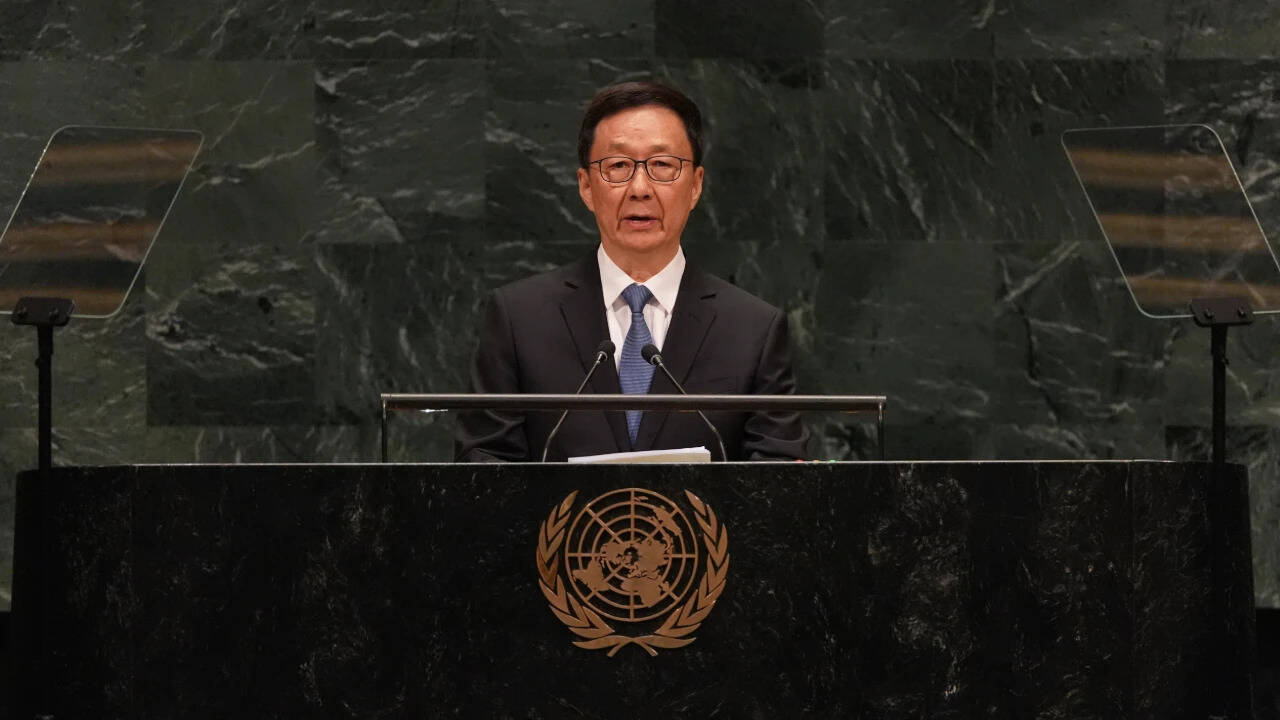
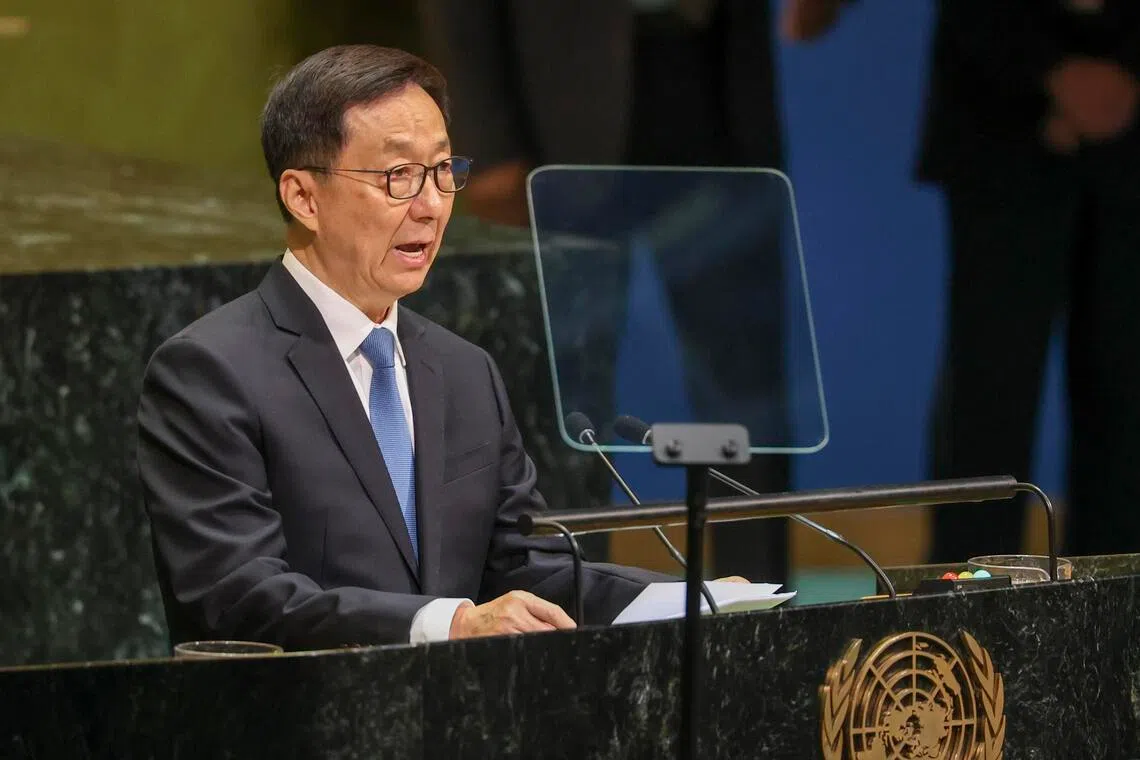
Delegates from Russia and China had sharp words for the United States’ war with Iran and operations related to Cuba during their Saturday speeches before the United Nations General Assembly. asserted
Delegates → have → Assembly
Russia’s foreign affairs minister Sergey Lavrov and China’s Vice President Han Zheng each sided with the Iranian regime over the Trump administration regarding the U.S.-Israeli war with Iran. asserted
minister → side → Iran
“It is unacceptable the fact that force was used to kill the supreme leader of Iran, Ayatollah Ali Khamenei, and members of his family, members of the military, and the political leadership of the Islamic Republic of Iran,” Lavrov said. asserted
Lavrov → use → Iran
“We’re particularly disquieted by the fact that the U.S. and Israeli aggression, which began in June of last year, also seeks to target the civilian infrastructure in Iran and civilian nuclear infrastructure under [International Atomic Energy Agency] safeguards. asserted
which → begin → safeguards
Lavrov called for stability in the region and in the Strait of Hormuz, pointing to the global energy trade crisis that has been top of mind for Democrats during the midterms, saying the airstrikes in the waterway are “dealing a blow to global navigation and trade.” asserted
airstrikes → call → navigation
Zheng took aim more broadly against war and conflict across the world, saying “we should safeguard the post-war international order and foster lasting peace based on common security.” asserted
we → take → security
“China holds that the sovereignty and security of countries in the Middle East, including the Gulf, should be respected,” Zheng said. asserted
Zheng → hold → Gulf
Both Lavrov and Zheng took another cut at Israel by supporting Gaza, with Lavrov calling the recognition of Palestinian statehood “the main issue in the Middle East.” asserted
Lavrov → take → East
The two further railed against the Trump administration’s foreign policy aims by going after the U.S. energy blockade of Cuba. asserted
two → rail → Cuba
“China urges the relevant country to immediately stop using threat of force against Cuba and immediately and completely lift the blockade and sanctions against Cuba,” Zheng said, referring to the United States without directly naming the country or the Trump administration. asserted
Zheng → urge → country
In contrast, Lavrov directly name-dropped the U.S. when discussing Cuba, saying, “We insist that the U.S. lift its siege on the island of freedom and lift all restrictions on trade with Cuba.” asserted
U.S. → drop → Cuba
He also asked the U.S. to remove Cuba from its state sponsors of terrorism list. asserted
He → ask → list
“We need urgent measures to be taken to address the terrible humanitarian situation in Cuba, which is under extreme, unprecedented pressure on the part of its northern neighbor. asserted
which → need → neighbor
We stand in solidarity with the Cuban people and its government,” Lavrov said. asserted
Lavrov → stand → people
President Donald Trump addressed his administration’s aims in Cuba on Saturday in a press gaggle before Lavrov and Zheng took the U.N. stage, underscoring that he did not think U.S. military action would be necessary on the communist island. asserted
action → address → island
“I would say that Cuba and us will make a deal,” Trump said Saturday. asserted
Trump → say → deal
“I don’t think we’ll need the military. asserted
we → think → military
Cuba is failing very badly. asserted
Cuba → fail → ?
We want to help Cuba. asserted
We → want → Cuba
We want to open Cuba up to our people. asserted
We → want → people
We have great Cuban Americans who want to go back.” asserted
who → have → Americans
Zheng and Lavrov’s speeches each mark a striking dissenting tone from U.S. foreign policy, just as Trump has touted recent progress with each country’s leaders. asserted
Trump → mark → leaders
Trump has noted his recent successful calls with Russian President Vladimir Putin, while he also comes of the heels of a multi-day meeting with Chinese President Xi Jinping, which he said was “one of Friendship, Strength, and Success.” asserted
he → note → Friendship
Both Lavrov and Zheng called for global development on Saturday, as Lavrov railed against Western unity and what he called the “brute force” of Western powers. asserted
he → call → powers
“The Western minority, which dominated for 500 years thanks to others’ resources, continues to try to maintain its privileges and to impose its own rules on everyone else,” Lavrov said. asserted
Lavrov → dominate → everyone

Give feedback · no sign-in needed

No sign-in needed for now. Your note is sent without a name, so it cannot be answered.

History Support