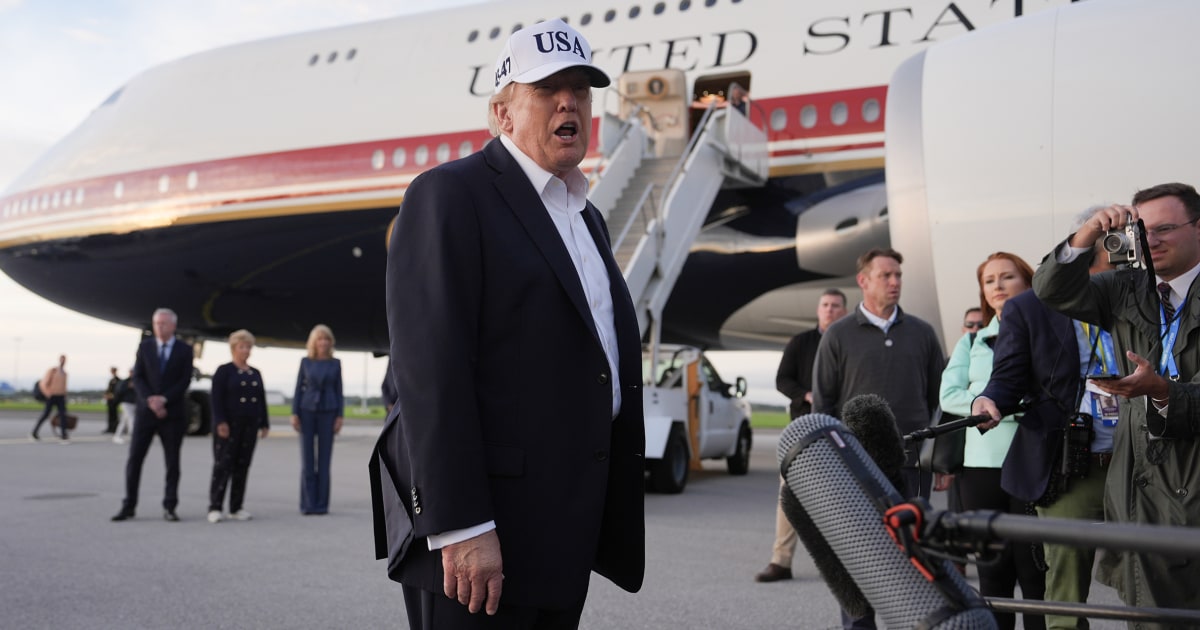
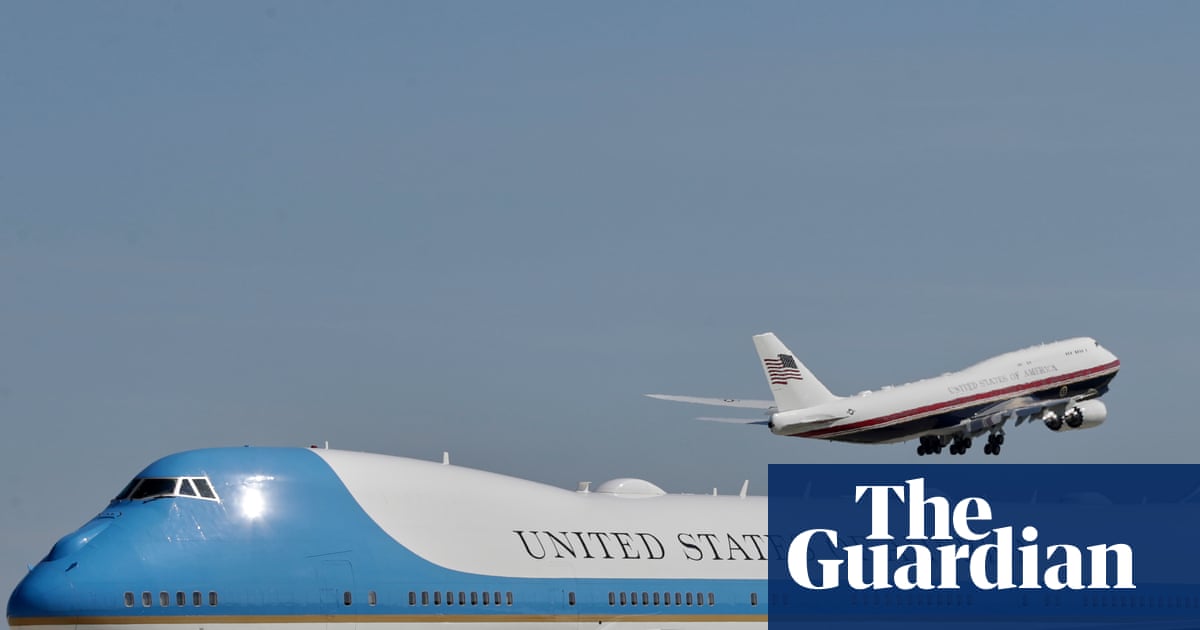
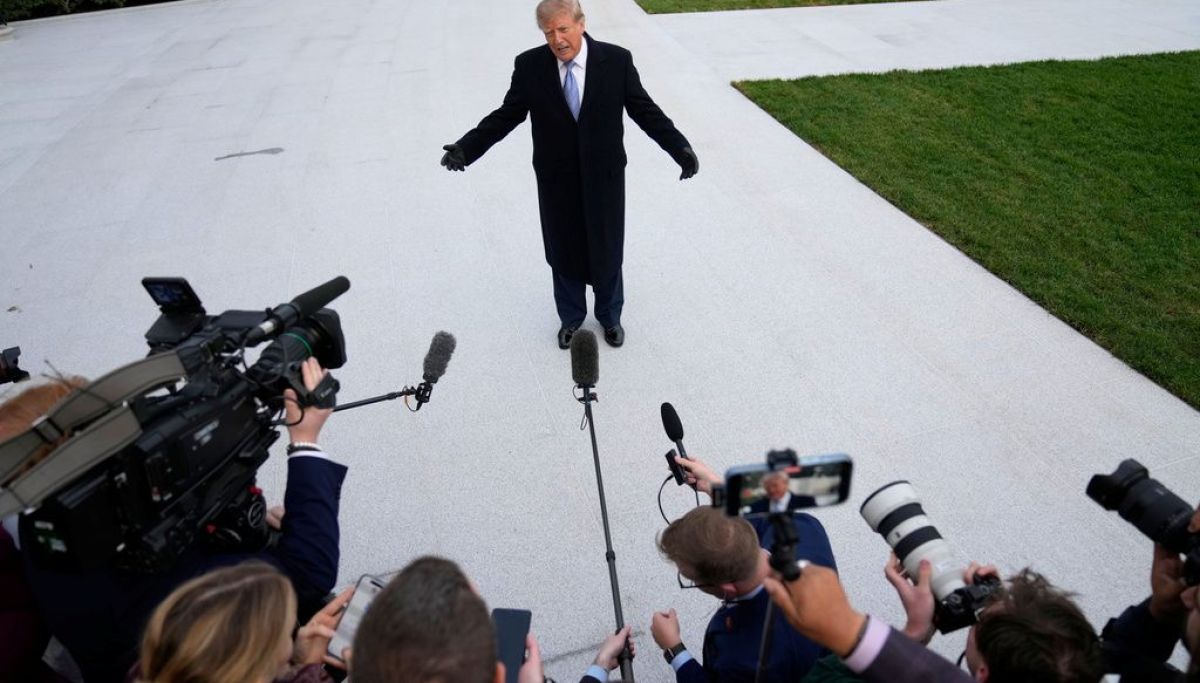
After being blocked in his attempt to keep CNN out of the White House altogether (including the main press briefing room), President Trump has excluded CNN from traveling with him on Air Force One.
asserted
Trump → block → Force
This, though, he is quite likely allowed to do.
asserted
he → allow → This
As you likely recall, last year Trump kicked AP out of the Oval Office press pool, because the AP had refused (in my view correctly refused) to call the Gulf of Mexico "the Gulf of America."
asserted
AP → recall → America
A D.C. Circuit panel majority, to oversimplify slightly, concluded that this was constitutionally permissible, both as to the Oval Office and as to Air Force One.
asserted
this → oversimplify → One
The White House is likely to succeed on the merits because these restricted presidential spaces {Oval Office, … Air Force One, and … the President's home in Mar-a-Lago} are not First Amendment fora opened for private speech and discussion.
asserted
spaces → succeed → speech
The White House therefore retains discretion to determine, including on the basis of viewpoint, which journalists will be admitted.
asserted
journalists → retain → viewpoint
The majority concluded that those spaces differed from some more broadly open spaces in the White House:
asserted
spaces → conclude → House
Reporters and photographers have long been permitted access to the White House complex to cover the President and his administration.
asserted
Reporters → permit → President
The White House manages access by requiring journalists to obtain a press credential called a hard pass.
asserted
House → manage → credential
More than one thousand journalists hold hard passes, through which they may access spaces such as the James S. Brady Briefing Room, where the White House Press Secretary delivers regular briefings.
uncertain
Secretary → hold → briefings
Hard pass holders may also sign up via a reservation system to attend larger events hosted in the East Room, which is often used for meetings with foreign leaders, executive order signings, and press conferences.
uncertain
which → sign → leaders
Because the White House has opened these press facilities "to all bona fide Washington-based journalists," hard passes may not be denied arbitrarily or based on the content of a journalist's speech.
uncertain
passes → open → speech
When the White House opens its facilities to the press generally, as it does in the Brady Briefing Room, it cannot exclude journalists based on viewpoint.
asserted
it → open → viewpoint
On the other hand, we have never suggested that there are any First Amendment restrictions on "the discretion of the President to grant interviews or briefings with selected journalists."
uncertain
we → suggest → journalists
In deciding which journalists to speak with, the President may of course take into account their viewpoint.
uncertain
President → decide → viewpoint
If President Trump sits down for an interview with Laura Ingraham, he is not required to do the same with Rachel Maddow.
asserted
he → sit → Maddow
The First Amendment does not control the President's discretion in choosing with whom to speak or to whom to provide personal access.
asserted
Amendment → control → access
It is a time honored and entirely mundane aspect of our competitive and free press that public officials "regularly subject all reporters to some form of differential treatment based on whether they approve of the reporters' expression."
asserted
they → honor → expression
These uncontested principles provide the framework for assessing the AP's claim that the Oval Office and other restricted spaces become nonpublic fora [in which viewpoint discrimination is forbidden -EV] when the White House selects a small group of journalists (such as the press pool) to be present for observational newsgathering and reporting….
uncertain
House → provide → newsgathering
The Oval Office is the President's office, over which he has absolute control and discretion to exclude the public or members of the press.
asserted
he → have → press
As the district court explained, the Oval Office "is a highly controlled location … shrouded behind a labyrinth of security protocols," which "few members of the public will ever" enter.
asserted
members → explain → public
The President uses the space for myriad purposes, including speeches, signing ceremonies, and meetings with senior officials or heads of state.
asserted
President → use → state
When events in the Oval Office are broadcast to the public, they feature the President's speech and expressive activity.
asserted
they → broadcast → speech
It hardly needs to be said that the Oval Office, Air Force One, or even the East Room are not places "traditionally open to assembly and debate," nor are they open to the public for expressive activity….
asserted
they → need → activity
Only about one percent of hard pass holders can fit in spaces like the Oval Office.
asserted
percent → fit → Office
{Both the AP and the district court at various points suggest that if the White House maintains something like the press pool, it must allow access on a viewpoint neutral basis.
asserted
it → suggest → basis
For the reasons already explained, a group of journalists observing presidential events is not a forum of any sort.
asserted
group → explain → sort
Accordingly, the White House should not have to choose between excluding all journalists and admitting journalists under the restrictions of a nonpublic forum.
asserted
House → have → forum
By recognizing the distinctions between different fora "we encourage the government to open its property to some expressive activity in cases where, if faced with an all-or-nothing choice, it might not open the property at all."}
uncertain
it → recognize → property
…
The messages conveyed in the Oval Office are government speech and opportunities for the President's administration to express its message.
asserted
administration → convey → message
"When government speech is involved, forum analysis does not apply and the Government may favor or espouse a particular viewpoint."
uncertain
Government → involve → viewpoint
Choosing who may observe or possibly speak with the President in these spaces is not the type of action that supports a retaliation claim.
uncertain
that → choose → claim
Rather, it is more akin to a decision about how the President wields the bully pulpit….
asserted
President → wield → pulpit
To be sure, CNN has also argued that the revocation of its reporters' White House press passes violated the Due Process Clause as well as the First Amendment.
asserted
revocation → argue → Clause
Indeed, the judge's order Thursday morning requiring the White House to reinstate those press passes relied on the Due Process Clause, and didn't reach the First Amendment.
asserted
order → require → Amendment
(The D.C. Circuit Sherrill v. Knight decision, which the judge relied on Thursday and which AP v. Budowich discussed, concluded that denial of a White House press pass based on viewpoint would violate both the First Amendment and the Due Process Clause.)
asserted
denial → rely → Amendment
But the logic of the D.C. Circuit AP v. Budowich decision, it seems to me, applies equally to the Due Process Clause.
asserted
it → seem → Clause
The Sherrill precedent expressly yoked the First Amendment and Due Process Clause claims together:
uncertain
precedent → yoke → Amendment
In our view, the procedural requirements of notice of the factual bases for denial, an opportunity for the applicant to respond to these, and a final written statement of the reasons for denial are compelled by the foregoing determination that the interest of a bona fide Washington correspondent in obtaining a White House press pass is protected by the first amendment.
asserted
interest → respond → amendment
This first amendment interest undoubtedly qualifies as liberty which may not be denied without due process of law under the fifth amendment.
uncertain
which → qualify → amendment
…and 4 more, not listed.
 The Aporia