Unemployment claims tick up to 206,000 but remain at historically low levels

ABC News: Top Stories · collected 2026-09-03 · by PAUL WISEMAN AP economics writer
Read the original at ABC News: Top Stories ↗

Summary

The Labor Department reported an increase in unemployment claims to 206,000 last week, but still at historically low levels, with claims mostly staying within a range of 200,000 to 230,000 per week for the past year. The number of people collecting unemployment benefits rose slightly to 1.78 million. According to forecasters surveyed by FactSet, this week's jobs report is expected to show employers added 65,000 jobs in August and the unemployment rate ticked up to 4.2%. The job market has been characterized as a "no-hire, no-fire" labor market where those with work enjoy job security but new workers are struggling to enter the workforce.
Written by the local model on 2026-09-03, using this article's own text rather than the other coverage of the same event (that is the story summary below).

Signals How these are calculated →

Claims extracted
16
claim-shaped sentences
Uncertain
38%
6 of 16 hedged
Leaning
not political
takes no side on a contested political question
Publisher trust
94.1
red-flag proxy, not a credibility rating
Outlets on this story
1
Economy/Business
Narrative spread
1
articles carrying this framing
Analyzed 2026-09-03 · how these are computed

AI analysis (generated at analysis time, not now)

Story summary

More Americans filed for 206,000 unemployment benefits last week, marking a slight increase from the previous week's revised total of 204,000. Despite this uptick, jobless claims remain at historically low levels, and economists consider layoffs to be rare. The four-week average of claims rose to 207,250, which is still within the range of 200,000 to 230,000 that has prevailed for the past year. This trend suggests a "no-hire, no-fire" labor market where existing workers enjoy job security but young workers and those seeking to return to work face difficulty finding entry-level positions or employment. The number of people collecting unemployment benefits increased by 8,000 to 1.78 million, while the unemployment rate remains low at 4.1%.

Written for “US Job Market Conditions” on 2026-09-03, grounded in this article and the 0 other(s) covering the same event.
Why this leaning score
This article does not take a side on a contested political question, so it has no leaning score. That is an answer rather than a gap: a match report or a rescue can be warmly or critically written without being left or right, and scoring it anyway is how approval of a subject gets recorded as a political position.
No political leaning scored for article 3553 · logged 2026-09-03

Story

📰 US Job Market Conditions
Economy/Business · 1 article(s) covering the same event. This is the one the site leads with.

How this is being covered How these are calculated →

Article leaning vs. publisher reliability
Source leaning vs. consistency

Compared with similar articles

Nothing to compare against. No article is close enough to this one for the pipeline to have linked or judged the pair.

Publisher

ABC News: Top Stories · 76 article(s) · 0 correction(s) detected
SignalValueWeight
Correction rate 0.000 0.4
Uncertainty density 0.118 0.25
Assertive mismatch rate 0.000 0.35
No corrections detected for this publisher. That may mean careful reporting, or simply that nothing has been checked.

Who wrote this

PAUL WISEMAN AP economics writer
1 article(s) here · 1 carrying a prediction
🔮 When the Labor Department releases its report on last month's hiring and unemployment Friday, it's expected to show that employers added 65,000 jobs in August and that the unemployment rate ticked up to 4.2%, according to a survey of forecasters by the data firm FactSet.
The only article under this byline in the corpus.

Topics

Americans FactSet The Labor Department WASHINGTON

Subjects

The Labor Department ORG · 3× Americans NORP · 2× WASHINGTON GPE · 2× FactSet ORG · 1× Trump PERSON · 1×

Narrative

The result is what economists call a "no-hire, no-fire'' labor market in which those have work enjoy job security but times are tough for young workers trying to land an entry-level job or unemployed people seeking to get back to work.
framing: mixed · carried by 1 article(s) · first seen 2026-09-03
🔮 When the Labor Department releases its report on last month's hiring and unemployment Friday, it's expected to show that employers added 65,000 jobs in August and that the unemployment rate ticked up to 4.2%, according to a survey of forecasters by the data firm FactSet.
2026-09-03 · ABC News: Top Stories
Unemployment claims tick up to 206,000 but remain at historically low levels · mixed framing

Claims (16 extracted, 6 hedged)

Unemployment claims tick up to 206,000 but remain at historically low levels More Americans filed for unemployment benefits last week, but layoffs are still rare and jobless claims remain at historically low levels WASHINGTON -- uncertain
claims → tick → levels
WASHINGTON (AP) — More Americans filed for unemployment benefits last week, but layoffs are still rare and jobless claims remain at historically low levels. uncertain
claims → file → levels
The Labor Department reported Thursday filings for benefits ticked up to 206,000 last week from a revised 204,000 the week before. asserted
filings → report → 204,000
The four-week average of claims, which smooths out week-to-week volatility, rose modestly to 207,250 last week. uncertain
which → smooth → 207,250
Claims for jobless benefits are a proxy for layoffs, and economists watch them because they can be a sign of where the job market is headed. uncertain
market → watch → them
For the past year, claims have mostly stayed within a historically low range of 200,000 to 230,000 a week. uncertain
claims → stay → 230,000
The number of people collecting unemployment benefits rose slightly to 1.78 million the week that ended Aug. 22, up by 8,000 from the week before. asserted
that → collect → week
Companies, remembering the worker shortages that followed the end of COVID-19 lockups, are still reluctant to let go of staff. asserted
that → remember → staff
But employers aren’t eager to take on new workers. asserted
employers → take → workers
The Labor Department reported Tuesday that gross hiring — before subtracting people who lost or left their jobs — fell 5% to fewer than 5.1 million new jobs. asserted
who → report → jobs
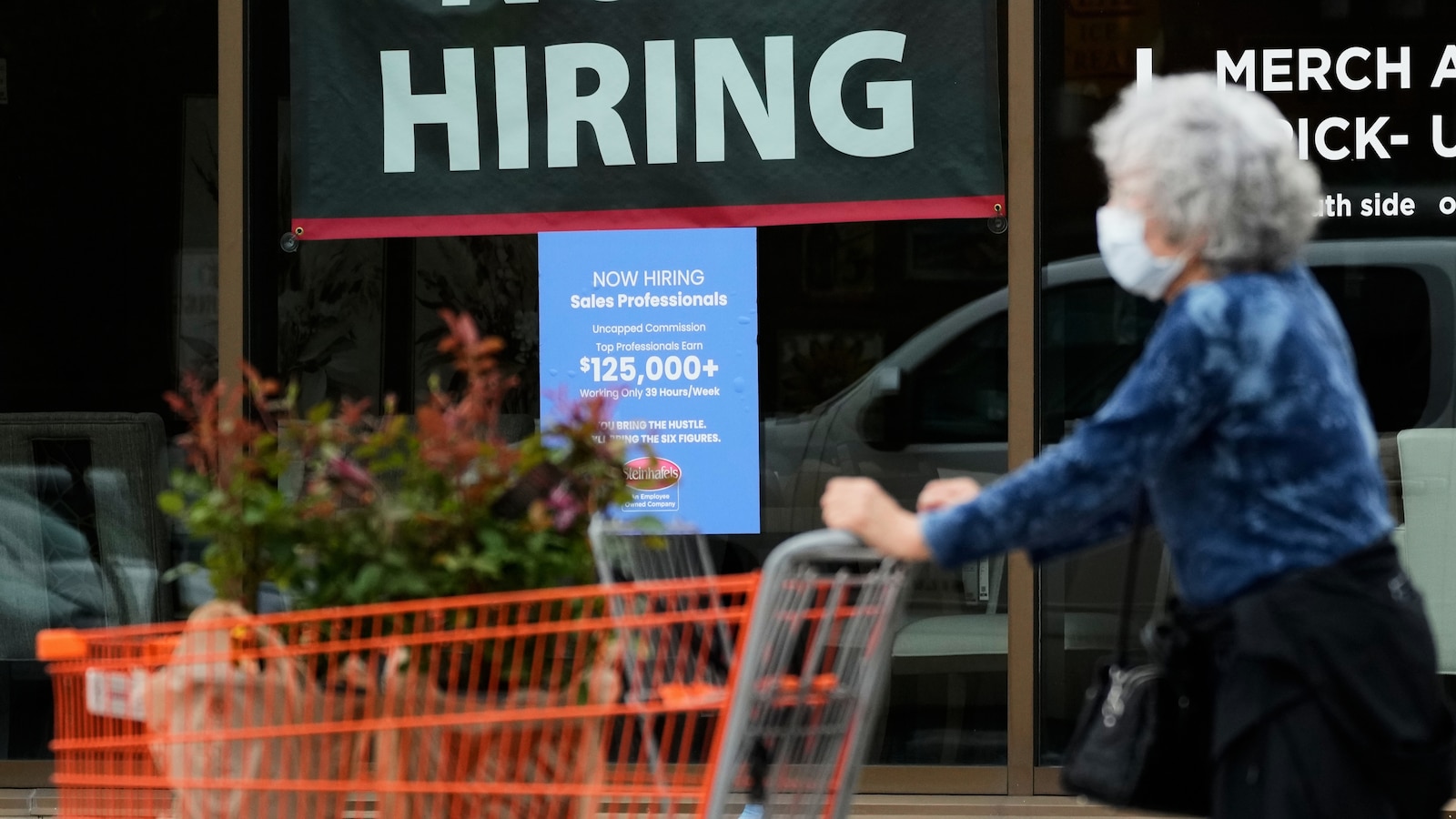
The result is what economists call a "no-hire, no-fire'' labor market in which those have work enjoy job security but times are tough for young workers trying to land an entry-level job or unemployed people seeking to get back to work. asserted
times → call → work
In July, companies, government agencies and nonprofits together cut 23,000 jobs. asserted
companies → cut → jobs
So far this year, employers are adding 61,000 jobs a month, up from the 9,700 they averaged last year — the weakest hiring outside a recession since 2002. asserted
they → add → 2002
The lingering effects of high interest rates and Trump’s erratic trade policies discouraged companies from hiring in 2025. asserted
effects → linger → 2025
When the Labor Department releases its report on last month's hiring and unemployment Friday, it's expected to show that employers added 65,000 jobs in August and that the unemployment rate ticked up to 4.2%, according to a survey of forecasters by the data firm FactSet. uncertain
rate → release → firm
Hiring this year remains well below the 166,000 monthly jobs created, on average, in 2023 and 2024, let alone the 491,000 a month recorded during the 2021-2022 hiring boom that followed pandemic lockdowns. asserted
that → remain → lockdowns
💬 Give feedback
🕘 History 🎫 Support