As millions of kids lose SNAP food benefits, free school meals are also at risk
When Republican lawmakers secured cuts to the United States' largest food assistance program last year, Paige Shoemaker DeMio wasn't worried about children going hungry just at home — but at school.
asserted
children → lose → school
"Anytime we're hearing about cuts to SNAP or Medicaid, we're worried about what's going to be the domino effect of this," she says.
asserted
she → hear → this
Shoemaker DeMio is a senior policy analyst at the Center for American Progress, a left-leaning think tank.
asserted
DeMio → lean → Progress
She usually focuses on K-12 education, but in recent months, she has been following the changes to the Supplemental Nutrition Assistance Program, also known as SNAP or food stamps.
asserted
she → focus → SNAP
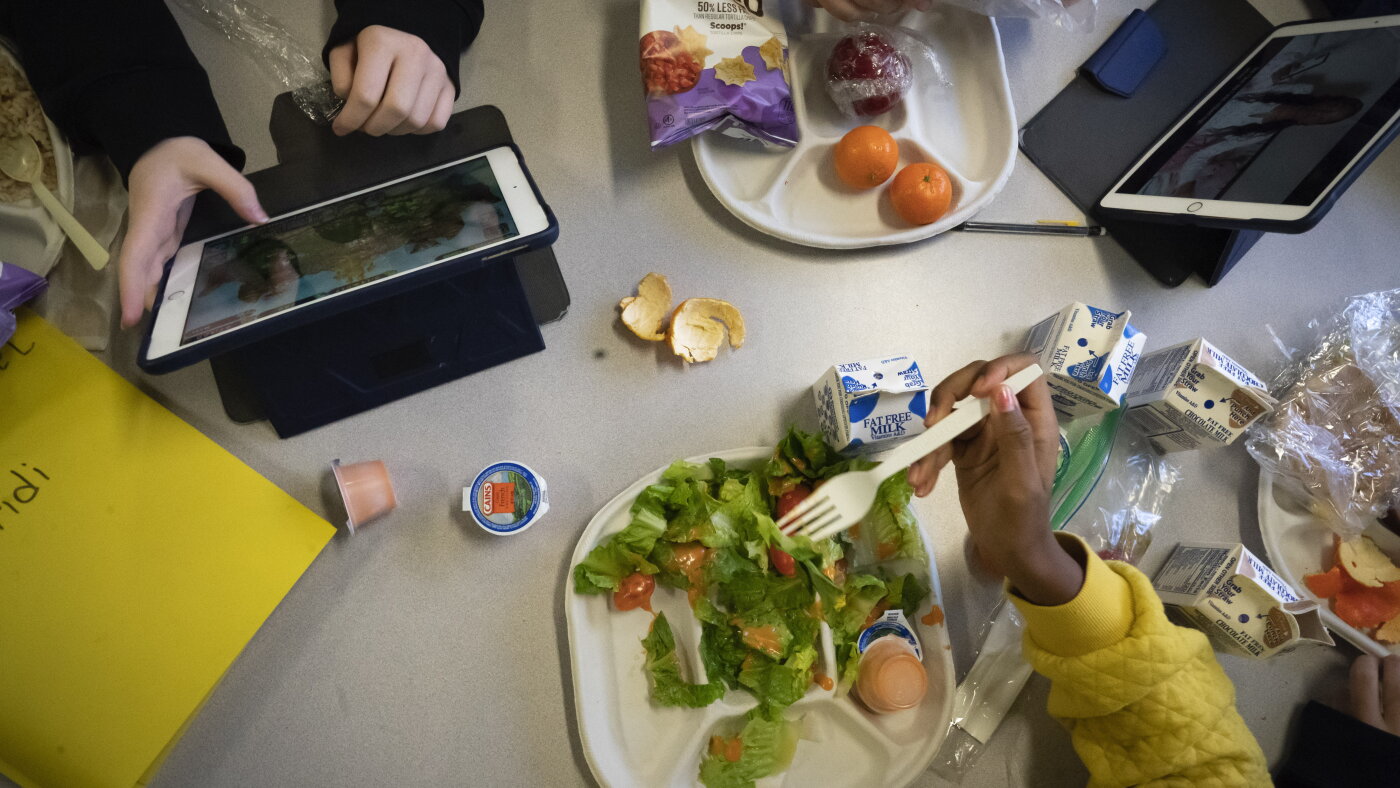
That's because SNAP connects children with other critical resources, such as free breakfast and lunch at school.
asserted
SNAP → connect → school
So when a family loses access to food assistance, the family's child may stop automatically receiving free food at school.
uncertain
child → lose → school
And when scores of families fall off SNAP, universal free meal programs at tens of thousands of schools fall into jeopardy.
asserted
programs → fall → jeopardy
The Center on Budget and Policy Priorities estimates that over a million children have lost food benefits since July 2025, when the One Big Beautiful Bill Act was signed into law.
asserted
Act → estimate → law
Among the changes, the legislation led to stricter work requirements to receive food assistance.
asserted
legislation → lead → assistance
Going into this academic year, dozens of schools nationwide have ended their universal free meal programs — including schools in San Antonio, Houston and Miami-Dade County.
asserted
dozens → go → Antonio
School nutrition experts say it's unclear to what extent a decline in SNAP participation played a role.
uncertain
decline → say → role
But Diane Pratt-Heavner, a spokesperson for the School Nutrition Association, which represents about 50,000 school nutrition professionals in the U.S., says that the full impact on free school meals will emerge in the coming years as SNAP changes take effect.
asserted
changes → represent → effect
"This moment in time could potentially be a tip-of-an-iceberg situation," she says "It could get much, much worse."
uncertain
It → say → iceberg
In a statement, the U.S. Agriculture Department, which administers SNAP and school meals on the federal level, said it invests $385 million for low-income communities and people in need of nutrition assistance.
asserted
it → administer → assistance
"School meal programs have varying income limits, and while SNAP participation may ease the application process, a family not on SNAP is not automatically disallowed participation," the department stated.
uncertain
department → have → participation
School districts will have to reassess whether they can afford free meals
The Agriculture Department's Community Eligibility Provision helps pay for universal free meals at a school or district if at least a quarter of students participate in assistance programs like SNAP.
asserted
quarter → reassess → SNAP
(If it's 62.5% or more, the federal government covers the full tab.)
asserted
government → cover → tab
More than 49,000 public schools participated as of the 2024-2025 school year, according to the Center for American Progress.
uncertain
schools → participate → Progress
Federal reimbursement fluctuates based on the percentage of families receiving assistance.
asserted
reimbursement → fluctuate → assistance
A decline in food stamp participation can lead to a decrease in federal funding, forcing schools to pay more for universal free food when their budgets are already stretched thin, according to Pratt-Heavner.
uncertain
budgets → lead → Heavner
This could push schools to shift funds away from classroom needs or decide to stop offering universal free meals altogether, she adds.
uncertain
she → push → meals
If districts decide to do away with their free food programs, they may still incur costs in the form of debt from unpaid meals.
uncertain
they → decide → meals
That's what happened in 2023.
asserted
what → happen → 2023
When the U.S. ended a federal pandemic waiver allowing schools nationwide to offer free meals, districts reported accruing meal debt as high as $1.7 million, according to a report by the School Nutrition Association.
uncertain
districts → end → Association
"Unpaid meal debt becomes an issue not only for the school meal program, but for the school district budget, which has to pay teachers and for textbooks," Pratt-Heavner says.
asserted
Heavner → become → textbooks
Erin Bronner is the director of child nutrition and wellness for a small school district in central Phoenix that participates in the Community Eligibility Provision (CEP).
asserted
that → participate → Provision
Arizona has seen the most dramatic decline in SNAP participation in the country, with more than 400,000 people — including about 180,000 children — losing food assistance over the past year.
asserted
people → see → year
Now, Bronner's district is due to reapply for the provision next year.
asserted
district → reapply → provision
She says she's worried whether her district can afford to keep offering universal free meals.
asserted
district → say → meals
"Due to the dramatic decline in SNAP assistance, the percentage of eligible families [is] not high enough for us to be able to financially sustain operating this provision," she says.
asserted
she → sustain → provision
"So we would actually lose money if we were to continue to operate CEP.
asserted
we → lose → CEP
Students qualify for free food at school if their family earns at or below 130% of the poverty line, which is $42,900 for a family of four in 2026.
asserted
which → qualify → 2026
Reduced-price meals are offered to such families making $61,050 or less.
asserted
meals → offer → 61,050
To access free or reduced-price meals, students can fill out a school meal application.
asserted
students → access → application
But the form tends to be a source of confusion and administrative burden, according to Shoemaker DeMio.
uncertain
form → tend → DeMio
"It's easier and faster for children to get fed when meals are universally given rather than individually applied for," she says.
asserted
she → feed → ?
Another issue with the application is that it factors in only income and doesn't take into account a family's expenses or unique hardships, according to Pratt-Heavner.
uncertain
it → factor → Heavner
"So, a family that's struggling with a recent rent increase or has a family [member] undergoing cancer treatment may be spending more than they're taking in and might not be eligible for any help at all," she says.
uncertain
she → struggle → help
Bronner, in Arizona, calls it the "danger zone": when a student's family makes just above the income threshold but is still cash-strapped.
asserted
family → call → threshold
"They do fall through the cracks," she says.
asserted
she → fall → cracks
…and 18 more, not listed.
 The Aporia