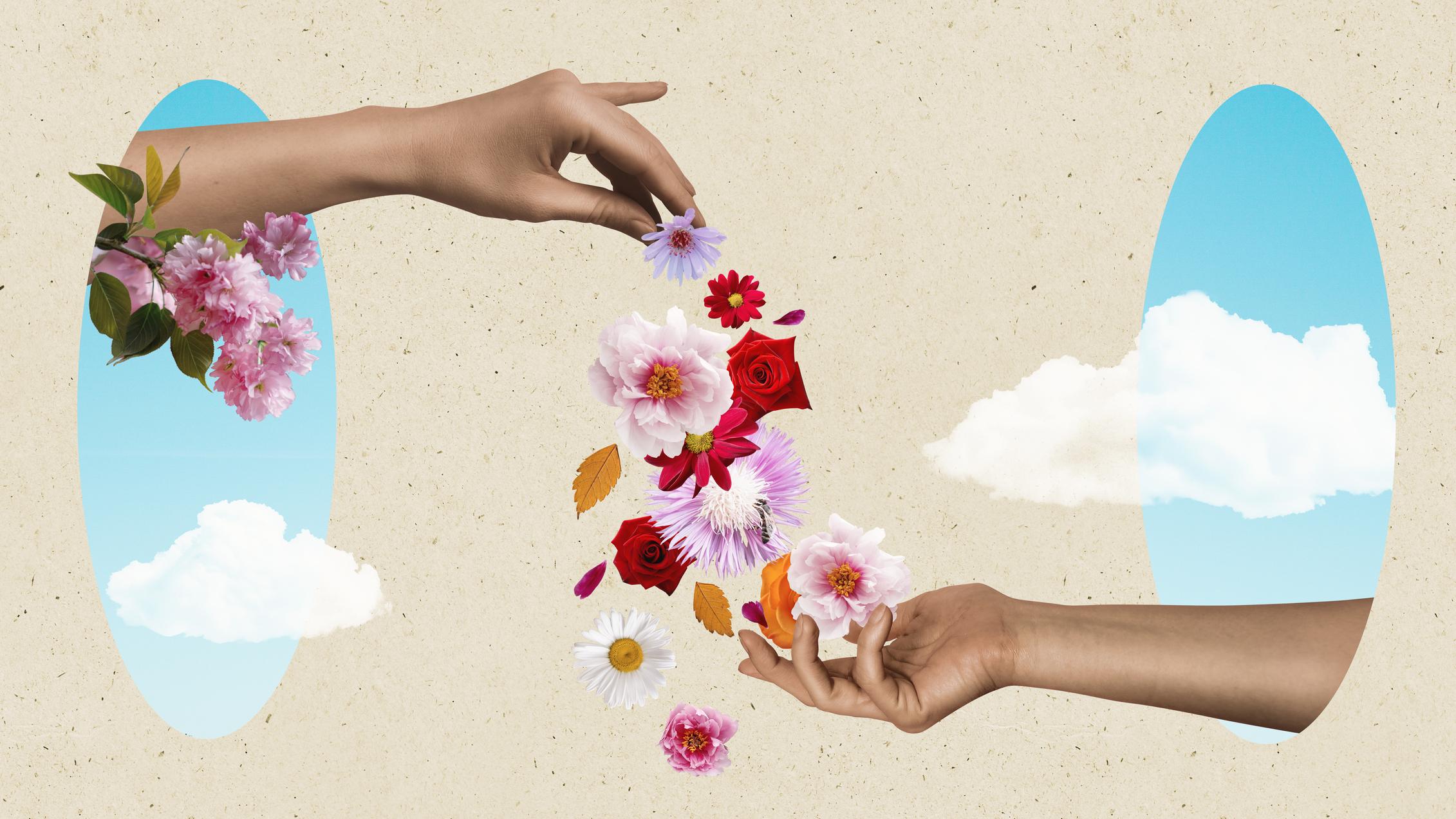
I’m the kind of person who shares a genuine compliment often, telling someone who is standing behind me in the airport line that I love their sneakers or letting one of my daughter’s friends know they have a beautiful smile.
asserted
they → ’m → smile
I also like to do nice things for people, like bringing the veterans that I work with doughnuts and coffee every Monday morning.
asserted
I → like → doughnuts
I learned to be kind from my grandfather who raised me.
asserted
who → learn → me
He drove the nuns from my Catholic grammar school to their doctors’ appointments, and he shared smiles and jokes with grocery store clerks, neighborhood kids, and almost every soul whose path he crossed.
asserted
he → drive → path
I wanted to follow in his footsteps and engage as often as I could in my own random acts of kindness.
uncertain
I → want → kindness
I recognized that being kind and giving selflessly to others made me feel good as well, but it wasn’t until recently, 25 years into my career as a trauma psychologist, that I learned about the science behind random acts of kindness.
asserted
I → recognize → kindness
Research indicates that engaging in random acts of kindness boosts happiness in both those who give and those who receive.
asserted
who → indicate → those
A systematic review of 24 studies indicated that performing acts of kindness boosts the well-being of the giver.
asserted
performing → indicate → giver
One study on the effects of a seven-day intervention—in which people intentionally tried to do nice things for others—found that it didn’t matter if someone was giving to those with whom they had strong ties (family members or friends), or those with whom they had weak ties (strangers).
asserted
they → try → ties
All had equally positive effects on happiness.
asserted
All → have → happiness
Oliver Scott Curry is the research director for Kindlab, a team of researchers who study the causes and consequences of kindness.
asserted
who → study → kindness
The group offers tools and programs to help increase kindness; you can even complete the Kindness Quotient, a research-based questionnaire that takes less than five minutes to fill out and gives you an indication of how kind you are compared to others.
asserted
you → offer → others
I contacted Curry and asked him what he thought about the value and opportunities for kindness in what feels like an incredibly hostile world.
asserted
what → contact → world
“Humans are naturally kind, under the right circumstances,” he tells me.
asserted
he → tell → me
Indeed, according to research across diverse cultural and economic settings, from the U.S. and Canada to Uganda, India, and South Africa, the well-being rewards one experiences from helping others appears deep-rooted in human nature.
uncertain
one → accord → nature
Jonathan Passmore, a psychologist and coach in the U.K., has developed a positive psychology coaching technique called CAKE, which stands for consistent acts of kindness and empathy.
asserted
which → develop → kindness
I asked him how engaging in CAKE can help teach someone how to spread kindness.
asserted
engaging → ask → kindness
“The list of possible actions is limitless,” he says.
asserted
he → say → actions
“I advocate for folks to initially commit to a one-week plan—choosing to engage in one act of kindness per day.”
asserted
folks → advocate → day
On Monday, for example, you can greet the barista at your local coffee shop by name, and wish them a pleasant day, he offers.
asserted
he → greet → day
On Tuesday, “you could write a handwritten card to a colleague and thank them for something they have done.”
uncertain
they → write → something
Do this for a week, and “one often gets hooked and begins to hold an empathic stance towards most they meet.”
asserted
they → do → most
You’re never too young to start.
asserted
You → ’re → ?
Kindlab offers kindness challenges—skill-building, games, and more—for younger family members.
asserted
Kindlab → offer → members
One of my favorites is the kindness walk: a map that reminds and encourages kids to smile at someone they don’t know, give someone a sincere compliment, or pick up litter the next time they take a walk.
asserted
they → remind → walk
Givers often underestimate the positive effect such gestures have on receivers.
asserted
gestures → underestimate → receivers
Undervaluing our kindness may discourage us from engaging in such acts.
uncertain
Undervaluing → undervalue → acts
But engaging in acts of kindness is a straightforward, low-cost, widely available, and valuable tool we can all use with our family, friends, community members, and strangers.
asserted
we → engage → family
As a psychologist who cares very deeply about people’s well-being, I see engaging in acts of kindness as a win-win.
asserted
I → care → win
Whether it’s buying a cup of coffee for the person in line behind you at the drive-thru, holding the grocery store door open for someone whose hands are full of heavy bags, or saying hello to a stranger
asserted
hands → buy → stranger
, you will likely boost your own and others’ emotional well-being.
asserted
you → boost → being
 The Aporia