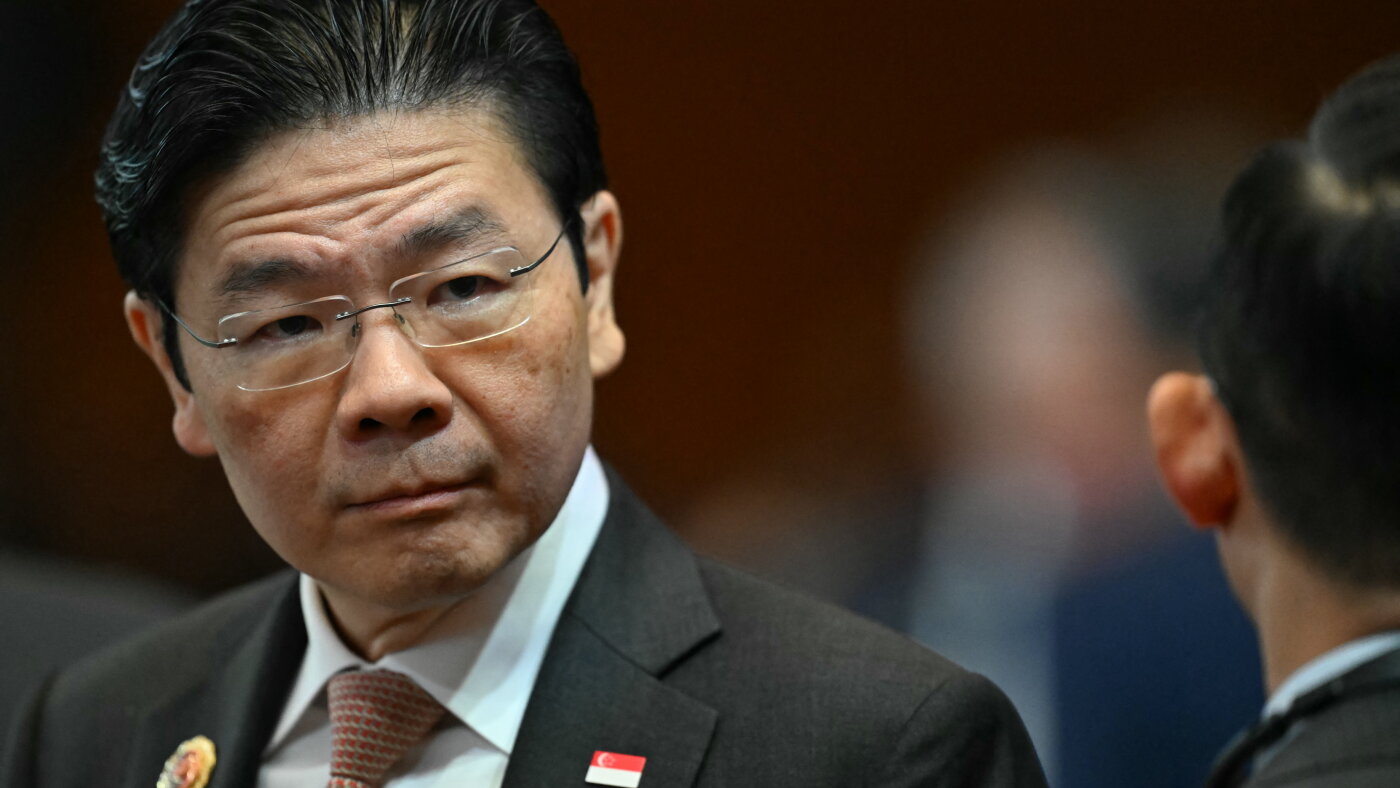
Singapore is scrambling to stabilize birthrates.
asserted
Singapore → scramble → birthrates
Experts say there are lessons for the U.S.
When Singapore Prime Minister Lawrence Wong gave his annual address in late August, he said his government would invest vast new resources to tackle a national crisis: the dangerous decline in the island country's birthrate.
asserted
government → say → birthrate
"We want to make a fundamental shift in how we support families," Wong said.
asserted
Wong → want → families
"We will walk alongside parents throughout the journey of raising their children."
asserted
We → walk → children
The package Wong unveiled offers the equivalent of roughly $55,000 per baby.
asserted
Wong → unveil → baby
The plan starts with a $7,000 cash payment at birth and is followed by annual payments and credits that continue until the child is 16 years old.
asserted
child → start → payments
According to Wong, the steps are needed to counter a looming demographic crisis that he said threatens "our ability to keep Singapore going."
uncertain
he → accord → Singapore
Birthrates have fallen much more rapidly.
asserted
Birthrates → fall → ?
But Karen Guzzo, an expert on family development and demographic trends at the University of North Carolina at Chapel Hill, said many American couples who are weighing parenthood need this kind of help.
asserted
who → say → help
"I was reading through what Singapore is doing and it's hard not to drool with envy," Guzzo said.
asserted
Guzzo → read → envy
"It [offers] investments in children and family for an extended period of time and I think that's really important."
asserted
that → offer → time
The urgency in Singapore to address falling birthrates grew earlier this year when the country's deputy prime minister, Gan Kim Yong, told parliament that the nation's "total fertility rate" — a figure estimating the number of children each woman will choose to have in their lifetimes — had plunged again.
asserted
woman → address → lifetimes
In 2000, Singapore's total fertility rate matched the current rate of the U.S., which is roughly 1.6 children per woman.
asserted
which → match → woman
But in 2025, the rate slid to just .87, according to government data.
uncertain
rate → slide → data
Singapore's leaders say that's so low, it could lead to a population collapse of more than 50% in a single generation.
uncertain
it → say → generation
"This is an existential challenge," Gan told parliament, warning that the country's demographic crisis could soon face a point of no return.
uncertain
crisis → tell → return
"Over time it will be practically impossible to reverse the trend because we will have fewer and fewer women who can bear children."
To counter that trend, Singapore's new family program will also include more affordable daycare and better access to housing.
asserted
program → reverse → housing
It roughly triples the amount of paid leave, allowing married couples with three children to take up to 24 days off work each year.
asserted
couples → triple → work
The plan also expands efforts to help fathers spend more time parenting.
asserted
fathers → expand → time
Most demographers and economists say Singapore's national campaign is unlikely to dramatically boost birthrates, especially in the short term.
asserted
campaign → say → term
But it could offer a model for slowing or halting alarming declines.
uncertain
it → offer → declines
"There are certainly elements that other countries could learn from in this new package, including affordable child care and reducing the housing burden for young families," said Xiujian Peng, who studies Asian demographic trends at Victoria University in Australia.
uncertain
who → be → Australia
A growing number of nations, including Chile, China, Italy, Japan, Poland and South Korea, have seen birthrates fall to levels similar to Singapore, where demographers say rapid population aging and decline are possible.
asserted
aging → grow → Singapore
Birthrates in the U.S. are still nearly twice those of Singapore, but have fallen steadily since 2007.
asserted
Birthrates → fall → 2007
They now stand well below the "replacement rate" that researchers say is needed to maintain a stable population.
asserted
researchers → stand → population
The number of young people in the U.S. under age 25 has already begun to fall, while the population of retirement-age seniors is surging.
asserted
population → begin → seniors
"I do think [U.S. birthrates] are likely to continue trending downward," Guzzo said.
asserted
Guzzo → think → ?
She noted that efforts to support family size in the U.S. have so far been much more modest than in other countries.
asserted
efforts → note → countries
"We're tweaking with child tax credits and we've got the Trump accounts.
asserted
we → tweak → accounts
Those things aren't going to do much."
Many U.S. families are eligible for a federal child tax credit, and President Trump created savings accounts, which may come with $1,000 in government seed money for some babies born while he's in office.
uncertain
he → go → office
But those benefits are a fraction of what Singapore is offering.
asserted
Singapore → offer → what
According to the U.S. Labor Department, most American workers get no paid family leave.
uncertain
workers → accord → leave
Trump has been an outspoken opponent of any role for the federal government helping with childcare, one of the biggest costs for families.
asserted
government → help → families
"Don't send any money for daycare," Trump said during a speech on April 1.
asserted
Trump → send → April
"The United States can't take care of daycare, that has to be up to a state.
asserted
that → take → state
We can't take care of daycare, we're a big country, we have 50 states we have all these other people, we're fighting wars, we can't take care of day care.
asserted
we → take → care
But Guzzo said this is the moment, before the US. reaches a demographic breaking point like Singapore's, when an ambitious family support program might help the most.
uncertain
program → say → Singapore
"There is more potential if we could just help people have the kids they want to have," she said.
uncertain
she → be → kids
In rolling out Singapore's plan, Wong said women and families won't be pressured to have more kids.
asserted
women → roll → kids
"Ultimately of course, the decision to have children is a deeply personal one," he said.
asserted
he → say → children
…and 10 more, not listed.
 The Aporia