More than 3,000 years ago, a community lived, worked and raised families on land that is now being transformed into a modern Scottish suburb.
asserted
that → live → suburb
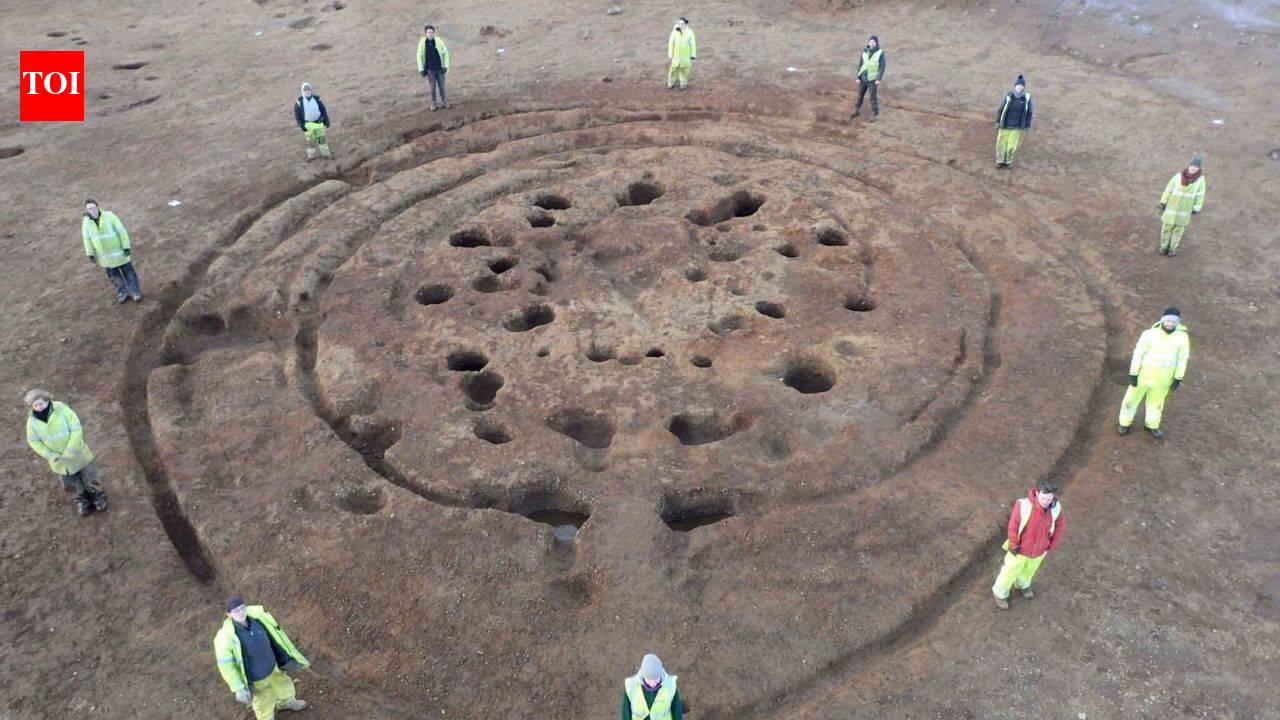
Archaeologists excavating at Northbar, on the south-eastern outskirts of Erskine in Renfrewshire, discovered the remains of 12 Bronze Age roundhouses dating between 1500 and 1100 BC.
asserted
Archaeologists → excavate → BC
The settlement contained evidence of farming, animal keeping, pottery production and weaving, and nearby graves revealed that the site had been used for burial centuries before the houses appeared.
asserted
houses → contain → burial
The excavation also uncovered charred crops, animal bones and large quantities of hazelnut shells, hinting at concerns over food shortages.
asserted
excavation → uncover → shortages
Although the settlement eventually disappeared without obvious destruction, its remains provide a detailed glimpse into everyday life, work and hardship in Bronze Age Scotland.
asserted
remains → disappear → Scotland
Discovery beneath the modern housing development in Scotland
The archaeological remains were discovered by GUARD Archaeology(an independent commercial archaeological organisation based in Glasgow, Scotland) during excavations carried out during 2018-19.
asserted
remains → discover → 2018
The work was commissioned by CALA Homes (a major British housebuilding company that designs and builds new residential properties across the UK) before construction began at Northbar, with the investigation required as part of the planning process.
asserted
investigation → commission → process
According to GUARD Archaeology, the site was occupied between 1500 and 1100 BC.
uncertain
site → accord → Archaeology
Archaeologists identified 12 roundhouses spread across the area, showing that people returned to and developed the settlement over several centuries.
asserted
people → identify → centuries
The houses themselves had largely disappeared.
asserted
houses → disappear → ?
Time, weather and later activity had destroyed the timber structures, leaving behind features such as post-holes and trenches.
asserted
Time → destroy → holes
But those surviving marks were enough to reveal the scale of some buildings.
asserted
marks → survive → buildings
GUARD Archaeology reported that several had been extremely large timber structures, capable of housing large groups of people.
asserted
several → report → people
The discovery is significant because it does more than show where people lived.
asserted
people → show → ?
The remains also preserve clues about how those communities survived.
asserted
communities → preserve → clues
The people who lived at Northbar were closely connected to the surrounding landscape.
asserted
who → live → landscape
Burnt animal bones and charred grains of barley and wheat found inside the roundhouses indicate that farming was an important part of life.
asserted
farming → char → life
Animal dung discovered in two of the houses provides another personal detail.
asserted
dung → discover → detail
According to GUARD Archaeology, people and animals may have shared the same buildings at certain times of the year.
uncertain
people → accord → year
Keeping animals close could have provided warmth and made it easier to protect valuable livestock, although it would also have made daily life considerably less comfortable by modern standards.
uncertain
life → keep → standards
The discovery of large quantities of hazelnut shells adds another dimension to the story.
asserted
discovery → add → story
GUARD Archaeology suggests that the nuts may have been collected and stored during autumn as a reserve food supply for the winter.
uncertain
nuts → suggest → winter
Such preparation could have become particularly important if the grain harvest failed.
uncertain
harvest → become → ?
The archaeologists point to evidence of famine and catastrophe at other Bronze Age communities in south-west Scotland, suggesting that the threat of food shortages was a genuine concern for people living at the time.
asserted
threat → point → time
Archaeologists found evidence that people produced some of the everyday objects they needed themselves.
asserted
they → find → objects
Several kiln pits were discovered inside one of the roundhouses.
asserted
pits → discover → roundhouses
GUARD Archaeology describes these as rare evidence for pottery manufacture during this period.
asserted
Archaeology → describe → period
The kilns indicate that people at Northbar were making ceramic vessels, which could then be used for cooking and storing food.
uncertain
which → indicate → food
The discovery of numerous ‘clay loom weights’ provides evidence of weaving.
asserted
discovery → provide → weaving
Loom weights were used to keep the threads of a vertical loom under tension.
asserted
weights → use → tension
Their presence at Northbar suggests that wool was being turned into cloth, probably for clothing and other household purposes.
uncertain
wool → suggest → clothing
Together, they show a community capable of producing basic necessities rather than relying entirely on goods brought in from elsewhere.
asserted
they → show → goods
GUARD Archaeology notes that Bronze Age communities were connected to one another, but the evidence from Northbar demonstrates a considerable degree of self-sufficiency.
asserted
evidence → note → sufficiency
The story of Northbar goes back even further than the roundhouses.
asserted
story → go → roundhouses
Several centuries before the settlement was established, part of the site had already been used as a cemetery during the Early Bronze Age.
asserted
part → establish → Age
GUARD Archaeology discovered cremated human remains belonging to at least nine people.
asserted
Archaeology → discover → people
Fragments of ‘ceramic Beakers and urns’ were also found alongside the cremated remains.
asserted
Fragments → find → remains
These objects had been placed with the dead, apparently as part of burial practices intended to accompany them into the afterlife.
asserted
objects → place → afterlife
The presence of the cemetery raises an intriguing possibility.
asserted
presence → raise → possibility
GUARD Archaeology reports that the earlier graves and reputation of the people buried there may have influenced why a later community chose to settle in the same location.
uncertain
community → report → location
…and 15 more, not listed.
 The Aporia