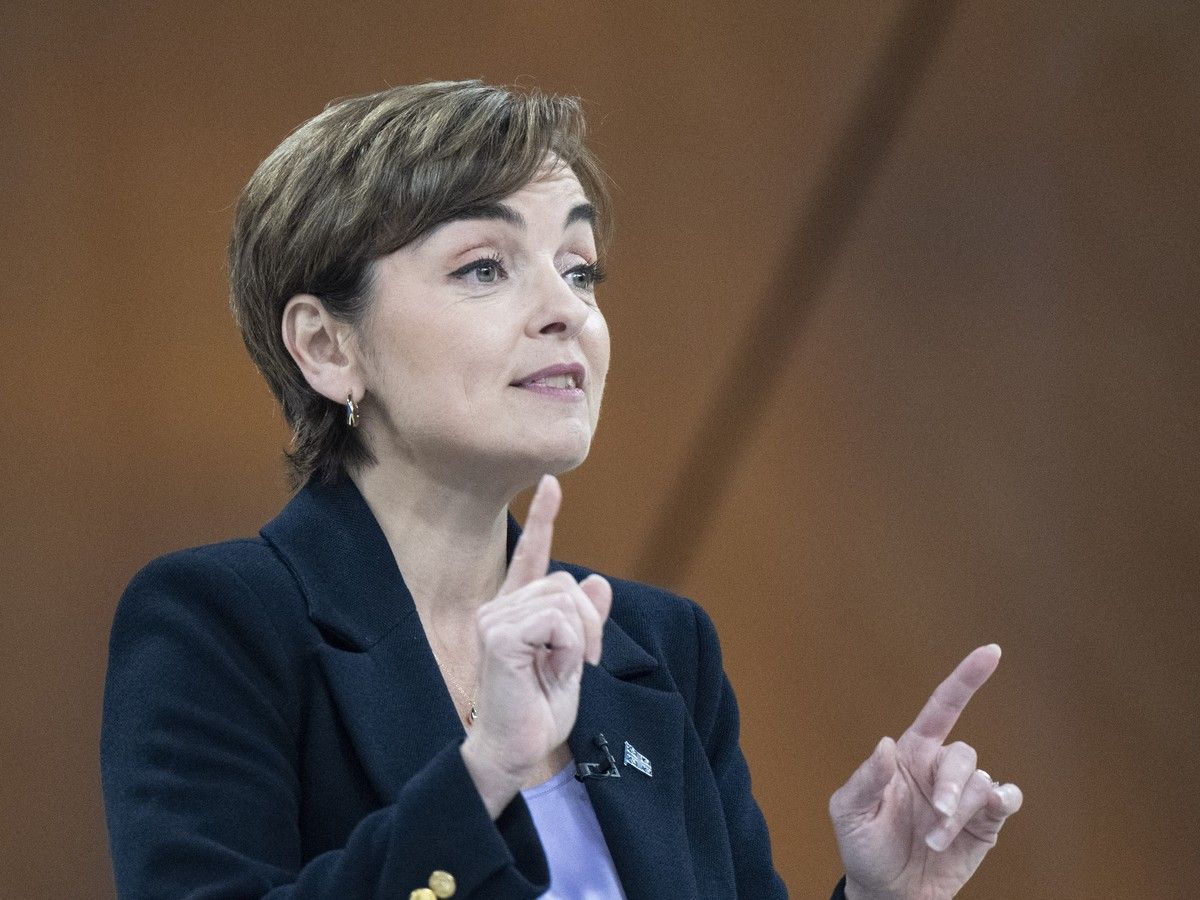
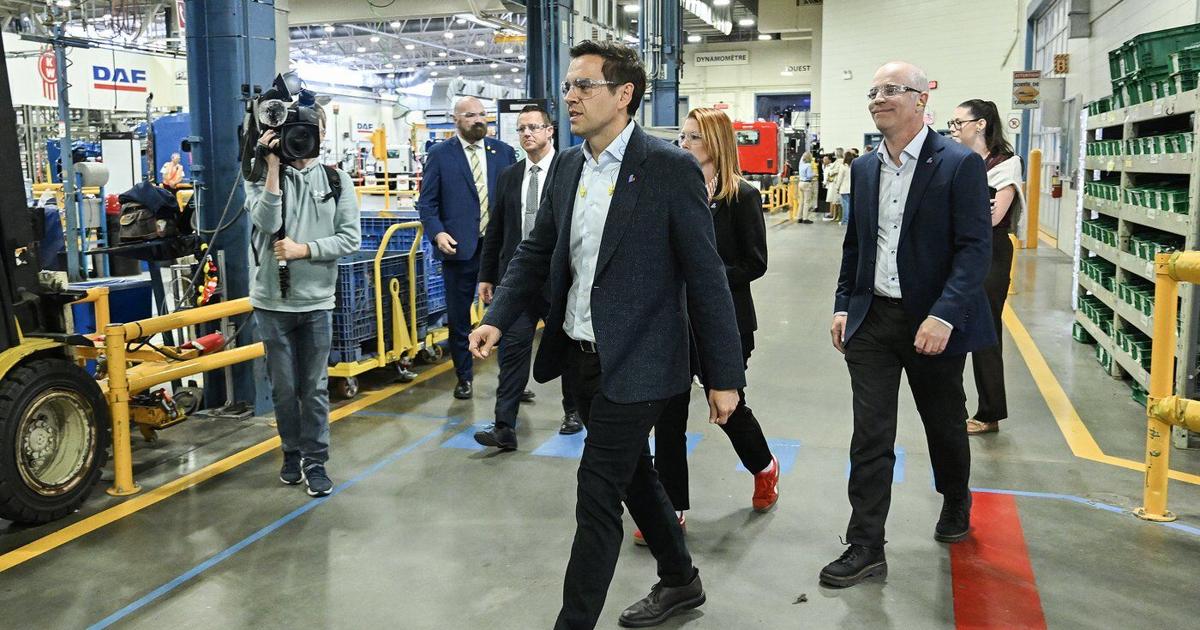
Missed the debate? Key takeaways from Quebec party leaders’ final showdown

Read the original at CBC News ↗
CBC News · collected 2026-09-24 · by Benjamin Shingler

Quick Summary

Quebec's five main party leaders debated critical issues such as healthcare, the economy, and immigration ahead of the October 5 election, with the Parti Québécois leader Paul St-Pierre Plamondon addressing potential referendum scenarios despite avoiding a direct answer. The debate featured a heated discussion on health care accessibility initiated by a citizen's question, highlighting varying proposals for improvement from different parties ranging from reducing bureaucracy to introducing privatized care. While significant issues like Indigenous affairs and climate change were notably absent, the leaders took questions from English-speaking Quebecers in post-debate interviews.
Written locally by qwen2.5:14b on 2026-09-24, using this article's own text rather than the other coverage of the same event (that is the story summary below).

AI analysis runs on qwen2.5:14b, locally

Story summary

Quebec party leaders participated in their third and final debate on October 4, hosted by Radio-Canada at 8 p.m., as the provincial election campaign drew to a close ahead of the October 5 vote. The debate focused on five key issues: Quebec's future, the economy, tax cuts and public service reductions, childcare policies, and healthcare. Parti Québécois leader Paul St-Pierre Plamondon emphasized his party’s commitment to holding an independence referendum if re-elected, despite opposition from other leaders like Conservative Éric Duhaime who vowed to block such a vote. Polls suggest the Parti Québécois remains the frontrunner but faces a likely minority government scenario, with Léger polling showing the PQ at 29%, the Liberal party at 23%, and the governing Coalition Avenir Québec (CAQ) trailing at 20%.

Written for “Quebec Election Campaign Debate” on 2026-10-05, grounded in this article and the 5 other(s) covering the same event.

Signals How these are calculated →

Claims extracted
47
claim-shaped sentences
Uncertain
2%
1 of 47 hedged
Leaning
withheld
no quote in the article backed the model's score
Correction & hedging signals
76.7
corrections and hedging in what we collected; not a measure of accuracy
Outlets on this story
6
Politics
Narrative spread
1
articles carrying this framing
Analyzed 2026-09-24 · how these are computed

Story

📰 Quebec Election Campaign Debate
Politics · 6 article(s) covering the same event. See how they differ ↓

How this is being covered How these are calculated →

Article leaning vs. publisher reliability
Source leaning vs. consistency

Compared with similar articles

This article reads unscored and hedges 2% of its claims. Each row says how that neighbour differs.
The Globe and Mail
⚖️ leaning not scored 🔴 33% hedged 2 of 6 📰 publisher trust 51
“Both articles describe the third and final debate of Quebec's provincial election campaign, hosted by Radio-Canada on the same evening.”
Global News
⚖️ leaning not scored 🔴 29% hedged 2 of 7 📰 publisher trust 64
“Both articles describe the same final debate of Quebec party leaders hosted by Radio-Canada on September 23, 2026.”
Toronto Star · 0.90 cosine similarity
⚖️ Leans left 🔴 3% hedged 1 of 31 📰 publisher trust 63
“Both articles describe the third and final debate of Quebec's election campaign hosted by Radio-Canada, with the same leaders from the main parties participating.”
Global News
⚖️ leaning not scored 🔴 6% hedged 2 of 32 📰 publisher trust 64
“Both articles describe the third and final leaders' debate of the Quebec provincial election campaign hosted by Radio-Canada on the same day.”
National Post
⚖️ Leans strongly left 🔴 26% hedged 10 of 39 📰 publisher trust 60
“Both articles discuss the final televised debate of Quebec party leaders on September 24, 2026.”
Global News
⚖️ leaning not scored 🔴 0% hedged 0 of 5 📰 publisher trust 64
“The articles describe different stages of the election campaign, with Article A focusing on the final debate and Article B discussing the ongoing efforts to win voters leading up to the election.”
CBC News
⚖️ leaning not scored 🔴 0% hedged 0 of 7 📰 publisher trust 77
“Article A discusses key takeaways from the final debate between Quebec party leaders, while Article B reports on CAQ Leader Christine Fréchette's concerns about U.S. interference in the election.”
Global News
⚖️ Leans left 🔴 9% hedged 2 of 23 📰 publisher trust 64
“The articles discuss different aspects of the election campaign: one covers a debate among leaders, while the other reports on polling trends for party support.”
Toronto Star
⚖️ leaning not scored 🔴 0% hedged 0 of 2 📰 publisher trust 63
“Article A describes the preparation and expectations for the final debate of Quebec's election campaign, while Article B summarizes key takeaways from the actual final debate that took place afterwards.”
Toronto Star
⚖️ Leans left 🔴 3% hedged 1 of 30 📰 publisher trust 63
“Article A describes a debate between party leaders, while Article B discusses lesser-known political parties' challenges in gaining attention and resources.”

Publisher

CBC News · 933 article(s) · 4 correction(s) detected
Running correction rate · 4 correction(s)
2026-09-28
Alleged drug trafficker denied bail again in Toronto police corruption case
2026-09-19
She pressed charges against a Mountie for sex assault, but says court delays robbed her of justice
2026-09-17
Toronto cop charged in Project South allegedly didn't care if selling information harmed people
2026-09-15
Edmonton mayor calls for province to address release protocols after detainees dropped off in Chinatown

Who wrote this

Benjamin Shingler
5 article(s) here · 1 carrying a prediction
🔮 A little later, St-Pierre Plamondon was asked if he would hold a referendum after Trump leaves office even if the polls suggest the No side will win again.
🔮 On the whole, if Nova Scotia's tax system were applied to Quebecers, they would actually pay more.
🔮 Will he do the same to the Quebec campaign?
🔮 Will the PQ's Trump-era referendum pause work with voters?
🔮 This software will not be used to verify the identity of individuals in video images, but rather to identify the video passages where the targeted known element appears," de Repentigny said in an email to CBC earlier this year.
Also by Benjamin Shingler
Nothing else under this byline is closely related to this article, so these are simply their most recent.

Topics

Indigenous Quebec Quebecers Radio-Canada the Parti Québécois

Subjects

Quebec GPE · 6× St-Pierre Plamondon PERSON · 4× CAQ ORG · 2× Conservatives NORP · 2× Quebecers NORP · 2× Trump PERSON · 2× Coalition Avenir Québec ORG · 1× Indigenous NORP · 1× Radio-Canada ORG · 1× the Parti Québécois ORG · 1×

Narrative

Key takeaways from Quebec party leaders’ final showdown What we heard in the final debate — and what we didn’t — as Oct. 5 vote looms With less than two weeks until Quebec voters head to the polls on Oct. 5, the leaders of Quebec's five main parties faced off over the health-care system, the trade war and the possibility of a referendum.
framing: assertive · carried by 1 article(s) · first seen 2026-09-24
🔮 A little later, St-Pierre Plamondon was asked if he would hold a referendum after Trump leaves office even if the polls suggest the No side will win again.

Claims (47 extracted, 1 hedged)

Key takeaways from Quebec party leaders’ final showdown What we heard in the final debate — and what we didn’t — as Oct. 5 vote looms With less than two weeks until Quebec voters head to the polls on Oct. 5, the leaders of Quebec's five main parties faced off over the health-care system, the trade war and the possibility of a referendum. asserted
leaders → hear → referendum
The third and final debate of this campaign was hosted by Radio-Canada. asserted
debate → host → Canada
While the leaders traded predictable jabs on the economy and immigration, several critical issues— namely Indigenous affairs and climate change— were left off the table. asserted
issues → trade → table
And although issues pertaining specifically to English-speaking Quebecers were also not discussed during the debate, four of the five party leaders were given a chance to address anglophones while meeting with reporters afterwards. asserted
four → pertain → reporters
On a referendum, PQ leader says he's an optimist asserted
he → say → referendum
With the Parti Québécois (PQ) leading in the polls, the possibility of another referendum on Quebec independence is a very real possibility. asserted
possibility → lead → independence
But it took more than half the debate for the topic to be raised — when Coalition Avenir Québec (CAQ) Leader Christine Fréchette took a jab at the PQ's leader, Paul St-Pierre Plamondon, as she pumped up her own economic plan. asserted
she → take → plan
A little later, St-Pierre Plamondon was asked if he would hold a referendum after Trump leaves office even if the polls suggest the No side will win again. asserted
side → ask → office
Although he didn't answer directly, he didn't walk back his promise — and stressed he remains an optimist. asserted
he → answer → promise
"We shouldn't be afraid of democracy," he said, in response to the question. asserted
he → say → question
"Jacques Parizeau used to say: 'Don't be afraid of your democracy, of going to the polls, of reflecting on our future.' asserted
Parizeau → use → future
" Woman's struggle to find doctor sparks exchange asserted
struggle → find → exchange
One Montrealer, Tania Lamoureux, asked a question to the leaders that sparked a heated exchange between the leaders about how to improve access to health care. asserted
that → ask → care
The woman said she’s been waiting for years to be assigned a doctor, and asked what concrete plans the leaders have to fix this problem shared by so many Quebecers. " asserted
leaders → say → Quebecers
We still have a lot of work to do. asserted
We → have → work
I am very aware of this," Fréchette began, before citing improvements made by her party over the years. asserted
Fréchette → begin → years
Quebec Liberal Party Leader Charles Milliard cut in to say there are still significant waiting times at emergency rooms. asserted
Milliard → cut → rooms
St-Pierre Plamondon said he would eliminate Santé Québec, the newly formed government agency that manages the province's health-care system, to cut down on bureaucracy, while Conservative Party of Quebec Leader Éric Duhaime said he would introduce more privatized care. asserted
he → say → care
Québec Solidaire (QS) co-spokesperson Ruba Ghazal championed more public care. asserted
Ghazal → champion → care
Speaking more generally, she warned that cutting back on the state, as her counterparts propose, could impact services. uncertain
counterparts → speak → services
Trump looms large U.S. President Donald Trump and the trade war, not surprisingly, featured prominently in the debate. asserted
Trump → loom → debate
We heard from the parties about how they would best manage the cost of living and Quebec's finances in tumultuous times. asserted
they → hear → times
Each tried to make the case they were the person best suited to defend Quebec's interests and protect its economy as Canada negotiates with Washington. asserted
Canada → try → Washington
"We won't let you down," said St-Pierre Plamondon, speaking on behalf of the five party leaders. asserted
Plamondon → let → leaders
St-Pierre Plamondon again said he would cut back the bureaucracy to balance the budget — an ambition shared by the Conservatives. asserted
he → say → Conservatives
The topic of immigration generated some fiery debate, with each party outlining its well-entrenched position. Three out of the five parties want to cut immigration levels compared to last year. asserted
Three → generate → year
The CAQ wants to reduce immigration levels to 45,000, down from 60,000 last year. asserted
CAQ → want → 60,000
The Conservatives set the same target, while the PQ would cut that further, to 35,000. asserted
PQ → set → 35,000
Only QS wants to raise the level of newcomers, targeting 70,000. asserted
QS → want → 70,000
The Liberals, meanwhile, still didn't give a clear answer. asserted
Liberals → give → answer
The party has previously said it would accept anywhere between 45,000 and 70,000 permanent immigrants, depending on integration capacity and workforce needs. asserted
it → say → capacity
"I am not going to commit tonight," Milliard told reporters after the debate. asserted
Milliard → go → debate
The business community has pushed for more immigrants to meet the demands of the labour market. asserted
community → push → market
What was left off the table asserted
left → leave → table
Beyond the many topics discussed during the debate, two issues were notably absent: Indigenous affairs and the environment. asserted
issues → discuss → debate
During the election campaign, the Assembly of First Nations Quebec-Labrador (AFNQL) urged parties to commit to equitable public services, recognize First Nations police services as essential services, and support the revitalization of ancestral languages. asserted
Assembly → urge → languages
In a recent interview with CBC, Kebaowek First Nation Chief Lance Haymond said it has been "disappointing" that leaders of major parties have passed through his region of Témiscamingue without discussing plans to improve the lives of his constituents. asserted
leaders → say → constituents
The leaders, as well, had little to say on the environment. asserted
leaders → have → environment
On that front, much of the discussion centred around a proposal by Duhaime to suspend the gas tax. asserted
much → centre → tax
Duhaime took the opportunity to also outline his plan to withdraw Quebec from the cap-and-trade carbon market and eliminate the Electrification and Climate Change Fund, formerly the Fonds vert. Post debate: leaders address English-speaking Quebec The English-speaking community also received scant mention during the debate. asserted
community → take → debate
…and 7 more, not listed.

💬Give feedback
🕘History 🎫Support